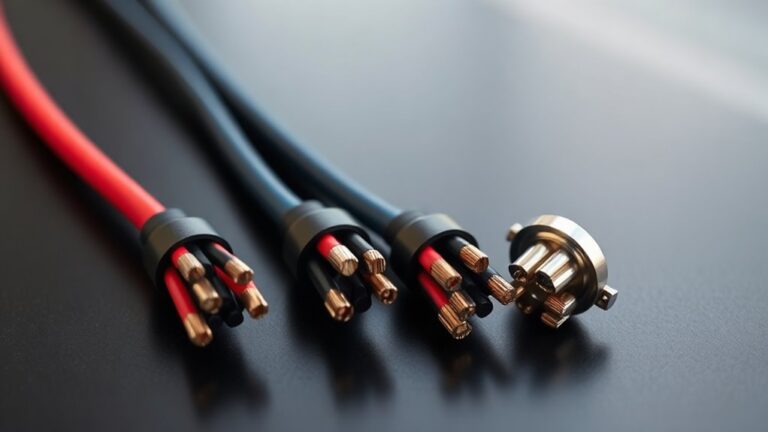
3 Best 6mm Solar Wires for 2027
For 2027, the top 3 six-millimeter solar wires combine durability, flexibility, and high voltage ratings to meet your energy needs. These solar wires are designed to handle tough outdoor conditions while delivering efficient power transfer. Choosing the right 6mm solar wire can make a big difference in your solar panel setup’s performance and safety.
Consider the 10 AWG Solar Panel Extension Cable 100Ft (2-Pack) with tinned copper and XLPE insulation rated up to 1800 V DC. This cable offers excellent conductivity and protection for long-term use.
The Twin Wire 100FT 10AWG cable features IP67 connectors and supports a 30 A current capacity. It’s perfect for secure and reliable outdoor connections.
Also, the 10 AWG Solar Panel Wire 2×20 FT uses flexible aluminum alloy conductors with XLPO insulation, giving you a lightweight yet durable option.
Keep going to discover key factors that’ll help you pick the perfect wire.
| Image | Name | Editor's Rating | Price |
|---|---|---|---|

|
|
||

|
|
||

|
|
10 AWG Solar Panel Extension Cable 100Ft (2-Pack)
- [10AWG Tinned Copper Wire]: MOOKEERF solar wire made of larger diameter 10AWG tinned copper wire which is minimize...
- [XLPE Material]: MOOKEERF solar cable jacket and insulation material is XLPE, can withstand the temperature range...
- [Weather Resistant Cable]: A layer of insulation between the inner conductor and the sheath reduces the damage to...
- [Wide Applications]: 10AWG solar extension cable is suitable for outdoor solar panels roofs, boats, cars, RVs...
- [You Will Get]: 1x100 FT solar wire(Black) and 1x100 FT solar wire(Red), we are a company specializing in...
Experience a hassle-free solar setup with the 10 AWG Solar Panel Extension Cable 100Ft (2-Pack). Designed to reduce power loss, this cable uses 10 AWG tinned copper conductors with multiple tin-plated strands for efficient energy transfer. Its robust design ensures your system performs reliably over long distances.
The cable’s XLPE insulation supports voltages up to 1800 V DC and endures extreme temperatures from -40°F to 248°F. This durability means it withstands harsh outdoor conditions without cracking or degrading. A flexible, weatherproof sheath shields the wiring from wind, rain, and snow, making installation easier and maintenance minimal.
Ideal for connecting solar panels in outdoor, marine, and RV environments, this cable keeps your power flowing smoothly. While the fixed 100-foot length suits many large setups, it may require trimming or managing in smaller spaces. Limited color options could affect wiring customization but do not impact overall performance.
Best for: homeowners and DIY enthusiasts needing durable, weather-resistant solar extension cables for outdoor, marine, or RV use.
What We Like:
- Efficient 10 AWG tinned copper minimizes power loss
- XLPE insulation handles extreme temperatures and high voltage
- Weatherproof and flexible for diverse installation needs
Specification:
| Feature | Details |
|---|---|
| Manufacturer | Not specified |
| Length | 100 ft (per cable) |
| Conductor Size | 10 AWG |
| Material | Tinned copper, XLPE jacket |
| Voltage Rating | Up to 1800 V DC |
| Temperature Range | -40°F to 248°F |
| Color Options | Black and red |
Twin Wire 100FT 10AWG Solar Extension Cable
- ✅Superior materials: Our solar panel wires are crafted from high-quality Tinned Copper materials, ensuring...
- ✅ Durable insulation: Solar panel wires are coated with weather-resistant insulation materials that can withstand...
- ✅ Appropriate size: Choosing the appropriate size of solar panel wires is crucial for the efficient transfer of...
- ✅ High-quality manufacturing process: Solar panel wires are manufactured using high-quality processes to ensure...
- ✅ Compatibility: Ensure that the solar panel wires are compatible with other components of the solar energy...
The Twin Wire 100FT 10AWG Solar Extension Cable is designed to deliver dependable, weather-resistant connections for your solar setup. Its robust construction helps maintain efficient energy flow, reducing power loss even over long distances. This cable is built to withstand harsh outdoor conditions, making it a reliable choice for solar panel extensions.
Protected by a black braided sleeve and tinned copper conductors, the cable resists UV rays, moisture, and extreme temperatures. This durability means less frequent maintenance and longer service life in outdoor environments. The MC4-style connectors are IP67 rated, ensuring a secure and weatherproof connection that keeps your system running smoothly.
Installation is simplified with six pairs of connectors and a wire stripper included, saving you time and effort on the job. Compatible with inverters, charge controllers, and batteries, this cable works well in various solar applications. Whether you’re powering an RV, boat, or home solar array, it supports up to 30A current capacity with minimal voltage drop.
While the 100-foot length suits many setups, it may not fit every installation need. The black braided sleeve offers good protection but can show dirt or wear over time.
Best for: Outdoor solar energy users needing a sturdy, weather-resistant extension cable for connecting panels to inverters, charge controllers, or batteries in RVs, boats, or marine setups.
What We Like:
- Efficient energy transfer with tinned copper conductors
- Durable, weatherproof design with UV and moisture resistance
- IP67-rated MC4-style connectors ensure secure outdoor connections
- Includes six pairs of connectors and a wire stripper for easy installation
Specification:
| Feature | Details |
|---|---|
| Manufacturer | Feotech |
| Length | 100 feet (30.48 meters) |
| Wire Gauge | 10 AWG |
| Conductor Material | Tinned copper |
| Sleeve Material | Black braided |
| Connector Type | MC4-style male-to-female |
| Current Rating | 30 Amps |
10 AWG Solar Panel Wire 2×20 FT, 10 Gauge PV Wires 6mm² Photovoltaic Wire
- 【1500V Pro-Grade & TUV Certified】 Professional 1500V DC PV wire for off-grid solar systems. TUV certified for...
- 【Flexible & All-Weather XLPO Insulation】 Combining 84/0.3mm strand (10AWG) fine core with a heavy-duty XLPO...
- 【Cost-Effective Copper Alternative】 Maximize your ROI with our high-conductivity aluminum alloy conductor. This...
- 【Pre-Cut Lengths for Every Project】 From a quick battery connection to long-distance solar extension cable...
- 【Universal Compatibility & Paneles Solares】 Essential solar panel accessory for paneles solares para casa and...
Experience hassle-free solar wiring with the 10 AWG Solar Panel Wire, designed to simplify rooftop and RV solar installations. Its lightweight aluminum alloy conductor makes handling and positioning easier, reducing strain during setup. This wire delivers reliable performance while offering flexibility similar to copper wiring.
Each set includes two 20-foot, 6mm² wires with 84 strands, ensuring excellent conductivity and durability. The XLPO insulation protects against UV rays, water, and extreme temperatures from -40°F to 194°F, making it perfect for outdoor and marine environments. Rated for 1500V DC and TUV certified, it supports safe, long-lasting solar connections.
Maintenance is straightforward due to its robust design and waterproof insulation, minimizing wear and tear. The wire is compatible with MC4, Anderson, and ring terminals, allowing versatile connectivity in various solar setups. While aluminum wiring is lighter, it may require connectors suited for aluminum to maintain efficiency and safety.
This 10 gauge photovoltaic wire is ideal for off-grid solar systems, outdoor lighting, and marine use where durability and ease of installation are priorities.
Best for: Homeowners, RV owners, and off-grid solar enthusiasts seeking lightweight, flexible, and durable 10 AWG solar panel wiring for outdoor applications.
What We Like:
- 50% lighter aluminum conductor simplifies installation
- XLPO insulation resists UV, water, and extreme temperatures
- Compatible with common solar connectors for versatile use
Specification:
| Feature | Details |
|---|---|
| Manufacturer | – |
| Length per set | 2 x 20 ft (6.1 m) |
| Wire Gauge | 10 AWG (6 mm²) |
| Conductor Material | Aluminum alloy |
| Stranding | 84 strands |
| Insulation Type | XLPO |
| Voltage Rating | 1500 V DC |
| Temperature Range | -40°F to 194°F (-40°C to 90°C) |
| Certifications | TUV |
Factors to Consider When Choosing 6mm Solar Wire

When choosing 6mm solar wire, you’ll want to focus on key factors like conductor material, voltage and current ratings, and the quality of insulation and jacket.
Don’t forget to account for temperature and weather resistance, especially if your setup faces harsh conditions.
Cable flexibility and durability also play a big role in ensuring long-lasting performance. It’s all about finding the right balance for your specific needs.
Conductor Material Types
Although selecting the right conductor material for your 6mm solar wire may seem straightforward, it directly impacts your system’s efficiency and durability. Copper conductors, especially tinned copper, offer superior electrical conductivity and lower resistive losses, making them ideal for higher-current solar runs.
The tinning also resists corrosion and enhances longevity in moist or salty environments. Aluminum conductors are lighter and cheaper but have higher resistivity, so they often need larger cross-sections or special terminations to perform well.
Pay attention to strand count: finely stranded wires increase flexibility and reduce metal fatigue, which helps with routing. Finally, make certain your chosen conductor material matches your connectors and is rated for your system’s temperature and DC voltage requirements to avoid compatibility issues.
Voltage and Current Ratings
Choosing the right conductor material sets the foundation, but matching your 6mm solar wire’s voltage and current ratings to your system’s demands guarantees safe and reliable performance.
Typically, 6 mm² wire handles continuous currents around 30 A, so you must size your wire to carry your array or inverter current without overheating. Check that the wire’s DC voltage rating meets or exceeds your system’s maximum—modern solar wires often rate between 1500 V and 1800 V DC.
Also, consider temperature ratings since ampacity drops at higher temperatures. Use your system’s maximum open-circuit voltage and configurations to make certain insulation and connectors hold a safe margin.
Finally, calculate voltage drop over long runs, keeping it under 3%. If it’s higher, increase wire size or adjust string current accordingly.
Insulation and Jacket Quality
Since your solar wire will face harsh outdoor conditions, you need insulation and jacket materials that can withstand high temperatures, UV exposure, moisture, and chemicals without degrading. Choose insulation rated for your system voltage, typically 1000–1500 V DC, with temperature tolerance from −40°C up to at least +90°C.
Solar-grade materials like XLPE or XLPO are ideal because they resist UV rays and ozone, preventing cracks over time. Make certain the jacket resists water, oils, and salt spray, especially for rooftop or marine use.
Multi-layer constructions—separate insulation over the conductor plus a tough outer sheath—offer extra protection against abrasion and electrical faults. Always verify these ratings through third-party certifications to guarantee your wire’s durability and safety in long-term solar applications.
Temperature and Weather Resistance
When selecting 6mm solar wire, you’ll want insulation and jackets that stand up to the full range of temperatures your system will face—from freezing cold to intense heat. Choose wire rated for at least −40°C to +85°C to avoid cracking or softening.
For rooftop installations, pick cables with higher heat resistance, up to 120°C, to handle solar heating and high current loads. Make sure the jacket is UV-resistant to prevent sunlight-induced embrittlement and insulation failure over time.
Also, check for moisture protection—water-resistant or IP-rated cables help protect against corrosion and insulation breakdown in wet environments. Finally, look for materials designed to endure thermal cycling and frost, which reduces the risk of microcracks and performance loss in areas with big temperature swings.
These factors keep your system reliable year-round. So, taking the time to choose the right wire really pays off!
Cable Flexibility and Durability
Beyond temperature and weather resistance, you’ll want to pay close attention to cable flexibility and durability. Choosing a 6 mm² solar wire with multi-stranded tinned copper or high-strand-count conductors (70+ strands) makes routing easier, especially in tight conduits or roof penetrations.
Look for XLPE/XLPO insulation combined with a flexible outer jacket to keep cables pliable from −40°C to +120°C. This prevents brittleness in cold and softening in heat.
UV-resistant, abrasion-proof jackets protect against cracking, chafing, and moisture. This helps extend mechanical life on rooftops.
Corrosion-resistant finishes like tin-plating guard against long-term degradation in humid or marine environments. Just keep in mind, thicker insulation and heavier jackets boost durability but reduce flexibility.
Connector Compatibility Options
To make certain a secure and efficient solar installation, you’ll need to choose connectors that perfectly match your 6 mm² wire’s conductor material, strand count, and insulation thickness. Guarantee the connector supports copper or tinned copper conductors and meets crimp or solder requirements for a reliable joint.
Match the connector’s current and voltage ratings to your system—at least 30 A continuous and compatible with 600–1500 V DC. Confirm the pin size fits the 84-strand conductor diameter to avoid resistance and poor contact.
Pick connectors with robust environmental protection like IP67 ratings and UV-resistant materials for outdoor use. Finally, verify mechanical compatibility with your installation hardware, ensuring secure, polarity-keyed mating such as MC4 or Anderson-style plugs for safe, easy maintenance.
Application and Usage Scenarios
Although choosing the right 6 mm² solar wire depends heavily on your system’s specifications, you should consider the unique demands of each application. For rooftop arrays and longer panel-to-inverter runs, 6 mm² wire helps minimize voltage drop in 12–48 V systems, but calculate based on current and distance.
In marine, RV, or off-grid setups, pick wires rated for UV, salt spray, and flexibility to handle vibration and movement. These environments can be tough, so the right wire really makes a difference.
For battery banks and inverters, make sure ampacity matches continuous current and fuse ratings, usually up to around 30 A. Outdoor and rooftop cables must have insulation rated for your system voltage (1000–1500 V DC) and temperature extremes.
Finally, check strand count and plating to guarantee compatibility with MC4, Anderson connectors, or lugs for secure, low-resistance terminations. This ensures your connections stay solid and efficient over time.
Frequently Asked Questions
How Do Temperature Changes Affect 6mm Solar Wire Performance?
You’ll see resistance increase as temperature rises, which reduces your 6mm solar wire’s efficiency.
Cold temperatures make the wire stiffer but improve conductivity. So, temperature swings directly impact your wire’s performance and durability.
Can 6mm Solar Wires Be Used for Underground Installations?
Yes, you can use 6mm solar wires underground if they’re rated for direct burial.
Don’t assume all wires suit this; check insulation type and certification to guarantee safety and long-term performance beneath the surface.
It’s always better to double-check before you start digging, right? That way, you avoid any surprises down the line.
What Is the Lifespan of 6mm Solar Wires in Harsh Weather?
You can expect 6mm solar wires to last around 25 to 30 years in harsh weather if they’re UV-resistant and properly insulated. Regular inspections and maintenance will keep them performing well despite extreme conditions.
It’s pretty impressive how durable these wires can be when they’re built right. Just remember, a little upkeep goes a long way in making sure they don’t give up on you too soon.
Are 6mm Solar Wires Compatible With All Inverter Types?
You’ll find 6mm solar wires compatible with most inverter types, but always check your inverter’s specifications.
Using the right wire size guarantees safety and efficiency, so don’t assume all inverters accept 6mm cables without verification.
How Do UV Rays Impact the Insulation of 6mm Solar Wires?
Think of UV rays like relentless sunlight fading a vibrant painting; they degrade your 6mm solar wire insulation, causing cracks and brittleness.
You’ll want UV-resistant coatings to keep your wires safe and efficient over time. It’s all about protecting your investment and making sure everything runs smoothly under the sun.
Conclusion
Choosing the right 6mm solar wire is like picking the perfect bridge to connect your energy dreams to reality. Just as a sturdy bridge guarantees safe passage over rushing waters, the right wire guarantees a reliable flow of power from your panels to your home.
With quality cables like these, you’ll build a strong, lasting connection that withstands the elements and keeps your solar journey bright and steady for years to come. Investing in the best 6mm solar wires ensures durability, efficiency, and safety for your entire solar setup. So, whether you’re upgrading or starting fresh, selecting the right wire is key to maximizing your solar energy’s potential in 2027.