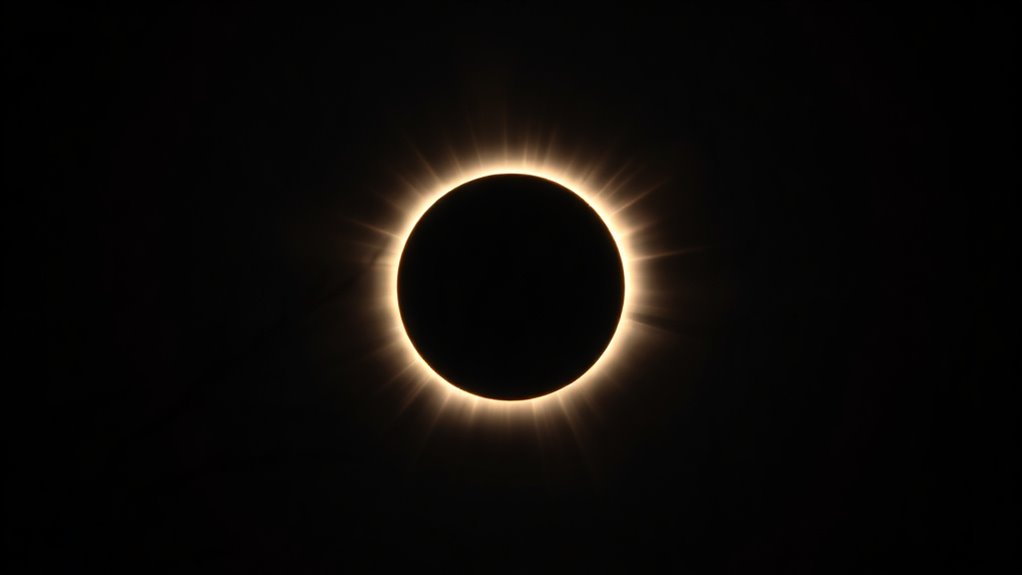
7 Best Camera Settings for Solar Eclipse Photos in 2027
For your 2027 solar eclipse photos, start with ISO 100–200 to keep noise low and shutter speeds between 1/1000 and 1/4000 sec for sharp sun details during partial phases. These settings help capture the sun’s texture without blur or grain. Using apertures from f/8 to f/11 will give you crisp focus, stopping down just enough for good depth of field.
Lock manual focus on the sun’s edge while the solar filter is on to nail that perfect sharpness. Don’t forget to bracket your exposures—from 1/4000 sec to several seconds—especially during totality when the light changes dramatically.
Always secure your solar filter properly to protect both your gear and your eyes. Play around with these settings a bit, and you’ll be amazed at the stunning eclipse shots you can get!
| Image | Name | Editor's Rating | Price |
|---|---|---|---|

|
|
||

|
|
||

|
|
||

|
|
||

|
|
Celestron EclipSmart Universal Solar Filter for Telescopes
- SOLAR SAFE TELESCOPE FILTER: Filter conforms to the ISO 12312-2:2015(E) international safety standard for filters...
- WORKS WITH YOUR EXISTING TELESCOPE, SPOTTING SCOPE, OR DSLR CAMERA: Compatible with objective lenses with an...
- SAFE, SECURE FIT: Adjust the side panels to fit the filter to your telescope or camera and attach the elastic band...
- SOLAR FILM MADE IN THE USA: Celestron Solar Safe film is produced in the USA by American Paper Optics, one of the...
- GREAT VIEWS AND IMAGES: This filter features an orange tint, producing a natural look perfect for visual observing...

Experience safe and clear views of solar eclipses with the Celestron EclipSmart Universal Solar Filter. This filter is designed to solve the challenge of protecting your eyes and equipment while capturing detailed solar images. Its adjustable design fits objective lenses between 75 mm and 100 mm, ensuring a secure and tailored fit for your telescope, spotting scope, or DSLR.
The unique orange-tinted solar film offers natural-looking views, allowing you to observe sunspots and eclipses without harsh glare or distortion. This film meets strict ISO safety standards and is recommended by NASA, giving you confidence in its protective performance during solar observation.
Maintenance is simple—just gently clean the filter with a soft cloth to preserve image clarity and extend its lifespan. Its durable construction and secure attachment system make it easy to use and reliable in the field. While primarily designed for visual use, it supports basic eclipse photography with quality results.
Best for: Amateur astronomers and photographers needing a safe, adjustable solar filter for telescopes or cameras with 75 mm to 100 mm objective lenses.
What We Like:
- Complies with ISO 12312-2:2015(E) safety standards using NASA-recommended solar film
- Adjustable fit with side panels and elastic band for secure attachment
- Natural orange tint enhances solar viewing and basic imaging
- Easy to maintain with simple cleaning and durable design
Specification:
| Feature | Details |
|---|---|
| Manufacturer | Celestron |
| Fits Objective Lens Size | 75 mm – 100 mm |
| Material | Orange-tinted solar film |
| Color | Orange |
| Weight | Lightweight (specific weight not provided) |
Medical King Solar Eclipse Camera Filter for iPhone
- iphone solar eclipse filter
- eclipse phone camera filter
- solar eclipse phone filter
Capture the beauty of solar eclipses safely with the Medical King Solar Eclipse Camera Filter designed for iPhone users. This filter helps protect your phone’s lens from intense sunlight during eclipse events, reducing the risk of damage. Its simple screw-on design makes attaching and removing it quick and hassle-free.
The Medical King filter features a 1-millimeter thread size that fits iPhones securely. It creates a unique cross-screen effect, adding a creative touch to your eclipse photos. While the filter lacks coating and water resistance, handling it with care will help maintain its condition over time.
This solar eclipse filter is ideal for photographers who want a straightforward and affordable way to safeguard their device while capturing rare solar moments. Its compact design and inclusion in a convenient two-pack mean you have a backup or can share with a fellow eclipse viewer.
Best for: iPhone users seeking an easy and practical solution for protected eclipse photography.
What We Like:
- Secure 1-millimeter thread fits iPhone lenses well
- Unique cross-screen effect enhances eclipse images
- Comes in a 2-pack for convenience and backup
- Simple installation for quick setup during events
Specification:
| Feature | Details |
|---|---|
| Manufacturer | Medical King |
| Thread Size | 1 millimeter |
| Pack Size | 2 filters |
| Compatibility | iPhone |
| Coating | None |
| Water Resistance | No |
Celestron EclipSmart Deluxe Solar Observing Kit
- PREMIUM SOLAR GLASSES: Go beyond paper eclipse glasses! These premium EclipSmart Solar Glasses feature sturdy...
- SOLAR SAFE FILTER TECHNOLOGY: Filter conforms to the ISO 12312-2:2015(E) international safety standard for filters...
- SOLAR SAFE PHOTO FILTER: Capture stunning still images and video of the eclipse with your smartphone, DSLR, or...
- 32-PAGE ECLIPSE BOOK: This handy reference is packed with resources to help you have the best eclipse...
- SOLAR FILM MADE IN THE USA: Celestron Solar Safe film is produced in the USA by American Paper Optics, one of the...
Experience solar observation like never before with the Celestron EclipSmart Deluxe Solar Observing Kit. This kit lets you safely capture the Sun’s beauty during eclipses and regular solar viewing without risking eye or camera damage. Its specially designed Solar Safe film blocks harmful rays while maintaining clear visibility.
The included Solar Glasses have an orange tint that reveals the Sun in natural white light, making solar events easier to see and photograph. A versatile photo filter fits most smartphones, DSLRs, and point-and-shoot cameras, allowing you to take sharp stills and videos of the Sun’s activity.
Maintenance is simple; the durable materials are easy to clean and store, ensuring your kit remains ready for every solar event. The 32-page eclipse guidebook provides detailed maps and schedules, helping you plan the perfect viewing experience.
While the orange tint may slightly change the Sun’s color, the kit’s safety and imaging quality make it an essential tool for solar enthusiasts. Note that the photo filter may require adapters for some cameras, and the kit is designed specifically for solar observation.
Best for: Photographers and solar enthusiasts seeking safe, high-quality solar viewing and imaging during eclipses and daily solar observation.
What We Like:
- Solar Safe film meets ISO 12312-2:2015(E) safety standards
- Compatible photo filter for a wide range of cameras
- Detailed eclipse guidebook included for planning
- Durable, easy-to-maintain components
Specification:
| Feature | Details |
|---|---|
| Manufacturer | Celestron |
| Dimensions | N/A |
| Weight | N/A |
| Material | Solar Safe film, durable plastic |
| Color Options | Orange tint (glasses) |
6″x6″ Solar Filter Sheet for Telescopes, Binoculars and Cameras
- Silver-black polymer is the most common filtering material for observing sunspots and granulation, through...
- Make a filter on your own for any telescope / binoculars / camera, and for a fraction of what factory made filters...
- The sun will appear in a natural orange color when viewed through your telescope using this filter.
- WARNING: ALWAYS MAKE SURE THE FILTER IS WELL ATTACHED TO THE TELESCOPE/BINOCULARS, USING STICKY TAPE, TO KEEP IT...
Experience clear and natural solar views with the 6″x6″ solar filter sheet designed for telescopes, binoculars, and cameras. This black/silver polymer filter allows you to capture the sun’s natural orange hue while protecting your optics. Its durable black polymer is stronger than Mylar, ensuring precise and safe solar imaging.
The filter’s embedded properties provide consistent and accurate light reduction, making it ideal for solar observation and photography. You can easily customize it for devices with about a 30mm thread size, creating a secure fit for your specific equipment.
Proper maintenance is important since the filter is not water resistant. Handle it carefully and always secure it firmly with sticky tape to avoid accidents during use. This attention ensures long-lasting performance and reliable safety when observing solar events.
This solar filter sheet is perfect for anyone needing a versatile, durable solution for solar viewing across various optical devices. Its compact 6″x6″ size supports easy customization but may require modification for larger instruments.
Best for: Photographers, astronomers, and solar enthusiasts seeking a reliable solar filter compatible with multiple optical devices.
What We Like:
- Strong black polymer material more durable than Mylar
- Produces a natural orange view of the sun
- Customizable fit for devices around 30mm thread size
- Embedded filtering for consistent, safe solar imaging
- Compact size suitable for diverse optics with modification
Specification:
| Feature | Details |
|---|---|
| Manufacturer | Thousand Oaks Optical |
| Dimensions | 6 x 6 inches (15.2 x 15.2 cm) |
| Material | Black/Silver Polymer |
| Color Options | Black and Silver |
| Compatibility | Telescopes, Binoculars, Cameras (approx. 30mm thread) |
Urth 82mm ND100000 (16.6 Stop) Solar Lens Filter (Plus)
- CUT 16.6 F-STOPS | Capture celestial event photography safely with the Urth ND100000 Filter Plus. Reduces light by...
- CONTROL LIGHT | Maintain balanced exposure in ultra-bright conditions for precise detail, rich colour, and motion...
- CORANANO ENHANCED GLASS | Crafted from German SCHOTT B270 glass with our 20-layer CoraNano coating for ultra-low...
- PRECISION ENGINEERING | Designed with an ultra-slim rim for optimal optics and zero vignetting — built to handle...
- LIFETIME QUALITY | Made from tough 6061 aluminium, the Urth ND100000 Filter Plus offers lasting resilience. Backed...
Experience clear and safe solar photography with the Urth 82mm ND100000 solar lens filter. It dramatically reduces sunlight by 16.6 stops, allowing you to capture sharp details of solar eclipses and direct sun shots without risking sensor damage or eye injury.
Crafted from German SCHOTT B270 glass with a 20-layer CoraNano coating, this filter maintains true color accuracy while minimizing reflections. Its ultra-slim design prevents vignetting, ensuring your images remain crisp and evenly exposed.
The sturdy 6061 aluminum frame offers reliable durability under harsh sunlight conditions. Despite its robust build, handle the filter carefully during mounting and storage to maintain its protective coatings and overall performance.
Ideal for solar and celestial event photography, this specialized filter enhances exposure control and color richness. While it’s not suited for general photography, it excels where precise light management is critical.
Best for: Photographers focused on safe, high-precision solar and celestial event imaging requiring superior light reduction and color fidelity.
What We Like:
- Extreme 16.6-stop light reduction for safe direct sun imaging
- High-quality German SCHOTT B270 glass with advanced anti-reflective coating
- Ultra-slim, durable aluminum frame prevents vignetting and withstands intense sunlight
- True-to-life color rendering with low reflectivity coatings
- Designed specifically for solar and celestial photography needs
Specification:
| Feature | Details |
|---|---|
| Manufacturer | Urth |
| Diameter | 82 mm |
| Light Reduction | ND100000 (16.6 stops) |
| Glass Material | German SCHOTT B270 |
| Coating | 20-layer CoraNano coating |
| Frame Material | 6061 Aluminum |
BP-12 12″x12″ Solar Filter Sheet for Optics

- Measures 12" x 12"
- Make your own solar filter for camera, telescope, finder, binoculars or pocket Eclipse Viewer
- (Size shown in images is 8.5 x 11 inches); Solar image is orange; Made in USA
- Black polymer is the most commonly used filter material to observe sunspots and granulation through telescopes and...
- Remember, do not see the sun through an unprotected sight block. Be sure to remove or cover your sight block if it...
The BP-12 12″x12″ Solar Filter Sheet offers a practical solution for creating custom solar filters. It allows you to safely observe and photograph the sun by blocking 99.9% of sunlight. This filter produces clear, sharp orange solar images, making it ideal for capturing detailed views during solar events.
Designed for use with cameras, telescopes, binoculars, and eclipse viewers, this black polymer sheet can be easily cut to fit various optics. Its flat surface helps avoid wrinkles, a common issue with thinner filters, ensuring consistent image quality. However, it lacks water resistance and protective coatings, so careful handling and storage are important.
The filter is simple yet effective, perfect for those who want to customize their solar viewing equipment. Although it requires some manual cutting and shaping, it provides a reliable, high optical density of 5 for safe solar observation. Keep in mind, this sheet is shipped without a storage case, so plan accordingly.
Best for: Amateur and professional astronomers and photographers who want to create tailored, safe solar filters for different optical devices.
What We Like:
- Blocks 99.9% of sunlight with optical density 5 for safety
- Produces sharp, orange solar images with minimal wrinkles
- Trusted Thousand Oaks Optical manufacturing quality
- Flexible sizing for custom fitting to various optics
Specification:
| Feature | Details |
|---|---|
| Manufacturer | Thousand Oaks Optical |
| Dimensions | 12 x 12 inches (30.5 x 30.5 cm) |
| Material | Black polymer |
| Optical Density | 5 |
| Color | Orange solar image |
Camera Solar Filters Threaded (95mm)

- Protective Packaging and Storage: This filter is packed and shipped in a foam-lined box than placed in a plastic...
- Natural Solar Viewing: There is a natural looking yellowish-orange image when viewing the sun and you can view it...
- Experienced Manufacturer: Built and developed with over 25 years of experience in creating safe solar filters with...
- Full Aperture Design: These full aperture film solar filters allow only a safe amount of light which allows your...
- Durable Construction: Made from .002 inch thick black plastic polymer, this extremely durable, high quality...
Capture the sun safely with the 95mm threaded solar filter, designed to deliver clear and sharp solar images. Its full-aperture design ensures direct viewing and photography without risking eye or camera damage. This filter makes solar eclipse imaging straightforward, offering peace of mind during your observation.
Crafted from durable .002-inch black plastic polymer, the filter features a neutral density coating that produces a natural yellowish-orange solar image. It fits securely on cameras and telescopes with a 95mm thread, reducing atmospheric interference for crisp, detailed shots. The waterproof construction also helps protect the filter during outdoor use.
Maintenance is simple thanks to its robust design and protective foam-lined storage box. The optical film is hand-selected and carefully inspected, ensuring consistent performance and longevity. This filter balances safety and image quality, making it a reliable tool for solar enthusiasts.
While it provides excellent clarity, the filter is limited to devices with a 95mm thread. It offers neutral density coating only, which means it does not include additional optical effects. This focused design prioritizes safety and image accuracy during solar observations.
Best for: photographers and astronomers seeking a safe, durable solar filter for cameras or telescopes with a 95mm thread to capture solar eclipses and other solar events.
What We Like:
- Full-aperture design for safe and clear solar viewing and photography
- Durable, waterproof polymer with hand-selected optical film
- Protective foam-lined storage box for easy maintenance
- Reduces atmospheric distortion for sharper images
Specification:
| Feature | Details |
|---|---|
| Manufacturer | Not specified |
| Dimensions | Fits 95mm threaded devices |
| Weight | Lightweight (not specified) |
| Material | .002-inch black plastic polymer |
| Color Options | Yellowish-orange solar image |
Factors to Consider When Choosing Camera Setting for Solar Eclipse
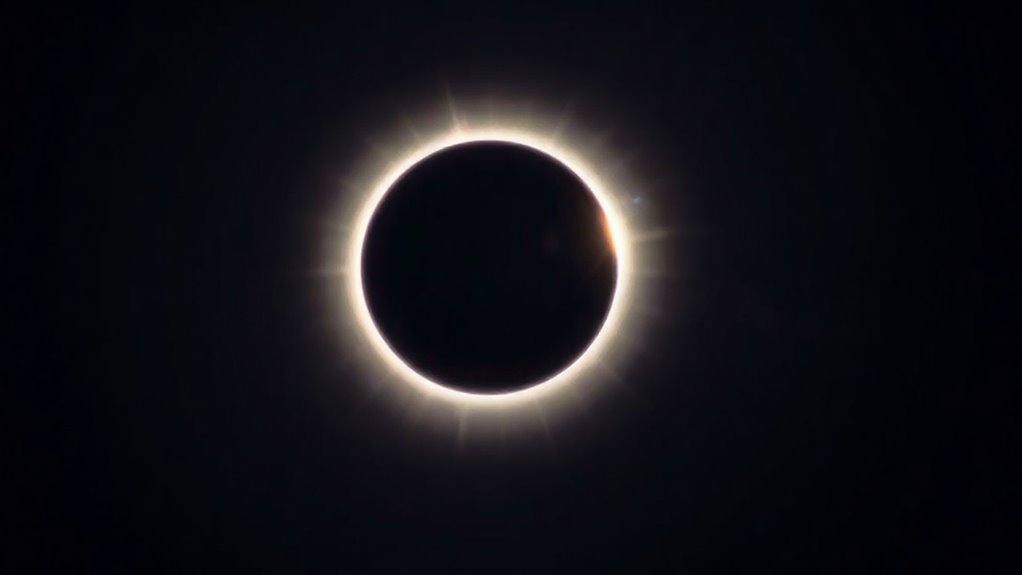
When setting up your camera for a solar eclipse, you’ll need to carefully adjust exposure settings and choose the right ISO sensitivity to capture the details. It’s super important to get these settings just right.
Pay close attention to aperture size and shutter speed to balance light and sharpness. These two work together, so tweaking one affects the other.
Don’t forget to set the white balance correctly to guarantee accurate colors in your photos. It might seem small, but it makes a big difference in how your eclipse shots turn out.
Exposure Settings Adjustment
Adjusting exposure settings during a solar eclipse requires careful attention to changing light conditions and safety precautions. Start with a safe baseline for full Sun: ISO 100, f/8–f/11, and shutter speeds between 1/1000 and 1/4000 seconds using a solar filter.
As the eclipse progresses, keep shutter speeds fast and ISO low during partial phases. When totality arrives, remove the solar filter and switch to longer exposures—from about 0.5 to 2 seconds—using wider apertures like f/4 to f/8 to capture the corona’s faint details.
It’s a good idea to bracket exposures across a wide range, from 1/4000 second to several seconds, adjusting in 1/3-stop steps. Keep an eye on your histogram and highlight warnings to avoid clipped highlights. This way, you can adjust exposures progressively to balance the bright inner corona and the faint outer structures effectively.
ISO Sensitivity Selection
Since light conditions change dramatically during a solar eclipse, selecting the right ISO sensitivity is essential to capturing clear, detailed images. Start with the lowest practical ISO, around 100 to 200, to maximize dynamic range and minimize noise during the bright photosphere or partial phases.
When totality arrives or you want to capture faint corona details, modestly increase ISO to 400 or 800—but only if you need faster shutter speeds to avoid blur or excessively long exposures. Remember, each ISO doubling halves your exposure time, so adjust in one-stop increments while balancing aperture and shutter speed.
Use the lowest ISO that lets you meet your shutter speed and aperture goals because higher ISO adds noise that can obscure subtle solar features. It’s a good idea to test various ISOs before the eclipse to find your best settings.
Aperture Size Impact
Choosing the right aperture size plays a significant role in capturing sharp and detailed solar eclipse photos. Smaller apertures (like f/8–f/16) increase depth of field and reduce blur, keeping the solar disk and prominences sharply focused.
Larger apertures (f/2.8–f/5.6) let in more light for shorter exposures but demand precise focusing and can reveal atmospheric turbulence. For most telephoto lenses, stopping down 1–3 stops from maximum aperture (around f/5.6–f/11) strikes a good balance between sharpness, contrast, and exposure control.
Shutter Speed Control
Capture the perfect solar eclipse by carefully controlling your shutter speed to match each phase of the event. During partial phases, start with shutter speeds between 1/1000s and 1/2000s using a full-aperture ND ~5 filter to freeze solar limb details and sunspots.
When totality arrives, increase exposure dramatically. Shutter speeds can range from 1/500s to several seconds to capture the faint corona and prominences.
Use bracketing, taking exposures from 1/4000s to 1/125s, to cover bright and faint features. Remember, each stop doubles or halves shutter time, so adjust in half- or full-stop increments for precise brightness control.
If you’re shooting handheld with long focal lengths, keep shutter speed faster than the reciprocal of focal length or use a tripod and remote trigger to avoid blur. It really helps keep your shots sharp!
White Balance Importance
Although your shutter speed and aperture settings play a crucial role, setting the white balance correctly is just as important to achieve accurate and consistent colors in your solar eclipse photos. Instead of Auto, set your white balance to a fixed Kelvin value—typically 5000–5500K—to maintain color consistency across multiple exposures.
If you’re using visible-light solar filters that tint the Sun orange, choose 4000–4500K to keep that warm hue natural. For neutral-density filters, stick to 5000–5500K for daylight-accurate colors.
When bracketing for HDR of the corona, lock the white balance to avoid color shifts that complicate blending later. And if you’re capturing the chromosphere or prominences in narrowband, a cooler white balance enhances emission contrast.
Always shoot RAW so you can adjust white balance precisely in post without any quality loss. It really gives you more control over your final image.
Focus Mode Choice
When photographing a solar eclipse, you’ll want to rely on manual focus rather than autofocus because autofocus systems often struggle to lock onto the Sun’s sharp edge. Start by pre-focusing on the Sun at your intended distance using live view at 100% magnification or focus peaking.
Then switch your lens to manual focus to avoid any accidental shifts. If your lens has focus scales, mark the exact focus position to quickly restore it if bumped.
For telescopes or long lenses, refocus between eclipse phases since temperature changes and filter removal during totality can affect focus. When using solar filters, focus with the filter on because it changes the effective focus.
Only remove or adjust focus after removing the filter for totality shots. This way, you’ll keep your shots sharp and ready for those incredible moments.
Use of Solar Filters
Since solar eclipses involve intense sunlight, you must always use a solar filter rated to ISO 12312-2 on your lens or telescope to protect both your eyes and camera sensor. This filter reduces solar intensity by about 100,000×, ensuring safe viewing and imaging.
Always mount the filter securely to the front of your lens or telescope—not the eyepiece—using tape or a locking mechanism to prevent it from falling off. Use a full-aperture solar filter that covers the entire front element to avoid concentrated heat damage.
Never improvise with unknown materials. Before each use, carefully inspect your filter for pinholes, wrinkles, or damage, and replace it if you find any defects.
Camera Stability Needs
Using the right solar filter protects your gear and eyes, but keeping your camera steady is just as important for sharp eclipse images. Use a sturdy tripod rated for your camera and lens weight to eliminate vibrations. Tiny shakes at long focal lengths (500–2000 mm) can blur fine solar details.
Enable mirror lock-up on DSLRs or switch to electronic shutter modes. Pair these with a 2–5 second self-timer or remote trigger to avoid shutter and handling shake.
Keep shutter speeds faster than 1/(focal length × crop factor), like 1/1000s for 1000 mm, during partial phases.
For extended sessions, consider autoguiding or a motorized equatorial mount to track the Sun and prevent drift. Lock your focus and tripod position during bracketed or time-lapse shots. This helps maintain consistent framing and sharpness.
Frequently Asked Questions
What Is the Best Time to Photograph a Solar Eclipse?
You should photograph the solar eclipse during totality when the moon fully covers the sun. This brief period offers dramatic lighting and unique effects.
Make sure to arrive early to set up your gear. And don’t miss the diamond ring moments just before and after totality—they’re pretty amazing!
How Do I Protect My Camera Sensor During the Eclipse?
You’ll want to use a solar filter since 99.999% of harmful light can damage your sensor during the eclipse. Don’t point your camera at the sun without it, and avoid long exposures to keep your gear safe.
It’s really important to protect your camera, so think of the solar filter as a must-have accessory. Trust me, skipping it can lead to some serious damage. Just take it slow and keep your shots short to be on the safe side.
Can I Use Manual Focus for Eclipse Photography?
Yes, you can and should use manual focus for eclipse photography. Autofocus often struggles in low light, so manually focusing on the sun’s edge guarantees sharp, clear images throughout the event.
It’s a good idea to practice beforehand to get it right. This way, you won’t miss any important moments during the eclipse.
What Shutter Speed Works Best for Capturing the Corona?
You’ll want a shutter speed between 1/125 and 1/500 seconds to capture the corona’s delicate details without overexposing. Adjust based on brightness and use a tripod to keep your shot steady during the eclipse.
It really depends on the light conditions, so don’t be afraid to tweak your settings as you go. A steady shot makes all the difference when you’re aiming for those crisp corona details.
Should I Use Burst Mode to Capture the Eclipse Phases?
Think of burst mode as a net catching fleeting butterflies—you’ll want it to seize every eclipse phase swiftly.
Yes, use burst mode; it lets you capture quick changes without missing a magical moment in the sky’s dance.
Conclusion
Capturing the 2027 solar eclipse is like painting with light—your camera settings are the brushstrokes that reveal the sun’s hidden beauty. By choosing the right solar filter and adjusting your camera carefully, you’ll protect your gear and capture stunning images.
Remember, each setting plays a part in balancing exposure and detail, so experiment and prepare in advance. With the right tools and settings, you’ll turn a fleeting moment into a timeless masterpiece.
When it comes to solar eclipse photography, having the best camera settings is key. From ISO to shutter speed, every choice impacts your final shot. So, get ready to explore these settings and make your 2027 eclipse photos truly unforgettable!