8 Best Camera Settings for Solar Eclipse Photos in 2027
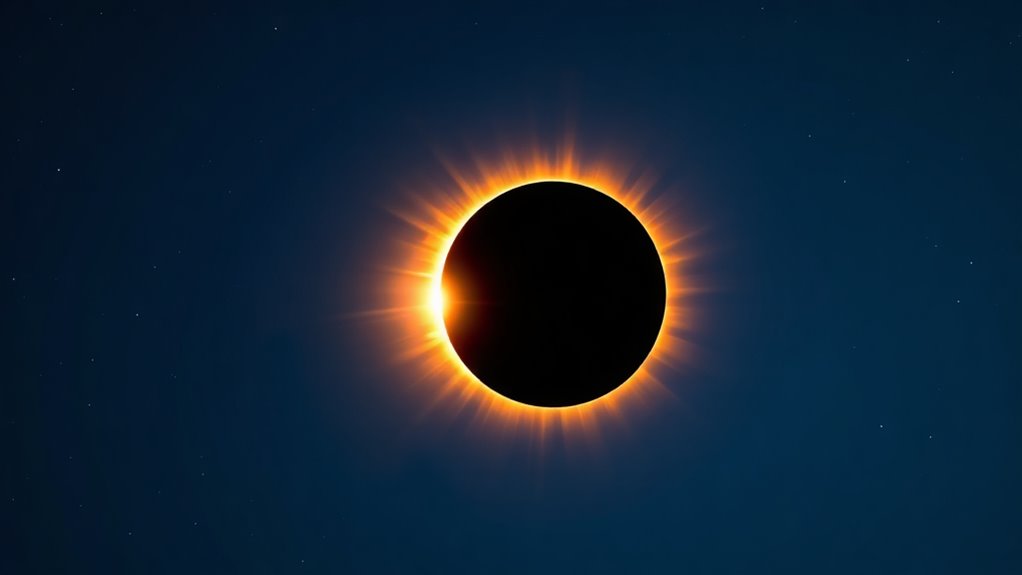
For your 2027 solar eclipse shots, setting the right camera settings is key to capturing stunning images of this rare event. A low ISO (100–200) helps reduce noise, while fast shutter speeds (1/1000–1/4000 s) combined with apertures around f/5.6–f/11 work best during the partial phases of the eclipse. These settings ensure sharp, clear shots of the sun’s changing light.
When totality begins, you’ll want to adjust your approach. Slow down your shutter speed to anywhere from 1/125 seconds to several seconds, and raise your ISO to between 400 and 1600. This helps capture the faint, beautiful details of the solar corona.
Remember to focus manually and use daylight white balance, locking focus before you start shooting. Also, don’t forget to stabilize your camera on a tripod—it makes a huge difference.
Want to optimize your exposure and protect your gear? Keep exploring key tips and gear choices to make the most of this incredible solar eclipse experience.
| Image | Name | Editor's Rating | Price |
|---|---|---|---|

|
|
||

|
|
||

|
|
||
|
|
||

|
|
Celestron EclipSmart Universal Solar Filter for Telescopes
- SOLAR SAFE TELESCOPE FILTER: Filter conforms to the ISO 12312-2:2015(E) international safety standard for filters...
- WORKS WITH YOUR EXISTING TELESCOPE, SPOTTING SCOPE, OR DSLR CAMERA: Compatible with objective lenses with an...
- SAFE, SECURE FIT: Adjust the side panels to fit the filter to your telescope or camera and attach the elastic band...
- SOLAR FILM MADE IN THE USA: Celestron Solar Safe film is produced in the USA by American Paper Optics, one of the...
- GREAT VIEWS AND IMAGES: This filter features an orange tint, producing a natural look perfect for visual observing...

The Celestron EclipSmart Universal Solar Filter provides a safe and clear way to observe solar phenomena. Designed to fit objective lenses from 75 mm to 100 mm, it offers a secure and adjustable fit with elastic bands and side panels. This ensures your telescope, spotting scope, or DSLR camera stays protected during solar viewing.
Its orange-tinted solar-safe film is independently tested and complies with the ISO 12312-2:2015(E) safety standard. This filter reduces harmful solar radiation while delivering natural-looking views, making it ideal for observing sunspots and solar eclipses without distortion.
Maintenance is straightforward. Handle the filter carefully to avoid scratches or damage to the film. Proper attachment is essential to maintain safety and optimal performance during use. Its durable design allows repeated use for many solar events.
The filter is especially useful for amateur astronomers and photographers who need a reliable, easy-to-use solar filter. Its ability to provide clear, safe solar images enhances your solar observation experience, though the orange tint may slightly affect the Sun’s natural color.
Best for: Amateur astronomers and photographers seeking a safe and adjustable solar filter for telescopes, spotting scopes, or DSLR cameras.
What We Like:
- Complies with ISO 12312-2:2015(E) solar safety standards
- Adjustable fit for 75 mm to 100 mm objective lenses
- Produces natural, orange-tinted solar images
- Durable design for repeated use
- Secure attachment with elastic band and side panels
Specification:
| Feature | Details |
|---|---|
| Manufacturer | American Paper Optics |
| Fits Objective Lens | 75 mm – 100 mm |
| Material | Solar-safe orange-tinted film |
| Color | Orange |
| Attachment | Elastic band and side panels |
Medical King Solar Eclipse Camera Filter for iPhone
- iphone solar eclipse filter
- eclipse phone camera filter
- solar eclipse phone filter
Capture the beauty of a solar eclipse safely with the Medical King Solar Eclipse Camera Filter for iPhone. This filter helps you take clear, sharp photos without risking eye damage or camera sensor harm. Its simple design ensures your iPhone lens is protected while enhancing your eclipse photography.
The filter attaches easily to your iPhone with a secure 1mm thread, providing a stable fit during use. Its unique cross-screen effect adds a creative touch to your images without relying on coatings that can degrade over time. This makes it a practical choice for casual eclipse observers.
Maintenance is straightforward—avoid exposure to water as the filter is not water resistant. Keep it clean and store it safely between uses to prolong its lifespan. This lightweight and compact design won’t add bulk to your phone, making it convenient for travel or spontaneous shooting.
Ideal for anyone wanting a risk-free way to document solar eclipses using their iPhone, this filter balances ease of use with effective solar protection. It’s especially useful for the 2027 eclipse, offering a simple solution for clear and safe solar photography.
Best for: iPhone users seeking an affordable, easy-to-use solar eclipse filter that delivers clear, safe photos with minimal setup.
What We Like:
- Two-pack ensures you have a spare or can share with others.
- Secure 1mm thread attachment fits iPhones firmly.
- Cross-screen effect enhances photo creativity without coatings.
- Lightweight and compact for easy portability.
Specification:
| Feature | Details |
|---|---|
| Manufacturer | Medical King |
| Thread Size | 1 mm |
| Pack Quantity | 2 filters |
| Compatibility | iPhone cameras |
| Water Resistance | No |
| Effect Type | Cross-screen filter |
6″x6″ Solar Filter Sheet for Telescopes, Binoculars and Cameras
- Silver-black polymer is the most common filtering material for observing sunspots and granulation, through...
- Make a filter on your own for any telescope / binoculars / camera, and for a fraction of what factory made filters...
- The sun will appear in a natural orange color when viewed through your telescope using this filter.
- WARNING: ALWAYS MAKE SURE THE FILTER IS WELL ATTACHED TO THE TELESCOPE/BINOCULARS, USING STICKY TAPE, TO KEEP IT...
Experience safe and clear solar observation with the 6″x6″ solar filter sheet. Designed for custom solar filters, this sheet lets you create protective covers for cameras, binoculars, and telescopes. It solves the challenge of safely viewing the sun by blocking harmful rays while showing sunspots and granulation in a natural orange hue.
Crafted from a durable black/silver polymer, this material outperforms Mylar in strength and longevity. It offers reliable protection for up to five years, making it a practical choice for amateur astronomers and photographers. The sheet’s size is ideal for devices with approximately 30mm thread sizes, allowing easy customization.
Proper handling is essential because the filter is not water-resistant. Secure it firmly with sticky tape to prevent it from falling during use, ensuring both safety and performance. With careful maintenance, this filter sheet provides consistent, high-quality solar viewing.
Best for: Amateur astronomers and photographers needing a customizable, durable solar filter sheet for safe sun observation.
What We Like:
- Strong black polymer material with five-year protection
- Natural orange solar view revealing sunspots and granulation
- Customizable 6″x6″ size fits various 30mm thread devices
- Lightweight and easy to cut for tailored solar filters
Specification:
| Manufacturer | Thousand Oaks Optical |
|---|---|
| Dimensions | 6 x 6 inches (15.2 x 15.2 cm) |
| Material | Black/Silver Polymer |
| Color | Black with Silver backing |
| Compatible Thread Size | Approximately 30 mm |
4″x4″ Solar Filter Sheet for Telescopes, Binoculars and Cameras
- Black polymer is the most common filtering material for observing sunspots and granulation, through telescopes and...
- These sheets are a quality product of Thousand Oaks Optical, Arizona, a manufacturer of safe solar filters for over...
- Make a filter on your own for any telescope / binoculars / camera, and for a fraction of what factory made filters...
- The sun will appear in a natural orange color when viewed through your telescope using this filter.
- WARNING: ALWAYS MAKE SURE THE FILTER IS WELL ATTACHED TO THE TELESCOPE/BINOCULARS, USING STICKY TAPE, TO KEEP IT...
Discover a reliable way to safely observe the sun with this 4″x4″ solar filter sheet. Designed for photographers and astronomy enthusiasts, it lets you create custom solar filters that deliver clear views of sunspots and granulation. The filter’s black polymer material is tougher than Mylar, making it both durable and safe for direct solar observation.
This sheet filters sunlight to show the sun in a natural orange hue, providing realistic and detailed solar images for telescopes, binoculars, and cameras. Its filtering properties are embedded in the substrate, ensuring consistent performance without degradation over time.
Maintenance requires care since the filter is not water-resistant and lacks a protective coating. To avoid damage, handle gently and always secure the filter firmly with sticky tape when attaching it to your device. This extra step prevents accidents during use and keeps your setup stable.
With a trusted design from Thousand Oaks Optical, this sheet offers a practical and safe solution for solar viewing. Its durability and clarity help improve your solar observation experience, making it an essential component for custom solar filters.
Best for: Photographers and astronomy enthusiasts creating durable, high-quality solar filters for telescopes, binoculars, or cameras.
What We Like:
- Stronger and more durable than Mylar with embedded filtering layer
- Provides natural orange color for accurate solar detail observation
- Trusted manufacturer with over 30 years of experience
- Requires secure attachment to prevent accidents
- Ideal for custom filter creation and safe solar viewing
Specification:
| Feature | Details |
|---|---|
| Manufacturer | Thousand Oaks Optical |
| Dimensions | 4 x 4 inches (10.16 x 10.16 cm) |
| Material | Black polymer sheet |
| Color Appearance | Natural orange sun color |
| Water Resistance | Not water-resistant |
Astromania Solar Eclipse Glasses 5 Pack Certified
- Maximum Protection for Cosmic Spectacles Safely observe rare solar eclipses; Special polymer lenses feature...
- Exceptional Optical Clarity with Natural Viewing Experience razor-sharp solar imaging with specially coated film...
- Certified Safety & Premium Durability with scratch-resistant lenses and full compliance with ISO...
- Ideal for Solar Events Perfectly timed for 2026 total solar eclipse across Spain/Iceland and subsequent...
- Versatile Astronomical Observation Tool for solar eclipses & daily sunspot monitoring bird/aircraft transit...
Experience the thrill of solar events with Astromania Solar Eclipse Glasses 5 Pack, crafted to protect your eyes while delivering clear solar views. These glasses eliminate the hazards of UV and infrared radiation, ensuring your sight remains safe during every eclipse or celestial phenomenon.
Designed with ISO 12312-2 and CE certification, they filter out 100% of harmful UV and IR rays and block 99.999% of intense visible light. This precise filtration allows you to observe solar eclipses, sunspots, or planetary transits without strain or risk.
The lightweight, scratch-resistant orange lenses are coated for durability and sharpness. Their design supports comfortable, extended use and works well with or without additional magnification gear, making them ideal for group viewing.
To maintain optimal performance, handle the glasses carefully and store them in a dry place. Avoid exposure to water as they are not water resistant, which helps preserve the lens coating and clarity over time.
Best for: Astronomy enthusiasts and eclipse viewers seeking reliable, high-quality solar eclipse glasses for safe group observation.
What We Like:
- Certified eye protection compliant with ISO and CE standards
- Scratch-resistant lenses offering clear solar images
- Convenient 5-pack ideal for groups or multiple uses
Specification:
| Feature | Details |
|---|---|
| Manufacturer | Astromania |
| Dimensions | Standard adult size |
| Weight | Lightweight |
| Material | Specially coated optical lenses |
| Color Options | Orange tint |
Urth 82mm ND100000 (16.6 Stop) Solar Lens Filter (Plus)

- CUT 16.6 F-STOPS | Capture celestial event photography safely with the Urth ND100000 Filter Plus. Reduces light by...
- CONTROL LIGHT | Maintain balanced exposure in ultra-bright conditions for precise detail, rich colour, and motion...
- CORANANO ENHANCED GLASS | Crafted from German SCHOTT B270 glass with our 20-layer CoraNano coating for ultra-low...
- PRECISION ENGINEERING | Designed with an ultra-slim rim for optimal optics and zero vignetting — built to handle...
- LIFETIME QUALITY | Made from tough 6061 aluminium, the Urth ND100000 Filter Plus offers lasting resilience. Backed...
The Urth 82mm ND100000 Solar Lens Filter offers precise control over intense sunlight, making it ideal for capturing solar eclipses with clear detail. It reduces light by 99.9999% (16.6 stops), enabling safe photography of direct sunlight without risking overexposure or sensor damage.
Crafted from premium German SCHOTT B270 glass and enhanced with a 20-layer CoraNano coating, this filter minimizes reflections and preserves accurate colors. Its ultra-slim rim design prevents vignetting, ensuring your images remain sharp and evenly exposed.
Maintenance is simple thanks to its water-, oil-, and fingerprint-resistant surface. This durable feature keeps the filter clean and your shots clear under various conditions. The robust 6061 aluminum frame adds stability and long-lasting performance.
Designed mainly for solar and celestial photography, this filter enhances exposure balance and color fidelity during rare and dramatic sky events. Its specialized construction supports photographers who demand high precision and reliable light control.
Best for: photographers and astrophotographers needing safe, high-precision solar and celestial event imaging with excellent color accuracy.
What We Like:
- Exceptional 99.9999% light reduction for safe sun photography
- High-quality SCHOTT B270 glass with anti-reflective CoraNano coating
- Durable 6061 aluminum frame with slim rim to prevent vignetting
- Water-, oil-, and fingerprint-resistant surface for easy maintenance
Specification:
| Feature | Details |
|---|---|
| Manufacturer | Urth |
| Filter Diameter | 82 mm |
| Light Reduction | ND100000 (16.6 stops) |
| Glass Material | German SCHOTT B270 |
| Coating | 20-layer CoraNano |
| Frame Material | 6061 Aluminum |
Celestron EclipSmart Deluxe Solar Viewing & Imaging Kit

- PREMIUM SOLAR GLASSES: Go beyond paper eclipse glasses! These premium EclipSmart Solar Glasses feature sturdy...
- SOLAR SAFE FILTER TECHNOLOGY: Filter conforms to the ISO 12312-2:2015(E) international safety standard for filters...
- SOLAR SAFE PHOTO FILTER: Capture stunning still images and video of the eclipse with your smartphone, DSLR, or...
- 32-PAGE ECLIPSE BOOK: This handy reference is packed with resources to help you have the best eclipse...
- SOLAR FILM MADE IN THE USA: Celestron Solar Safe film is produced in the USA by American Paper Optics, one of the...
Experience safe and clear solar observation with the Celestron EclipSmart Deluxe Solar Viewing & Imaging Kit. This kit is designed to protect your eyes and camera sensors while capturing stunning solar images. The key to its effectiveness lies in the Solar Safe film, which meets ISO standards and is made in the USA for reliable protection.
The kit includes premium solar glasses with a natural orange tint that offers comfortable viewing without straining your eyes. It also provides a versatile photo filter compatible with many smartphones and DSLRs, so you can safely photograph solar events like eclipses and sunspots. The filter’s design helps prevent sensor damage during extended use.
Maintenance is straightforward—simply handle the glasses and filters with care to avoid scratches, and store them in the provided case to maintain their protective quality. The included 32-page guidebook offers detailed eclipse maps and practical tips, enhancing your solar viewing experience.
This comprehensive setup improves your ability to observe and capture solar phenomena safely and effectively, making it ideal for enthusiasts who want reliable, user-friendly solar gear.
Best for: Anyone seeking a safe and high-quality solar viewing and imaging experience, including eclipse watchers, amateur astronomers, and photography enthusiasts.
What We Like:
- ISO-certified Solar Safe film protects eyes and camera sensors.
- Comfortable, natural orange-tinted solar glasses.
- Versatile photo filter fits many smartphones and DSLRs.
- Detailed 32-page eclipse guidebook included.
Specification:
| Feature | Details |
|---|---|
| Manufacturer | Celestron |
| Material | Solar Safe film, plastic |
| Color Options | Orange tint (glasses) |
| Included Accessories | Solar glasses, photo filter, guidebook |
| Weight | Lightweight for easy use |
Camera Solar Filters Threaded (95mm)

- Protective Packaging and Storage: This filter is packed and shipped in a foam-lined box than placed in a plastic...
- Natural Solar Viewing: There is a natural looking yellowish-orange image when viewing the sun and you can view it...
- Experienced Manufacturer: Built and developed with over 25 years of experience in creating safe solar filters with...
- Full Aperture Design: These full aperture film solar filters allow only a safe amount of light which allows your...
- Durable Construction: Made from .002 inch thick black plastic polymer, this extremely durable, high quality...
Capture the sun safely and clearly with the Camera Solar Filters Threaded (95mm) from Spectrum Telescope. This filter fits precisely on cameras or telescopes with 95 mm threads, ensuring a secure attachment for your solar observations. Its full-aperture optical film design reduces intense sunlight, delivering a sharp yellowish-orange view ideal for solar eclipse photography.
Designed for durability, the filter is made from waterproof black plastic polymer, which stands up to careful use over time. The clear aperture is hand-selected and rigorously inspected to maintain high optical quality. This means you can trust your images will be crisp and well-defined during solar events.
Maintenance is straightforward—handle the filter gently and store it in its foam-lined case to protect it from damage and dust. This thoughtful packaging adds convenience and safety when transporting or storing the filter.
While it offers precise fit and reliable solar protection, note that it only fits devices with 95 mm threaded mounts. It uses a neutral density filter without additional anti-glare coatings, which may affect glare reduction in some conditions.
Best for: Photographers and astronomers using cameras or telescopes with 95 mm threaded mounts seeking safe, effective solar filters for eclipse and solar imaging.
What We Like:
- Precise fit for 95 mm threaded cameras and telescopes
- Full-aperture optical film reduces sunlight for clear solar images
- Durable, waterproof black plastic polymer construction
- Hand-selected clear aperture ensures consistent image quality
- Foam-lined storage box protects filter during transport and storage
Specification:
| Feature | Details |
|---|---|
| Manufacturer | Spectrum Telescope |
| Thread Size | 95 mm |
| Material | Waterproof black plastic polymer |
| Filter Type | Full-aperture optical film |
| Packaging | Foam-lined storage box |
Factors to Consider When Choosing Camera Settings for Solar Eclipse
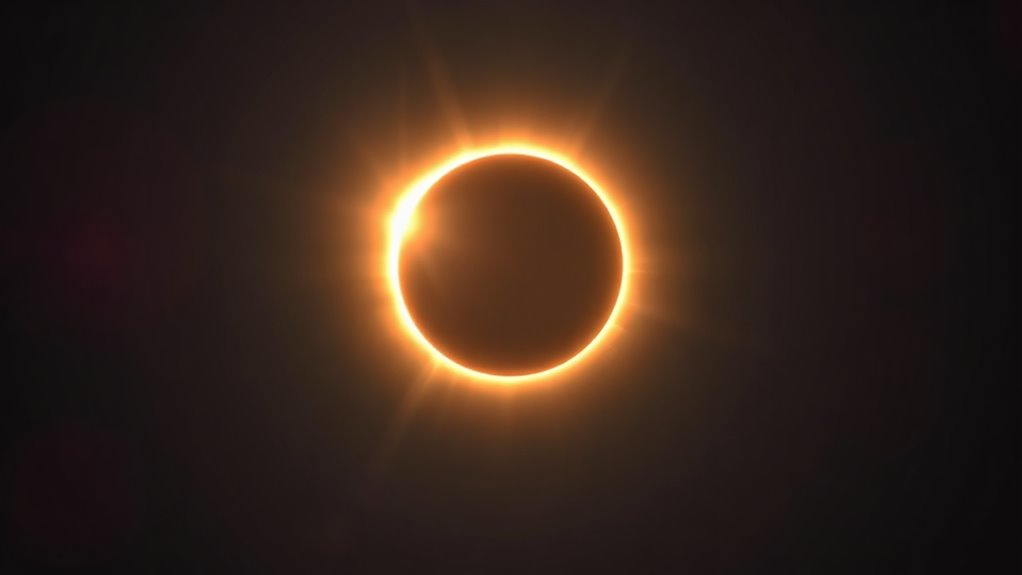
When setting up your camera for a solar eclipse, you’ll need to adjust exposure settings carefully to capture the event’s details. Choosing the right ISO level, aperture size, shutter speed, and white balance will help you get sharp, well-lit images.
Let’s explore how each of these factors impacts your photos. It’s not as complicated as it sounds, and a few tweaks can make a big difference in your shots.
Exposure Settings Adjustment
How do you choose the right exposure settings for capturing a solar eclipse? Start with a very low ISO (100 or less) to reduce noise since the Sun shines brightly, even during partial phases.
For full-disk solar images with a solar filter, use shutter speeds between 1/1000 and 1/4000 second at apertures of f/5.6 to f/11. Adjust faster if your image looks overexposed.
When capturing Baily’s beads or the diamond-ring effect at second and third contact, increase exposure by 2–4 stops to reveal those faint details.
During totality without a filter, expose for the corona using shutter speeds from 1/125 second to several seconds. Don’t forget to bracket your shots to capture both bright and faint corona features.
Use your camera’s histogram and live view to avoid clipping highlights and make sure your exposure is just right throughout the eclipse.
ISO Level Selection
Choosing the right ISO level plays a pivotal role in capturing clear, detailed images of a solar eclipse. For most phases, keep your ISO at the camera’s native base sensitivity—usually ISO 100 or 200—to minimize noise and preserve dynamic range. This is especially important when using neutral-density solar filters.
During totality, when light drops sharply, you might need to raise ISO between 400 and 1600. This helps capture the corona’s finer details without overly long exposures. Always use the lowest ISO that lets you balance shutter speed and aperture for proper exposure.
If you bracket exposures for the corona or prominences, keep ISO consistent across shots to avoid uneven noise. For high-resolution surface detail shots through filters, prioritize low ISO. Then, adjust other settings to prevent blur and sensor overload.
Aperture Size Impact
Although aperture size directly controls exposure, it also markedly influences image sharpness and detail during a solar eclipse. Using a smaller aperture, like f/8 to f/16, increases depth of field and reduces lens aberrations, helping you capture fine sunspot details clearly.
However, going beyond f/16 can introduce diffraction, softening those details. On the other hand, a larger aperture (f/2.8 to f/5.6) lets in more light, which allows faster shutter speeds but can cause vignetting and optical imperfections.
Plus, it requires stronger solar filters to protect your sensor. Stopping down your lens 1–2 stops from its widest aperture usually gives the best balance between sharpness and diffraction. If you’re using telescopes or long lenses, pick an aperture that balances resolution with safe filtering and prevents sensor overheating.
Shutter Speed Control
When capturing a solar eclipse, you’ll want to adjust shutter speed carefully to balance exposure and detail. During partial phases, use fast shutter speeds between 1/1000 and 1/4000 seconds with solar filters to avoid overexposure and capture sunspots and the solar limb.
For totality, when the photosphere is blocked, slow your shutter speed from 1/125 second to several seconds to reveal the faint corona. Bracket exposures across this range to capture inner and outer corona details.
Combine multiple exposures—from 1/4000 to 4 seconds—to create a high-dynamic-range composite showcasing both bright and faint features. Just keep in mind, longer exposures raise the risk of motion blur, so use a sturdy tripod and accurate mount.
It’s best to prioritize shutter speed here. Lower ISO and smaller apertures mean longer exposures, but they’ll give you sharper, less noisy corona images. So, take your time and experiment to find the right balance.
White Balance Choice
Since color accuracy plays a crucial role in solar eclipse photography, setting the right white balance is essential to capture natural and consistent hues. Start with a daylight white balance around 5200–5600 K to render the Sun and lunar limb with a natural orange-white look in visible-light shots.
If you shoot in RAW, feel free to set any convenient white balance in-camera—daylight works well—and fine-tune it later during post-processing to avoid permanent color casts. For scientific imaging, note the exact Kelvin value used (±50 K) to keep measurements reproducible.
During totality, try lowering the color temperature to 3000–4000 K to highlight red and orange hues of prominences, but keep it consistent throughout the sequence. Also, avoid auto white balance to prevent inconsistent color shifts across phases.
Focus Mode Tips
Because autofocus can struggle with the Sun’s low-contrast edges and bright glare, you’ll want to use manual focus for solar eclipse photography. Before the eclipse peak, pre-focus on the Sun or a distant object at infinity, then lock your focus ring with tape or a marker to avoid accidental shifts.
When using live view or an electronic viewfinder, magnify the image 10x or more to fine-tune focus on the solar limb or sunspots, then return to normal framing. If you’re shooting through a telescope or long lens, start slightly out of focus and slowly adjust until the solar disk’s edge is sharp.
Consider bracketing focus by capturing a short focus stack around your estimated point to make certain at least one image is perfectly sharp. This way, you’ll have a better chance of getting that crisp shot you want.
Use of Solar Filters
A critical step in capturing safe and stunning solar eclipse photos is using a high-quality solar filter rated to the ISO 12312-2 standard. Always place this filter over the front of your camera lens or telescope to protect your sensor and optics from intense solar radiation.
Use a full-aperture filter that blocks about 99.99% of visible light and all UV/IR radiation—never rely on eyepiece or rear-mounted filters alone. Make sure the filter fully covers the objective with no gaps and is securely fastened with tape or safety straps to prevent slipping.
Only remove the filter during totality, then replace it immediately before the photosphere reappears. And don’t forget to inspect your filter for any pinholes or damage before each use to ensure safe, effective protection.
Camera Stability Techniques
Make certain your camera remains rock-steady during the eclipse to capture sharp, blur-free images. Use a sturdy tripod rated for your camera and lens, tightening all leg locks and head screws to prevent movement.
Engage mirror lock-up on DSLRs and switch to electronic first-curtain or fully electronic shutter modes to minimize internal vibrations. Trigger your shutter remotely with a wired or wireless release, or use the two-second timer to avoid camera shake.
If wind is an issue, add weight to the tripod and position it so the camera faces the least wind resistance. For long focal lengths, rely on a solid ball head or geared mount.
Don’t forget to turn off image stabilization when your camera’s on a tripod. Also, test exposure bursts to make sure you get sharp shots under eclipse lighting conditions.
Frequently Asked Questions
What Time Should I Start Photographing the Eclipse?
You should start photographing the eclipse about 30 minutes before the partial phase begins to capture the gradual changes.
This way, you won’t miss the buildup and can adjust your settings as the eclipse progresses.
How Do I Protect My Eyes During the Eclipse?
Don’t stare like you’re hypnotized—use certified eclipse glasses or solar viewers! Regular sunglasses won’t cut it.
Protect your eyes like they’re priceless treasure because, well, they are. Safety first, or you’ll regret it forever.
Can I Use My Smartphone to Capture the Eclipse?
Yes, you can use your smartphone to capture the eclipse, but you’ll need a solar filter to protect your lens. This is really important to avoid damaging your phone’s camera.
Try using a tripod for stability. It helps keep your shots steady and clear.
Also, if your phone lets you, adjust the exposure manually. This can make a big difference in getting better results.
What Are the Best Locations for Viewing the 2027 Eclipse?
You should head to northern Mexico, southwestern Texas, or parts of the southeastern United States for the best 2027 eclipse views. These locations lie directly in the path of totality, offering an unforgettable experience.
Trust me, being right in that path makes all the difference. It’s going to be a sight you won’t want to miss!
How Do I Focus My Camera for Sharp Eclipse Images?
You’ll want to switch your lens to manual focus and zoom in on a distant bright star or the moon before the eclipse. Autofocus often struggles, so trust your eyes and fine-tune until the edges look crisp.
It might take a bit of patience, but once you get it right, your images will be much sharper. Just take your time and adjust slowly—you’ll see the difference!
Conclusion
When you’re gearing up for the 2027 solar eclipse, don’t just rely on your trusty Kodak Brownie—modern filters and settings make all the difference. Using the right solar filter and adjusting your camera settings carefully helps you capture that celestial moment perfectly.
Remember, safety comes first, so protect your gear and your eyes. You don’t want to miss out on the experience because of a preventable mistake.
With these tips, you’ll be ready to shoot stunning eclipse photos that’ll wow everyone like a true space-age pro. Using the best camera settings for solar eclipse photos in 2027 ensures your shots come out clear and breathtaking. So, get your gear ready, set those perfect settings, and be prepared to capture the magic of the eclipse like never before!