1 best city to see solar eclipse 2017
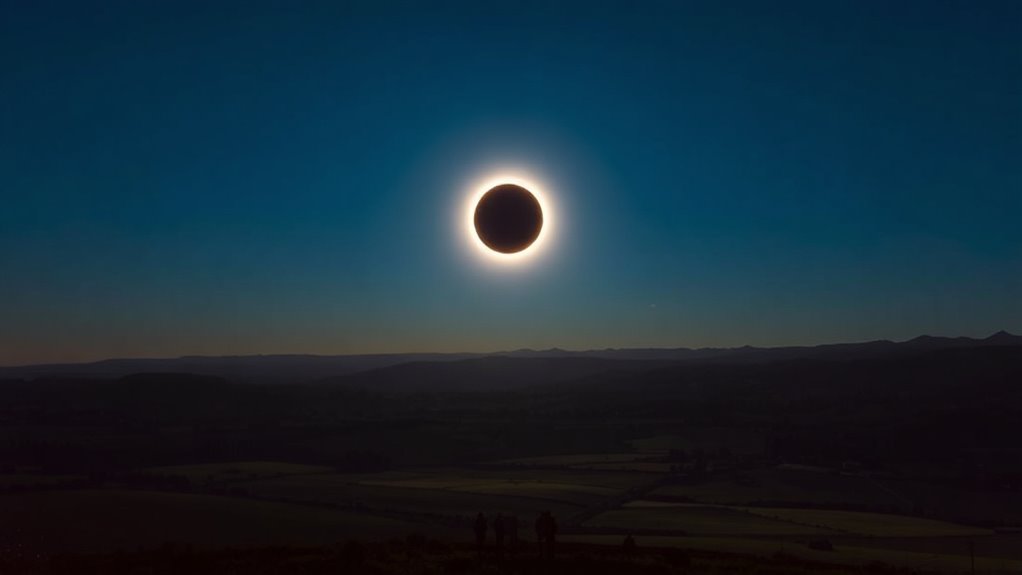
You’ll want to head to Casper, Wyoming, to catch the 2017 solar eclipse in its full glory. Casper sits right in the path of totality and boasts a history of clear, stable skies, ideal for sharp solar views. This makes it the best city to see the solar eclipse 2017.
The city offers excellent transportation options and plenty of accommodations if you plan ahead. Plus, organized local events ensure safe, guided viewing.
It’s a perfect spot to experience one of nature’s most spectacular shows.
Keep exploring to discover more key factors that’ll help you make the most of this rare celestial event. Trust me, you won’t want to miss out on this unforgettable experience!
Celestron EclipSmart Deluxe Solar Observing Kit
Experience the 2017 solar eclipse safely and in detail with the Celestron EclipSmart Deluxe Solar Observing Kit. This kit solves the problem of harmful solar rays by using a specially tested Solar Safe film, meeting the strict ISO 12312-2:2015(E) standard. It allows you to view the Sun directly without strain or risk.
The kit features comfortable, natural orange-tinted glasses that reveal the Sun’s white light spectrum clearly. This design reduces eye fatigue, making long viewing sessions enjoyable and safe. For those looking to capture the event, a photo filter is included for smartphones and cameras, ensuring you can photograph the eclipse without damaging your device or eyes.
Maintenance is straightforward, but care is essential. Handle the glasses and filters gently to protect the delicate Solar Safe film. Clean them only as instructed to preserve their safety and clarity for future use.
A detailed 32-page eclipse guidebook accompanies the kit, helping you plan your viewing with maps and timetables. This makes it easier to know when and where to watch the eclipse for the best experience.
Best for: Anyone wanting a safe, comfortable, and reliable way to observe and photograph solar eclipses.
What We Like:
- Certified ISO 12312-2:2015(E) Solar Safe film for direct Sun viewing
- Comfortable orange-tinted glasses that reduce eye strain
- Includes photo filter for safe eclipse photography
- Detailed 32-page eclipse guide with maps and schedules
Specification:
| Feature | Details |
|---|---|
| Manufacturer | Celestron |
| Dimensions | Not specified |
| Weight | Not specified |
| Material | Solar Safe film, plastic |
| Color Options | Orange-tinted glasses |
Factors to Consider When Choosing a City to See Solar Eclipse 2017
When choosing a city to see the 2017 solar eclipse, you’ll want to review weather conditions to increase your chances of a clear view. Think about the eclipse path location and how easy it is to get there.
Plus, check out local events and accommodation options. These factors will help you plan a smooth and unforgettable eclipse experience.
Weather Conditions
Because clear skies are essential for viewing the 2017 solar eclipse, you’ll want to carefully assess weather conditions before choosing your city. Check historical and forecast cloud cover around the eclipse time, since even thin clouds can obscure solar details.
Look for locations with good atmospheric stability—low haze and minimal turbulence—to keep the Sun’s edges sharp during peak moments. It really makes a difference to have crisp, clear views.
Monitor wind and humidity trends, avoiding humid coastal areas where haze often blurs the view. Favor sites with low chances of rain or thunderstorms throughout the eclipse window, not just at specific times.
Use updated, hour-by-hour forecasts from multiple sources to track changing conditions. The eclipse timing is precise and weather can shift rapidly, so keeping an eye on the latest info will help you catch the best view possible.
Eclipse Path Location
To choose the best city for viewing the 2017 solar eclipse, you’ll want to confirm that it lies within the eclipse path—the narrow track where totality occurs. Only cities inside this path experience full or significant partial eclipse, so check official eclipse maps carefully to pinpoint your location’s latitude and longitude.
Small variations in position can drastically change totality duration or eclipse coverage. So, it’s a good idea to emphasize cities along the path’s widest section to enjoy a longer totality window.
Also, consider the eclipse’s orientation relative to the Sun’s rise or set to ensure the event happens at a good viewing altitude during daylight. Finally, cross-check your city’s coordinates with exact eclipse timetables to align the phases to your observing schedule perfectly.
Accessibility And Transportation
Finding your way to the best eclipse viewing spot requires cities with strong transportation options, including major highways, airports, and reliable public transit. You’ll want to pick a city where local transit and traffic plans handle large crowds efficiently, with clear directions for parking, shuttle routes, and traffic flow.
Make sure the viewing sites offer step-free paths, ADA-compliant parking, and accessible restrooms if you have mobility needs. Check that emergency services, evacuation routes, and first-aid stations are nearby and well marked for safety.
Finally, plan your trip back to lodging carefully—expect road closures and transit delays as crowds disperse quickly after the eclipse. Prioritizing these factors ensures a smooth, stress-free experience during this rare celestial event.
Local Viewing Events
Where can you experience the safest and most engaging solar eclipse viewing? Look for official local events that offer structured guidance, including scheduled “when to look” briefings and supervised viewing windows.
These events often provide detailed, city-specific schedules and illustrated timelines. They help you pinpoint exact contact times and peak moments.
Opt for gatherings that cater to both casual viewers and photographers by offering instructions on solar-safe filters and proper eye protection. Make sure organizers follow recognized safety standards for eclipse glasses or solar filters, minimizing risks from counterfeit gear.
Also, check accessibility details like start times, viewing areas, and weather contingency plans. That way, you can arrive early and settle in before the eclipse begins.
This way, you’ll enjoy a safe, well-informed, and memorable experience.
Accommodation Availability
Because eclipse-viewing cities attract large crowds, you’ll want to make sure your accommodation is booked well in advance to avoid sold-out hotels and inflated prices. Start by checking room availability early, as popular spots fill up quickly.
Don’t limit yourself to just one town—compare options in nearby areas within commuting distance to broaden your choices. It’s worth looking around to find the best deal.
Watch for “eclipse weekend” surcharges or minimum-night requirements, which can raise costs even if rooms remain open. Choose places with flexible cancellation policies so you can adjust plans based on weather updates.
Finally, confirm your lodging offers reliable access to key viewing sites or transport routes. That way, you won’t waste valuable eclipse time stuck in traffic or far from prime observation points.
Frequently Asked Questions
What Time Did the 2017 Solar Eclipse Occur?
The 2017 solar eclipse happened around midday. It started roughly at 10:15 AM and reached totality near 1:30 PM, depending on where you were.
You’d want to check local times for the exact moments during the event. That way, you won’t miss the best parts!
How Long Did the Total Eclipse Last?
You’ll only have about two and a half minutes of total darkness during the eclipse.
In that brief, breathtaking moment, the sun’s corona dazzles you, making the sky eerily quiet and the world seem completely still.
Are Solar Eclipses Dangerous to View Without Protection?
Yes, solar eclipses are dangerous to view without protection. You shouldn’t look directly at the sun, or you risk serious eye damage.
Always use proper eclipse glasses or indirect viewing methods to stay safe. It’s better to be cautious than sorry when it comes to your eyes!
Can Solar Eclipses Be Seen From Space?
Yes, you can see solar eclipses from space. Astronauts aboard the International Space Station witness the moon’s shadow moving across Earth, offering a unique, unobstructed view of the eclipse.
It’s a perspective you just can’t get from the ground. Seeing it from space makes the whole experience even more incredible!
How Often Do Total Solar Eclipses Happen in the U.S.?
Total solar eclipses visit your skies roughly every 18 months somewhere on Earth, but in the U.S., you’ll see one about every 375 years on average—like a rare cosmic whisper you won’t want to miss.
It’s kind of amazing when you think about it. These events are super rare here, making them all the more special when they do happen.
Conclusion
When you choose the best city to see the 2017 solar eclipse, you’re not just picking a spot—you’re choosing weather, accessibility, and local events all aligning perfectly. You want clear skies, a prime eclipse path, and easy travel, right?
Luckily, these factors often coincide, making your experience smoother and more memorable. So, pack your Celestron EclipSmart kit, book that hotel, and get ready—because the perfect city is waiting for you.
Finding the best city to see the 2017 solar eclipse means thinking about more than just the view. It’s about catching clear skies, being right on the eclipse path, and having a city that’s easy to get to. Plus, local events can add a fun twist to your trip. When all these come together, your eclipse experience becomes unforgettable. So whether you’re a seasoned eclipse chaser or a first-timer, picking the best city makes all the difference. Get ready for an amazing adventure and a front-row seat to this incredible celestial show!