3 Best Commercial Solar Installation Services for 2027
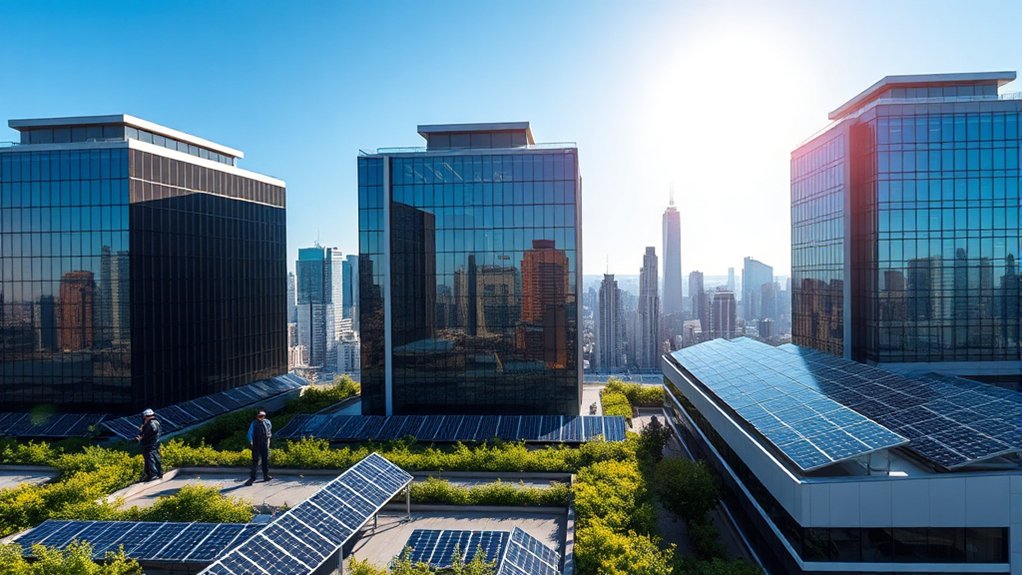
When you’re considering the best commercial solar installation services for 2027, it’s important to focus on trusted industry leaders like SunPower, Tesla, and NextEra Energy.
These companies offer high-quality components that stand the test of time. Plus, they use advanced water-drain brackets and protective combiner boxes designed with top safety standards in mind.
You’ll also enjoy extensive warranties and scalable system options that grow with your business needs. Their expert site assessments help maximize both efficiency and savings, so you get the most out of your investment.
Look for services that handle custom mounting and weatherproofing to ensure your solar setup stays reliable no matter the climate.
Keep reading to discover which provider best matches your project goals and future energy plans. It’s all about finding the perfect fit for your commercial solar needs!
| Image | Name | Editor's Rating | Price |
|---|---|---|---|

|
|
||

|
|
||

|
|
Solar Panel Water Drain Clip Brackets (4pcs)
- Automatic drainage:These clips are built to regulate water flow efficiently and stop standing water from pooling on...
- High-Quality Material: Crafted with high grade aluminum alloy, this integrated stamped drain clip resists rain, UV...
- Design:Curved diversion groove structure forms targeted flow channels. Pre drilled mounting holes match standard...
- Wide Application Range:this solar water drain clip fits household rooftop solar systems and commercial outdoor...
- Easy to install:Tool free installation allows quick and effortless setup. Each solar water drain clip easily...
Prevent water buildup and sediment accumulation on your solar panels with the 4pcs Solar Panel Water Drain Clip Brackets. These brackets are designed to keep your photovoltaic system clean and efficient by channeling rainwater and silt away from the panel surfaces. This helps avoid water pooling and sediment deposits that can reduce energy output.
Crafted from high-grade aluminum alloy, the brackets resist rain, UV rays, and mud abrasion. Their durable design ensures long-lasting outdoor performance without frequent maintenance. The curved diversion groove effectively directs water flow, protecting your panels from damage caused by stagnant moisture and debris.
Installation is simple and tool-free. The brackets feature pre-drilled holes and raised ridges that secure them firmly onto standard photovoltaic frames. This practical design allows for quick setup and reliable attachment, making maintenance hassle-free.
By preventing water and dirt buildup, these clip brackets help extend the lifespan and improve the performance of your solar array. They offer a straightforward, low-maintenance solution to common environmental challenges faced by solar installations.
Best for: Solar system owners seeking an easy-to-install, durable method to prevent water and sediment buildup on photovoltaic panels.
What We Like:
- High-grade aluminum alloy resists weather and UV damage
- Tool-free installation with secure mounting features
- Curved groove design efficiently diverts water and silt
- Enhances panel efficiency and durability over time
Specification:
| Feature | Details |
|---|---|
| Manufacturer | Not specified |
| Dimensions | Standard size for PV frames |
| Weight | Not specified |
| Material | High-grade aluminum alloy |
| Color Options | Not specified |
600V Solar PV Combiner Box 1 String with Fuse Breaker Lightning Protection
- Optimize Solar Power System Efficiency – This photovoltaic combiner box organizes panel connections and reduces...
- Built with two 32A DC fuses, a high-voltage lightning arrester, and a 63A circuit breaker, it provides...
- Durable IP65 Waterproof ABS Enclosure – Built with a rugged ABS housing, rated IP65 for dustproof, rainproof, and...
- Pre-Wired and Easy Installation – The internal wiring and ground connection are pre-installed, saving over 1 hour...
- Wide Compatibility for Solar Systems – Supports up to 600V/32A single-string input (max 9000W), suitable for...

The 600V Solar PV Combiner Box 1 String with Fuse Breaker Lightning Protection is designed to simplify and secure your solar power setup. By consolidating panel connections into one unit, it reduces wiring complexity and helps maintain a tidy, efficient system. This makes managing your solar array easier and lowers the risk of connection issues.
Built to handle up to 600V and 32A for single-string inputs, this combiner box is ideal for both on-grid and off-grid solar systems. Its robust safety features, including dual 32A DC fuses, a 63A breaker, and a high-voltage lightning arrester, provide reliable protection against electrical faults and lightning strikes. This ensures your system stays safe under various conditions.
The IP65-rated ABS enclosure offers strong resistance to weather and environmental factors, making the box suitable for outdoor installation. Pre-installed wiring and connectors simplify setup and reduce maintenance time, allowing for quick inspections or replacements when needed. Its transparent cover lets you monitor components easily, though it may require extra care to prevent damage.
This combiner box helps maintain system performance by protecting key components and streamlining maintenance tasks. It is a practical choice for users who want dependable protection and efficient solar operation without complicated installation.
Best for: Businesses and homeowners needing a durable, easy-to-install solution for protecting and optimizing single-string solar PV systems outdoors.
What We Like:
- Pre-wired design speeds up and simplifies installation
- Multiple safety features protect against electrical faults and lightning
- Weatherproof IP65 ABS enclosure ensures long-lasting outdoor use
- Transparent cover allows quick visual inspection of components
Specification:
| Feature | Details |
|---|---|
| Manufacturer | PhysiTeile |
| Model | UTKFHT-PhysiTeile (PHSESCB0728) |
| Input Voltage | Up to 600V |
| Maximum Current | 32A single-string input |
| Breaker Rating | 63A |
| Enclosure Rating | IP65 ABS |
| Dimensions | Not specified |
| Weight | Not specified |
Solar Panel Mounting Brackets, Rails and Clamps Included In A Row Assembly
- Reliable Solar Panel Mounting Rail: Built with high-strength aluminum alloy, the mounting rails now feature a...
- Flexible Fit for Different Panel Thicknesses: Designed to accommodate solar panels with frame thicknesses from...
- Simple Installation for DIY Projects: Pre-drilled holes and a well-organized structure help simplify the mounting...
- Versatile for Multiple Setup Scenarios: Suitable for a wide range of applications, including flat or pitched roofs...
- All-in-One Kit for 4 Solar Panels: This complete set includes everything needed for a 4-panel layout: 10 pieces of...
Solar panel installation can be challenging without the right mounting system. This kit offers a complete solution with mounting brackets, rails, and clamps designed for secure and lasting setups. Its robust design ensures your panels stay firmly in place, even in harsh weather conditions.
Crafted from high-strength aluminum alloy, the rails provide excellent durability while remaining lightweight. Adjustable clamps fit panel frames between 1.18 and 1.38 inches, allowing flexibility for common solar panel sizes. This adaptability helps achieve a snug fit and reduces installation errors.
Maintenance is simple thanks to corrosion-resistant materials like stainless screws and rubber pads that protect your panels from wear. The pre-drilled holes and organized components speed up assembly, saving you time and effort. Whether mounting on pitched roofs, flat surfaces, or vehicles, this kit fits a variety of solar setups.
While designed for four-panel arrays, the system may require multiple kits for larger projects. It’s also tailored for standard panel frame sizes, so panels outside this range might not be compatible. Unique roof shapes may need additional hardware not included here.
Best for: Engineers, facility managers, and DIY installers needing a durable, all-in-one solar panel mounting system suitable for diverse environments.
What We Like:
- Durable aluminum alloy and reinforced rails for weather resistance
- Adjustable clamps fit a range of panel frame sizes
- Pre-drilled and organized components simplify installation
Specification:
| Feature | Details |
|---|---|
| Manufacturer | — |
| Dimensions | Supports panels with 1.18–1.38 inch frames |
| Weight | — |
| Material | High-strength aluminum alloy, stainless steel screws, rubber pads |
| Color Options | — |
Factors to Consider When Choosing a Commercial Solar Installation
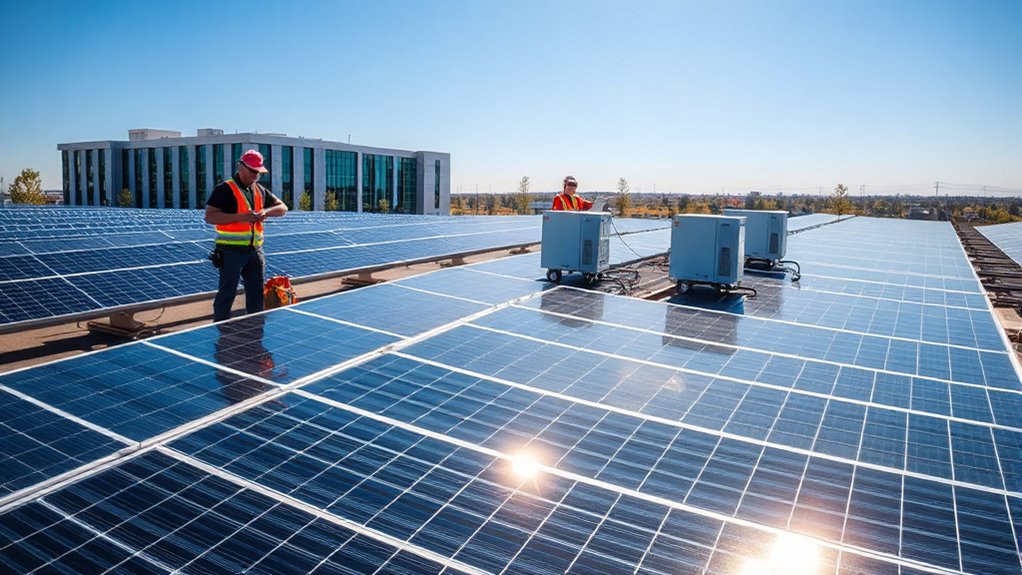
When you’re selecting a commercial solar installation, you need to look at the essentials like site assessment, system capacity, and component quality. Don’t overlook the importance of installation methods and weatherproofing, since these choices affect long-term performance.
Site Assessment Essentials
Although commercial solar installations promise significant energy savings, their success depends on a careful site assessment before any panels go up. You’ll want to evaluate the orientation and tilt of your roof or ground area to guarantee panels capture maximum sunlight.
Check for potential shading from trees, buildings, or other obstructions, since even minor shade can sharply reduce output. Don’t overlook the structural integrity of your installation site; it must reliably support the weight of solar panels and mounting equipment, especially if your area experiences harsh weather.
Also, assess your local climate—consider sunlight hours, temperature swings, and precipitation—to select the most suitable solar technology. And don’t forget to review local regulations and permitting requirements early, as these can influence your installation’s design and timeline.
System Capacity Planning
Once you’ve completed a thorough site assessment, the next step is determining how much solar power your facility actually needs. Start by analyzing your facility’s energy consumption patterns to size a system that effectively offsets your utility costs.
Don’t overlook the importance of peak sunlight hours at your location, since this directly affects your system’s output and efficiency. Also, evaluate the available roof space or land to confirm there’s enough area for the solar panels required to meet your target capacity.
You’ll also want to take into account local regulations and available incentives, as these can influence the best system size from a financial standpoint.
Finally, think ahead—factor in any anticipated facility expansions or increases in energy demand so the solar installation remains adequate for years to come.
Component Quality Standards
Reliability stands at the core of any commercial solar installation, making component quality a top priority in your decision process. You’ll want to choose systems that use high-grade materials like aluminum alloys and ABS, as these resist corrosion, UV rays, and harsh weather. This ensures your investment lasts.
Pay close attention to performance efficiency—well-designed wiring and robust protection features help minimize energy loss. That way, you get the most out of every kilowatt produced.
Never compromise on safety; components should meet stringent standards and include circuit breakers or fuses to guard against electrical faults and surges. It’s better to be safe than sorry!
Also, confirm installation compatibility by selecting parts that fit various panel sizes and configurations. This makes your setup smoother and more flexible.
Finally, environmental resistance—such as IP65 ratings—guarantees dustproof and water-resistant operation in challenging outdoor conditions. This means your system keeps running strong, no matter the weather.
Installation Method Choices
Three main installation methods—roof-mounted, ground-mounted, and carport systems—offer distinct benefits for commercial solar projects. When you’re deciding which is right for your property, assess your available space and building layout.
Roof-mounted systems make excellent use of existing structures, saving land and often reducing costs. But you’ll need to verify your roof is structurally sound and can handle the added weight.
Ground-mounted installations provide maximum flexibility in panel orientation and maintenance access. However, they require open land and proper site preparation.
Carport systems are a smart option if roof space is limited. They generate solar power while offering shaded parking areas for vehicles.
Ultimately, your installation choice will impact system efficiency, ease of maintenance, and overall project costs. So, evaluate your site carefully.
Weatherproofing Considerations
When planning a commercial solar installation, you can’t overlook weatherproofing—it’s essential for system longevity and performance. Make sure you select solar panels and mounting brackets with high durability ratings, like IP65. That way, they can handle dust, rain, and snow in any outdoor environment.
Opt for materials such as high-grade aluminum alloy, which resist corrosion and UV damage. This keeps your system reliable year after year. Also, look for brackets with automatic drainage systems to prevent water pooling. Water pooling can cause structural issues and reduce energy output, so this feature is a real plus.
Always choose installations that include protective elements like fuse breakers and lightning protection. These guard against electrical surges and storms. Finally, designs should encourage drainage and ventilation. This reduces sediment buildup and helps your solar system last longer and perform efficiently.
Maintenance Accessibility Factors
Although investing in quality solar equipment is important, you also need to think about how easy it will be to maintain your system over time. Make sure your commercial solar installation allows simple access to panels and key components for routine inspections and upkeep.
Systems with well-designed access points let maintenance teams work efficiently and safely, reducing downtime and preventing potential performance issues. Look for features like adjustable mounts or ideal tilt angles, which make cleaning and repairs less complicated.
Choose durable, weather-resistant materials to minimize how often you’ll need maintenance, saving you time and money in the long run. You might also benefit from automated cleaning or drainage solutions, which handle dirt and debris automatically. That way, your solar panels keep operating at their best with less manual effort.
Electrical Safety Measures
Beyond easy access for maintenance, you also need to make electrical safety a top priority when selecting a commercial solar installation. Start by confirming all electrical components, including inverters and combiner boxes, are properly rated for your system’s voltage and current. This prevents overheating and potential failures.
Proper grounding techniques are essential to protect your investment from electrical surges and lightning strikes. Don’t overlook over-current protection—install circuit breakers and fuses so any faults can be isolated quickly, reducing the risk of further damage.
Regularly inspect wiring and connections for signs of wear, corrosion, or damage to maintain electrical integrity and reduce fire risks. Finally, always follow local electrical codes and standards during installation and maintenance to confirm safety and compliance.
Warranty and Support
Since commercial solar installations are long-term investments, you need to pay close attention to warranty terms and the support offered by both manufacturers and installers. Warranty coverage can range from 10 to 25 years, so always check the length, conditions, and what’s actually protected.
Don’t settle for warranties that only cover panels—look for ones that include inverters and other key system components to guarantee extensive protection. It’s better to have broad coverage than be stuck when something goes wrong.
Reliable support is just as critical. Manufacturers should offer prompt customer service for troubleshooting, maintenance advice, and help with any warranty claims.
Investigate each provider’s reputation for honoring warranties, as fast, effective responses can make a huge difference in your experience. Performance guarantees are also valuable, ensuring your system delivers expected output, which supports your financial planning.
Frequently Asked Questions
How Long Does a Typical Commercial Solar Installation Project Take?
You can expect a typical commercial solar installation to take anywhere from two to six months. You’ll go through site assessment, permitting, equipment delivery, installation, and final inspection.
All these steps need to be completed before your system is fully operational and generating power. It might seem like a lot, but each phase is important to make sure everything runs smoothly.
What Financing Options Are Available for Commercial Solar Systems?
You can choose from several financing options, including solar leases, power purchase agreements (PPAs), loans, and outright purchases. Each option lets you manage upfront costs and ownership differently.
Are There Maintenance Requirements for Commercial Solar Installations?
Like a car needs regular tune-ups, you’ll need to maintain your commercial solar installation. Clean panels, check wiring, monitor performance, and schedule professional inspections to guarantee peak energy output and protect your investment for years.
Keeping up with these simple tasks can make a big difference. It’s all about making sure everything runs smoothly so you get the most out of your solar system. Regular care really pays off in the long run!
How Do Commercial Solar Systems Affect Property Value?
You’ll likely boost your property’s value when you install a commercial solar system. Buyers see lower energy bills and environmental benefits as attractive features, so they’re often willing to pay more for buildings with solar systems.
It makes sense, right? Who wouldn’t want to save on energy costs and help the planet at the same time? This added value can make your property stand out in the market.
Can Solar Installations Be Integrated With Existing Backup Generators?
Like two dancers moving in sync, you can integrate solar installations with your existing backup generators.
You’ll need proper inverters and controllers to guarantee everything works smoothly. So, always consult a professional to design the system safely.
Conclusion
By now, you’ve seen how the right solar panel brackets, combiner boxes, and mounting hardware can make your 2027 installation as smooth as dialing up a rotary phone—yes, old school, but it gets the job done.
Remember, when you’re choosing a commercial solar installer, consider their tech, protection features, and overall reliability.
With these top picks, you’ll be well on your way to harnessing the sun’s power and future-proofing your business energy needs. Choosing the best commercial solar installation services ensures your system is efficient, durable, and backed by expert support.
So, invest wisely in quality components and trusted installers to maximize your return on investment and reduce energy costs long-term. After all, the right commercial solar installation service in 2027 can transform how your business taps into clean, renewable energy.