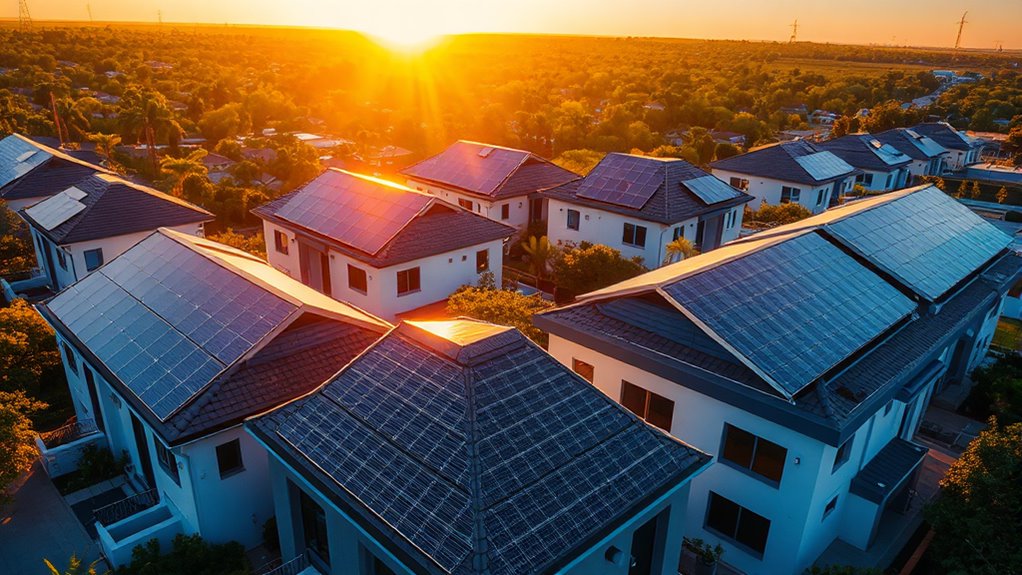
6 Best Companies That Install Solar Panels in 2027
You want solar installers in 2027 who combine top-tier N-type bifacial panels with expert installation and strong warranties. These companies should be skilled with high-efficiency panels—like Renogy’s 590W and 800W models rated near 25% efficiency.
Look for installers offering robust weatherproofing, MPPT system compatibility, and modular setups perfect for tight spaces. It’s also smart to prioritize those with proven experience in high-voltage designs.
Don’t forget solid customer support and local code compliance—they’re key to protecting your investment. Keep exploring to uncover how these choices impact your solar success.
450W N-Type Bifacial Monocrystalline Solar Panel
Experience the power of advanced solar technology with the 450W N-Type Bifacial Monocrystalline Solar Panel. This panel is designed to maximize energy production in various environments by capturing sunlight from both sides. It addresses the need for efficient and reliable energy solutions in residential and commercial settings.
Its high conversion efficiency of 25.6% means more electricity generated from the same sunlight, helping reduce energy costs. The panel’s robust double-glass and anodized aluminum frame provide long-lasting protection against harsh weather, minimizing maintenance requirements.
Designed for high-voltage MPPT systems, it delivers a stable output at 30.08 volts, making it suitable for modern solar installations. The bifacial design enhances energy yield, particularly when installed where reflected light is available, offering a unique advantage over traditional panels.
While the panel’s weight requires secure mounting, its durable build ensures it withstands environmental challenges. This solar panel is a smart investment for those seeking to improve energy efficiency and durability in their solar setups.
Best for: Homeowners and businesses needing a durable, high-efficiency solar panel optimized for high-voltage MPPT systems with bifacial energy capture.
What We Like:
- High 25.6% conversion efficiency for greater power output
- Bifacial cells increase total energy capture
- Durable double-glass and anodized aluminum frame
- Compatible with high-voltage MPPT systems
Specification:
| Feature | Details |
|---|---|
| Manufacturer | Not specified |
| Power Output | 450 W |
| Cell Type | N-Type 16BB Monocrystalline |
| Conversion Efficiency | 25.6% |
| Voltage (Max Power) | 30.08 V |
| Weight | 54 lb (24.5 kg) |
| Construction | Double-glass, anodized aluminum frame |
Renogy Bifacial Solar Panel 4PCS 590 Watt N-Type 16BB, 25% High Efficiency
Renogy’s 4-pack of 590W bifacial solar panels offers a smart solution for those who want to maximize clean energy output efficiently. These panels use advanced bifacial technology to capture sunlight on both sides, increasing power generation by up to 30%. This means more energy with less space and fewer panels.
Designed with durable materials like corrosion-resistant aluminum frames and tempered glass, these solar panels handle tough weather conditions effortlessly. Their IP68 waterproof junction boxes ensure reliable performance even in harsh environments. Maintenance is straightforward, with robust construction minimizing wear from wind and snow.
The panels deliver 590 watts each with 12V DC output and MC4 connectors, making them suitable for various setups. Their design reduces hot spots and tolerates high temperatures well, providing stable, long-lasting energy. They are ideal for off-grid homes, farms, campers, or marine use where dependable power is essential.
While the panels are heavier and require sturdy mounting, their high efficiency and durability justify the investment. Users should ensure compatibility with their system’s voltage requirements to maximize benefits.
Best for: individuals or businesses seeking high-efficiency, durable solar panel solutions for off-grid, home, farm, camper, or marine use that maximize energy yield through bifacial technology.
What We Like:
- High conversion efficiency up to 25% with N-Type 16BB design
- Bifacial technology boosts energy capture by up to 30%
- Durable build with corrosion-resistant frame and IP68 waterproof junction box
- Stable performance with reduced hot spots and excellent temperature tolerance
Specification:
| Feature | Details |
|---|---|
| Manufacturer | Renogy |
| Power Output | 590 Watts per panel |
| Number of Panels | 4 |
| Cell Type | N-Type 16BB half-cut |
| Conversion Efficiency | Up to 25% |
| Frame Material | Corrosion-resistant aluminum |
| Glass | Tempered |
| Junction Box Protection | IP68 waterproof |
| Voltage Output | 12V DC |
| Connectors | MC4 |
| Wind Load Capacity | 2400 Pa |
| Snow Load Capacity | 5400 Pa |
| Total Weight | 233 lbs (4 panels) |
Renogy Solar Panels 800 Watt N-Type, 16BB 25% High-Efficiency
Experience efficient solar energy in a compact form with the Renogy Solar Panels 800 Watt N-Type. Designed for tight spaces, these panels suit Class B vans and small off-grid setups where space and weight are concerns. Their advanced 16BB monocrystalline cells boost energy capture, providing a high 25% efficiency that maximizes your power generation even in limited areas.
The panels operate at 24 volts DC, compatible with both 12V and 24V battery systems, making them versatile for various setups. Their IP67 rating ensures protection against harsh weather, while a low temperature coefficient helps maintain performance during hot or cloudy days. This durability means less maintenance and more reliable energy output over time.
Despite their compact size, these panels deliver up to 800 watts total through four 200W units. This modular design allows users to scale power according to needs. While the upfront investment is higher due to premium technology, the long-term benefits include consistent performance and reduced space requirements.
Best for: Compact, high-efficiency solar power solutions ideal for Class B van owners and off-grid enthusiasts needing reliable, space-saving energy generation.
What We Like:
- High 25% efficiency with advanced 16BB cell technology
- Compact and lightweight design ideal for limited roof space
- Durable IP67 ingress protection and stable thermal performance
- Low degradation rate for sustained energy output
Specification:
| Feature | Detail |
|---|---|
| Manufacturer | Renogy |
| Total Power Output | 800 Watts |
| Panel Type | 4 x 200W N-Type Monocrystalline |
| Cell Technology | 16BB |
| Efficiency | 25% |
| Voltage | 24 V DC (compatible with 12V/24V systems) |
| Dimensions | Smaller by 7.5% than typical panels |
| Weight | 11.7% lighter than typical panels |
| Ingress Protection | IP67 |
Renogy Bifacial Solar Panel 400W N-Type, 16BB 25% High-Efficiency
Experience the power of efficient solar energy with the Renogy Bifacial Solar Panel 400W N-Type. This panel captures sunlight on both sides, boosting energy output by up to 30% when placed near reflective surfaces like snow or sand. It’s designed to solve common solar challenges by maximizing energy capture even in limited spaces.
Its 16BB Mono N-Type cells offer reliable performance, maintaining consistent power even under partial shading. The anti-shade dual-zone layout helps reduce power loss, making it dependable in varied lighting conditions. This makes it ideal for areas where shading might affect traditional panels.
The panel’s compact design and IP68-rated durability ensure it fits well in tight spots like RV roofs or small home installations. Maintenance is minimal due to its robust construction, allowing for long-term use without frequent upkeep. Its design balances efficiency with resilience, ensuring steady energy production.
While the 400W output might require multiple units for larger needs, its bifacial technology makes each panel highly effective. The upfront cost is higher than standard panels, but the increased energy yield can offset this over time.
Best for: Outdoor enthusiasts, RV owners, and homeowners with limited roof space looking for high-efficiency solar panels that perform well in partial shade and maximize energy capture through bifacial technology.
What We Like:
- Bifacial design increases energy capture by up to 30% from reflected light.
- Anti-shading dual-zone cells maintain power output under partial shade.
- Compact, durable IP68-rated panel suited for space-limited installations.
- Reliable N-Type cells ensure consistent, long-lasting performance.
Specification:
| Feature | Details |
|---|---|
| Manufacturer | Renogy |
| Power Output | 400W |
| Cell Type | 16BB Mono N-Type |
| Efficiency | Up to 25% |
| Dimensions | Compact (exact size not specified) |
| Durability Rating | IP68 |
Renogy 200W Solar Panel Kit 12V Starter Kit + 30A PWM Charge Controller
Experience dependable solar power with the Renogy 200W Solar Panel Kit, designed to meet the energy needs of RVs, boats, and small off-grid setups. This kit helps you reduce reliance on traditional power sources by efficiently converting sunlight into usable energy, ensuring your batteries stay charged even in low-light conditions.
The kit features two 100W monocrystalline panels equipped with bypass diodes, which enhance performance during cloudy days or partial shading. Its included 30A PWM charge controller supports various battery types and uses a 4-stage charging process to protect and extend battery life.
Installation is straightforward with pre-drilled holes, Z-brackets, and all necessary cables included. This setup allows for quick deployment and easy maintenance without requiring specialized tools or expertise. Plus, the system can be expanded up to 400W by adding compatible panels, offering flexibility as your power needs grow.
While the kit is optimized for 12V systems and uses a PWM controller, which may be less efficient than MPPT in some situations, it remains a practical solution for basic off-grid power requirements.
Best for: Outdoor enthusiasts and small off-grid users seeking a reliable, expandable solar starter kit for 12V applications.
What We Like:
- Efficient 25% monocrystalline panels with bypass diodes for better low-light output
- Versatile 30A PWM charge controller with multi-battery support and 4-stage charging
- Easy, tool-free installation with included mounting hardware and cables
- Expandable system design up to 400W for growing energy demands
Specification:
| Feature | Details |
|---|---|
| Manufacturer | Renogy |
| Solar Panel Power | 200W (2 x 100W panels) |
| Panel Efficiency | 25% |
| Charge Controller | 30A PWM Wanderer |
| System Voltage | 12V |
| Mounting Hardware | Z-brackets with pre-drilled holes |
| Expandability | Up to 400W |
Renogy 2PCS 320 Watt Solar Panels N-Type 18BB, 25% High-Efficiency
Renogy’s 2PCS 320 Watt solar panels are designed to deliver high power output even in tight spaces. Their advanced N-type cells with 18 busbars improve efficiency and reduce the risk of hot spots. This means you get more reliable energy production day after day.
Built to withstand harsh conditions, these panels resist microcracks and feature durable anti-corrosion frames and tempered glass. The IP68-rated connectors enhance weatherproofing, making maintenance easier and ensuring long-lasting performance.
Installation is straightforward with pre-drilled holes and compatibility with various mounting options. These panels produce 320W each, offering a boost over standard models and enabling you to generate ample power for off-grid or outdoor use.
While they are heavier than some alternatives, this adds to their sturdy build quality. The panels are designed for systems up to 24V, fitting many common setups without complication.
Best for: Outdoor enthusiasts and off-grid users seeking durable, efficient solar panels that maximize energy generation in limited spaces.
What We Like:
- High 25% efficiency with advanced N-type 18 busbar cells
- Durable design resists microcracks and extreme weather
- Easy installation with pre-drilled holes and versatile mounting options
- Robust anti-corrosion frame and tempered glass for longevity
- IP68-rated connectors enhance weather resistance
Specification:
| Feature | Details |
|---|---|
| Manufacturer | Renogy |
| Power Output | 320 Watts per panel |
| Cell Type | N-type, 18 busbars |
| Dimensions | Not specified |
| Weight | 90 lbs (approx. 40.8 kg) |
| Frame Material | Anti-corrosion metal |
| Glass Type | Tempered glass |
| Connector Rating | IP68 |
| Max System Voltage | 24 Volts |
Factors to Consider When Choosing Companies That Install Solar Panels
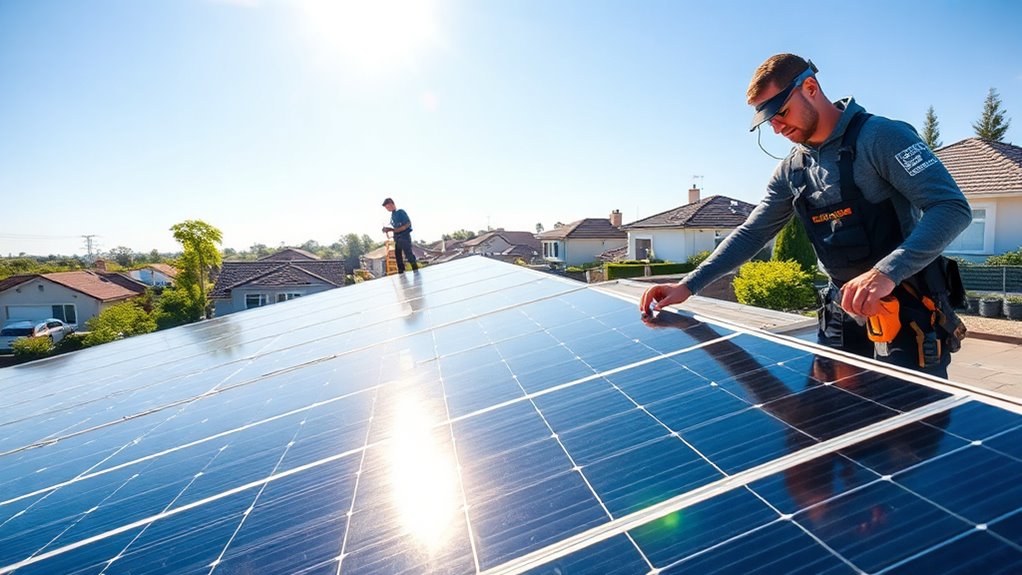
When choosing a solar panel installation company, you’ll want to check their experience level and the types of panel technology they offer. Make sure they provide solid warranties and reliable support to protect your investment.
Also, consider their pricing, financing options, and expertise in energy efficiency to get the best value. It’s all about finding a company that fits your needs and budget while giving you peace of mind.
Installation Experience Level
Choosing a solar panel installer with extensive experience can greatly impact your system’s performance and longevity. You want a company skilled in deploying high-voltage MPPT string designs and wiring panels correctly to prevent power losses.
Make sure they’ve handled bifacial module setups, considering mounting height and rear-side reflection for the best output. Experience with anti-shade or dual-zone panel architectures is essential, as proper layout and wiring preserve shading loss reductions.
Also, verify they’re competent installing panels rated for harsh conditions, like IP68 junction boxes and high wind or snow loads. This ensures secure mounting and sealing.
Finally, ask how they manage system commissioning for 12V versus 24V compatibility. They should select the right controller and inverter settings tailored to your system’s electrical design, not just use a generic approach.
Panel Technology Options
A key factor in selecting a solar panel installation company is their expertise with different panel technologies. You’ll want a company familiar with advanced cell types like N-type, which outperform older PERC cells by offering better temperature tolerance and slower degradation.
Pay attention to efficiency ratings—top modules often reach around 25–25.6%, which is essential if your roof space is tight. Also, consider bifacial panels that generate power from both sides, boosting output on reflective surfaces or ground mounts.
The company should understand electrical specs like maximum power (400–590W+), operating voltage, and current, as these affect system design and MPPT optimization. Finally, look for panels with features like anti-shading cell architecture or higher busbar counts, which help maintain performance under partial shade and reduce hot-spot risks.
Warranty And Support
Since you’ll rely on your solar system for years to come, you want a company that offers clear, thorough warranty coverage and dependable support. Look for warranties that cover workmanship and materials separately—often 10 years for installation work and 25 years ensuring your panels maintain around 84.5% output.
Also, confirm the scope of support, including responsive technical help for a decade after installation. Make sure the company provides straightforward documentation and an easy claims process, detailing coverage duration and any required inspections or maintenance.
Check if warranties cover system-level components like wiring, mounting, and inverters, not just the panels. And don’t forget to verify return policies and customer service responsiveness to avoid surprises. Choosing a company with transparent, extensive warranty and support safeguards your solar investment over the long haul.
Pricing And Financing
When evaluating solar panel installation companies, understanding pricing and financing options is crucial to making a smart investment. Don’t just focus on panel costs—compare the total installed price and confirm if financing covers inverters, mounting hardware, permits, inspections, and grid fees.
Review the annual interest rate, loan term, fees, and any early-payment penalties. These affect your real cost more than sticker prices.
Check if your financing choice impacts eligibility for incentives like the federal solar tax credit, which can reduce expenses substantially. Ask for clear monthly payment figures against expected energy output to verify system sizing fits your needs.
Finally, weigh ownership versus lease or PPA models carefully. Consider long-term savings and what happens if your system underperforms due to shading or other real-world factors.
Energy Efficiency Expertise
Although many companies offer solar panel installation, you should choose one with deep energy efficiency expertise to maximize your system’s performance. Look for installers who can clearly explain efficiency drivers like N-type cells, 16BB/18BB architectures, and bifacial designs that boost real-world energy yield.
They should translate panel efficiency ratings—around 25% for high-class modules—into expected system output, factoring in local heat losses and temperature effects. Make sure they understand how voltage and current operate with MPPT settings and inverter requirements, ensuring best energy harvest through proper electrical design.
Also, ask if they use anti-shade or partitioned modules to minimize shading losses. Finally, your installer should estimate energy production by considering bifacial gains and local irradiance, not just nameplate wattage, to give you a realistic performance forecast.
Local Licensing Compliance
Before any solar panel installation begins, you’ll want to confirm that the company handles all required local permits and inspections. Solar regulations vary by city and county, so ensuring your installer obtains these permits protects you from legal issues.
Ask if they’re licensed for electrical work and request proof of their license number, bonding, and insurance coverage. It’s important to verify they follow your utility’s interconnection rules if your system is grid-tied, including submitting necessary forms and passing inspections.
Make sure their designs meet local electrical codes, using proper wiring, labeling, and protection devices to avoid failed inspections. Also, confirm the company schedules inspections at key stages, like mounting and electrical connections, so your system is officially approved and safe to operate.
Post-Installation Maintenance
Once your solar panels are installed according to local codes and inspections, keeping them in good shape becomes your next focus. Regularly inspect panels and mounting hardware for damage, debris, or loose fittings. Weather and dirt can lower efficiency, so it’s important to stay on top of this.
Clean the panels as your installer recommends, usually using water and gentle methods. If you have bifacial panels, make sure to pay attention to both sides.
Check electrical connections and junction boxes for dryness and proper sealing. IP68-rated junctions are designed to handle outdoor conditions, but they can still fail sometimes.
Use the inverter or monitoring app to track performance and catch issues like shading or failing strings early. This way, you can address problems before they become bigger headaches.
Finally, follow the manufacturer’s maintenance guidelines and keep records of any service visits. Doing this helps ensure your system maintains its warranty and long-term output.
Frequently Asked Questions
What Financing Options Are Available for Solar Panel Installation?
You can choose from loans, leases, or power purchase agreements (PPAs) to finance solar panels. Many companies offer zero-down options, which can make getting started easier.
Plus, you might qualify for tax credits or incentives that lower your upfront costs. These benefits can really help make solar more affordable.
How Long Does the Solar Panel Installation Process Take?
The solar panel installation process usually takes one to three days. But the entire project, including permits and inspections, might take a few weeks.
You’ll want to prepare for scheduling and possible weather delays. It’s a good idea to stay flexible and keep in touch with your installer throughout.
Are There Any Government Incentives for Installing Solar Panels in 2027?
Imagine sunlight turning into savings—yes, you can get government incentives in 2027!
Tax credits, rebates, and grants make installing solar panels more affordable.
They help you reduce costs while embracing clean, renewable energy for your home.
What Maintenance Is Required After Solar Panel Installation?
You’ll need to make sure your panels are cleaned periodically, usually with water and a soft brush. It’s also important to check for shading or debris that might block sunlight.
Don’t forget to inspect the wiring for any damage, and keep an eye on system performance to make sure everything is working efficiently.
Most panels require minimal maintenance overall, so it’s pretty easy to keep them in good shape. Just a little attention now and then goes a long way!
How Do Solar Panel Warranties Work?
Solar panel warranties typically cover defects and performance for 10-25 years. You’ll get repairs or replacements if panels underperform or fail.
Always read terms carefully to understand coverage, exclusions, and claim processes before installing. It’s super important to know what’s included and what’s not.
This way, you won’t be caught off guard if something goes wrong down the line. Just take a little time upfront, and you’ll be glad you did!
Conclusion
When choosing a company to install your solar panels, remember: not all panels shine equally. You want efficiency, reliability, and expert installation to power your future. Think of it as planting a seed—choose the right soil, and your energy savings will grow strong and steady.
With excellent options like Renogy’s high-efficiency panels, you’re not just buying equipment; you’re investing in a brighter, cleaner tomorrow. So, make your choice wisely and let the sun work for you.
Choosing the best solar panel installation company in 2027 means looking for trusted experts who deliver quality and service. The right company ensures your solar setup is efficient, reliable, and long-lasting, giving you the maximum return on your investment. Don’t settle for less—go for the best solar panel installers to power your home or business and enjoy clean, renewable energy for years to come.