4 Best Air Conditioners for Solar Power in 2027
You’ll want the 12000BTU Solar Hybrid ACDC Mini Split for efficient cooling and heating in medium spaces, or the 24000BTU model if you need coverage up to 1,000 sq. ft.
For quiet, energy-saving operation, the Albott 12,000 BTU Mini Split with SEER2 18 is a solid pick. It balances performance and solar power compatibility well.
If you need something portable, the 280W Off-Grid Tent Air Conditioner works great in small personal areas. Keep exploring, and you’ll discover what factors make these ideal for solar setups.
| Image | Name | Editor's Rating | Price |
|---|---|---|---|

|
|
||

|
|
||
|
|
|
||

|
|
12000BTU Solar Hybrid ACDC Ductless Mini Split Air Conditioner With Heater
- 12000 BTU
- Full Solar or Full Electric
Experience efficient climate control with the 12000BTU Solar Hybrid ACDC Ductless Mini Split Air Conditioner With Heater. This versatile system provides reliable cooling and heating, harnessing solar power to reduce your energy costs. It’s designed to improve comfort in medium-sized spaces, making temperature management both eco-friendly and convenient.
The mini split operates quietly at 36 dB, thanks to its inverter compressor technology. It cools rooms up to 600 cubic feet at 12,000 BTU and heats up to 14,000 BTU, adapting to your space’s needs. The hybrid power system seamlessly switches between solar and electric sources, ensuring continuous operation even when sunlight varies.
Maintenance is straightforward, with included PV cables, connectors, and a DC breaker simplifying solar integration. While professional installation is necessary due to the split design and outdoor unit setup, once installed, the system offers remote app control for easy monitoring and adjustments.
This air conditioner and heater combination is ideal for those seeking an energy-conscious solution that balances performance with environmental benefits. Its compact design fits well in various indoor settings, although window size limitations should be considered during installation.
Best for: homeowners or small business owners needing a solar-compatible heating and cooling system for medium-sized rooms around 600 cubic feet.
What We Like:
- Hybrid solar and electric power support for flexible energy use
- Quiet operation with inverter compressor for efficient cooling and heating
- Includes essential solar installation components for easy setup
- Remote app control for convenient temperature management
Specification:
| Feature | Details |
|---|---|
| Manufacturer | Unbranded/Generic |
| Cooling Capacity | 12,000 BTU |
| Heating Capacity | 14,000 BTU |
| Noise Level | 36 dB |
| Suitable Room Size | Up to 600 cubic feet |
| Power Source | Solar and Electric (Hybrid) |
| Included Components | PV cables, connectors, DC breaker |
| Installation | Professional required |
Off-Grid Portable Tent Air Conditioner 280W
- 【RAPID COMPRESSOR COOLING】Tired of useless water mist fans? Powered by a 2700 BTU (900W) real compressor, this...
- 【OFF-GRID ENERGY EFFICIENCY】Stop worrying about high electricity bills or tripping breakers. Running at an...
- 【WHISPER-QUIET SLEEP MODE】Engineered for light sleepers, this quiet portable AC operates at a stealthy ≤45dB...
- 【PERFECT FOR BED CANOPY & DORMS】Specially optimized for micro-environments, this mini air conditioner for room...
- 【3-IN-1 MODES & READY TO USE】Ditch complex window kits. Weighing only 19.8 lbs (9KG), this compact travel AC...
Stay cool and comfortable wherever you go with the Off-Grid Portable Tent Air Conditioner. Designed to efficiently cool small, personal spaces like tents or dorm rooms, this unit offers reliable relief in hot environments without needing a traditional power source. Its low power draw of 280W makes it ideal for off-grid living and solar-powered setups.
This compact air conditioner combines cooling, dehumidifying, and fan functions to create a versatile climate solution. The included exhaust and drain hoses simplify maintenance, while the 4-way swing airflow ensures even temperature distribution. Weighing just 9 kg, it’s easy to move and requires no complicated installation.
Operation is straightforward with multiple control options: touch panel, remote, or smartphone app. A quiet sleep mode keeps noise under 45 dB, making it suitable for overnight use. The 1 to 12-hour timer adds convenience and helps conserve energy during extended use.
While best suited for very small areas, this unit’s energy-efficient design supports sustainable cooling in off-grid environments. Its simplicity and portability make it a practical choice for travelers and anyone needing personal cooling without bulky equipment.
Best for: individuals seeking a portable, energy-efficient cooling solution for small personal spaces such as tents, dorm rooms, and off-grid environments powered by solar generators.
What We Like:
- Low power consumption ideal for solar and off-grid use
- Versatile modes: cooling, dehumidifying, and fan with 4-way airflow
- Lightweight and portable with multiple control methods
- Quiet operation with a sleep mode under 45 dB
- Easy maintenance with included exhaust and drain hoses
Specification:
| Feature | Details |
|---|---|
| Manufacturer | – |
| Cooling Capacity | 2700 BTU |
| Power Consumption | 280W |
| Weight | 9 kg (19.8 lbs) |
| Modes | Cooling, Dehumidify, Fan |
| Control Options | Touch panel, Remote, App |
| Noise Level | < 45 dB (Sleep Mode) |
24000BTU Solar Hybrid ACDC Ductless Mini Split Air Conditioner & Heater
- Type: Ductless Solar Mini Split Air Conditioner
- Btu Cooling Rating: 24000BTU
Experience efficient climate control with the 24000BTU Solar Hybrid ACDC Ductless Mini Split, designed to reduce your energy costs while keeping your space comfortable. This system cools areas up to 1,000 square feet and provides reliable heating with 26,600 BTUs. It’s ideal for bedrooms, living rooms, or office environments where consistent comfort is key.
The unit operates quietly using a rotary compressor, minimizing noise disruptions. Its plug-and-play design lets you power it through solar panels or a standard AC outlet without needing batteries. This flexibility ensures you stay comfortable even when sunlight varies.
Maintenance is straightforward thanks to the ductless design, which reduces common issues related to traditional HVAC systems. The remote control and multiple speed settings make adjusting the temperature effortless. Features like a 24-hour timer and auto-restart add convenience and efficiency.
Certified for durability, this mini split delivers up to 70 SEER efficiency in full sun. However, its performance depends on consistent solar exposure, and professional installation is required to set up the outdoor unit properly.
Best for: Homeowners or office users seeking a versatile, energy-efficient heating and cooling solution that leverages solar power to lower electricity costs.
What We Like:
- High efficiency with up to 70 SEER when solar powered
- Dual power source with easy solar integration, no batteries needed
- Quiet operation with remote control and multiple speeds
- Convenient 24-hour timer and auto-restart functions
Specification:
| Specification | Details |
|---|---|
| Manufacturer | Not specified |
| Cooling Capacity | 24,000 BTU |
| Heating Capacity | 26,600 BTU |
| Coverage Area | Up to 1,000 sq. ft. |
| Power Source | Solar hybrid (solar + AC) |
| Compressor Type | Rotary |
| Dimensions (Indoor) | Not specified |
| Weight | Not specified |
Albott 12,000 BTU Mini Split Air Conditioner and Heater SEER2 18, 115V
- All-in-One Comfort Control: This mini split AC/heating system provides cooling, heating, dehumidifying, and fan...
- Energy-Efficient Performance: Featuring an advanced invert heat pump with a SEER2 18 rating, this system delivers...
- Stable & Reliable Year-Round Use: This 12,000 BTU ductless mini split AC/heating operates in extreme conditions...
- Quiet Operation & Easy Control: This split AC unit runs quietly below 29dB to create a peaceful environment at home...
- Self-Cleaning & Warranty Protection: This Air Conditioner offers self-cleaning function, easily removable filters...
Experience reliable comfort with the Albott 12,000 BTU Mini Split Air Conditioner and Heater, designed to keep rooms up to 750 square feet perfectly balanced. This system combines efficient cooling and heating in one unit, making it ideal for maintaining consistent indoor temperatures year-round.
Its inverter heat pump delivers precise temperature control while using just 980 watts, helping to reduce energy consumption without sacrificing performance. The quiet operation, running below 29 dB, ensures your environment stays peaceful whether cooling, heating, or simply circulating air.
Maintenance is straightforward thanks to washable mesh filters that help keep air clean and system efficiency high. The unit requires professional installation as a split system, using eco-friendly R32 refrigerant, which supports safer and greener operation.
Control is simple with WiFi-enabled features and a remote, allowing you to adjust settings from anywhere. Sleep mode enhances comfort by gently adapting temperatures overnight, contributing to better rest without interruptions.
Best for: Homeowners seeking a quiet, energy-efficient mini-split system for medium-sized rooms up to 750 sq. ft., especially those integrating solar power solutions.
What We Like:
- High energy efficiency with SEER2 rating of 18 and low power use.
- Whisper-quiet operation under 29 dB across multiple modes.
- Easy remote and WiFi control with sleep mode for added comfort.
- Washable mesh filters simplify maintenance and improve air quality.
- Uses eco-friendly R32 refrigerant for safer environmental impact.
Specification:
| Feature | Details |
|---|---|
| Manufacturer | Albott |
| Cooling Capacity | 12,000 BTU |
| Voltage | 115V |
| SEER2 Rating | 18 |
| Power Consumption | 980 watts |
| Weight | 151 lbs (68.5 kg) |
| Noise Level | Below 29 dB |
| Refrigerant | R32 (eco-friendly) |
Factors to Consider When Choosing an Air Conditioner for Solar
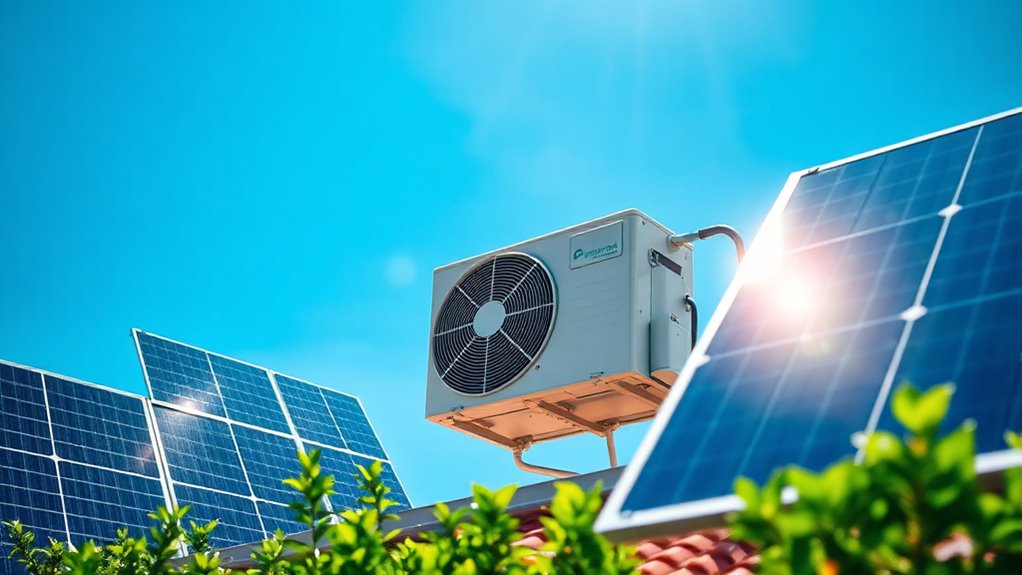
When choosing an air conditioner for solar power, you’ll want to check its compatibility with your system’s power source and energy efficiency ratings. It’s super important to make sure they work well together.
Also, think about the cooling and heating capacity to match your space. This way, your AC won’t be too weak or too powerful for the room.
Plus, don’t forget the installation requirements. It helps to avoid any surprises down the road.
And hey, noise levels matter too. You want to keep your environment comfortable without a loud humming sound in the background.
Power Source Compatibility
Although selecting an air conditioner compatible with your solar power setup may seem straightforward, you’ll need to verify several key electrical specifications to guarantee seamless integration. First, confirm the A/C supports DC input or “solar hybrid” operation, allowing it to run directly from your PV panels or solar inverter without relying on batteries.
Check the unit’s voltage range—such as 110–240 V or specific DC voltages—to match your solar inverter and PV array configuration. Compare the rated wattage and startup current against your system’s continuous output and inverter surge capacity to avoid underpowering or tripping.
Also, determine if the A/C requires AC-only power or can accept DC input via built-in MPPT or solar interfaces. Inverter-equipped, variable-speed units often pair better with solar by drawing smoother, lower peak power. It’s a good idea to look for these features to get the most efficient setup.
Energy Efficiency Ratings
Energy efficiency ratings often play an essential role in selecting an air conditioner for solar power systems. You’ll want to prioritize units with high SEER or SEER2 ratings—each point increase cuts electricity use noticeably. Models with SEER 20 or above excel when paired with solar.
Inverter-driven compressors are ideal since they adjust speed to match cooling needs and solar output. This helps maintain efficiency better than fixed-speed units.
Check the EER or COP by comparing cooling capacity (BTU/h) to power draw. The higher these values, the less solar energy you’ll need.
Also, consider models designed for low-voltage DC or direct solar use, as they minimize conversion losses. Finally, reviewing rated annual energy consumption helps you size your solar array and battery accurately for your usage.
Cooling And Heating Capacity
Selecting an air conditioner for solar power goes beyond efficiency ratings—you also need to match its cooling and heating capacity to your space and climate. Undersizing leads to discomfort, while oversizing causes short-cycling and wastes energy.
Choose inverter-driven units with variable-capacity compressors so the BTU output adjusts to your solar power availability. This helps reduce peak wattage demand.
Consider both sensible heat and latent moisture loads, especially in humid areas where dehumidification is vital. If you want year-round comfort, check heating capacity separately.
Focus on heat pump performance in low temperatures to minimize auxiliary electric heat. Finally, use seasonal efficiency metrics like SEER and HSPF alongside BTU ratings to estimate actual energy use.
Make sure your AC size aligns well with your solar system’s expected generation and your home’s insulation.
Installation Requirements
When choosing an air conditioner for solar power, you need to make certain it can integrate smoothly with your PV system. Check if the unit supports DC solar input or has a solar-hybrid inverter interface to accept PV power directly or via an inverter.
Plan for a properly sized outdoor condenser spot with enough clearance, ventilation, and structural support—especially for split systems needing refrigerant line routing.
Verify electrical specs like voltage range, dedicated breaker, wire gauge, and whether a DC breaker or AC disconnect is required. Make sure there’s space for PV cables, connectors, and conduit rated for outdoor use and system current.
Finally, hire a professional HVAC technician for refrigerant handling and a licensed electrician for solar interconnection to guarantee safe, code-compliant installation. It’s always better to have experts on board to avoid any headaches later.
Noise Level Considerations
You’ll often find that noise level plays a crucial role in deciding which air conditioner works best with your solar setup. For bedrooms and quiet living areas, aim for indoor unit noise below 40 dB to preserve comfort during sleep and conversation.
Outdoor unit noise matters too—keep sound power levels under 55–60 dB(A) at 1 meter to avoid disturbing neighbors or violating local rules. Inverter-driven compressors and variable-speed fans usually run quieter than fixed-speed systems by modulating output and preventing frequent high-power cycles.
Don’t just focus on continuous noise; transient sounds like startup or defrost cycles can be more noticeable. Always check manufacturer sound ratings, including indoor and outdoor dB(A) levels and testing distances.
And remember, compare realistic measurements instead of relying on vague terms like “quiet.” It makes all the difference when you want peace and quiet at home.
Control And Connectivity
Beyond noise considerations, how you control and connect your air conditioner can make a big difference in maximizing solar power use. You’ll want an AC that supports DC input or solar-hybrid mode, so it handles variable-voltage solar power without needing battery inversion.
Look for Wi-Fi or app control alongside a physical remote to schedule runtime, adjust setpoints, and run remote diagnostics. This way, you can easily sync cooling with peak solar output.
Models with low-voltage startup and auto-restart are essential for reliable on/off toggling as solar power fluctuates. Also, check compatibility with smart energy management systems or PV components, so your AC can respond to charge status or grid signals.
Finally, choose units offering eco or solar priority modes and programmable timers. These features help minimize grid reliance and maximize your solar investment.
Warranty And Support
Since solar-powered air conditioners involve unique components and operating modes, you should verify that the warranty explicitly covers solar-mode operation and related DC parts like PV connectors and inverter electronics. It’s important to check the duration and scope of coverage for critical components such as the compressor, inverter electronics, and sealed refrigerant circuit. Longer warranties on compressors and parts can really reduce your risk of costly repairs.
Also, make sure to confirm if warranty service requires certified HVAC technicians or authorized solar/EV-trained specialists. Find out whether on-site diagnostics or part shipping is included—this helps you anticipate potential expenses.
Be certain the warranty clearly states installation requirements like proper PV wiring and surge protection. That’s because failing to follow these can void your coverage.
Finally, look for warranties with accessible support, documented spare-part availability, and clear turnaround policies. This will help minimize downtime in solar-dependent setups.
Frequently Asked Questions
How Do Solar Air Conditioners Impact Home Energy Bills?
Solar air conditioners cut your energy bills by using sunlight instead of grid electricity. They reduce reliance on traditional power and save money over time.
Plus, they help you stay cool efficiently while lowering your carbon footprint. It’s a smart way to keep comfortable and be eco-friendly at the same time.
Can Solar Air Conditioners Work During Cloudy Days?
Yes, solar air conditioners can work on cloudy days, but their efficiency drops since solar panels generate less power.
You’ll likely rely on stored energy or the grid to keep your AC running smoothly during low sunlight.
What Maintenance Is Required for Solar-Powered Air Conditioners?
You’ll clean solar panels, check connections, and replace filters regularly. It’s important to keep everything in good shape to ensure smooth operation.
You’ll also inspect batteries, tighten wiring, and monitor system performance. These steps help catch any issues early before they become bigger problems.
Plus, you’ll maintain, troubleshoot, and optimize to guarantee your solar-powered AC runs efficiently and lasts longer. Staying on top of these tasks means your system will keep you cool without any hiccups.
Are Solar Air Conditioners Compatible With Existing Home Solar Panels?
Yes, solar air conditioners usually work with your existing home solar panels. You’ll just need to guarantee your system’s capacity matches the AC’s power needs.
You might also require an inverter upgrade or additional batteries for peak performance. It’s all about making sure everything runs smoothly together.
Do Solar Air Conditioners Have Any Government Rebates or Incentives?
You’ll feel like you’ve struck gold—yes, many solar air conditioners qualify for government rebates and incentives.
Don’t miss out; check local programs and federal tax credits, which can markedly cut your upfront costs and boost savings.
Conclusion
When you’re picking an air conditioner for your solar setup, you want efficiency and reliability—no need to sweat like it’s the Victorian era. These top models blend modern tech with solar power to keep you cool and eco-friendly.
Whether you’re off-grid or boosting your home’s energy, make sure your choice matches your space and power capacity. With the right unit, you’ll enjoy comfort without draining your solar resources.
Choosing the best air conditioners for solar power means looking for units designed to maximize energy savings while providing powerful cooling. It’s all about balancing performance with your solar system’s capacity, so you stay comfortable and sustainable. In 2027, the best air conditioners for solar power combine smart technology and eco-friendly features to make the most of your renewable energy investment.