4 Best Angles for Solar Panels in South Africa in 2027
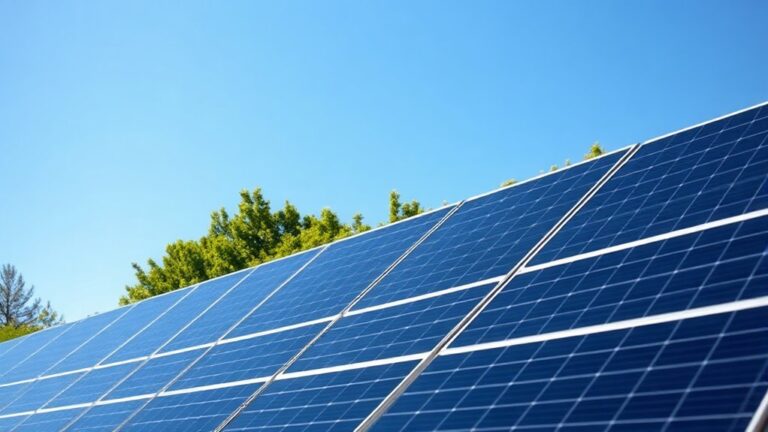
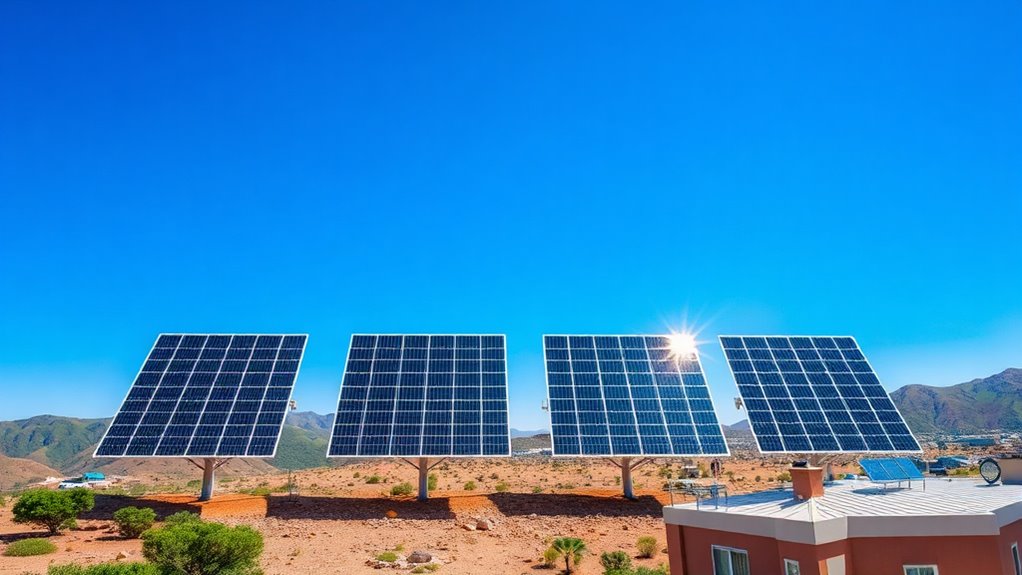
To maximize your solar panel output in South Africa in 2027, start with a fixed tilt near your local latitude—about 26°—for year-round efficiency. This angle captures the sun’s rays effectively throughout the year, making it a solid baseline for your setup.
Want to squeeze out even more energy? Boost winter capture by raising the tilt 10–15° (to 36–41°). Then, in summer, lower it 10–15° (to 11–16°) for better midday performance.
Adjusting your solar panel tilt two to four times yearly can lift energy production by up to 15%. Curious about how portable guides and adjustable mounts can help you nail these angles easily? They make fine-tuning your panels a breeze, keeping your system efficient without hassle.
| Image | Name | Editor's Rating | Price |
|---|---|---|---|

|
|
||

|
|
||

|
|
||

|
|
Solar Angle Guide for Portable Foldable Solar Panels
- Find Perfect Angle for Solar Panels - The solar angle guide helps you determine the optimal angle for your solar...
- 【Simple to Use】Clip the solar panel angle tool to the edge of the solar panel, then adjust the angle of the...
- 【Premium Quality】Since it needs exposed to the sun for a long time, our solar tracker tool uses UV-resistant...
- 【Widely Application】You can use it on any brand of foldable portable solar panels or solar mounting bracket...
- 【Notice】Make sure you install on the appropriate location, do NOT block any cell of the solar panels which will...
Optimize your portable foldable solar panels with the Solar Angle Guide—a simple yet effective tool to enhance your solar energy capture. By clipping it onto your panel’s edge, you can quickly find the perfect angle for maximum sunlight exposure. The guide uses a clear visual alignment where the black dot’s shadow matches the black cross, signaling a 90° angle for optimal power output.
Designed to fit various panel thicknesses, the guide won’t scratch your equipment. Its durable materials resist UV rays, water, and heat, ensuring reliable performance in harsh outdoor conditions. The stainless steel clip is rust-proof, adding to the tool’s long-lasting functionality.
Maintenance is straightforward. Avoid opening the clamp beyond 1 cm to preserve its shape and grip strength. This careful handling keeps the guide effective and protects your solar panel from damage during use.
This tool is ideal for outdoor enthusiasts and remote workers who depend on foldable solar panels. It simplifies angle adjustment, helping you maximize energy efficiency wherever you go.
Best for: Outdoor adventurers and remote workers using foldable portable solar panels seeking easy and precise solar angle adjustment.
What We Like:
- Simple visual alignment ensures optimal solar panel angle
- Durable, weather-resistant build with rust-proof stainless steel clip
- Fits a variety of foldable panel thicknesses without scratching
- Easy to install and remove with minimal effort
Specification:
| Feature | Details |
|---|---|
| Manufacturer | N/A |
| Dimensions | Fits panel edges up to 1 cm thick |
| Weight | Lightweight |
| Material | UV-resistant plastic, stainless steel clip |
| Color Options | Black |
Adjustable Aluminum Solar Panel Tilt Mount Brackets (2-Set)
- Adjustable Tilt for Optimal Sun Exposure: This solar panel mount lets you set a 15-30 degree tilt for your solar...
- Versatile Mounting for Multiple Surfaces: Designed primarily for flat roofs, it also works on RVs, boats, garage...
- Easy Assembly with Clear Instructions: The solar panel stand kit includes all necessary hardware and an English...
- Lightweight & Durable Aluminum Build: Made from corrosion-resistant aluminum alloy, this solar panel tilt mount is...
- Complete Kit for DIY Installers: You get a full solar mounting brackets set: 2 bases with extendable arms...
Experience precise solar panel positioning with the Adjustable Aluminum Solar Panel Tilt Mount Brackets. These brackets solve the challenge of tracking the sun’s movement, allowing your panels to capture optimal sunlight throughout the day. With adjustable tilt angles from 15 to 30 degrees and extendable arms ranging from 14 to 27 inches, they accommodate a wide range of panel sizes between 50W and 400W.
Crafted from corrosion-resistant aluminum, these brackets offer a lightweight but sturdy design ideal for outdoor conditions. Their durability makes them perfect for seasonal setups or long-term installations on flat roofs, RVs, boats, and cabins. The included hardware and clear instructions simplify the installation process, ensuring a secure fit.
Maintenance is minimal due to the aluminum’s resistance to rust and weathering. However, it is important to tighten screws properly, especially on vertical surfaces, to maintain stability and maximize solar energy capture. The tilt range suits many locations but may not be ideal for all geographic or roof angles.
This mounting kit enhances solar efficiency by allowing easy adjustments to meet seasonal sun angles. It’s a practical solution for those seeking flexibility and durability in solar panel mounting.
Best for: DIY enthusiasts and off-grid users needing an adjustable and corrosion-resistant solar panel mounting system for flat surfaces.
What We Like:
- Adjustable tilt and extendable arms for better sun tracking
- Lightweight, corrosion-resistant aluminum construction
- Complete mounting kit with all necessary hardware
- Suitable for various outdoor settings including RVs and boats
Specification:
| Feature | Details |
|---|---|
| Manufacturer | Not specified |
| Tilt Range | 15° to 30° |
| Arm Extension | 14 to 27 inches |
| Compatible Panel Wattage | 50W to 400W |
| Material | Corrosion-resistant aluminum |
| Suitable Surfaces | Flat roofs, RVs, boats, cabins |
Keopuals Solar Panel Angle Guide Tools (2 Pack)
- Find Perfect Angle for Solar Panels: The solar angle guide helps you determine the optimal angle for your solar...
- Compatible with Different Panel Types: With a clip on the back, the Solar angle guide is suitable for use with a...
- Easy to use: It's only necessary to adjust the solar panel so that the shadow of the black dot is in the center of...
- Durable and portable: Made from high-quality ABS and acrylic materials, the solar angle guide is sturdy and...
Keopuals Solar Panel Angle Guide Tools offer a simple solution for achieving the perfect tilt on your solar panels. By using the shadow of a black dot to align with the scale plate, you can quickly find the ideal angle for maximum energy capture. This method helps reduce charging time and boosts efficiency, especially when sunlight is strong.
The clip-on design fits fixed, adjustable, and portable solar panels, making it versatile for various setups. These tools are made from durable ABS and acrylic, ensuring they withstand outdoor conditions without adding extra weight. Their compact size makes them easy to carry and use on the go.
Maintenance is straightforward since the weather-resistant materials require minimal care. Just keep the guides clean and free from debris to maintain accurate readings. While these tools focus on tilt angle adjustment, they do not provide full solar tracking capabilities.
Each pack contains two guides, allowing you to optimize multiple panels at once. Although centering the shadow might take some practice, these tools provide consistent results once mastered.
Best for: Anyone seeking a quick, reliable way to optimize solar panel tilt for enhanced energy efficiency.
What We Like:
- Easy clip-on design fits multiple solar panel types
- Accurate tilt adjustment using shadow alignment
- Durable, lightweight, and weather-resistant materials
- Compact and portable for outdoor use
Specification:
| Manufacturer | Keopuals |
|---|---|
| Dimensions | Not specified |
| Weight | Lightweight (exact weight not specified) |
| Material | ABS and Acrylic |
| Color Options | Not specified |
Metal Solar Angle Guide for Solar Panels
- Magnet Adsorption: This solar angle guide will not scratch the solar panels, easy to move, patch or suction cups to...
- Aluminum+ PC: The shadow can be viewed clearly from both the top and sides, and aluminum adds durability of solar...
- Simple to Use: Use the magnet side of the Solar Angle Guide to attach to the edge of the solar panel to which the...
- Get Your Angles Right: Thanks to its transparent shell, you can line up the sun’s shadow to the center of the...
- No thickness limit: This solar angle guide is suitable for thin portable solar panels and thick glass solar panels.
The Metal Solar Angle Guide offers a simple solution for achieving precise solar panel alignment. Its design helps you position panels at the optimal angle, improving energy capture without complex tools. The clear polycarbonate shell makes it easy to see and adjust shadows from any viewpoint.
Installation is flexible with built-in magnets and a suction cup, allowing use on different surfaces. The lightweight aluminum frame fits various panel thicknesses, from slim portable models to thick glass types. This ensures compatibility across many solar setups.
Maintenance is straightforward since the durable materials resist wear and weather. The compact size makes storage easy, though care is needed to avoid misplacing it. While it requires some practice to master shadow alignment, this tool provides a reliable, manual method for angle finding.
Overall, it streamlines solar panel positioning with durable construction and practical usability. It is well suited for those seeking an affordable, non-electronic way to optimize solar angles.
Best for: Solar panel owners and telescope users who need accurate manual solar angle adjustment.
What We Like:
- Flexible mounting options with magnet and suction cup
- Transparent shell enables clear shadow alignment
- Durable aluminum fits all panel thicknesses
- Lightweight and compact for easy handling
- Simple maintenance with weather-resistant materials
Specification:
| Specification | Details |
|---|---|
| Manufacturer | Not specified |
| Dimensions | 1.7 inches (square) |
| Weight | 27.22 grams |
| Material | Aluminum, polycarbonate |
| Color Options | Not specified |
Factors to Consider When Choosing the Angle for Solar Panels in South Africa
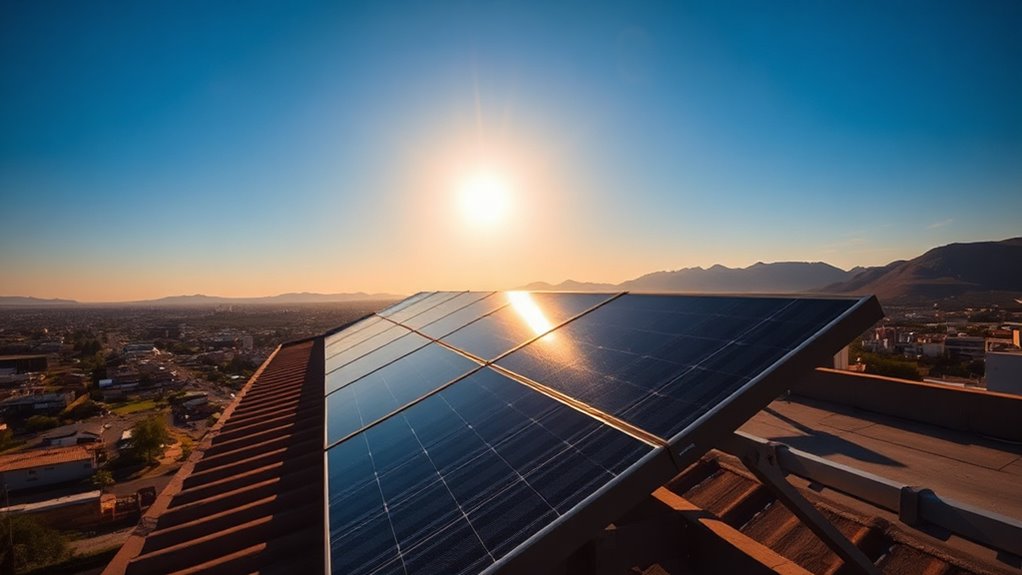
When choosing the angle for your solar panels in South Africa, you need to take into account your location’s latitude and how sunlight changes with the seasons.
Don’t forget how your roof’s direction and any shading can affect performance.
Plus, local weather conditions play a big role in maximizing your solar energy.
It might sound like a lot to think about, but getting the angle right can really boost your system’s efficiency.
Latitude-Based Tilt Adjustment
Although it might seem straightforward to set your solar panels at your exact latitude, adjusting the tilt angle based on seasonal goals can markedly boost your energy production.
In South Africa, a fixed tilt equal to your latitude—say 30° for 30°S—maximizes annual yield. But if you want more winter power, increase the tilt by 10–15°, letting panels capture the lower sun.
For summer focus, decrease tilt by 10–15° to better face the higher sun. If you prefer a simple approach, use latitude for year-round output, latitude plus 5° for winter, and latitude minus 5° for summer.
Adjustable mounts should ideally cover a tilt range from latitude minus 15° up to latitude plus 15°, so you can fine-tune angles and maximize energy throughout the year.
Seasonal Sunlight Variation
Since sunlight angles shift markedly across seasons in South Africa, you’ll want to adjust your solar panel tilt to match these changes for peak performance. Generally, setting your panels close to your local latitude—around 26° in Johannesburg—works well annually.
But to maximize winter output when the sun sits lower, you should increase the tilt by 10–15°, capturing more low-angle sunlight. Conversely, in summer when the sun is higher, decreasing tilt by 10–15° helps reduce midday losses and improves efficiency.
Adjusting tilt two to four times yearly can boost energy capture by 5–15%, especially in higher-latitude areas. If you prioritize winter energy, lean toward steeper fixed tilts or a winter-focused schedule.
For steady year-round power, stick close to latitude tilt and shift seasonally by about ±10°. It’s a simple tweak that can really pay off!
Roof Orientation Impact
Adjusting your solar panel tilt for seasonal sunlight changes can markedly boost energy capture, but the direction your roof faces plays an equally important role in overall performance. In South Africa, north-facing roofs receive the most solar irradiance, so mounting panels here typically yields the highest energy output.
If your roof faces east or west, expect about 10–25% less annual energy, depending on tilt and location. Every 10° your roof’s azimuth deviates from true north can cut annual yield by 1–3%, with bigger losses toward the extremes.
If north isn’t an option, consider adjusting tilt or splitting panels on east and west slopes to align production with your morning or afternoon energy needs. Coastal and high-latitude areas benefit from steeper tilts, while interior low-latitude regions do better with shallower angles closer to latitude.
Panel Shading Effects
When you choose the angle and placement of your solar panels, shading can dramatically reduce their output—even small shadows on a single cell or string can slash energy production by 10–30% or more.
Since shading patterns shift throughout the day and seasons, panels shaded during peak sun hours (10:00–15:00) lose far more energy than those shaded at dawn or dusk.
Bypass diodes help limit losses but only protect specific cell groups, so extensive shading still cuts output considerably.
To minimize shading, aim for a clear sky view with at least 30° vertical clearance above the horizon near obstructions. Even slight tilt adjustments that shift panels away from trees or chimneys during peak sun can boost annual energy yield by several percent.
This often outweighs minor deviations from the “optimal” tilt. So, a little tweak here and there can really make a difference!
Local Weather Conditions
Shading isn’t the only factor that affects your solar panel’s efficiency—local weather conditions play a big role in deciding the best angle for installation. In South Africa, the sun’s height changes drastically with seasons.
For example, in Johannesburg, noon solar altitude drops to about 35° in winter but climbs near 78° in summer. You’ll want steeper tilts (latitude plus 10–15°) for winter to capture more direct sunlight and flatter angles for summer’s higher sun.
Regional cloud patterns also matter—coastal Western Cape sees more winter clouds, while KwaZulu-Natal experiences summer afternoon clouds, influencing whether diffuse or direct sunlight dominates.
Coastal wind and salt spray encourage lower tilts or stronger mounts, and steeper angles help rain clean panels, reducing dust buildup and maintenance needs inland.
Frequently Asked Questions
How Does Shading Affect Solar Panel Efficiency in South Africa?
Shading greatly lowers your solar panel’s efficiency by blocking sunlight, causing energy loss. Even partial shade on one panel can reduce the entire system’s output.
What Is the Lifespan of Solar Panels in South African Climates?
You won’t believe it, but solar panels usually last 25 to 30 years, even under South Africa’s harsh sun.
You can count on them to keep working, despite the climate’s attempts to wear them down.
Are There Government Incentives for Solar Panel Installation in 2027?
Yes, you’ll find government incentives in 2027, including tax rebates and grants to help lower installation costs. These programs aim to encourage renewable energy use, so make sure to check local policies and apply early.
It’s a great way to save some money while going green. Don’t miss out on these opportunities—they can make a big difference!
How Often Should Solar Panels Be Cleaned for Optimal Performance?
You don’t have to worship your solar panels daily, but cleaning them every 3 to 6 months keeps them efficient.
Dust and grime love to sneak in, so give them some TLC to keep the juice flowing!
Can Solar Panels Be Installed on Flat Roofs in South Africa?
Yes, you can install solar panels on flat roofs in South Africa.
You’ll need mounting racks to tilt them at the right angle for peak sunlight exposure.
This helps ensure maximum energy production throughout the day and year.
Conclusion
Just like a seasoned sailor reads the stars to navigate, you can master the perfect solar panel angle to harness South Africa’s abundant sun. With tools like adjustable mounts and angle guides, you’re well-equipped to capture maximum energy year-round.
Remember, just as the sun’s path shifts with the seasons, so should your panel’s tilt. Embrace these strategies, and you’ll sail smoothly toward efficient, renewable power in 2027 and beyond.
By adjusting your solar panels to the best angles throughout the year, you tap into South Africa’s strong solar potential like a pro. This ensures you get the most out of every ray of sunshine, boosting your energy output and saving you money.
So, whether you’re setting up for the first time or upgrading your system, keep these angle tips in mind. It’s the smart move for maximizing solar efficiency and enjoying sustainable energy well into the future.