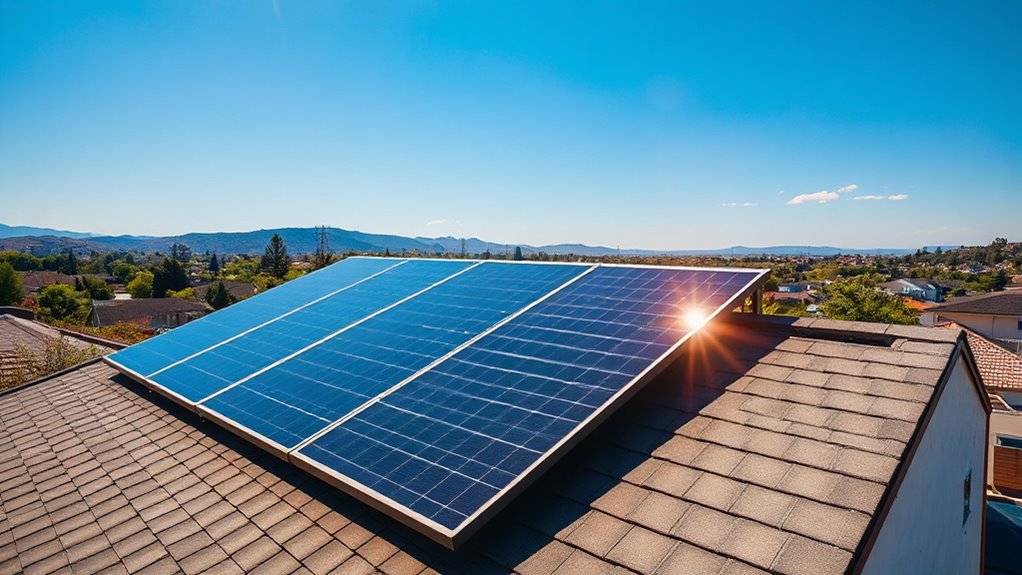
4 Best Azimuth Angles for Solar Panels in 2027
To maximize your solar panel output in 2027, it’s important to focus on the best azimuth angles for solar panels. Generally, aiming for angles near true south (or true north in the Southern Hemisphere) gives you the best year-round energy gain. But don’t worry, you have some flexibility depending on your energy needs and location.
You can shift your panels 15–45° east or west to better match your morning or evening energy use. This small adjustment can make a big difference if you use more power during specific times of the day. Plus, adjusting by 10–30° seasonally can really boost performance, especially if your roof limits your panel orientation or you have shading issues.
Choosing the right azimuth angle depends on your specific location, shading, and energy goals. Keep exploring different setups to fine-tune your system and get the most out of your solar investment.
| Image | Name | Editor's Rating | Price |
|---|---|---|---|

|
|
||

|
|
||
|
|
|
||

|
|
EF ECOFLOW Solar Angle Guide
- Catch Every Ray of Light: Keep sunlight at a 90° angle and concentrate the sun’s rays onto the surface of your...
- Seriously Simple to Use: Clip to the edge of your solar panel. Next, align your solar panel to the sun’s rays...
- Built to Last: The Solar Angle Guide will be on the front line when it comes to the sun’s rays. Its UV resistant...
- Get Your Angles Right: Thanks to its transparent shell, you can line up the sun’s shadow to the center of the...
The EF ECOFLOW Solar Angle Guide is designed to help you get the most from your solar panels by ensuring they face the sun at the ideal angle. This clip-on tool lets you quickly position your panel so sunlight strikes it at a perfect 90°, improving energy absorption and reducing charging time. Its clear, transparent design allows you to line up the sun’s shadow precisely in the center, making alignment simple and accurate.
Made from UV-resistant materials, this guide withstands outdoor conditions without degrading, so you can rely on it season after season. Its compact and lightweight build makes it easy to carry and attach without any tools, adding convenience to every outdoor solar setup. While it requires manual adjustment, it offers a straightforward way to maximize your solar panel’s efficiency.
For maintenance, just keep the transparent shell clean to ensure clear visibility of the shadow line. Its durable construction means minimal upkeep is needed, making it suitable for frequent use in various outdoor environments. This tool is best suited for users who actively adjust their solar panels to capture the strongest sunlight and shorten charging times.
Best for: outdoor enthusiasts and solar panel users who regularly reposition their panels to optimize solar energy collection.
What We Like:
- Transparent shell enables precise solar alignment
- UV-resistant materials for long-lasting outdoor durability
- Easy clip-on design requires no tools for setup
- Compact and lightweight for portability and convenience
Specification:
| Manufacturer | EF ECOFLOW |
|---|---|
| Dimensions | Compact (exact size not specified) |
| Weight | Lightweight (exact weight not specified) |
| Material | UV-resistant plastic |
| Color Options | Transparent shell |
Solar Panel Angle Tool Accurate Compass Alignment
- [PRECISE ANGLE MEASUREMENT] Equipped with a compass this solar angle guide accurately measures the verticality of...
- [PORTABLE OUTDOOR DESIGN] Conveniently portable this solar panel angle tool can be used outdoors to determine...
- [EASY USER EXPERIENCE] Simple to use this solar tracker tool is suitable for various types of solar panels making...
- [EFFICIENT OPTIMIZATION] Utilizing this device users can fine tune the angles and directions of solar panels...
- [SHADOW INDICATION] When the black dot shadow on the dial approaches the central black cross it is at 90 degrees...
Achieving the perfect solar panel angle just got easier with the Solar Panel Angle Tool featuring accurate compass alignment. This tool solves the common problem of misaligned panels by combining a compass with light shadow positioning. You simply align the shadow of a black dot with a central black cross at exactly 90 degrees, ensuring your panels are perfectly vertical.
Its precise angle and direction measurements help maximize your solar panel’s energy absorption. The compact and portable design makes it simple to use outdoors, whether you’re installing new panels or adjusting existing ones. Maintenance is minimal since the tool relies on natural light and a sturdy compass, requiring only occasional cleaning to keep it functioning smoothly.
Designed for both beginners and professionals, this tool eliminates guesswork when setting panel angles. While it needs ambient light to work effectively and may not fit every mounting system, it excels in providing straightforward, accurate alignment. This focus on precision boosts your solar system’s overall efficiency without complicated diagnostics.
Best for: Homeowners and solar installers needing an easy, accurate tool to optimize solar panel angle and orientation.
What We Like:
- Combines compass and light shadow for precise angle alignment
- Portable and user-friendly for outdoor use
- Helps maximize solar panel energy capture
- Minimal maintenance required
- Suitable for all skill levels
Specification:
| Feature | Details |
|---|---|
| Manufacturer | Not specified |
| Dimensions | Compact, portable size |
| Weight | Lightweight |
| Material | Durable plastic and metal |
| Color Options | Black and white markings |
Solar Angle Guide Tracker Tool with Compass
- High Accuracy Alignment: This solar angle guide tracker tool features a built-in compass and light-focusing dial...
- Portable and Lightweight Design: Weighing only 0.67 oz and measuring 1.77 inches, this plastic solar panel angle...
- Universal Compatibility: Designed for all types of solar panels, this solar angle guide works seamlessly with...
- Durable Plastic Construction: Made from high-quality, weather- plastic, this solar tracker tool withstands outdoor...
- Simple Visual Indication System: No complicated settings or apps needed—just place the solar angle finder on your...
The Solar Angle Guide Tracker Tool with Compass is designed to simplify the process of positioning solar panels for optimal sunlight. By using a built-in compass and a light-focusing dial, it helps you achieve the precise 90-degree angle between your panel and the sun. This straightforward method eliminates guesswork and complicated setups, making solar alignment accessible even without digital aids.
Its compact and lightweight design ensures easy handling on rooftops or remote sites. The device is crafted from weather-resistant plastic, which means it stands up well to outdoor conditions with minimal maintenance. Simply wipe it clean after use to keep it functioning accurately over time.
This tool is ideal for anyone aiming to maximize solar panel efficiency without relying on advanced technology. While it does not provide digital feedback or measure multiple angles, its simplicity and durability make it a practical choice for routine solar alignment tasks.
Best for: homeowners, technicians, and renewable energy enthusiasts who want a reliable, easy-to-use tool for precise solar panel positioning.
What We Like:
- Simple, app-free operation using compass and shadow alignment
- Durable, weather-resistant construction for outdoor use
- Lightweight and portable for easy transport and handling
Specification:
| Feature | Details |
|---|---|
| Manufacturer | Not specified |
| Dimensions | Compact size (exact not provided) |
| Weight | Lightweight (exact not provided) |
| Material | Weather-resistant plastic |
| Color Options | Not specified |
Solar Angle Guide Compass for Panel Energy Optimization
- [Versatile and Reliable] Compatible with a wide range of solar panel systems this tool is a musthave for solar...
- [Accurate Angle Measurement] Equipped with a precision compass and light focusing technology this solar angle guide...
- [Portable and Convenient] Designed for outdoor use this lightweight and compact solar tracker tool is easy to carry...
- [Userfriendly Design] This solar panel angle tool is simple to operate making it suitable for both beginners and...
- [Maximize Solar Energy Output] By fine tuning the angles and directions of your solar panels this device helps you...
Align your solar panels with confidence using the Solar Angle Guide Compass. This smart tool helps you find the perfect angle and direction for your panels to capture the most sunlight. By using a high-accuracy compass paired with light-focusing technology, it guides you to adjust your panels precisely for maximum energy absorption.
The device works by showing a black dot’s shadow moving toward a central crosshair on the dial. When aligned, your panel is nearly perpendicular to the sun, ensuring optimal performance. Its compact and lightweight design makes it easy to carry and use in any outdoor setting.
Made from durable plastic, the Solar Angle Guide requires minimal maintenance. Simply keep it clean and store it safely when not in use. Its straightforward operation suits both beginners and experts, allowing quick setup without any electronic components or digital screens.
Best for: outdoor enthusiasts, solar panel installers, and homeowners seeking a simple yet reliable tool to improve solar panel alignment and energy efficiency.
What We Like:
- Combines precision compass and light-focusing tech for accurate alignment
- Durable and portable design perfect for field use
- Easy to use with clear visual guidance
- Low maintenance with no electronic parts
- Suitable for a wide range of users from novices to professionals
Specification:
| Feature | Details |
|---|---|
| Manufacturer | Phefop |
| Dimensions | 4.5 cm (diameter) |
| Weight | 19 grams |
| Material | Durable plastic |
| Color Options | Not specified |
Factors to Consider When Choosing the Azimuth Angle for Solar Panels
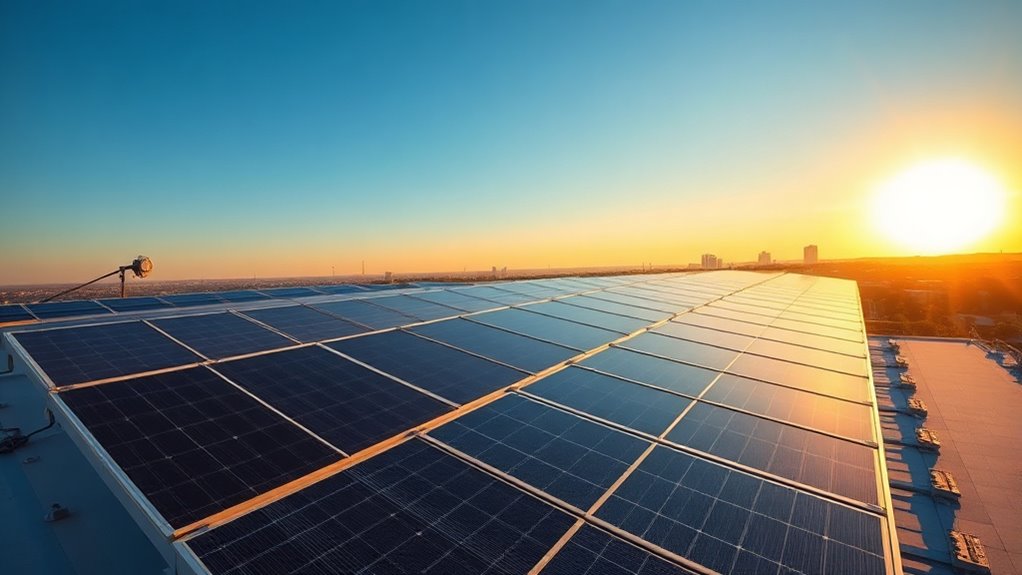
When choosing the azimuth angle for your solar panels, you’ll need to take into account your geographic location and how the sun moves throughout the seasons. Roof orientation and tilt angle can limit your options, while shading and nearby obstructions might reduce efficiency.
It’s important to keep these factors in mind because they help you maximize your panels’ energy output. So, don’t overlook the little things—they can make a big difference!
Geographic Location Impact
Because your geographic location shapes the sun’s path throughout the year, you’ll need to carefully consider how latitude and local surroundings affect your solar panel’s azimuth angle. Near the equator, panels often perform best facing true east–west to capture seasonal sun shifts.
While at higher latitudes, pointing true south (Northern Hemisphere) or true north (Southern Hemisphere) usually maximizes yearly energy. You should also account for local obstructions like buildings or trees, which might make a slight azimuth adjustment necessary to avoid shading.
In cloudy areas, diffuse light reduces azimuth sensitivity, so strict south-facing isn’t always crucial. Finally, if your grid demand peaks in the morning or afternoon, orienting panels east or west can better match your energy use and boost economic returns.
Seasonal Sun Path
Although the sun’s position changes throughout the year, you need to take into account its seasonal azimuth shifts when setting your panel’s angle. The sun’s azimuth at solar noon moves south in winter and north in summer, so you shouldn’t optimize for just one day.
At mid-latitudes, sunrise and sunset azimuths shift by roughly ±23.5° from equinox positions, expanding the best azimuth range. If you want more winter energy, bias your panel’s azimuth toward the winter sun to capture low-angle sunlight. Alternatively, adjusting your panel’s azimuth seasonally by 10–30° can boost annual output.
Finally, consider your dominant seasonal energy demand—whether summer cooling or winter heating—to weight your azimuth choice. The seasonal sun path affects incident angles and energy contribution throughout the year, so it’s worth thinking about what you need most.
Roof Orientation Constraints
Considering your roof’s orientation is essential when choosing the azimuth angle for solar panels, as it directly limits the directions your panels can face. The ridge orientation sets your feasible azimuth range: a south-facing plane allows azimuths near 180°, while east-west ridges restrict you to roughly 90°–270°.
Roof pitch and obstructions like chimneys may force panel placement on adjacent planes, offsetting the ideal azimuth by 30°–60°. Structural elements and setback requirements further confine usable roof area, narrowing azimuth options regardless of solar exposure.
If you plan a multi-string array, mixing azimuths can cause mismatch losses unless your inverter setup accommodates it. Also, local codes and load path considerations for wind or snow can restrict panel placement zones, effectively limiting acceptable azimuth angles even on unshaded roofs.
Panel Tilt Angle
Selecting the right panel tilt angle plays a crucial role in maximizing your solar system’s efficiency. Generally, you should set the tilt close to your site’s latitude, within ±10°, to optimize year-round solar capture.
For example, at 35° latitude, aim for a tilt between 25° and 45°. Adjusting the tilt seasonally—raising it about 15° in winter and lowering it by 15° in summer—can boost performance by matching the sun’s elevation.
If you use a fixed tilt, setting it equal to your latitude maximizes annual energy. Tilts steeper or shallower by 10–15° favor winter or summer output respectively.
Steeper angles help reduce soiling and snow buildup, improving winter production, whereas shallower tilts capture more summer midday sun but may need more frequent cleaning. Small tilt deviations usually cause minimal energy loss.
Shading and Obstructions
Nearby obstructions like trees, chimneys, or poles often cast shadows that can reduce your solar panel’s output by 10–25% or more during peak sunlight hours. Since shading between 9:00 and 15:00 local solar time hits your energy yield hardest, choose an azimuth angle that minimizes obstacles during this window.
Even partial shading on a module can trigger mismatch losses or hotspots, so try to avoid orientations where shadows repeatedly cross your array throughout the year. Keep in mind, seasonal sun path changes mean an obstruction harmless in summer might cause long winter shadows.
To make an informed choice, use horizon profiles, site surveys, or 3D shading tools to see how different azimuth angles affect shading losses. This way, you can optimize your panel orientation effectively and get the best possible energy output.
Energy Production Goals
Maximize your solar panel’s energy output by aligning its azimuth angle with your specific production goals. If you want peak midday energy for grid export or high solar rates, orient panels close to true south (Northern Hemisphere) or true north (Southern Hemisphere).
For morning or evening energy to match residential use, shift azimuth 15–45° east or west. In high latitudes, angle panels toward the winter sun to boost low-angle sunlight capture.
Keep in mind, even a 20° misalignment can cut annual energy output by 3–8%. Use annual insolation maps or PV simulation tools to quantify these effects precisely.
Weather Pattern Effects
Because weather patterns directly affect sunlight availability, you should consider local cloud cover and wind-driven cloud corridors when choosing your solar panel’s azimuth angle.
If your area often experiences morning fog or afternoon clouds, bias your azimuth toward the clearer half of the day to capture more sunlight. Seasonal winds that bring persistent clouds from a certain direction mean you’ll boost energy yield by orienting panels away from those sides.
In places with low-elevation haze, aim panels more southerly to avoid low-angle scattering losses. When overcast skies dominate, azimuth sensitivity drops, so near-south orientations work well regardless.
If weather varies rapidly, analyze multi-year cloud data to select an azimuth that maximizes energy during the longest clear-sky intervals. This way, you ensure consistent performance year-round.
Installation Accessibility
When setting the azimuth angle for your solar panels, make sure you can easily reach and adjust them from a stable position without constantly moving heavy equipment. Assure there’s enough clearance—at least 0.6 to 1 meter (2 to 3 feet)—around each panel for safe access and maintenance.
Design azimuth controls, like bolts or rotation mechanisms, so you can operate them with standard tools from your expected working spot. This way, you avoid awkward reaches or multiple ladder climbs.
Plan for future maintenance by routing walkways and leaving space to temporarily shift panels for cleaning or repairs. If you’ll adjust azimuth angles frequently or seasonally, consider easily accessible mounting points or motorized, remote-controlled systems.
These options reduce labor and safety risks while keeping your solar setup efficient. It just makes the whole process smoother and safer in the long run.
Frequently Asked Questions
How Does Azimuth Angle Affect Solar Panel Lifespan?
The azimuth angle affects your solar panel’s lifespan by influencing sun exposure and heat buildup. If panels face wrong directions, they overheat or underperform, causing faster wear.
You’ll want ideal angles to maximize efficiency and durability. That way, your panels work better and last longer. It’s all about getting the positioning just right!
Can Azimuth Angles Be Adjusted Seasonally?
Think of your solar panels like sunflowers—they can turn to follow the sun. Yes, you can adjust azimuth angles seasonally to maximize sunlight, boosting efficiency and energy production throughout the year.
It’s a smart move that doesn’t harm your panels at all. Just a little tweak here and there can make a big difference in how much energy you get!
Do Azimuth Angles Impact Solar Panel Warranty?
No, azimuth angles don’t usually impact your solar panel warranty directly. However, incorrect installation or damage from improper adjustments might void it.
How Do Shading and Azimuth Angle Interact?
You might not expect it, but shading combined with azimuth angle can seriously cut your solar panel’s efficiency. When panels face the wrong direction, even small shadows can block sunlight and reduce energy output dramatically.
It’s kind of surprising how much difference a bit of shade and the panel’s orientation can make. So, getting the angle right and avoiding shade is super important for maximizing your solar power.
What Tools Measure Azimuth Angles Indoors?
You can use digital compasses, smartphone apps with built-in sensors, or a theodolite to measure azimuth angles indoors. These tools help you accurately determine direction without needing direct sunlight or outdoor conditions.
It’s pretty handy because you don’t have to rely on the sun or be outside. Plus, these devices are usually easy to use and give you reliable readings.
Conclusion
Now that you know the top azimuth angles for 2027, you might think it’s a simple choice. But wait—there’s more to ponder before you lock in your panel’s direction.
Factors like location, shading, and seasonal shifts could change everything. Don’t rush just yet; the perfect angle isn’t just about numbers—it’s about maximizing every ray of sunlight.
Ready to optimize your energy? Finding the right azimuth angle could transform your solar game completely. Remember, the best solar panel azimuth angle depends on your unique environment and how you want to capture sunlight throughout the year.
So take your time, consider all the variables, and choose wisely. That way, you’ll get the most efficient solar panel orientation and truly boost your renewable energy benefits in 2027 and beyond.