6 Best Battery Backup for Solar Systems in 2027
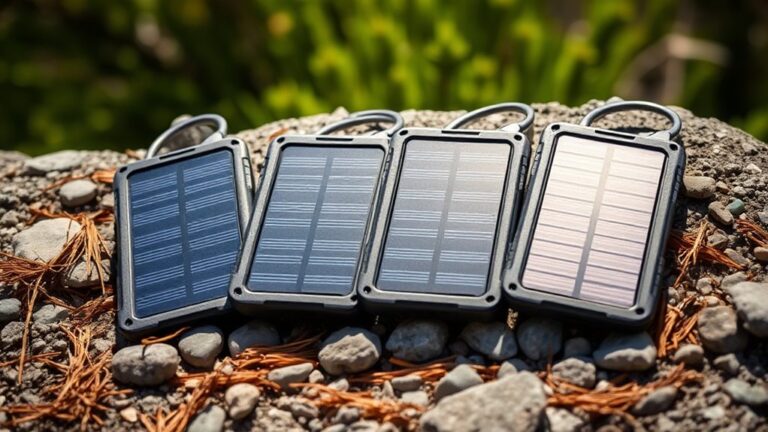
If you’re upgrading your solar setup in 2027, it’s smart to explore reliable battery backup options that keep your system running smoothly. LiFePO4 batteries stand out for their durability and efficiency. For example, the Portable Solar Generator 300W paired with a 60W panel is perfect for camping trips or on-the-go power needs.
Then, there’s the versatile Jackery Explorer 300 and PECRON E300LFP—both great choices if you want portable power that you can trust. When it comes to home backup solutions, you’ll want something with high capacity and long cycle life. The 48V 314Ah 16.08kWh batteries fit the bill and even come with smart monitoring features to keep an eye on performance.
For more heavy-duty needs, like running server racks, the VEVOR 48V 400Ah battery is a solid pick. Ultimately, choosing the right battery backup depends on capacity, durability, and compatibility with your solar system. Knowing these details makes it easier to find the perfect fit for your setup.
| Image | Name | Editor's Rating | Price |
|---|---|---|---|

|
|
||
|
|
||

|
|
||
|
|
||

|
|
Portable Solar Generator 300W Portable Power Station with 60W Solar Panel
- Portable Generator with 60W Solar Panel Included: with a big battery pack, ZeroKor 300W solar powered generator are...
- Multiple Charging outlets for camping gear with SOS Flashlight: with 2* 300W Max wall AC outlets, 1* DC port...
- Multiple Charging Optional, Solar Panel Charger 60W Included: ZeroKor portable power bank generator can be...
- Built in BMS(Battery Management System) : ZeroKor portable power station features short circuit protection...
- HIGH CONVERSION EFFICIENCY: ZeroKor solar panels 60W monocrystalline solar cell have a high conversion efficiency...
Experience reliable power anywhere with the Portable Solar Generator 300W paired with a 60W foldable solar panel. This lightweight unit offers a practical solution for camping, RV trips, and emergency situations where access to electricity is limited. It provides consistent energy to keep your devices running smoothly without the noise or fumes of a traditional generator.
Designed for versatility, this portable power station features 110V pure sine wave AC outlets, multiple USB ports, and a 12V car port. The included solar panel uses MPPT technology to maximize charging efficiency, ensuring you get the most out of available sunlight. Its compact design and low weight make it easy to carry and set up wherever you need power.
Maintenance is straightforward but important. Regular charging is necessary to prevent the battery from entering protection mode during extended storage. The solar panel junction box requires careful handling as it is not waterproof, so protecting it from moisture is essential for long-lasting use.
The generator’s built-in safety protections and cooling fan promote reliable and safe operation in various environments. Its 300W maximum output supports smaller devices, making it an ideal companion for outdoor enthusiasts and those seeking a dependable backup power source.
Best for: Outdoor enthusiasts, campers, and RV travelers needing a lightweight, portable power station for small electronics and emergency backup.
What We Like:
- Lightweight design at 5.1 pounds for easy portability
- Multiple charging options including AC, USB, car port, and solar panel
- MPPT technology in solar panel ensures efficient solar charging
- Built-in safety features and automatic cooling fan for safe operation
Specification:
| Feature | Details |
|---|---|
| Manufacturer | Not specified |
| Dimensions | Not specified |
| Weight | 5.1 lb (2.31 kg) |
| Battery Capacity | 280Wh |
| Maximum Output | 300W |
| Solar Panel Power | 60W |
| Output Ports | 110V AC, USB, 12V car |
| Solar Panel Type | Foldable monocrystalline |
48V 314Ah Lifepo4 16.08kWh Lithium Battery
- Advanced Safety & Long-Lasting Reliability: Engineered for total peace of mind, this 48V 314Ah LiFePO4 battery...
- Real-Time Monitoring via Display & App: Stay in control with multiple monitoring options: check real-time stats on...
- High Capacity, Space-Saving Design: With a massive 16.07 kWh of storage in a compact form, this battery powers your...
- Universal Inverter Compatibility: Equipped with RS485 and CAN communication interfaces, this battery seamlessly...
- Easy to Move & Install: Designed for hassle-free setup, the built-in handles and heavy-duty wheels allow you to...
Experience reliable, high-capacity energy storage with the 48V 314Ah LiFePO4 battery, designed to meet the demands of solar-powered homes. Its 16.08 kWh capacity ensures you have ample power for daily use, reducing dependence on the grid and increasing energy independence.
Durability is key with up to 6,000 cycles at 80% state of health, meaning this battery supports long-term energy needs without frequent replacements. The robust 200A BMS and six-layer safety protections provide peace of mind by preventing overloads and enhancing system reliability.
Maintenance is straightforward thanks to integrated Bluetooth and Wi-Fi monitoring, allowing you to track performance remotely. Compatibility with popular inverters such as Victron and Schneider simplifies integration, while scalability up to 15 units lets you expand your system as needed.
The thoughtful design includes portable handles and wheels, easing installation despite its 132 kg weight. This battery is ideal for homeowners looking for a durable, scalable solar storage solution that balances performance, safety, and ease of use.
Best for: Homeowners and solar energy users seeking a high-capacity, durable, and scalable lithium battery solution for reliable long-term energy storage and system integration.
What We Like:
- Long cycle life supporting extended, reliable use
- Comprehensive safety features including a powerful 200A BMS
- Easy system management with Bluetooth/Wi-Fi monitoring
- Compatibility with major inverter brands for flexible setup
- Portable design with handles and wheels for easier installation
Specification:
| Feature | Details |
|---|---|
| Manufacturer | Not specified |
| Capacity | 314Ah |
| Voltage | 48V |
| Energy | 16.08 kWh |
| Cycle Life | Up to 6,000 cycles @ 80% SOH |
| Weight | 132 kg (291 lb) |
| Safety Features | 200A BMS, six-layer protection, dual breakers |
| Connectivity | RS485, CAN, RS232, Bluetooth, Wi-Fi |
| Scalability | Up to 15 units in parallel |
Jackery Explorer 300 Portable Power Station,292Wh
- Ultra-Lightweight: At only 7.5 lbs, the Explorer 300 delivers a robust 292Wh capacity while remaining 17% lighter...
- Versatile Power for 6 Devices: Equipped with 2 AC outlets, a 100W USB-C PD port, 2 USB-A ports, and a 120W car...
- Built to Last: Upgraded with premium LiFePO4 chemistry, this portable generator delivers over 4,000 charge cycles...
- Fast Solar Charging: Perfect for off-grid use, this solar powered generator pairs seamlessly with Jackery panels...
- WHAT YOU GET: 1* Jackery Explorer 300 Portable Power Station, 1*AC adapter, 1* car charger cable, 1* user guide...
The Jackery Explorer 300 Portable Power Station is a compact and reliable energy solution designed to keep your devices charged wherever you go. Its lightweight design, weighing just 7.5 lbs, makes it effortless to carry on camping trips or outdoor adventures. The integrated handle adds convenience, so you can transport it with ease.
Equipped with a durable 292Wh LiFePO4 battery, this power station provides over 4,000 charge cycles, ensuring long-lasting performance for more than a decade. This means fewer replacements and consistent power availability for your devices over the years.
With a rated output of 300W and multiple ports, including AC outlets, USB-C PD, and a car port, it supports a variety of electronics from laptops to small appliances. Pairing it with a compatible 100W solar panel allows fast recharging to 80% in under three hours, making it ideal for off-grid solar setups.
While the device offers reliable power, note that the solar panel is sold separately. Also, the 600W peak surge power and two AC outlets may limit use with high-draw appliances or multiple devices simultaneously.
Best for: Outdoor enthusiasts and travelers needing a lightweight, durable, and efficient portable power station for camping and off-grid solar backup.
What We Like:
- Lightweight at 7.5 lbs with an easy-carry handle
- Long-lasting LiFePO4 battery with 4,000+ charge cycles
- Fast recharge with compatible 100W solar panel
- Multiple output ports for versatile device charging
Specification:
| Feature | Details |
|---|---|
| Manufacturer | Jackery |
| Battery Capacity | 292Wh |
| Battery Type | LiFePO4 |
| Weight | 7.5 lbs (3.4 kg) |
| Rated Output | 300W |
| Peak Surge Power | 600W |
| AC Outlets | 2 |
| USB-C PD Port | Yes |
| Car Port | Yes |
PECRON Portable Power Station E300LFP, 288Wh/600W Solar Generator
- [SMALL BUT POWERFUL]: 288Wh capacity with 600W AC pure sine wave inverter, Built-in 9 standard outlets, E300LFP...
- [POWER IT ALL]: E300LFP portable power station featuring 2 AC outlets, 2 USB-A ports, 1 USB-C port (input/output...
- [4 CHARGING WAYS]: E300LFP portable power station up to 300W AC fast charging, fully charged in 80 minutes. With...
- [SAFETY AND DURABLE]: The ultra-safe LiFePO4 battery with Built-in BMS assures the self-protection of short...
- [WHAT YOU GET]: 1+1 year worry-free warranty and 24hrs/7d friendly customer service. PECRON E300LFP portable power...
Looking for a portable power station that delivers reliable backup without weighing you down? The PECRON Portable Power Station E300LFP is designed to keep your essential devices powered wherever you go. Its 288Wh capacity and 600W pure sine wave inverter ensure stable and clean energy output, ideal for camping trips or emergency home use.
This compact unit weighs just 11.6 pounds, making it easy to carry and store. With nine output ports, including AC, USB-A, USB-C, and car outlets, it supports a wide range of devices. You can recharge it quickly—fully charged in 80 minutes through AC or in about three hours with compatible solar panels up to 100W.
Built around a durable LiFePO4 battery, the E300LFP offers long-lasting performance and enhanced safety. Its integrated battery management system protects against overcharge and overheating, reducing maintenance needs. However, the 288Wh capacity and 600W output limit mean it’s best suited for powering small to medium devices rather than extended heavy-duty use.
Best for: Outdoor adventurers and homeowners needing a lightweight, versatile, and fast-charging portable solar generator.
What We Like:
- Lightweight and compact design for easy transport
- Fast AC charging and flexible solar panel compatibility
- Durable LiFePO4 battery with built-in safety management
- Multiple output ports for diverse device support
Specification:
| Feature | Details |
|---|---|
| Manufacturer | PECRON |
| Capacity | 288Wh |
| Inverter Power | 600W pure sine wave |
| Weight | 11.6 lbs (5.26 kg) |
| Battery Type | LiFePO4 |
| Output Ports | AC, USB-A, USB-C, Car outlet |
| Solar Input Maximum | 100W |
VEVOR 48V 400Ah LiFePO4 Lithium Server Rack Battery UL9540 UL1973 100A BMS
- 51.2V LiFePO4 Battery: Officially tested to UL1973 & UL9540 safety standards, this server rack battery features...
- Real-Time Monitoring: Easily monitor this LiFePO4 lithium battery via LCD display and mobile APP. Track cell...
- Space-Saving Design: This server rack LiFePO4 lithium battery is fully compatible with standard server racks...
- 100A BMS Protection: Built-in 100A BMS keeps this server rack LiFePO4 battery from overcharge, over-discharge...
- Versatile Applications: This 51.2V LiFePO4 battery is ideal for home energy storage, solar energy storage, backup...

Experience dependable, high-capacity energy storage with the VEVOR 48V 400Ah LiFePO4 battery, tailored for demanding solar power systems. Its lithium iron phosphate chemistry delivers consistent power and long-lasting performance, helping you overcome energy storage challenges efficiently.
Designed for server rack installation, this battery saves valuable space and simplifies system integration. The built-in 100A Battery Management System (BMS) safeguards against overcharging, over-discharging, and short circuits, reducing maintenance needs and enhancing safety.
With a nominal voltage of 51.2 V DC and a continuous 100A current rating, it supports stable energy delivery for home or off-grid solar setups. The battery’s Bluetooth, WiFi, RS485, and CAN connectivity options allow real-time monitoring, keeping you informed and in control.
This battery offers over 6000 charge cycles, ensuring durability and long service life. While weighing 103.6 pounds, it requires careful handling during installation. Its 100A current limit suits moderate to high power demands but may not fit very high-load applications.
Best for: Homeowners or businesses needing a reliable, high-capacity lithium iron phosphate battery for solar energy storage and backup with advanced monitoring features.
What We Like:
- Extensive cycle life of 6000+ ensures lasting value
- Built-in 100A BMS enhances safety and battery health
- Multiple connectivity options for convenient system oversight
- Space-saving server rack design fits well in compact setups
Specification:
| Specification | Details |
|---|---|
| Manufacturer | VEVOR |
| Nominal Voltage | 51.2 V DC |
| Capacity | 400 Ah |
| Chemistry | LiFePO4 (Lithium Iron Phosphate) |
| Continuous Current | 100 A |
| Battery Management | Built-in 100A BMS |
| Weight | 103.6 lb (47 kg) |
| Certifications | UL1973, UL9540 |
| Connectivity | Bluetooth, WiFi, RS485, CAN |
| Design | Server rack compatible |
48V 314Ah LiFePO4 Lithium Battery Self-Heating, 9500+ Cycles & IP55

- 【16kWh High Capacity & 9500+ Long Cycles】: Grade A LiFePO4 cells deliver 16kWh of reliable energy storage...
- 【5-Inch LCD Touchscreen & Tool-Less Installation】: Intuitive capacitive touchscreen displays real-time battery...
- 【IP55 Protection & Mobile Design】: The electro-coated, rust-resistant IP55 enclosure protects against rain and...
- 【Advanced Safety Protection】: Meets UL1973 & UL9540 safety standards. Equipped with fire protection module...
- 【Precision Self-Heating & Easy Maintenance】: Self-heating function activates at ≤5℃ and shuts off at...
Experience reliable energy storage even in harsh winter conditions with the 48V 314Ah LiFePO4 battery featuring a precise self-heating system. This battery ensures efficient charging at temperatures below 5°C, solving common cold-weather charging challenges and keeping your power supply steady.
With a generous 16 kWh usable capacity and an impressive lifespan of over 9500 cycles at 80% depth of discharge, it delivers consistent performance for years. The rugged IP55-rated enclosure protects against dust and water, making it suitable for both indoor and outdoor installations.
Maintenance is straightforward thanks to concealed wheels and an anti-tipping bracket, simplifying setup and relocation. A clear 5-inch touchscreen provides easy monitoring of voltage, capacity, and cycle count, helping you keep track of battery health and usage.
Designed for scalability, it supports parallel connections of up to 32 units with CAN/RS485 communication. This flexibility makes it ideal for expanding solar energy systems, providing reliable backup power for homes or businesses in cold climates.
Best for: Homeowners or businesses in cold environments needing a durable, high-capacity, and scalable lithium battery solution for dependable solar energy storage.
What We Like:
- Long cycle life exceeding 9500 cycles at 80% depth of discharge
- Efficient self-heating system for charging below 5°C
- Scalable up to 32 units with versatile communication options
- Robust IP55-rated enclosure for indoor/outdoor use
- User-friendly touchscreen for real-time monitoring
Specification:
| Feature | Details |
|---|---|
| Manufacturer | Not specified |
| Voltage | 48V |
| Capacity | 314Ah |
| Usable Energy | 16 kWh |
| Cycle Life | 9500+ cycles (80% DoD) |
| Protection Rating | IP55 |
| Communication | CAN / RS485 |
| Dimensions | Not specified |
| Weight | Not specified |
Factors to Consider When Choosing Battery Back Up for Solar
When choosing a battery backup for your solar system, you’ll want to focus on capacity, chemistry, and how many charge cycles it can handle. Safety features are a must, and compatibility with your inverter guarantees smooth operation.
It might sound like a lot, but keeping these factors in mind really helps you pick the best option for your needs. Taking the time to consider each one will pay off in the long run.
Battery Capacity Importance
Choosing the right battery capacity is crucial to guarantee your solar backup meets your energy needs efficiently. Battery capacity, measured in watt-hours (Wh) or kilowatt-hours (kWh), determines how long your system powers your loads.
For example, a 5 kWh battery can run a 500 W load for about 10 hours. When sizing, factor in usable capacity considering the depth of discharge (DoD); a 10 kWh battery with 80% DoD offers only 8 kWh of usable energy.
Match capacity to your daily consumption plus extra for cloudy days or multi-day backup goals. Also, keep battery cycle life in mind — frequent deep discharges affect longevity.
If you need more power or runtime, paralleled batteries can expand capacity but require compatible management systems for safe operation.
Battery Chemistry Types
Explore different battery chemistries to find the best fit for your solar backup needs, as each type offers unique advantages and trade-offs.
Lithium iron phosphate (LiFePO4) batteries deliver excellent thermal stability and a long cycle life. That makes them ideal for long-term storage.
Lead-acid batteries cost less upfront but require more maintenance and have shorter lifespans. So, they might work if you’re on a budget but don’t mind some extra upkeep.
Other lithium-ion types, like NMC, pack higher energy density and lower weight. However, they come with shorter cycle lives and increased thermal risks.
Flow batteries offer nearly unlimited cycles and scalable capacity. But they tend to be bulkier, more complex, and pricier, with lower efficiency.
When choosing, consider usable depth of discharge, cycle life at that depth, energy density, safety, and total cost over the battery’s life. This way, you can be sure to pick the best solution for your solar system.
Charge Cycle Longevity
Because cycle life directly impacts your solar battery’s long-term cost, understanding how many full charge-discharge cycles a battery can handle at a given depth of discharge is essential. Batteries like advanced LiFePO4 models offer 4,000 to 9,500+ cycles at around 80% DoD. That means more years before capacity dips below practical levels.
You’ll want to limit cycling depth—sticking to 60%–80% DoD can markedly extend the battery’s usable life. Remember, calendar aging also reduces capacity over time, so opt for batteries with low calendar degradation and follow proper storage practices, like partial charge maintenance.
Additionally, a robust battery management system helps preserve cycle life by balancing cells and controlling temperature, voltage, and current, especially under stressful conditions. Ultimately, focus on total usable energy throughput, not just nominal capacity, to gauge true long-term value.
Safety Features Needed
Maintaining your battery’s longevity means more than just managing charge cycles—it also involves prioritizing safety features that protect both the system and your home. Make sure the battery has a robust Battery Management System (BMS) that guards against overcharge, over-discharge, short circuits, and extreme temperatures to prevent thermal runaway.
Check for certifications like UL1973 or UL9540, which confirm rigorous fire safety testing. If you live in colder climates, choose batteries with active thermal management or self-heating to avoid damage below 5°C.
Also, verify mechanical safeguards such as dual fuses, heavy-duty contactors, and IP55-rated enclosures that shield against faults, dust, and moisture. Finally, opt for systems with real-time monitoring via Bluetooth or Wi-Fi, so you can quickly detect and address unsafe conditions before they escalate.
Compatibility With Inverters
Choosing the right battery backup means making sure it works seamlessly with your inverter. First, check that the battery’s nominal voltage matches your inverter’s DC input—typically 12V, 24V, or 48V. This helps you avoid incompatibility or the need for extra converters.
Next, confirm your inverter supports the battery chemistry and charge/discharge profiles, like LiFePO4. You want to make sure it handles the proper charge voltages and current limits.
Also, see if the inverter and battery communicate via protocols like CAN or RS485. This is especially useful if you want state-of-charge monitoring or coordinated charging.
Make sure the inverter’s continuous and peak current ratings don’t exceed the battery and BMS limits. That way, you prevent any damage.
Finally, if you plan to use multiple batteries in parallel or stacked, check that your inverter and batteries support multi-unit setups. You don’t want to deal with complicated reprogramming or balancing gear later on.
Environmental Durability Factors
When your battery backup faces outdoor conditions, you need to make sure it can handle dust, moisture, and temperature extremes without failing. Choose batteries with at least an IP55 rating to prevent corrosion and ingress damage from rain or humidity.
Check the operating temperature range and built-in thermal management to guarantee safe charging and discharging in heat or cold. If your setup is mobile, look for vibration-resistant and shock-tolerant designs with reinforced housings to protect internal components.
Also, confirm the battery management system (BMS) safeguards against over-temperature, over-voltage, and moisture faults. It should also allow for inspection or remote monitoring.
Finally, prioritize corrosion-resistant materials and ensure proper ventilation and placement to avoid damage from salt air or chemicals. This will help extend battery life in harsh environments.
Maintenance And Monitoring
Regularly monitoring your battery backup is essential to catch issues before they cause system failures. Make sure your battery has a Battery Management System (BMS) with protections against over-charge, over-discharge, over-current, and temperature fluctuations.
Log these alerts frequently to prevent silent failures. Keep an eye on the state of charge (SOC) and cycle count through onboard displays or remote telemetry like Wi-Fi or Bluetooth. Try to avoid frequent deep discharges to extend battery life.
Schedule voltage, internal resistance, and cell-balance checks every 3–6 months, or review automatic balancing logs to spot aging cells early. It’s a good habit to maintain storage SOC between 60%–80% if the battery is idle, and recharge it monthly to avoid BMS shutdown.
Don’t forget to inspect the enclosure, ventilation, seals, and terminals every season. This helps prevent moisture buildup, corrosion, and loose connections that can cause problems down the line.
Frequently Asked Questions
How Long Do Solar Batteries Typically Last Before Replacement?
Solar batteries typically last between 5 to 15 years before you need to replace them. Your usage, maintenance, and battery type affect lifespan, so keeping an eye on performance helps you know when it’s time for a swap.
It’s a good idea to check your battery regularly. That way, you can catch any issues early and get the most out of your investment.
Can I Expand My Solar Battery Storage Later On?
You can definitely expand your solar battery storage later on. Most systems are designed to be modular, so you’ll just add more batteries as your needs grow.
This makes your energy setup flexible and future-proof. It’s a great way to keep up with changes in your energy use without having to start from scratch.
What Maintenance Is Required for Lithium-Ion Solar Batteries?
You don’t need much maintenance for lithium-ion solar batteries. Just keep them clean and guarantee proper ventilation.
Also, avoid extreme temperatures and check connections periodically. Most of the work is monitoring battery health through your system’s app or software.
It’s pretty straightforward, really! Just a little attention now and then keeps everything running smoothly.
Are Solar Battery Backups Safe for Indoor Use?
You won’t turn your home into a fireworks show—solar battery backups are safe indoors if you follow installation guidelines and guarantee proper ventilation.
Just don’t ignore manufacturer instructions, or you might invite trouble you definitely don’t want.
How Do Extreme Temperatures Affect Solar Battery Performance?
Extreme temperatures reduce your solar battery’s efficiency and lifespan. High heat speeds up degradation, which isn’t great for your battery over time.
On the flip side, cold temperatures slow down chemical reactions inside the battery, which limits its capacity.
Conclusion
Choosing the right battery backup for your solar system can feel like searching for a needle in a haystack, but it doesn’t have to be that hard. With options like the Portable Solar Generator 300W or the powerful 48V 314Ah Lifepo4 battery, you’re set to keep your energy flowing no matter what.
Just remember to take into account capacity, cycle life, and portability. These factors play a big role in how reliable and convenient your solar battery backup will be.
With the right choice, you’ll never worry about losing power again! Whether you need a compact solution for on-the-go use or a robust battery for home energy storage, picking the best battery backup for solar systems ensures continuous power supply. Keep these tips in mind, and you’ll enjoy a seamless solar experience in 2027 and beyond!