4 Best Batteries for Small Solar Systems in 2027
For your small solar system in 2027, you’ll want lightweight, reliable batteries that can keep your setup running smoothly. Options like the 12V 100Ah LiFePO4 Group 31 or the compact 12V 100Ah LiFePO4 Deep Cycle Solar Battery are excellent choices.
Both offer a long cycle life and are maintenance-free, making them perfect for hassle-free solar energy storage.
To keep your battery topped off, the 12V Solar Battery Charger Maintainer 20W Solar Panel Kit is a handy addition. It helps ensure your system stays charged even during low sunlight.
If space is tight, the ExpertPower EXP12180 AGM battery fits well and provides a reliable sealed design.
Remember, choosing the right battery means considering your specific setup and energy needs. Think about factors like size, capacity, and how much maintenance you’re willing to do. That way, you can pick the perfect battery that keeps your small solar system running efficiently.
| Image | Name | Editor's Rating | Price |
|---|---|---|---|

|
|
||

|
|
||
|
|
||

|
|
12V 100Ah LiFePO4 Battery Group 31 Deep Cycle Lithium Battery for RV Marine
- 【BMS Protection of 12V 100Ah Batteries】-Our LiFePO4 battery has built-in 100A BMS to protect it from...
- 【Mini Size Maximum Power】-The 12V LiFePO4 lithium battery measures only 12.9*6.69*8.5 inches and weighs 24 lbs...
- 【Capacity Expansion & Widely Use】- Equipped with premium LiFePO4 cells Plug-and-Play, this battery delivers...
- 【Widely used】-12V 100Ah LiFePO4 battery can be connected in parallel & in series for larger capacity. , allow...
- 【Efficient & Convenient】- Built-in BMS (Battery Management System) provides complete protection. Wide operating...
Discover the power and convenience of the 12V 100Ah LiFePO4 Battery Group 31, designed to enhance your energy storage with efficiency and reliability. This battery offers a lightweight alternative to traditional lead-acid models, weighing just 24 pounds—about 60% lighter—making installation and transport much easier.
Its advanced Battery Management System ensures safe operation by protecting against overcharge, over-discharge, and overheating. You’ll enjoy a stable and consistent energy supply, delivering 1280 Wh of usable power ideal for various applications. The battery supports expansion through parallel or series connections, allowing you to tailor capacity or voltage to your needs.
Maintenance is virtually eliminated, thanks to the battery’s robust design and long service life, with up to 15,000 cycles at 60% depth of discharge. This makes it perfect for demanding environments like RVs, marine vessels, and small solar power systems. However, charging should be done within 0 to 45 °C to avoid performance issues in colder conditions.
Best for: Users needing a durable, lightweight, and maintenance-free 12V battery solution for RVs, boats, or small-scale solar setups.
What We Like:
- Lightweight design enhances portability and ease of installation
- Built-in BMS offers comprehensive safety protections
- Long cycle life supports extended use over 10 years
- Flexible configuration with parallel or series wiring options
Specification:
| Feature | Details |
|---|---|
| Manufacturer | — |
| Dimensions | Fits BCI Group 31 case |
| Weight | 24 lb (10.9 kg) |
| Battery Type | LiFePO4 (Lithium Iron Phosphate) |
| Voltage | 12 V |
| Capacity | 100 Ah |
12V 100Ah LiFePO4 Deep Cycle Solar Battery
- Reliable 12V Solar Battery for Solar Systems: This 12V 100Ah LiFePO4 solar battery is designed specifically for...
- Long-Lasting, Deep Cycle Performance: The 12V 100Ah LiFePO4 battery offers over 15000 deep cycles, making it a...
- Lightweight and Maintenance-Free 12V Solar Battery: This 12V solar battery is 50% lighter than traditional...
- Versatile Solar Battery for Various Applications: Whether you're powering a solar system for your RV, marine...
- Battery Capacity / Low Power Troubleshooting Guide Use a dedicated 14.4V LiFePO4 charger; avoid lead-acid mixed...
Experience reliable and long-lasting power with the 12V 100Ah LiFePO4 Deep Cycle Solar Battery, designed to enhance small solar energy systems. Its advanced battery chemistry offers a maintenance-free solution that supports your off-grid lifestyle without frequent replacements.
This battery’s lightweight build at just 22.1 pounds makes it easy to install in tight spaces like RVs, boats, vans, or cabins. You’ll benefit from over 15,000 deep charge cycles, ensuring years of consistent energy storage for your essential devices.
With a nominal voltage of 12.8V and a capacity of 100Ah, it pairs seamlessly with 200W to 400W solar panels. Using a dedicated 14.4V LiFePO4 charger is essential to unlock its full potential and maintain battery health. The built-in Battery Management System (BMS) safeguards against overloads, providing safe operation and easy reset if triggered.
This battery is ideal for users seeking dependable, hassle-free power storage in compact off-grid solar setups. Its design balances performance with portability, making off-grid living more convenient.
Best for: outdoor enthusiasts and small off-grid solar users needing efficient, lightweight, and durable energy storage solutions.
What We Like:
- Over 15,000 deep charge cycles for extended lifespan
- Lightweight and compact for flexible installation
- Integrated BMS ensures safe and reliable operation
Specification:
| Feature | Details |
|---|---|
| Manufacturer | — |
| Voltage | 12.8 V |
| Capacity | 100 Ah |
| Weight | 22.1 lb (10 kg) |
| Compatible Charger | 14.4 V LiFePO4 charger |
| Ideal Solar Panel Range | 200W – 400W |
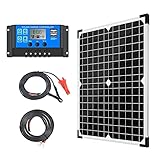
12V Solar Battery Charger Maintainer 20W Solar Panel Kit
- Multiple Compatibility:Perfect solar power kit for variety of off grid applications like shed, cabin, gate opener...
- Charger controller :Advanced PWM algorithm can fully protect the battery: under/over voltage, output overload...
- High Efficiency Monocrystalline Solar Cells, heavy duty anodized aluminum frame, the corrosion-proof aluminum frame...
- Light Weight and Durable:The four corners are equipped with protective cases to better protect the glass plate and...
- Package Included: 20 watts solar panel +10A solar charger and two 6.5ft cable with alligator clips and O-ring...
Harness the power of the sun with the 12V Solar Battery Charger Maintainer, designed to keep your batteries healthy and charged in small solar setups. This 20W solar panel kit uses high-efficiency monocrystalline cells to provide steady power, helping to extend battery life and reduce maintenance needs. Its PWM charge controller boosts charging efficiency by 20%, ensuring your batteries receive optimal care.
The durable design features a heavy-duty anodized aluminum frame and tempered glass, protecting the solar panel from harsh conditions. Built-in safeguards prevent voltage irregularities and short circuits, giving you peace of mind during use. This makes the charger maintainer reliable for various outdoor and off-grid applications.
Installation is straightforward with included cables, alligator clips, and O-ring terminals, allowing quick setup on vehicles, boats, or remote cabins. Although limited to 20W and fixed 12V compatibility, it suits small battery systems well. The moderate 1.11A output means charging larger batteries may take longer but is effective for maintenance charging.
Best for: Outdoor enthusiasts and vehicle owners needing a compact, reliable solar charger compatible with multiple 12V battery types.
What We Like:
- Efficient monocrystalline solar cells with PWM controller improve charging speed.
- Sturdy anodized aluminum frame and tempered glass enhance durability.
- Protective features guard against voltage spikes and short circuits.
- Easy installation with included cables and connectors.
Specification:
| Feature | Details |
|---|---|
| Manufacturer | Hoysicy |
| Power Output | 20W |
| Voltage | 12V |
| Max Current | 1.11A |
| Frame Material | Anodized Aluminum |
| Glass Type | Tempered Glass |
| Battery Compatibility | AGM, Flooded, GEL, Deep Cycle, Sealed Lead Acid |
| Accessories Included | Cables with alligator clips, O-ring terminals |
ExpertPower EXP12180 12V 18Ah AGM Replacement Battery
- Reliable SLA AGM Power: Durable 12V AGM battery designed for reliable, maintenance-free energy storage. Ideal for...
- Steady Performance: This sealed lead acid battery delivers slow discharge in low-drain, long-duration applications...
- Compact & Versatile 12 Volt Battery: Small 12 volt battery fits various setups with 7.13" x 3.03" x...
- Maintenance-Free: Fully sealed and spill-proof, this 12 volt battery rechargeable type requires no water refilling...
- Compatibility: Built to industry standards. Suitable as a replacement for 12V AGM batteries in UPS, usable as fish...

The ExpertPower EXP12180 battery delivers steady, reliable power for small solar setups and other low-drain applications. Its 12V 18Ah AGM design ensures long-lasting energy storage, ideal for devices that require slow, steady discharge over time. This battery helps maintain power without constant maintenance or worry.
With its fully sealed, spill-proof construction, the EXP12180 is maintenance-free and safe to handle. You won’t need to refill water or perform regular upkeep. Its compact size and 11.5-pound weight make it easy to fit into tight spaces, although it’s important to check tray clearance and connector compatibility before installation.
Designed primarily for solar storage, emergency lighting, and mobility devices, this battery excels in applications where long standby life is crucial. Use a 12V smart charger and avoid deep discharges to get the most out of its 3 to 5-year lifespan.
While the battery is not meant for rapid discharge or high-drain use, its slow-discharge design makes it dependable for consistent, low-power needs. It’s a practical solution for users seeking a durable, hassle-free power source.
Best for: Users needing a reliable, maintenance-free 12V battery for small solar systems, emergency lighting, and mobility devices.
What We Like:
- Fully sealed and spill-proof design for safety and convenience
- Long standby life with proper smart charging
- Compact, lightweight form fits small spaces
- Suitable for a variety of low-drain applications
Specification:
| Feature | Details |
|---|---|
| Manufacturer | ExpertPower |
| Voltage | 12V |
| Capacity | 18Ah |
| Type | AGM lead-acid |
| Weight | 11.5 lb (5.2 kg) |
| Maintenance | Maintenance-free |
| Dimensions | Check before install |
Factors to Consider When Choosing a Battery for Small Solar System
When choosing a battery for your small solar system, you’ll want to take into account key factors like battery chemistry, capacity, and voltage to make certain it meets your energy needs. Don’t forget to check the cycle life expectancy and maintenance requirements to find a durable, hassle-free option.
Also, think about the environmental conditions where you’ll use the battery to keep it running efficiently. It’s all about picking the right fit that works well for your specific situation.
Battery Chemistry Types
Although choosing the right battery chemistry might seem overwhelming, understanding the key differences can help you select the best option for your small solar system. Lead-acid batteries, including flooded, AGM, and GEL types, are affordable upfront and tolerate high charge voltages but require maintenance and offer shorter cycle life—typically 300 to 1,200 cycles.
Lithium iron phosphate (LiFePO4) batteries provide higher energy density and longer cycle life (4,000 to 15,000 cycles). They are about 60% lighter and maintain stable voltage under load with low self-discharge, which is pretty convenient.
NiMH and nickel-cadmium batteries are less suitable due to lower energy density, higher self-discharge, and environmental concerns. Keep in mind, LiFePO4 batteries handle deeper discharges safely, while lead-acid batteries need shallower discharge to extend life.
Capacity And Voltage
Since your battery’s capacity and voltage directly impact your solar system’s performance, choosing the right combination is essential. For small setups, 12 V batteries are common, but 24 V or 48 V systems help reduce current and wiring losses in larger loads.
Size your battery capacity (Ah) by dividing your daily energy use (Wh) by nominal voltage and usable depth of discharge. For example, 1,280 Wh ÷ 12.8 V ÷ 0.8 equals about 125 Ah for 80% usable capacity.
You can convert amp-hours to usable watt-hours by multiplying Ah, nominal voltage, and usable state-of-charge fraction to compare options accurately. Just make sure your solar panels and charge controller can recharge the battery fully within the sun hours you get.
Also, it’s a good idea to plan for expandability while respecting manufacturer limits and compatibility. That way, your system can grow with your needs without any hiccups.
Cycle Life Expectancy
Understanding cycle life expectancy helps you choose a battery that lasts through many charge–discharge cycles without significant capacity loss. Cycle life measures how many full charge–discharge cycles a battery can handle before its capacity drops to about 70–80% of its original.
Keep in mind, depth of discharge (DoD) greatly impacts this—shallower cycles, say 50–60% DoD, can multiply your battery’s lifespan compared to full 100% discharges. Battery chemistry matters too: LiFePO4 batteries often deliver thousands to tens of thousands of cycles, while lead-acid types offer fewer, typically a few hundred to a few thousand.
Also, operating conditions like temperature and charge rates affect cycle life; higher heat and faster charging speed up degradation. When comparing batteries, check cycle life specs under similar DoD and temperature to make an informed choice.
Maintenance Requirements
You’ll often find that maintenance requirements play a crucial role in choosing the right battery for your small solar system. Opt for maintenance-free chemistries like LiFePO4 to skip watering, equalization, or acid refilling needed by flooded lead-acid batteries.
You’ll need to monitor your battery’s state of charge closely—avoiding deep discharges and keeping voltages above recommended float levels prevents capacity loss and sulfation, especially in lead-acid types.
Use proper charging equipment with correct voltage setpoints tailored to your battery chemistry to avoid overcharging or undercharging that can shorten battery life.
Regularly inspect terminals, cable connections, and enclosures for corrosion, moisture, or looseness, and clean contacts when necessary.
Finally, keep your batteries in cool, dry environments within manufacturer-recommended temperature ranges to maximize cycle life and maintain performance.
Environmental Operating Conditions
Proper maintenance helps your battery last longer, but environmental conditions also play a big role in performance and lifespan. You need to make certain the battery chemistry supports your local temperature range—for example, many LiFePO4 batteries charge safely between 0–45°C and discharge down to –20°C.
Extreme temperatures reduce capacity and cycle life, so plan thermal management or insulation accordingly. Check that the battery’s management system includes protections like low-temperature cutoffs and over-temperature safeguards to prevent damage.
Also, consider humidity, dust, and water exposure by choosing a battery or enclosure with an appropriate IP rating and ventilation. If your site has wide daily temperature swings, install batteries in a stable, insulated location and derate capacity in your system design to maintain reliability.
Frequently Asked Questions
How Do Temperature Extremes Affect Battery Performance in Solar Systems?
Temperature extremes reduce your battery’s efficiency and lifespan. Cold slows chemical reactions, which lowers capacity. On the other hand, heat speeds up degradation.
You’ll want to protect your batteries from these extremes. Doing so helps maintain performance and extends their usable life. It’s worth the effort to keep them in a happy temperature range!
What Is the Typical Lifespan of Small Solar System Batteries?
Imagine your battery like a marathon runner; small solar system batteries typically last 5 to 15 years, depending on usage and care.
You’ll want to monitor cycles and temperature to keep it sprinting strong, not fading fast.
Can These Batteries Be Recycled or Safely Disposed Of?
Yes, you can recycle most small solar system batteries, especially lithium-ion and lead-acid types.
Always check local recycling programs and dispose of batteries safely to prevent environmental harm and recover valuable materials effectively.
How Do Charging Speeds Vary Between Battery Types?
You might think all batteries charge at the same pace, but they don’t. Lithium-ion charges fastest, lead-acid is slower, and flow batteries vary.
Knowing this helps you pick the right battery for your solar setup. It’s all about matching the battery to your needs and how quickly you want to recharge.
Are There Specific Maintenance Tips for Extending Battery Life?
You should keep batteries clean, avoid deep discharges, and maintain proper charge levels. Regularly check electrolyte levels in flooded types.
Also, store batteries in cool, dry places to extend their life and optimize performance. Taking these simple steps really helps keep your battery going strong!
Conclusion
Choosing the right battery for your small solar system isn’t just about power—it’s about peace of mind. You’ll want a reliable companion that quietly supports your energy needs without demanding much attention.
Whether you opt for lithium or AGM, each choice brings its own gentle strengths to the table. By considering capacity, longevity, and maintenance, you’ll find a battery that’s less of a chore and more of a trusted partner in your solar journey.
In 2027, picking the best batteries for small solar systems means focusing on durability and efficiency. A good battery should offer consistent performance while requiring minimal upkeep. When you choose wisely, your solar setup becomes smoother and more dependable. That’s the real win—having a battery that keeps your energy flowing without the hassle.