6 Best Charge Controllers for Solar Power Systems in 2027
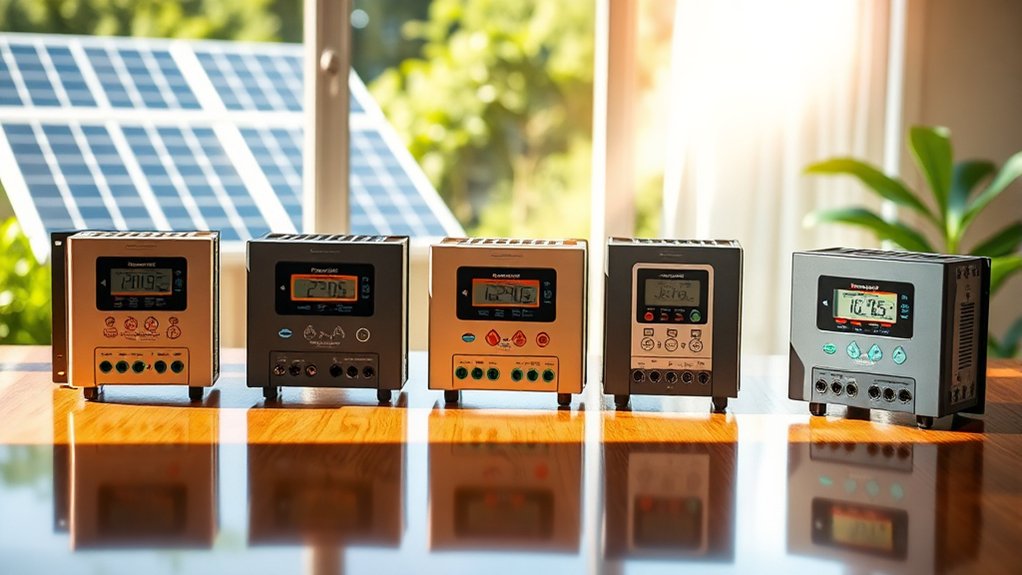
If you’re searching for the best charge controllers for solar power systems in 2027, you’ve come to the right place. The right charge controller can make all the difference in how efficiently your solar setup runs and how long your batteries last.
Start by checking out top models like the Victron SmartSolar MPPT, 100A MPPT Controller, and the Upgraded 100A MPPT (2026). These are known for their smart monitoring and high efficiency.
Also worth considering are the Renogy Wanderer 10A, Renogy Rover Lite 60A, and ACEIRMC 30A with USB. Each offers advanced safety features and is suitable for different system sizes.
Choosing the right charge controller means smoother energy management and longer battery life.
Stick around, and we’ll help you discover which one fits your solar needs best.
| Image | Name | Editor's Rating | Price |
|---|---|---|---|

|
|
||

|
|
||

|
|
||
|
|
||

|
|
Victron Energy SmartSolar MPPT Solar Charge Controller 100V, 50A, 12/24V
- SMART SOLAR CHARGE CONTROLLER: Solar charge the smart way with the Victron Energy SmartSolar MPPT charge...
- MAXIMIZE POWER OUTPUT: With lightning-fast optimum power point tracking and intelligent charge algorithms the...
- SYNCHRONIZED CHARGING: Multiple SmartSolar MPPT charge controllers can synchronize to behave as one, simultaneously...
- CONNECTIVITY: The VictronConnect app lets you connect with your system to gain insight into real-time data and...
- INTELLIGENT LOAD OUTPUT: Power devices directly and securely from your solar charger. Configure the voltage at...
Experience reliable and efficient solar energy management with the Victron Energy SmartSolar MPPT Solar Charge Controller 100V, 50A, 12/24V. This controller ensures your solar panels operate at their peak power point, maximizing energy capture even in partial shading conditions. Its advanced MPPT technology adapts quickly to changing sunlight, improving overall system performance.
Designed for both home and off-grid solar setups, this device supports the synchronization of multiple controllers. This feature allows for smooth transitions through all charging stages, helping to protect your battery and extend its lifespan. The intuitive VictronConnect app offers easy access to system monitoring, configuration, and firmware updates, simplifying maintenance and control.
Built with intelligent load management and automatic protection, the controller safeguards your system from overloads and faults. Its versatile design supports 12V or 24V battery systems, making it suitable for various solar power configurations. Regular maintenance is straightforward, mainly involving periodic system checks through the app.
Best for: Homeowners, RV owners, and off-grid users who need efficient and scalable solar charge management with smart monitoring capabilities.
What We Like:
- Efficient MPPT technology improves solar energy harvest.
- Synchronization enables scalable multi-controller setups.
- User-friendly monitoring and updates via VictronConnect app.
- Intelligent load management and system protection.
- Compatible with 12V and 24V battery systems.
Specification:
| Feature | Details |
|---|---|
| Manufacturer | Victron Energy |
| Model | SmartSolar MPPT Solar Charge Controller |
| Maximum PV Voltage | 100 V |
| Maximum Charge Current | 50 A |
| Battery Voltage | 12/24 V |
| Connectivity | Bluetooth (VictronConnect app) |
| Intended Use | Home and off-grid solar systems |
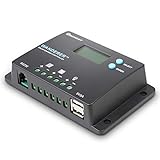
100A MPPT Solar Charge Controller with Auto Parameter LCD Display
- HASSLE-FREE PLUG & PLAY: Skip the confusing setups. With smart 12V/24V auto-recognition, installation is a breeze...
- TOTAL CONTROL AT A GLANCE: Take the guesswork out of your power management. The intuitive LCD screen gives you...
- CHARGE FASTER & MORE EFFICIENTLY: Maximize your solar yield effortlessly. By constantly tracking the maximum...
- WORRY-FREE OPERATION: Rest easy knowing your solar setup is completely safe. Built-in defenses automatically...
- RELIABLE WARRANTY & SUPPORT: Buy with confidence. We back our products with a full 12-month warranty for any...
The 100A MPPT Solar Charge Controller with Auto Parameter LCD Display offers efficient solar power management for 12V and 24V systems. Its smart auto-recognition feature simplifies setup by automatically detecting battery voltage, reducing installation errors. This makes it straightforward to connect your battery first, then your solar panels without confusion.
The controller’s intuitive LCD display provides real-time data on charging status and system performance. This allows users to monitor and adjust settings easily, ensuring optimal operation without needing technical expertise. The high charging efficiency of up to 99% helps maximize energy harvest from your solar panels.
Designed with built-in safety protections, it guards against overcharging, short circuits, and reverse polarity. This enhances system reliability and protects connected components over time. Maintenance is minimal, with clear indicators to help identify any issues quickly.
Overall, this charge controller suits users seeking a reliable, efficient, and easy-to-use solution for managing solar power in 12V or 24V setups.
Best for: Homeowners and solar enthusiasts needing efficient, hassle-free charge control for 12V/24V solar power systems.
What We Like:
- Auto 12V/24V detection simplifies installation
- High charging efficiency maximizes solar energy use
- LCD display offers clear, real-time system monitoring
- Built-in safety features protect against common electrical faults
Specification:
| Specification | Details |
|---|---|
| Manufacturer | Depvko |
| Max Current | 100A |
| Voltage Compatibility | 12V / 24V |
| Display | Auto Parameter LCD |
| Protection Features | Overcharge, Short-circuit, Reverse Polarity |
2026 Upgraded 100A MPPT Solar Charge Controller 12V, 24V, 36V, 48V
- Superior MPPT Technology: Advanced 100A MPPT solar controller algorithm auto-detects 12V/24V/36V/48V systems and...
- Versatile Design: Backlit LCD with clock offers 7 modes: charging, light control, light + time delay, universal...
- Comprehensive Voltage Protection: Protects against battery over-voltage, over-current, power failure, overcharge...
- User-Centric Design: LCD dynamically shows operating data and status, including working mode, battery voltage, PV...
- Diverse Battery Charging Options:This solar panel controller compatible with sealed, GEL, flooded, and LiFePO...
Experience reliable and efficient solar power management with the 2026 Upgraded 100A MPPT Solar Charge Controller. Designed to work seamlessly with 12V, 24V, 36V, and 48V systems, it adapts to various battery types including sealed, GEL, flooded, and LiFePO4. This versatility ensures your solar setup performs optimally, no matter your configuration.
The controller’s advanced MPPT algorithm automatically detects voltage and achieves over 99.5% tracking efficiency. This means more energy is captured from your solar panels, improving overall system performance. A clear backlit LCD keeps you informed with real-time system data, making monitoring straightforward.
Maintaining your system is simpler with seven operational modes, allowing you to tailor settings to your specific needs. Built-in protections prevent overcharging, deep discharge, and other common issues, extending battery life and safeguarding your investment. Dual USB ports add convenience for charging devices directly from your solar setup.
Installation requires connecting the battery before the solar panel, which may need careful attention during setup but helps protect the system. The robust design and user-friendly interface make it suitable for serious solar enthusiasts and system installers.
Best for: Users seeking a high-efficiency MPPT solar charge controller that supports multiple voltages and battery types for versatile solar power systems.
What We Like:
- Supports 12V to 48V systems and diverse battery chemistries including LiFePO4
- MPPT technology with over 99.5% tracking efficiency for enhanced energy capture
- Backlit LCD with real-time monitoring and seven customizable operation modes
- Comprehensive protection features to ensure battery and system safety
- Dual USB ports for added charging convenience
Specification:
| Feature | Details |
|---|---|
| Manufacturer | 2026 Upgraded Model |
| Voltage Support | 12V, 24V, 36V, 48V |
| Current Rating | 100A |
| Battery Types | Sealed, GEL, Flooded, LiFePO4 |
| Display | Backlit LCD |
| USB Ports | Dual USB |
| Dimensions | Not specified |
| Weight | Not specified |
Renogy Wanderer 10A PWM Solar Charge Controller 12/24V for Solar Panels
- 𝐒𝐦𝐚𝐫𝐭 𝟒-𝐒𝐭𝐚𝐠𝐞 12V/24V Solar Charge Controller: Renogy charge controller...
- ...
- 𝐇𝐢𝐠𝐡-𝐄𝐟𝐟𝐢𝐜𝐢𝐞𝐧𝐜𝐲 Renogy Solar Power Controller...
- 𝐕𝐞𝐫𝐬𝐚𝐭𝐢𝐥𝐞 Solar Charge Controller : Universal 12V/24V Battery Compatibility, whether you...
- 𝐒𝐦𝐚𝐫𝐭 𝐌𝐨𝐧𝐢𝐭𝐨𝐫𝐢𝐧𝐠 Renogy Charge Controller...

The Renogy Wanderer 10A PWM Solar Charge Controller offers a smart solution for managing your small to mid-sized solar power systems. It protects and extends battery life through its intelligent 4-stage charging process, which can improve battery longevity by up to 30%. This ensures your system runs efficiently and reliably over time.
Designed with convenience in mind, the Wanderer features a clear LCD display for real-time monitoring and a USB charging port to power small devices directly. Its rugged aluminum housing provides durability, making it suitable for various outdoor environments. The compact size allows easy installation even in tight spaces.
Maintenance is straightforward thanks to the controller’s robust build and comprehensive safety features. It safeguards your system with protections against overcharging, short circuits, and reverse polarity. While it lacks built-in Bluetooth, remote monitoring is possible via Renogy’s DC Home App with an additional module.
The controller supports 12V and 24V systems, making it a versatile choice for off-grid solar setups. However, the 10A current limit means it is best suited for smaller solar arrays and battery banks. Its IP32 rating suggests it should be installed in protected locations away from heavy moisture.
Best for: Small system owners or individuals needing a compact, reliable solar charge controller optimized for 12V/24V off-grid solar setups.
What We Like:
- Smart 4-stage charging extends battery life and boosts efficiency
- Comprehensive safety features ensure system protection and user safety
- Real-time LCD display and USB charging port add convenience
- Durable aluminum housing resists harsh environments
Specification:
| Feature | Details |
|---|---|
| Manufacturer | Renogy |
| Dimensions | Compact size (exact dimensions not specified) |
| Weight | Lightweight (exact weight not specified) |
| Material | Aluminum housing |
| Compatible Voltages | 12V / 24V |
| Max Current | 10A |
| Waterproof Rating | IP32 |
Renogy 60A MPPT Solar Charge Controller Rover Lite
- Compatible only with 𝐁𝐓𝟐 𝐁𝐥𝐮𝐞𝐭𝐨𝐨𝐭𝐡 𝐦𝐨𝐝𝐮𝐥𝐞(sold separately)!
- 【150V Maximum Solar Input】 The Renogy charge controller Rover Lite 60A features a robust 150V maximum solar...
- 【Reliable Performance in Extreme Temperatures】 Engineered for full-load operation from -31℉ to 113℉, this...
- 【Versatile Compatibility for Various Systems】 Renogy 60A solar charge controller excels in versatility and...
- 【Streamlined Design】 The Renogy MPPT solar charge controller offers intuitive operation and optional smart...
The Renogy 60A MPPT Solar Charge Controller Rover Lite is designed to optimize energy capture for high-capacity solar systems. Its advanced MPPT technology adjusts to changing sunlight, ensuring you get the most power from your panels throughout the day. This means more reliable energy for your home or off-grid setup without wasting solar potential.
This controller supports 12V, 24V, 36V, and 48V battery systems, making it versatile for various configurations. With a 150V solar input, you can connect multiple panels in series, which simplifies wiring and expands your system’s capacity. The built-in LCD screen provides clear, real-time status updates, helping you monitor performance easily.
Maintenance is straightforward thanks to its efficient cooling system and protective features that safeguard lithium batteries, especially in cold conditions. The labeled ports make installation simpler, but handling high voltage and current requires care. Optional Bluetooth monitoring lets you track your system remotely when paired with the separate module.
Best for: Homeowners or off-grid users seeking a dependable, high-capacity charge controller for multi-panel solar installations across diverse battery voltages.
What We Like:
- Efficient MPPT technology maximizes solar energy harvest.
- Supports multiple battery voltages and high-voltage solar input.
- Clear LCD display for real-time system monitoring.
- Protective features for lithium batteries in cold weather.
- Easy installation with labeled connection ports.
Specification:
| Feature | Details |
|---|---|
| Manufacturer | Renogy |
| Dimensions | 10.1 x 6.1 x 3.1 in |
| Weight | 3.7 lb (1.68 kg) |
| Supported Voltages | 12V, 24V, 36V, 48V |
| Max Solar Input Voltage | 150V |
| Max Charge Current | 60A |
| Display | LCD |
| Connectivity | Optional Bluetooth (module sold separately) |
ACEIRMC 30A Solar Charge Controller with USB

- 30A SOLAR CHARGE CONTRALLER Compatibility with 12V and 24V system, Discharge Current: 30A; dual USB output 5V...
- Fully 3-stage PWM regulation charging using direct charge, lifting charge, floating charge three-stage PWM...
- Easy to install and operate, Intuitive LCD display that can clearly indicate the status and data is able to switch...
- Built-in overcurrent protection, short circuit protection, reverse connection protection, open circuit protection...
- 30A Solar Charge Controller, Solar Panel Charger Controller 12V/24V, Multi-Function Adjustable LCD Display with...
The ACEIRMC 30A Solar Charge Controller with USB offers a smart solution for managing your 12V or 24V solar power systems. It efficiently protects your batteries while optimizing charge cycles, helping to extend their lifespan. This controller’s 3-stage PWM charging adjusts automatically to maintain battery health and prevent overcharging.
Its design includes dual USB outputs, allowing you to charge devices directly from the solar setup without extra adapters. The clear LCD display provides real-time information, making system monitoring straightforward. Adjustable power-off levels help safeguard lithium batteries from deep discharge, though full lithium battery compatibility is limited.
Installation is simple and compatible with various lead-acid batteries, making it suitable for homes, small businesses, and industrial applications. Safety features like overcurrent, short circuit, and reverse connection protection ensure reliable operation without constant supervision.
Best for: Homeowners and small business owners looking for a dependable and easy-to-use solar charge controller with integrated USB charging.
What We Like:
- Efficient 3-stage PWM charging for battery longevity
- Dual USB outputs for convenient device charging
- Built-in safety protections for worry-free use
Specification:
| Feature | Details |
|---|---|
| Manufacturer | ACEIRMC |
| Dimensions | 5.1 x 3.5 x 1.6 inches (approx.) |
| Weight | 0.35 lb (approx.) |
| Compatible Battery Types | Lead-acid (AGM, Gel, Flooded) |
| Voltage Support | 12V / 24V |
| Max Discharge Current | 30A |
| USB Output | 5V / 2.5A (dual port) |
Factors to Consider When Choosing Charge Controllers for Solar
When you’re picking a charge controller for your solar setup, you’ll want to pay attention to voltage and current capacity, as well as the type of controller technology. Make sure the controller matches your battery type and offers efficient power tracking.
Don’t forget to check for essential protection and safety features to keep your system secure. These little details can make a big difference in the long run. So, take your time and choose wisely!
Voltage and Current Capacity
Selecting the right charge controller starts with matching its voltage and current capacity to your solar power system. Make sure the controller supports your system voltage—typically 12V, 24V, 36V, or 48V—to avoid malfunctions or potential damage.
Always check the controller’s maximum input voltage, especially if you’re wiring panels in series; many models handle up to 150V.
Next, focus on current capacity. The controller’s amp rating should exceed the maximum current output from your solar array, which often ranges from 10A to 100A or more.
Choosing a charge controller with high efficiency—some MPPT models reach 99%—ensures you’re making the most of your solar energy. Finally, confirm compatibility with your battery type, as voltage and current requirements differ between sealed, GEL, flooded, and lithium batteries.
Controller Technology Type
While browsing charge controllers for your solar system, you’ll quickly notice two main technologies: MPPT (Maximum Power Point Tracking) and PWM (Pulse Width Modulation). MPPT controllers use advanced algorithms to continuously adjust and optimize the electrical operating point, squeezing out up to 99.5% efficiency in ideal conditions.
This means you capture more energy from your solar panels, especially during cloudy weather or when temperatures fluctuate. PWM controllers, on the other hand, are simpler and more affordable. They regulate voltage and current but usually result in lower energy transfer efficiency.
When choosing between them, pay close attention to efficiency ratings—higher numbers mean better overall performance. Also, look for controllers offering multiple charging stages and support for common system voltages (12V, 24V, 36V, 48V). It really makes a difference in how well your system runs.
Battery Compatibility Check
One of the most critical steps in choosing a charge controller is making certain it matches your battery type and voltage. You’ll need to confirm the controller works with the specific batteries you plan to use—whether they’re sealed, GEL, flooded, or lithium.
Each chemistry has unique charging needs, so choosing the right match helps maximize battery life and system performance. Always check if the controller supports your battery bank’s voltage, such as 12V, 24V, 36V, or 48V.
If you want flexibility or plan to expand, opt for controllers that handle multiple battery types and voltages. Adjustable settings for different chemistries can prevent overcharging or damage.
Finally, verify the controller’s maximum charge current meets or exceeds your battery bank’s requirements. That way, you’ll keep everything running smoothly without a hitch.
Efficiency and Power Tracking
After confirming your charge controller matches your battery type and voltage, it’s just as important to focus on how efficiently the controller manages power from your solar panels. Efficiency is largely determined by the controller’s ability to track the maximum power point (MPPT).
Top MPPT controllers use smart algorithms to adjust in real time, capturing over 99% of available energy—even when sunlight fluctuates or panels are partially shaded. This precise tracking not only maximizes energy harvest, but also helps extend your battery’s life by delivering ideal charging across multiple stages. It minimizes risks of overcharging or undercharging, too.
Additionally, advanced controllers offer real-time monitoring, letting you track solar input and battery status for informed energy decisions. Always compare MPPT with PWM options to guarantee your system’s peak performance.
Protection and Safety Features
Even the most efficient charge controller won’t protect your solar investment without robust safety features built in. When you’re choosing a charge controller, make certain it includes overcharge protection to stop batteries from being damaged when voltage spikes on sunny days.
Short-circuit protection is vital too—it guards your system against unexpected wiring issues or equipment failures. You’ll also want reverse polarity protection, which keeps your controller safe if wires are accidentally connected the wrong way.
Over-discharge protection is especially important for lithium batteries, preventing deep discharges that could shorten their lifespan. Finally, look for temperature compensation. This feature adjusts charging based on ambient temperatures, enhancing both battery longevity and system performance.
Prioritizing these protections will help guarantee your solar setup runs safely and reliably. It’s all about keeping your system working smoothly without any nasty surprises.
Display and Monitoring Options
Alongside robust safety features, it’s important to think about how you’ll monitor your solar power system’s performance. Many modern charge controllers offer real-time monitoring through clear LCD displays, showing you essential data like voltage, current, and system status.
These displays keep you informed, letting you spot issues quickly and fine-tune your setup for peak efficiency. Advanced models go further, providing smartphone connectivity so you can track energy generation and consumption from anywhere.
If you often check your system at night, look for controllers with backlit displays for better visibility. Auto-parameter LCDs streamline the process by adjusting settings automatically based on system conditions, which makes operation more intuitive.
With these monitoring options, you’ll always have the insights needed to maximize your solar investment. It really makes managing your system simpler and more effective.
Installation and Setup Ease
While choosing a charge controller, installation and setup should be straightforward to save you time and hassle. You’ll want to look for models with plug-and-play functionality, which automatically detects system voltage and reduces setup steps.
Pay attention to controllers that specify a clear connection order—most recommend connecting the battery first to establish a stable charging base before attaching the solar panels. Select units with intuitive displays, as real-time monitoring will help you troubleshoot and fine-tune settings right from the start.
Check if the controller includes a detailed user manual or offers online guides; these resources can make the process much smoother. Finally, consider the device’s size and weight—compact, lightweight controllers are far easier to install in tight or awkward spaces.
Warranty and Support Services
A reliable warranty and responsive support services can make a big difference when you’re choosing a charge controller for your solar setup. Most controllers come with a 1- to 2-year warranty, covering defects in materials and workmanship—crucial for long-term reliability.
Some manufacturers offer lifetime technical support, so you’ll always have help with installation, troubleshooting, or maintenance. It’s a great safety net to have.
Be sure to check the specific warranty requirements, like proof of purchase or following recommended installation guidelines, to keep your coverage valid. These little details can really matter.
Quick response times from support teams are important, ensuring any issues are resolved promptly. Nobody wants to be stuck waiting when there’s a problem.
You can often purchase an extended warranty for added peace of mind, making your solar investment even more secure. It’s worth considering if you want extra protection.
Always review support policies before making your final decision. It helps you know exactly what you’re getting into.
Frequently Asked Questions
Can I Use a Charge Controller With Lithium Batteries?
Yes, you can use a charge controller with lithium batteries, but you need one that’s specifically designed or programmable for lithium chemistry.
Make sure it supports the correct charging profile and voltage to protect your batteries and maximize performance.
It’s really important to match the controller to the battery type, so you don’t risk damaging your batteries or shortening their lifespan.
Choosing the right charge controller means your lithium batteries will stay safe and work efficiently over time.
How Do I Size a Charge Controller for My Solar System?
To size a charge controller, calculate your solar array’s maximum current output and match it to a controller with higher amperage. Make sure the controller supports your system’s voltage, and always add a 25% safety margin.
It’s pretty simple once you get the hang of it. Just remember to check those numbers carefully so your system runs smoothly and safely.
Are Charge Controllers Weatherproof and Suitable for Outdoor Installation?
Yes, many charge controllers are weatherproof and designed for outdoor installation, but you’ll need to check the IP rating. This rating tells you how well the device is protected against dust and water.
Always mount them in a shaded, ventilated place to protect from direct sun, rain, and extreme temperatures. It helps keep the controller working efficiently and lasting longer.
What Happens if I Connect Panels With Different Voltages to One Controller?
Mixing mismatched panel voltages may make your controller confused, causing charging chaos. You’ll likely lose efficiency, limit output, or even damage devices.
Always align and match voltages for smooth, safe, and successful solar system performance. It just makes everything work better and keeps your gear happy.
How Often Do Charge Controllers Need Maintenance or Firmware Updates?
You should check your charge controller’s maintenance schedule every 6-12 months. Clean the terminals and make sure all connections are tight.
For firmware updates, keep an eye on the manufacturer’s website. Updates usually come out once a year or whenever they need to fix bugs or boost performance. Just stay updated so your system runs smoothly!
Conclusion
When it comes to solar charge controllers, remember—don’t put all your eggs in one basket. Each system has unique needs, and the right controller can make all the difference in efficiency and longevity.
Whether you’re eyeing a robust MPPT model or a simple PWM controller, weigh your options carefully. It’s all about matching the controller to your solar power system’s specific demands.
With smart choices, you’ll harness the sun’s power seamlessly. The right solar charge controller not only boosts performance but also extends the life of your batteries.
In the end, picking the best charge controller for your solar setup ensures you get the most from your renewable energy investment. So, choose wisely and keep your solar power system running smoothly for years to come.