1 Best Commercial Solar Contractors for 2027 (Top Pick)
If you’re looking for the best commercial solar contractor for 2027, it’s important to choose one with up-to-date licensing, NABCEP certification, and strong insurance coverage. These credentials show they’re serious about quality and safety.
Also, pick a team with a solid track record on large-scale installations. They should use reliable, industry-certified components—like NEC 2026 reflective solar labels—to ensure your system lasts and stays safe.
Top contractors know their way around code compliance, resource management, and post-installation support. This means you can invest confidently, knowing your project is in good hands.
Stick around, and I’ll help you spot these key qualities so you can make the best choice for your commercial solar needs.
| Image | Name | Editor's Rating | Price |
|---|---|---|---|

|
|
NEC 2026 Reflective Solar Label Kit, 92-Piece
- 92-PIECE NEC 2026 SOLAR LABEL KIT – Complete 92-piece solar system label kit designed for photovoltaic...
- ENGINEER-GRADE REFLECTIVE MATERIAL – Made with engineer-grade glass bead reflective sheeting for improved...
- TRAFFIC-GRADE INK & ACRYLIC OVERLAMINATE – Printed with traffic-grade ink and protected by an acrylic...
- DESIGNED FOR 5 YEARS OUTDOOR USE – Built for demanding outdoor solar installations and designed for up to 5 years...
- EASY-PEEL BACKING FOR FASTER INSTALLATION – The backing paper is specially cut wider than the sticker, creating...
The NEC 2026 Reflective Solar Label Kit offers a practical solution for clear, durable labeling on photovoltaic systems. Its engineer-grade reflective material ensures critical safety warnings and identifications remain visible in low light and harsh outdoor conditions. This visibility helps maintain compliance and enhances safety on solar installations.
Designed for efficiency, the kit includes 92 labels with easy-peel backing that simplifies application on panels, disconnects, meters, and circuits. The reflective sheeting combined with traffic-grade ink and an acrylic overlaminate protects labels from fading and weather damage for up to five years. This durability reduces frequent maintenance and replacements.
While the labels cover a wide range of photovoltaic identification needs, they may be more than necessary for smaller systems. The kit is not customizable, which could limit use for unique or specialized labeling requirements.
Overall, the NEC 2026 Reflective Solar Label Kit supports clear communication and compliance in solar projects, balancing durability with straightforward installation.
Best for: Commercial and residential solar contractors or electricians needing high-visibility, long-lasting photovoltaic system labels.
What We Like:
- High-visibility reflective material improves safety and compliance
- Includes a comprehensive set of 92 labels for various solar system needs
- Easy-peel backing speeds up installation and reduces downtime
- Durable materials resist fading and weathering up to five years
Specification:
| Feature | Details |
|---|---|
| Manufacturer | NEC |
| Number of Labels | 92 |
| Material | Glass bead reflective sheeting |
| Ink Type | Traffic-grade ink |
| Overlaminate | Acrylic |
| Outdoor Durability | Up to 5 years |
Factors to Consider When Choosing Commercial Solar Contractors
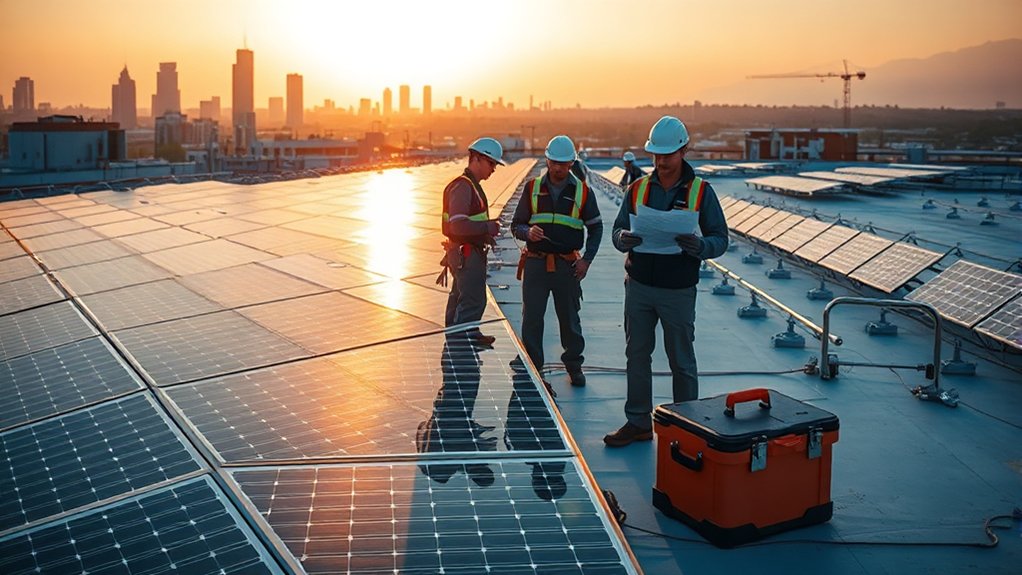
When you’re choosing a commercial solar contractor, make sure they hold the proper licenses and certifications. You’ll want a team with experience handling large projects.
It’s also important they use high-quality solar components and follow all safety codes.
Don’t forget to check what maintenance and support services they offer after installation. That way, you know you’re covered long-term.
Licensing and Certification Verification
Proper documentation forms the backbone of a trustworthy commercial solar contractor. When selecting a contractor, you should verify that they hold all necessary state and local licenses for solar installations in your area.
Licensing requirements differ by region, so it’s essential to confirm their credentials are current and in good standing to avoid legal complications. Look for certifications from respected organizations like the North American Board of Certified Energy Practitioners (NABCEP), which demonstrates a higher level of expertise.
Additionally, contractors who engage in ongoing training programs stay up to date with evolving technologies and regulations. This ensures your project benefits from the latest advancements.
Finally, always confirm the contractor is insured and bonded. This protects you from liability if accidents or damages occur during installation.
Experience With Large Projects
Because large-scale solar installations come with unique challenges, you’ll want a contractor who’s already proven their ability to handle complex, high-stakes projects.
When you evaluate a contractor’s experience with large commercial jobs, you’re checking if they can manage the intricacies of scale and logistics effectively.
Contractors with a solid background in big projects know how to navigate varying local regulations and secure the right permits, minimizing delays.
Their resource management skills—coordinating labor, scheduling deliveries, and keeping timelines tight—are critical when every day counts.
Don’t hesitate to ask for case studies or references from similar-sized installations; these reveal how a contractor overcomes obstacles and manages workflow.
Experienced teams also tend to integrate advanced solutions that boost system performance and ease long-term operation.
Quality of Solar Components
Although a contractor’s track record is important, the quality of the solar components they use can make or break your investment. When choosing a commercial solar contractor, you need to pay close attention to the panels, inverters, and mounting systems they install.
High-quality components directly impact your system’s efficiency and longevity. This means better energy output and fewer maintenance headaches over time.
Make sure your contractor uses materials that meet recognized industry standards and certifications. These guarantees mean reliability and long-term safety.
You’ll also want to look for reflective safety labels on photovoltaic equipment. They add another layer of assurance by improving system visibility.
Compliance With Safety Codes
When selecting a commercial solar contractor, you need to guarantee they strictly follow all relevant safety codes and regulations. Compliance guarantees your installation meets local, state, and national standards, which minimizes legal risks and promotes safe system operation.
Make sure your contractor adheres to the National Electrical Code (NEC). This code governs proper electrical installation, labeling, and circuit management for solar projects.
Safety codes often require reflective labels on photovoltaic systems. These labels help first responders and maintenance crews identify key components quickly.
Since codes are regularly updated, your contractor should stay current with any changes. This ensures ongoing compliance and keeps your project safe.
Ignoring these rules can lead to fines, project delays, and increased insurance costs. So, choosing a contractor who prioritizes compliance protects your investment and keeps your project running smoothly.
Maintenance and Support Services
After confirming your contractor’s adherence to safety codes, it’s just as important to assess their maintenance and support services. Look for providers that offer extensive maintenance, including routine system inspections and performance monitoring to keep your solar installation running efficiently.
Make sure they provide a clear warranty and support plan that covers both equipment and installation, so repairs and replacements are handled without hassle.
Don’t forget to ask about emergency support availability—quick response times can minimize downtime and protect your business from revenue loss.
Consider contractors who offer educational resources, empowering you to maintain your system’s efficiency and longevity.
Finally, evaluate their track record for customer support and responsiveness. Clear, timely communication is essential for resolving maintenance issues quickly and keeping your investment secure.
Frequently Asked Questions
How Long Does a Typical Commercial Solar Installation Take From Start to Finish?
A typical commercial solar installation takes about three to six months from start to finish. You’ll go through site assessment, design, permitting, equipment procurement, installation, and grid connection.
Timelines can vary based on project size and local regulations. So, it might be a bit quicker or longer depending on where you are and how big the project is.
What Maintenance Is Required for Commercial Solar Panels?
You’ll need to clean your commercial solar panels a few times a year and check for debris. Scheduling annual professional inspections is also important.
Don’t forget to monitor system performance regularly. This way, you can quickly catch and fix issues like wiring or inverter faults.
Can Commercial Solar Systems Be Expanded in the Future?
Absolutely, you can expand commercial solar systems later—imagine adding more bookshelves to your library as your collection grows.
In fact, a recent study found 60% of businesses expanded their solar arrays within five years. It’s pretty common to start small and grow bigger over time.
What Financing Options Are Available for Commercial Solar Projects?
You can choose from various financing options like solar leases, power purchase agreements (PPAs), loans, or cash purchases. Each option lets you control costs and ownership, so you’ll want to compare terms before making a decision.
It’s important to look closely at what each option offers. That way, you can find the best fit for your project’s needs and budget.
Are There Tax Incentives for Commercial Solar Installations in 2027?
You’ll find it’s no coincidence that 2027 offers strong tax incentives for commercial solar installations.
You can claim federal investment tax credits, accelerated depreciation, and possible state rebates. These perks make your investment more affordable and profitable than ever.
Conclusion
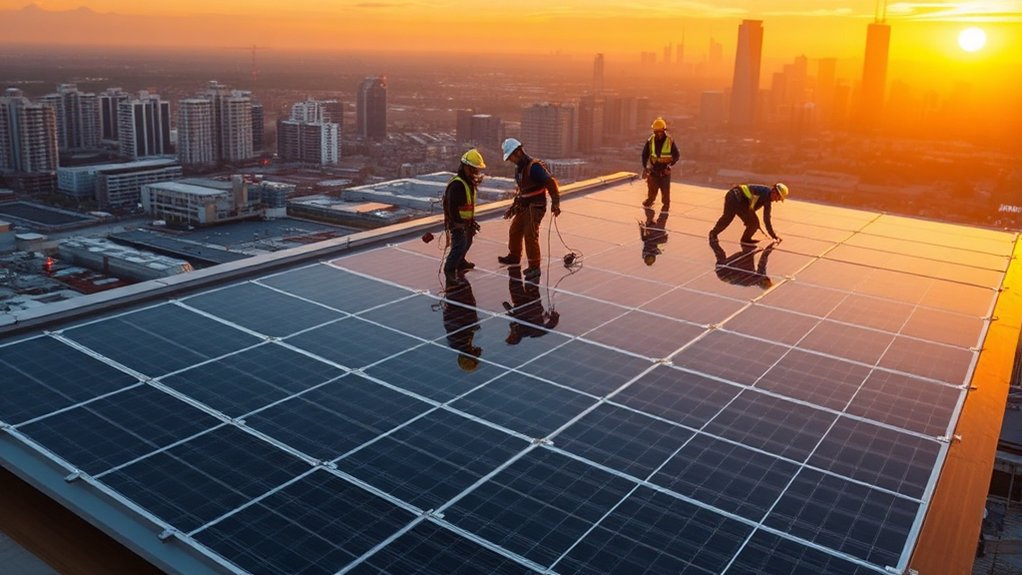
When you picture sunlight glinting off a flawless array of solar panels, you want to know that every detail—from the NEC 2026 reflective labels to ongoing support—was handled by true professionals.
Choosing the right commercial solar contractor means your investment won’t just shine today, but will power your business reliably for years. Trust your project to experts who value precision, safety, and lasting quality.
With the best commercial solar contractors for 2027, you’re not just installing panels—you’re securing a brighter energy future. These pros ensure your system runs efficiently and complies with all the latest standards. When you prioritize expert care and top-tier service, your business’s solar success is guaranteed to grow with every sunrise.