6 best commercial solar panel efficiency 2026
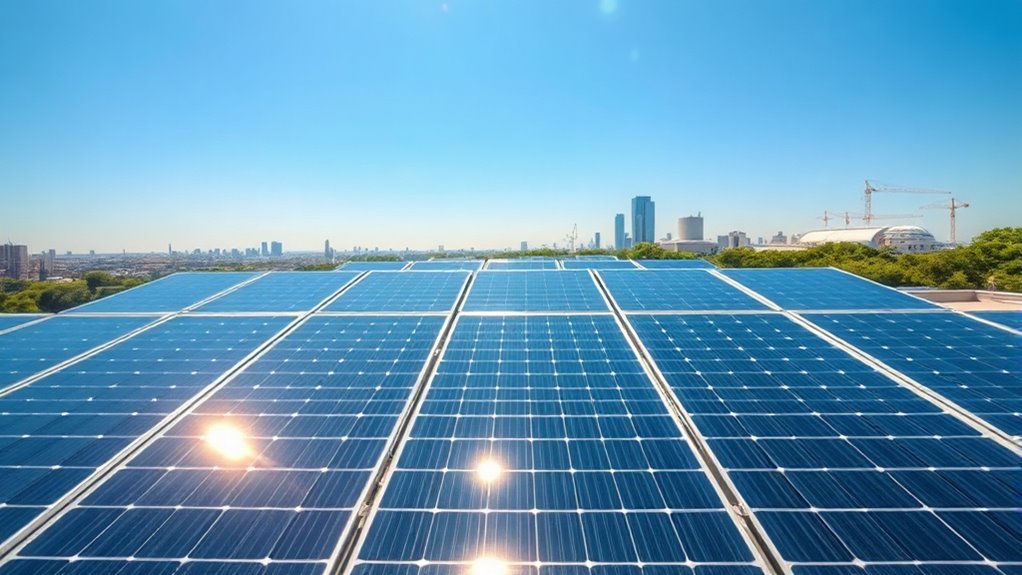
For top commercial solar panel efficiency in 2026, you’ll want to focus on panels featuring N-Type 16BB bifacial cells. These cells deliver high power outputs, like Renogy’s 590W or JJN’s 425W models, which can boost energy harvest by up to 30%.
Durability is just as important as efficiency. Look for designs with double-glass or frameless construction, which usually come with strong wind and snow ratings to withstand harsh conditions.
The efficiency gains come from capturing light on both the front and rear sides of the panel, plus improved shading tolerance.
Taking the time to explore these factors will help you find the best fit for your commercial needs and specific installation conditions. It’s all about maximizing your energy output while ensuring the panels hold up over time.
450W Bifacial Solar Panel 36-Pack, N-Type 16BB Solar Cells
Harness the power of sunlight more efficiently with the 450W Bifacial Solar Panel 36-Pack featuring advanced N-Type 16BB solar cells. Designed to maximize energy output, these panels capture sunlight from both sides, increasing overall power generation without requiring additional units. This bifacial technology is especially effective in open or reflective environments, helping you generate more clean energy with fewer panels.
The high-quality N-Type monocrystalline cells with 16 busbars reduce degradation, ensuring your system maintains peak performance over time. These panels are optimized for high-voltage MPPT systems, which means you can run larger solar arrays with minimal current loss and improved efficiency. Their durable double-glass construction adds stability but requires careful mounting and handling during installation.
Maintenance is straightforward thanks to the robust design, but to fully benefit from the bifacial feature, it’s best to install these panels in areas with good ground reflectance. While the upfront investment is higher than standard panels, the long-term gains in energy yield and reliability make it worthwhile for demanding commercial or residential projects.
Best for: commercial and high-capacity residential solar projects seeking high efficiency, durability, and reduced panel count for optimized energy output and long-term reliability.
What We Like:
- High energy yield and low degradation with advanced N-Type 16BB monocrystalline cells
- Bifacial design increases energy harvest from both panel sides
- Optimized for high-voltage MPPT systems to reduce current losses
- Durable double-glass panels provide stability and long-term reliability
- Effective in environments with reflective surfaces or open spaces
Specification:
| Feature | Details |
|---|---|
| Manufacturer | Not specified |
| Panel Power | 450W |
| Cell Type | N-Type Monocrystalline 16BB |
| Panel Count | 36-Pack |
| Panel Design | Bifacial, double-glass |
| Compatibility | High-voltage MPPT systems |
| Installation Considerations | Requires robust mounting due to size and weight |
EPOCH 2PCS 460W Bifacial Solar Panel, 920W N-Type with Frameless Design
Experience the power of advanced solar technology with the EPOCH 2PCS 460W Bifacial Solar Panel. This set delivers a combined output of 920W through its high-efficiency N-type cells, providing more energy per square foot than standard panels. Its unique bifacial design captures sunlight on both sides, increasing overall energy production by up to 30%.
The frameless CleanEdge design reduces dust buildup and allows rain to naturally clean the surface, minimizing maintenance needs. Built to withstand harsh weather, these panels resist wind loads up to 2400Pa and snow loads up to 5400Pa, ensuring reliable performance over many years.
Ideal for homeowners and off-grid users, these panels maximize power generation while offering durability in various environments. Installation may require special mounting hardware due to the frameless design, and optimal performance depends on the installation setting to make the most of reflected light.
Best for: homeowners and off-grid users seeking durable, high-efficiency solar panels with dual-sided energy capture for enhanced power output and low maintenance.
What We Like:
- High power output with efficient N-type cells delivering 920W total
- Bifacial dual-glass design boosts energy yield by up to 30%
- Frameless CleanEdge design reduces dust and uses rain for cleaning
- Durable construction withstands strong wind and heavy snow loads
Specification:
| Feature | Details |
|---|---|
| Manufacturer | EPOCH |
| Panel Power | 460W per panel |
| Total Power | 920W (2 panels) |
| Cell Type | N-type |
| Efficiency | 25.6% |
| Design | Bifacial, frameless |
| Wind Load Rating | 2400Pa |
| Snow Load Rating | 5400Pa |
HQST 400W Solar Panel, 2 * 200W, N-Type, Bifacial, 16BB, 25.4% Efficiency,
Experience efficient solar power in a compact design with the HQST 400W Solar Panel system. This setup combines two 200W N-Type bifacial panels that deliver up to 25.4% efficiency, making it ideal for users who need reliable energy in limited spaces.
The bifacial panels capture sunlight from both sides, increasing energy generation by up to 30% depending on your environment. This feature makes it a smart choice for rooftops or mobile setups where maximizing output is essential. The panels’ 16BB cell technology enhances durability and ensures stable performance over time.
Designed to be lightweight and compact, this solar panel system fits easily into tight areas like campervans, tiny homes, or off-grid cabins. Installation is straightforward, reducing the need for extensive mounts and wiring. Regular maintenance is minimal, thanks to sturdy materials that withstand various weather conditions.
While the bifacial gain depends on surface reflectivity and installation, this system offers a long-lasting power solution that adapts to different settings. Its advanced technology supports users looking for durable, space-saving solar energy without sacrificing efficiency.
Best for: Users seeking a high-efficiency, durable solar panel system for limited rooftop or mobile installations such as campervans, tiny homes, and off-grid living.
What We Like:
- High 25.4% efficiency with advanced N-Type and 16BB cells for consistent energy output
- Bifacial design boosts power generation by capturing sunlight on both sides
- Compact and lightweight, ideal for tight spaces and mobile applications
- Durable construction suited for various weather conditions
- Simplified installation reduces mounting and wiring complexity
Specification:
| Feature | Details |
|---|---|
| Manufacturer | HQST |
| Power Output | 400W (2 x 200W panels) |
| Cell Type | N-Type, 16BB |
| Efficiency | 25.4% |
| Design | Bifacial |
| Dimensions | Compact (exact size not provided) |
| Weight | Lightweight (exact weight not provided) |
| Intended Use | Rooftops, campervans, tiny homes, off-grid systems |
JJN Bifacial 425 Watt N-Type Solar Panel, UL 61730, 25% High Efficiency
The JJN Bifacial 425 Watt N-Type Solar Panel is designed to boost energy output with up to 25% higher efficiency. Its innovative bifacial technology captures sunlight from both sides, making it ideal for spaces where maximizing solar gain matters. This panel addresses energy needs for commercial and residential users seeking reliable, clean power.
Its durable design features a black aluminum frame resistant to corrosion and harsh weather conditions. It handles strong wind pressures up to 2400Pa and heavy snow loads up to 5400Pa, ensuring performance and longevity in diverse climates. Maintenance is minimal, thanks to robust construction and quality materials.
Installation is straightforward with pre-drilled mounting holes and standard MC4 connectors, though additional components are required for a complete system. Weighing 51.6 pounds, the panel needs careful handling during setup but offers versatility for rooftops, off-grid sites, RVs, and boats.
With advanced N-type 16BB cells and a transparent backsheet, this solar panel enhances energy harvest while maintaining a sleek profile. It’s a practical solution for users aiming to optimize solar power generation with durable, high-performance equipment.
Best for: Homeowners and small businesses needing efficient, durable solar panels for residential rooftops, off-grid setups, and mobile applications.
What We Like:
- High energy output with 25% improved efficiency.
- Durable, weather-resistant black aluminum frame.
- Handles strong wind and snow loads.
- Easy installation with pre-drilled holes and MC4 connectors.
- Suitable for diverse applications including rooftops and mobile setups.
Specification:
| Attribute | Details |
|---|---|
| Manufacturer | JJN |
| Power Output | 425 Watts |
| Cell Type | N-Type 16BB bifacial cells |
| Frame Material | Black aluminum |
| Weight | 51.6 lbs (23.4 kg) |
| Wind Load Resistance | 2400 Pa |
| Snow Load Resistance | 5400 Pa |
| Dimensions | Not specified |
JJN UL61730 425W Bifacial N-Type Rigid Solar Panel, 25% High-Efficiency
Experience higher energy output with the JJN UL61730 425W Bifacial N-Type rigid solar panel, designed to maximize your power generation. Its advanced bifacial dual-glass technology captures sunlight on both sides, increasing energy yield by up to 30%. This panel’s 25% high efficiency ensures you get more electricity from the same space, solving energy shortfalls in limited areas.
Built with UL61730 certification and A+ grade monocrystalline cells, this solar panel offers excellent durability and reliable performance. Its heat resistance minimizes efficiency loss to just 0.16% per 1°F increase, maintaining steady output even in hot climates. The panel is engineered to last 30 years with minimal degradation, reducing the need for frequent replacements.
Maintenance is simplified with features like drainage clips that prevent water buildup and hot spots, extending the panel’s lifespan. The versatile installation options allow use in various environments, though to fully benefit from the bifacial design, specific mounting setups are recommended.
The JJN UL61730 425W is ideal for homeowners and businesses looking to boost energy production efficiently while enjoying long-term reliability and reduced upkeep.
Best for: Homeowners and businesses seeking durable, high-efficiency solar panels with enhanced energy capture in diverse installation settings.
What We Like:
- 25% efficiency with bifacial dual-glass design enhances power output
- Strong heat resistance keeps performance stable in warm conditions
- Long lifespan with minimal degradation over 30 years
- Drainage clips and hot-spot prevention reduce maintenance
- Flexible installation options for various environments
Specification:
| Feature | Details |
|---|---|
| Manufacturer | JJN |
| Model | UL61730 425W Bifacial N-Type |
| Power Output | 425 Watts |
| Efficiency | Up to 25% |
| Cell Type | Monocrystalline N-Type |
| Dimensions | Not specified |
| Weight | Not specified |
| Design | Bifacial dual-glass, rigid |
| Certifications | UL61730 |
Renogy Bifacial Solar Panel 4PCS 590 Watt N-Type 16BB, 25% High Efficiency
Renogy’s 590W bifacial solar panels offer a powerful solution for maximizing energy output in commercial and residential settings. Their advanced bifacial design captures sunlight from both sides, increasing energy harvest by up to 30%. This means more power generation without requiring extra space.
The panels are built with durable, corrosion-resistant aluminum frames and IP68 waterproof junction boxes. This ensures reliable performance even in harsh weather conditions. The phosphorus-doped silicon cells provide higher temperature tolerance and reduce hot spot risks, extending the panels’ lifespan.
Maintenance is straightforward thanks to the robust construction and weatherproof features. These panels are ideal for businesses or homeowners aiming to improve energy efficiency and reduce reliance on traditional power sources through innovative solar technology.
With eligibility for a U.S. tax credit and a flexible return policy, these bifacial solar panels represent a smart, long-term investment. Proper installation is key to fully benefiting from their unique energy gains.
Best for: Businesses and homeowners seeking durable, high-efficiency solar panels with bifacial technology for enhanced energy capture and savings.
What We Like:
- Up to 25% efficiency with A+ grade N-Type cells and 16BB technology
- Durable aluminum frames with IP68 waterproof junction boxes
- Enhanced energy output through bifacial design capturing sunlight on both sides
- Designed for higher temperature tolerance and longer lifespan
- Eligible for U.S. tax credit, supporting cost-effective adoption
Specification:
| Specification | Details |
|---|---|
| Manufacturer | Renogy |
| Power Output | 590 Watts per panel |
| Cell Type | N-Type, Phosphorus-doped |
| Cell Configuration | 16 Busbar (16BB) |
| Efficiency | Up to 25% |
| Dimensions | Not specified |
| Frame Material | Corrosion-resistant aluminum |
| Junction Box Rating | IP68 Waterproof |
| Max Voltage | 24 V |
| Max Current | 14.13 A |
Factors to Consider When Choosing Commercial Solar Panel Efficiency 2026
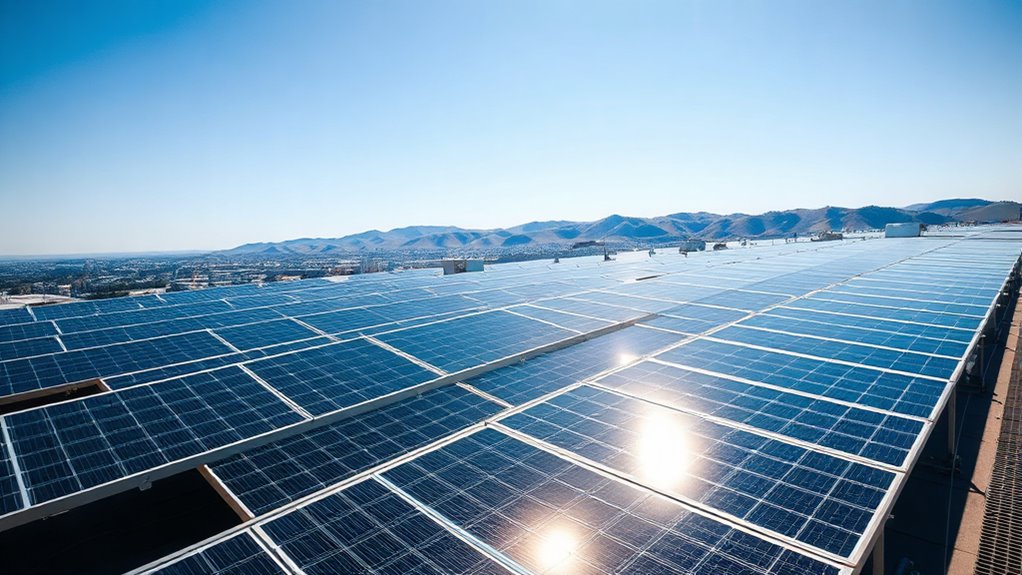
When choosing commercial solar panels, you’ll want to evaluate cell technology types and power output ratings to match your energy needs. Don’t forget the benefits of bifacial panels, along with durability and weather resistance for long-term performance.
Also, shading tolerance features can make a big difference in real-world efficiency. It’s definitely worth considering how panels perform under less-than-ideal conditions. That way, you get the most reliable energy output for your investment.
Cell Technology Types
Because choosing the right cell technology directly impacts your system’s efficiency and durability, understanding the latest advancements is key. N-type monocrystalline cells stand out by offering superior durability and lower light-induced degradation compared to older P-type cells, ensuring your panels maintain performance longer.
You’ll also want to examine 16BB (16-busbar) architectures, which improve current collection and reduce internal resistance. This minimizes hot-spot risks and preserves output.
Bifacial-capable cells add value by generating power from both sides, boosting energy yield when installed over reflective surfaces. Modern N-type 16BB cells reach impressive efficiencies around 25–25.6%, meaning you can meet power targets with fewer panels—ideal for space-limited commercial sites.
Finally, pay attention to thermal performance, as better heat tolerance helps retain efficiency throughout your system’s lifespan. It’s something that really makes a difference over time.
Power Output Ratings
Although panel efficiency plays a significant role, you should also pay close attention to power output ratings when selecting commercial solar panels for 2026. Compare wattage ratings—commercial modules typically range from 400 to 590 watts—and remember higher wattage means more energy per panel under the same conditions.
Make sure you know if the rating is per single module or combined in multi-packs, so you don’t confuse total output with individual panel specs. Check electrical limits, like max voltage (around 31–38V) and current (13–14A), to ensure compatibility with your system’s string size and inverter inputs.
While bifacial panels list wattage based on front-side standard tests, real output can vary with rear irradiance and installation factors. So, treat any “up to” gains as scenario-dependent, not assured.
Bifacial Energy Benefits
Power output ratings give you a quick snapshot of a panel’s potential, but bifacial technology adds another layer to consider for commercial solar efficiency in 2026.
Bifacial panels generate electricity from both the front and back sides by capturing reflected and ambient light. This can potentially boost total energy yield by up to 30% in ideal conditions.
That said, the actual rear-side gain really depends on surface reflectivity—think concrete or ballast—and installation factors like tilt angle and mounting height. You’ll want to make sure there’s proper spacing and avoid any rear-side shading to get the most out of this benefit.
Dual-glass bifacial panels use transparent backsheets, which allow light to pass through while still keeping things durable. Since practical gains can vary a lot depending on your site, it’s best to assess expected rear irradiance instead of just relying on generic percentage claims when picking your commercial solar setup.
Durability And Weather Resistance
When selecting commercial solar panels for 2026, you’ll want to prioritize strength and weatherproofing to ensure long-term performance. Check structural ratings like wind 2400 Pa and snow 5400 Pa to confirm the panel withstands harsh rooftop conditions.
Opt for double-glass construction, which offers superior resistance against moisture and outdoor exposure. Make sure the electrical components have high ingress protection—IP68 waterproofing and IP65-rated junction boxes minimize damage from rain, dust, and corrosion.
Choose corrosion-resistant framing, such as all-black or aluminum frames, to maintain mechanical integrity over time. Don’t forget certifications like UL 61730 and module-level EL testing; these ensure build quality and detect microcracks early.
Prioritizing these factors helps you invest in panels that deliver reliable efficiency for years to come. It’s all about picking panels that stand strong against the elements while keeping your energy production steady.
Shading Tolerance Features
To maximize commercial solar panel efficiency in 2026, you need to focus on shading tolerance features that keep energy production steady even when parts of your panels face shadows. Look for panels with “anti-shade” designs like dual-module or dual-string parallel architectures. These let unshaded sections keep generating power instead of the whole panel dropping output.
Choose bifacial panels with transparent backsheets or dual glass to capture reflected light and offset front-side shading losses. It’s a smart way to get more from your panels even when some areas are shaded.
Check product specs for improved shading tolerance compared to older multi-busbar models. This ensures better current collection under partial shade, which really helps keep your system efficient.
Also, consider system layouts with fewer series connections and more stable parallel circuits. This setup minimizes power loss from leaves or roof obstructions.
Finally, confirm “shade resistance” claims relate to effective electrical segmentation. That’s key for the best bypass of shaded areas and keeping your energy production steady.
Installation And Maintenance
Although selecting high-efficiency solar panels is crucial, you’ll also need to focus on installation and maintenance factors that preserve their performance over time. Choose panels and mounting systems rated for high weather loads—like wind resistance around 2400 Pa and snow load resistance near 5400 Pa—to avoid stress-related losses.
Opt for corrosion-resistant aluminum frames with robust sealing (IP68-rated) to prevent water damage. Plan easy access for routine inspection and cleaning since dust buildup can reduce energy yield, especially for bifacial panels relying on ground reflectivity.
If available, use frameless or self-cleaning designs to let rain wash away debris, but still schedule periodic checks. Finally, ensure proper tilt, airflow clearance, and careful wiring to minimize hot spots and maintain stable output, even under partial shading conditions.
Warranty And Support
Maintaining your solar panels’ performance goes beyond installation and upkeep—it also depends on the warranty and support offered by manufacturers. You should look for long, clearly stated output-performance warranties, like maintaining at least 84.5% efficiency over 25 years or a 30-year transferable power output warranty.
Check what the warranty includes—materials, workmanship, and power output—and whether it specifies degradation targets with retention percentages. It’s important to assess support quality too by confirming dedicated technical support periods and professional customer service availability.
Also, verify certification compliance, such as UL 61730, since strong warranties often align with certified safety and performance standards. And don’t forget to ensure the manufacturer offers clear return policies, like a 30-day guarantee, so you can address issues early if the panels don’t meet expectations.
Frequently Asked Questions
How Does Solar Panel Efficiency Impact Overall Energy Savings?
Higher solar panel efficiency means you’ll generate more electricity from the same sunlight, boosting your energy savings.
You’ll cut costs faster, reduce reliance on the grid, and get a better return on your solar investment overall. It’s a win-win all around!
What Maintenance Is Required for Bifacial Solar Panels?
Think of bifacial solar panels as your garden—clean them regularly to remove dust and debris, check for shading, and inspect wiring.
These simple steps keep your energy blooming efficiently without letting dirt steal the sunlight.
Are There Government Incentives for Installing High-Efficiency Panels?
Yes, you can take advantage of government incentives for installing high-efficiency panels. These often include tax credits, rebates, and grants that lower your upfront costs.
They also improve your solar investment’s overall return. So, it’s definitely worth looking into what’s available in your area!
How Do Weather Conditions Affect Solar Panel Performance?
Sure, if you love watching your solar panels sulk during cloudy days and rain, weather’s your best friend.
But seriously, you’ll see less output when it’s gloomy or snowy—sunshine’s the real MVP for peak performance.
What Is the Expected Lifespan of N-Type Solar Cells?
You can expect n-type solar cells to last around 30 to 40 years. They degrade slower than traditional cells, so you’ll get more reliable performance and longer energy production over time without significant efficiency loss.
That means less worry about your system losing power quickly. Plus, it’s a smart choice if you want your solar investment to pay off for decades.
Conclusion
When choosing commercial solar panels, remember that “you get what you pay for.” Opting for high-efficiency models like the 450W or 590W N-Type bifacial panels ensures you maximize energy output and long-term savings.
Don’t just focus on wattage—consider durability, cell technology, and design as well. These factors play a huge role in how well your system performs over time.
By investing smartly now, you’ll power your business sustainably and efficiently well into 2026 and beyond. Choosing the best commercial solar panel efficiency means you’re not only cutting costs but also boosting reliability.
Your future self will thank you for making the wise choice today! Embracing high-efficiency commercial solar panels is a smart move for any business aiming to save money and reduce its carbon footprint in the years ahead.