4 Best Azimuth Angles for Solar Panels in 2027
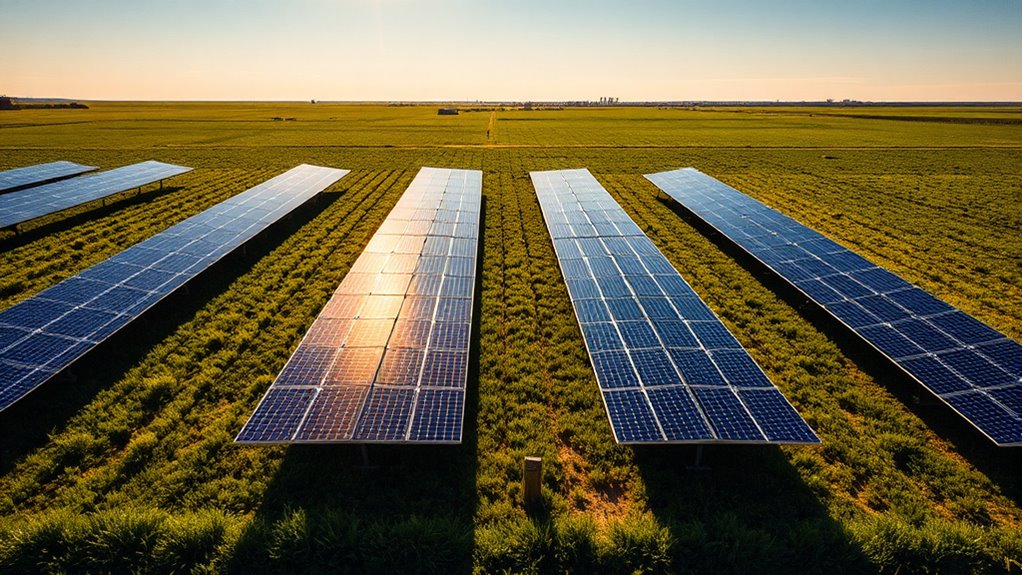
To maximize your solar panel efficiency in 2027, focusing on the right azimuth angles is key. For those in the Northern Hemisphere, aiming close to true south (180°) usually works best. Meanwhile, if you’re in the Southern Hemisphere, orienting panels near true north (0°) tends to give you the most sun exposure.
You can also boost performance by adjusting the angle 10°–20° east or west. This depends on your local sunrise and sunset times, plus atmospheric conditions like cloud cover. Don’t forget to avoid shading by choosing azimuths that fit your site’s terrain and the seasonal sun path.
Taking time to explore these factors will really help you tailor the best solar panel setup for your location. It’s all about finding that sweet spot to get the most energy from the sun year-round.
| Image | Name | Editor's Rating | Price |
|---|---|---|---|

|
|
||

|
|
||

|
|
||

|
|
UNI-T UT381PV Solar Irradiance Meter with Sensors
- Precise Solar Irradiance Measurement: Measures solar irradiance from 0 to 1400W/m² with a resolution of 1W/m² and...
- Built-in Inclination & Azimuth Sensors: Accurately determines PV panel tilt angle (-90° to +90°) and orientation...
- Dual Temperature Channels: Equipped with two temperature measurement channels for monitoring both ambient...
- Designed for Harsh Outdoor Environments: Built with an IP65 dustproof and waterproof housing, UV-resistant casing...
- Bluetooth App & 12,800 Data Logging: Connects to the "iENV" mobile app for real-time data viewing, remote...
Experience precise solar measurements with the UNI-T UT381PV Solar Irradiance Meter, engineered to meet the demands of solar installation professionals. It provides accurate readings of solar irradiance, helping you optimize panel positioning for maximum energy output. Integrated sensors capture tilt and azimuth angles, delivering comprehensive data to enhance your site assessments.
This meter is designed for easy operation and reliable field use. Dual temperature channels monitor both ambient and panel surface temperatures, allowing for accurate temperature compensation in PV system analysis. Bluetooth connectivity pairs seamlessly with the iENV app, enabling real-time data viewing and streamlined report creation on your mobile device.
Durability is built into the IP65-rated rugged casing, protecting the device against dust and water while withstanding onsite drops. Maintenance is straightforward, with a corded power source ensuring consistent operation without battery replacements. However, the need for an external power connection may limit portability in some scenarios.
The UNI-T UT381PV stands out by combining multiple precise sensors into a single handheld instrument. This integration simplifies your workflow, saving time and reducing errors compared to using separate devices for irradiance, angle, and temperature measurements.
Best for: Solar installation professionals and PV system technicians requiring detailed and accurate irradiance, angle, and temperature data for effective solar panel setup and analysis.
What We Like:
- Accurate solar irradiance readings with integrated tilt and azimuth sensors
- Dual temperature channels for precise temperature compensation
- Bluetooth connectivity with iENV app for real-time monitoring and reporting
- Rugged IP65 casing ensures durability in harsh job site conditions
Specification:
| Feature | Details |
|---|---|
| Manufacturer | UNI-T |
| Dimensions | Not specified |
| Weight | Not specified |
| Measurement Range | Solar irradiance 0-1400 W/m² |
| Tilt Angle Range | -90° to +90° |
| Azimuth Angle Range | 0° to 360° |
| Temperature Channels | Dual (ambient & panel) |
| Connectivity | Bluetooth |
| Protection Rating | IP65 |
| Power Source | Corded |
Adjustable Solar Panel Ground Mounting Bracket
- Ground Mount Installation: When your roof is not in suitable condition, this ground-mounted system allows you to...
- Adjustable Tilt Angle 3045: The ballasted tilt triangle brackets allow you to adjust the angle between 30 to...
- Rust Free Aluminum Alloy Material: Constructed from lightweight, sturdy aluminum alloy that is rust-free and easy...
- Rail End Cap Protection: This kit includes plastic rail end caps that provide better protection for the solar panel...
- Versatile Panel Configuration: This solar panel mounting system can assemble 1-3 pieces of solar panels with rails...
The Adjustable Solar Panel Ground Mounting Bracket is designed to make solar panel installation on uneven terrain straightforward and efficient. It allows you to precisely adjust the tilt between 30° and 45°, helping you capture more sunlight and improve your system’s energy output by up to 2%. This flexibility is ideal for maximizing performance in varied landscapes.
Constructed from lightweight, rust-free anodized aluminum alloy, the bracket is built to endure harsh weather conditions like strong winds and heavy snow. Its durable, powder-coated silver finish adds an extra layer of protection, reducing maintenance needs and ensuring long-lasting outdoor use.
This mounting bracket supports solar panels ranging from 100 to 500 watts, accommodating 1 to 3 panels per rail setup. It includes all necessary clamps, brackets, and connectors, making assembly straightforward even for those new to solar installations.
While it excels as a ground mounting solution, it is limited to this use and may not fit pole or rooftop setups without additional accessories. The moderate tilt range may not suit all geographic locations, so consider your site’s solar angle requirements.
Best for: Homeowners or businesses needing a durable, adjustable ground mount for 100–500W solar panels on uneven or challenging ground.
What We Like:
- Adjustable tilt and azimuth fine-tuning boosts solar energy capture
- Lightweight, rust-resistant anodized aluminum withstands harsh weather
- Includes all essential hardware for easy installation
- Powder-coated finish enhances durability and reduces upkeep
Specification:
| Specification | Details |
|---|---|
| Manufacturer | Not specified |
| Dimensions | Not specified |
| Weight | Lightweight |
| Material | Anodized aluminum alloy |
| Color Options | Powder-coated silver |
| Compatible Panel Size | 100–500W |
| Panel Capacity | Supports 1–3 panels per rail |
Solar Panel Dual Axis Tracking System with Tracker Controller,App Control
- Intelligent Solar Tracker: It can fully automatically manage solar panels, intelligently adjust the position and...
- Widely Compatible: Compatible with many different versions of solar panels and most traditional rigid...
- Dual-axis Tracking Technology: Dual-axis (pitch & pan can achieve a wider range of movement changes and track the...
- Intelligent Algorithm Photosensitivity: The light intensity sensor detects light intensity in 10 directions...
- Applicable to Multiple Scenarios: simple installation. The solar tracker is movable in design, foldable for...
Experience precise solar tracking like never before with the Solar Panel Dual Axis Tracking System. Designed to maximize sunlight capture, this system intelligently follows the sun’s path on two axes, significantly enhancing energy efficiency compared to traditional single-axis trackers. Its smart app control lets you monitor and adjust settings remotely, giving you full control from anywhere.
The system’s robust IP54 waterproof design ensures reliable outdoor performance in various weather conditions. A unique light sensor array detects sunlight from 10 directions, enabling accurate positioning throughout the day. This means your solar panels will consistently receive optimal exposure without manual adjustments.
Maintenance is straightforward with its durable materials and foldable design, making transport and installation hassle-free. Compatible with rigid solar panels up to 25 kg and 1.1 meters wide, it fits well in both home and mobile setups. Though it weighs 66.1 pounds, its compact packaging and sturdy construction offer a balance between portability and stability.
This dual-axis solar tracker is a practical solution for those seeking to improve solar energy harvesting with minimal effort and precise control.
Best for: Homeowners and mobile users wanting efficient and precise solar power capture with convenient remote management.
What We Like:
- Boosts solar energy efficiency by up to 30% with dual-axis tracking
- Durable IP54 waterproof build for various outdoor conditions
- Remote app control and intelligent 10-direction light sensor array
- Foldable design for easier transport and installation
Specification:
| Feature | Details |
|---|---|
| Manufacturer | — |
| Dimensions | Fits panels up to 1.1 m wide |
| Weight | 66.1 lb (30 kg) |
| Material | Weather-resistant components |
| Color Options | — |
Solar Altitude Meter Sun Elevation Angle Measuring Instrument Compass
- - Professional Solar Altitude Teaching Tool: This solar altimeter is a dedicated primary school science and...
- - Precision Integrated Structural Design: This science experiment apparatus features a complete assembled...
- - Simple & Intuitive Measurement Operation: Easy for students to set up and operate. Simply insert the angle board...
- - Visual Optical & Astronomical Demonstration: As a core STEM physics teaching aid, it utilizes sunlight projection...
- - Ideal Group Experiment Educational Kit: Perfect portable science lab supplies for primary school science...
Discover the ease of measuring the sun’s position with the Solar Altitude Meter, designed for clear and accurate solar elevation readings. This compact instrument helps users quickly understand solar angles through simple adjustments and alignment, making solar observation accessible and practical.
The meter’s built-in magnetic compass and azimuth dial enable precise orientation, enhancing your ability to track the sun’s movement throughout the day. Its portable design allows use indoors or outdoors, perfect for interactive learning or fieldwork.
Made from durable plastic, it requires minimal maintenance—just keep it clean and store in a dry place. While its size is convenient for transport, it may require careful handling during longer outdoor sessions to avoid damage.
This tool is ideal for visualizing solar altitude and azimuth, making it valuable for educational environments and anyone interested in solar positioning. It supports hands-on learning and helps improve understanding of natural light patterns and solar panel placement.
Best for: Teachers and students in primary science and geography classes seeking a practical, educational tool for studying solar elevation and solar angles.
What We Like:
- Easy-to-use design for quick, accurate sun elevation measurements
- Built-in compass and azimuth dial for precise solar tracking
- Lightweight and portable for indoor or outdoor STEM activities
- Durable plastic construction suitable for regular classroom use
Specification:
| Feature | Details |
|---|---|
| Manufacturer | Not specified |
| Dimensions | 13 x 8.4 cm |
| Weight | Not specified |
| Material | Plastic |
| Color Options | Varies (may differ slightly) |
Factors to Consider When Choosing Azimuth for Solar Panels
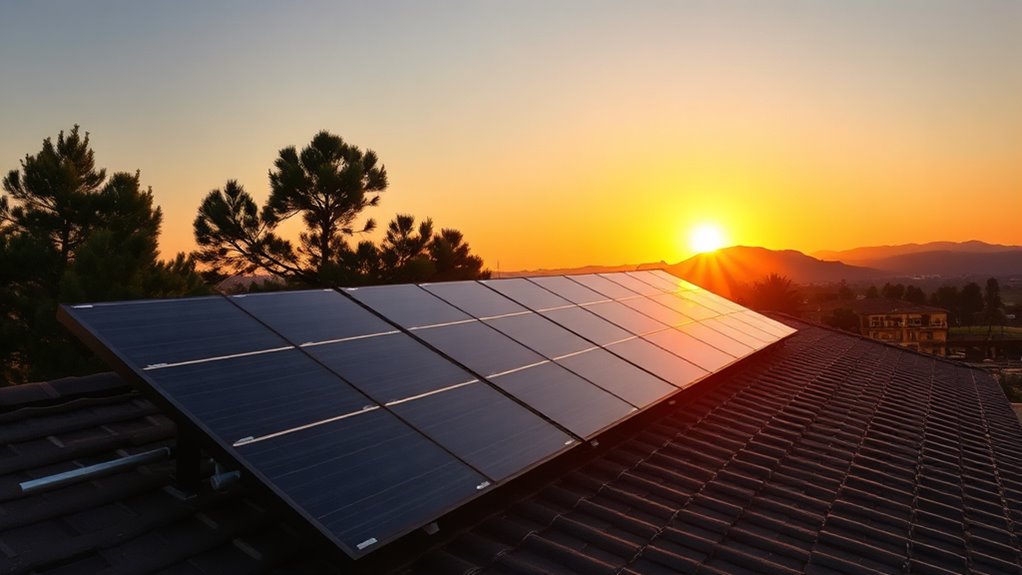
When choosing the azimuth for your solar panels, you’ll need to take into account factors like your geographic location and how the sun moves throughout the seasons. Your roof’s orientation and tilt angle can also limit your options.
Plus, don’t forget to account for any shading or obstructions that might block sunlight. These little details can make a big difference in how much energy your panels produce. So, it’s worth paying close attention to all these aspects before making a decision.
Geographic Location Impact
Although selecting the ideal azimuth angle depends largely on geographic location, you should consider several factors to maximize your solar panel’s energy output.
In the Northern Hemisphere, you’ll usually aim panels true south (180°), while in the Southern Hemisphere, true north (0°) is best. Your latitude influences this too; at higher latitudes, slight east or west offsets (10–20°) can boost morning or afternoon power to match your demand.
Also, local atmospheric conditions like morning fog or afternoon clouds might push you to shift azimuth 10–30° toward clearer skies. Don’t forget terrain—mountains or buildings near you could block sunlight, forcing adjustments away from true south or north to avoid shading during peak sun hours.
Tailoring azimuth to your location guarantees better year-round performance. It’s all about making the most of the sun where you are!
Seasonal Sun Path
Adjusting your solar panels’ azimuth isn’t just about geographic location—you also need to take into account how the sun’s path changes throughout the year. In the Northern Hemisphere, the sun’s azimuth at solar noon shifts southward in winter and northward in summer, affecting your panel’s optimal alignment.
Sunrise and sunset positions swing tens of degrees between solstices, so aiming panels solely for summer peak irradiance can reduce winter performance. If your energy needs vary seasonally, consider adjusting azimuth angles eastward in winter or westward for afternoon loads to boost year-round output.
Use monthly solar irradiance and sun position data to model these trade-offs. That way, you can balance summer peak output against winter energy yield for the best overall efficiency throughout the year.
Roof Orientation Limitations
Since your solar panels must align with your roof’s planes, the azimuth options are limited by your roof’s orientation. You can’t exceed the compass bearing of each roof facet unless you install special racking to change panel direction.
On multi-facet roofs, you’re confined to facets with enough space, and differing azimuths may require separate inverters or microinverters, adding complexity. Structural elements like ridges, chimneys, vents, and setback requirements further reduce usable areas, forcing less-than-ideal orientations.
Even if a facet faces the perfect azimuth, shading from nearby roof geometry can cut performance during key sun angles. Plus, mounting hardware limits and local wind or snow codes might restrict tilting or canting, locking your panels into the roof-facing azimuth that meets safety and structural standards.
Solar Panel Tilt Angle
Your roof’s orientation sets the direction for your solar panels, but their tilt angle plays an equally important role in capturing sunlight effectively. Typically, setting your panels’ tilt close to your site’s latitude (±10°) maximizes annual energy yield.
You can tweak this angle seasonally—steeper tilts between 60° and 90° enhance winter solar capture and help shed snow but reduce summer output. Shallower tilts (0°–20°) boost summer production and reduce soiling in some climates, though they may drop winter efficiency.
Keep in mind, the tilt affects how directly sunlight hits your panels: each degree off perpendicular reduces irradiance due to cosine loss. If your roof area is limited or skies are mostly diffuse, aim for a tilt within ±5° of your latitude for the best overall performance and manageable installation.
Shading and Obstructions
Although azimuth determines the general direction your solar panels face, nearby shading and obstructions can markedly cut their output during peak hours. Even small objects like trees, chimneys, or poles can cast shadows that disproportionately reduce your system’s performance.
You should choose an azimuth that minimizes shading during the most productive morning or afternoon hours. It’s a good idea to check sun paths for worst-case seasons—winter’s low sun angle creates long shadows, so avoid obstructions when irradiance still matters economically.
Use solar path or horizon profile tools, including smartphone apps, to map shading and estimate direct-sun loss for each azimuth option. Also, factor in future vegetation growth or new buildings to maintain clear sun access over time.
Keep in mind that partial shading risks hotspots and string losses unless you use bypass diodes or microinverters in your array design. So, planning ahead can save you from performance headaches later on.
Energy Yield Optimization
Optimizing energy yield means carefully choosing the azimuth angle of your solar panels to match your site’s unique conditions and energy needs. For fixed-tilt systems, orient panels within ±15° of true south (Northern Hemisphere) or true north (Southern Hemisphere) to maximize annual output. Each 10° deviation roughly drops yield by 0.5–1%.
You can boost late-afternoon production by shifting azimuth slightly west, which helps if your grid demands more evening power. Don’t overlook shading—selecting an azimuth that reduces morning or evening shading can increase energy more than perfect sun-facing orientation.
If you use single-axis trackers, align the azimuth axis north–south for overall yield, or east–west to favor peak production timing. Always run solar simulations with local irradiance data to quantify how azimuth changes will affect your system’s annual energy yield.
Frequently Asked Questions
How Does Azimuth Angle Affect Solar Panel Efficiency?
The azimuth angle affects your solar panel’s efficiency by determining how directly sunlight hits it throughout the day.
If you don’t align it properly, your panels won’t capture maximum energy, reducing overall power output substantially.
Can Azimuth Angles Be Adjusted Seasonally?
You can adjust azimuth angles seasonally, boosting solar panel efficiency by up to 20%!
By tweaking angles to follow the sun’s path, you’ll capture more energy year-round.
This way, you maximize your system’s performance effortlessly.
What Is the Ideal Azimuth Angle for Rooftop Installations?
You’ll want to set your rooftop solar panels to face true south at an azimuth angle of 180°. This maximizes sunlight exposure throughout the day, boosting energy production efficiently.
The best part? You won’t need to make seasonal adjustments, so it’s pretty hassle-free. It’s all about getting the most out of your panels with minimal effort.
How Do Weather Conditions Impact Azimuth Angle Choices?
You’d think weather doesn’t matter, but it completely changes your azimuth angle choice!
Cloudy, snowy, or windy conditions force you to adjust panel direction to maximize sunlight capture. This helps keep your system efficient year-round.
Are There Software Tools to Optimize Azimuth Angles?
Yes, you can use software like PVsyst, HelioScope, and SAM to optimize azimuth angles. These tools analyze shading, weather, and location data, helping you maximize your solar panel’s energy output efficiently and accurately.
They’re pretty user-friendly, too, so even if you’re not a tech expert, you can get reliable results. Plus, they save you a ton of time compared to manual calculations.
Conclusion
You’ll want to measure accurately with tools like the UNI-T UT381PV, mount securely using adjustable brackets, and track efficiently through dual-axis systems. Understanding solar altitude angles deeply is also key.
Each step guides you to optimize your solar panel’s azimuth angle for maximum energy capture. By measuring, adjusting, tracking, and analyzing, you’re not just setting panels—you’re harnessing the sun’s power smartly and sustainably.
This approach ensures your solar panels are positioned at the best azimuth angles for 2027 and beyond. Optimizing these angles means you get the most from every ray of sunlight, boosting your energy efficiency and savings. So, take the time to get it right and watch your investment shine bright for years to come.