Does Solar Work in Winter: How to Maximize Efficiency
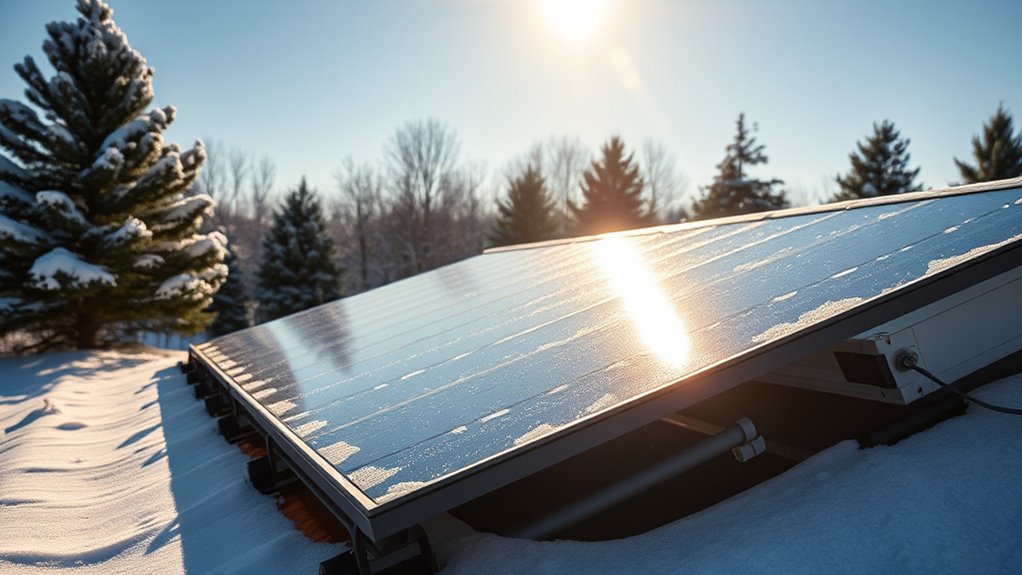
Yes, solar panels do work in winter, and cold weather can actually boost their efficiency by reducing electrical resistance.
Even though the days are shorter and snow might cover your panels, your solar system can still generate a good amount of power.
To get the most out of your solar panels during the colder months, try adjusting the tilt to capture more sunlight.
Gently clearing off any snow and removing shading from nearby trees or objects can also make a big difference.
Regular maintenance is key, too.
By paying attention to these simple steps, you’ll keep your solar setup performing well all winter long.
Keep reading to find more tips and learn how seasonal changes affect your solar energy output!
Key Takeaways
- Solar panels remain effective in winter, producing electricity even on cold, cloudy, or snowy days with adequate sunlight. Cold temperatures actually improve panel efficiency by reducing electrical resistance, which boosts power output on bright winter days.
- Keep in mind, though, that shorter daylight hours mean you’ll get less total energy. You can expect about 40% to 60% of your summer production during the winter months.
- It’s a good idea to clear snow and debris off your panels regularly. Use soft tools to avoid damage, and adjust the tilt so your panels can catch that low-angle winter sunlight.
- Also, make sure to remove any shading obstacles and keep an eye on how your system is performing. This way, you’ll ensure consistent energy generation and get the most out of your solar setup all winter long.
How Well Do Solar Panels Work in Winter?
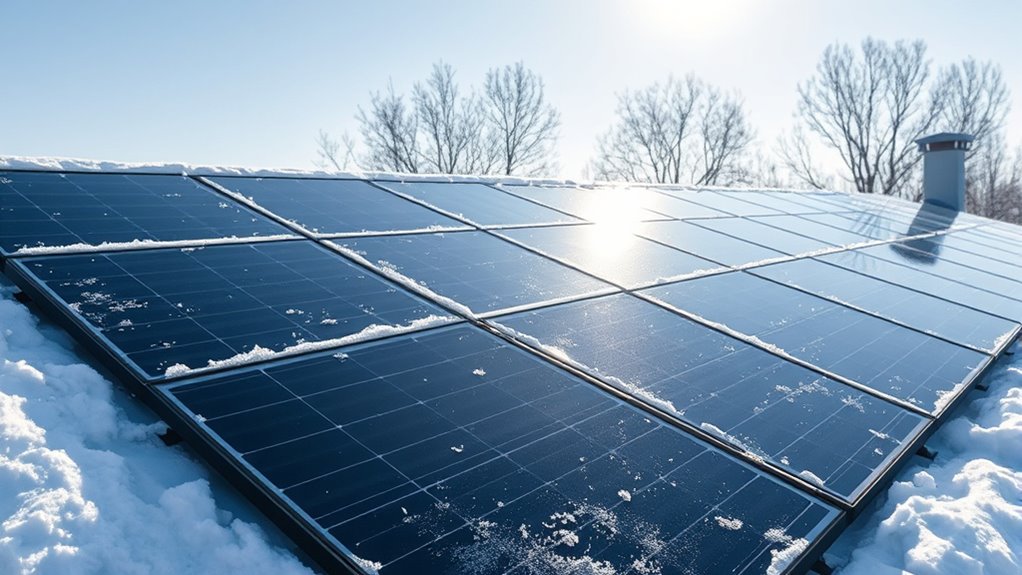
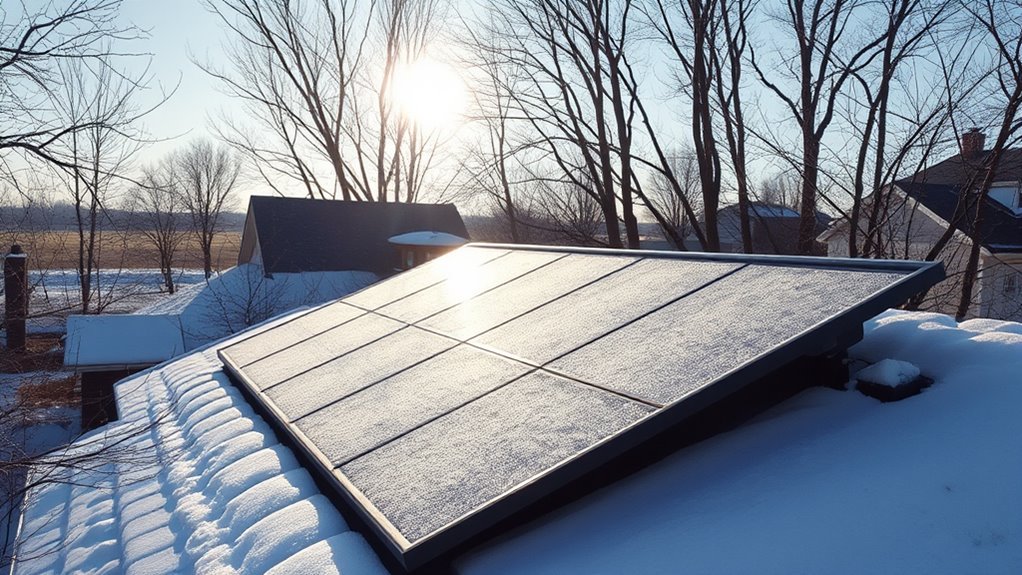
Although colder temperatures might seem like a challenge, solar panels actually perform quite well in winter. You might worry shorter days and weaker sunlight reduce their output substantially, but solar panels can still generate a good amount of electricity.
Even on cloudy or snowy days, they capture diffused sunlight effectively. Snow falling on panels can temporarily block light, but once it slides off or melts, your panels resume working efficiently.
Keep in mind, panels work best when clean and clear of debris, so regular maintenance helps maximize performance. While you may see a dip compared to summer months, your solar system continues producing power, supporting your energy needs during winter’s gloomier days.
Why Does Cold Weather Boost Solar Panel Efficiency?
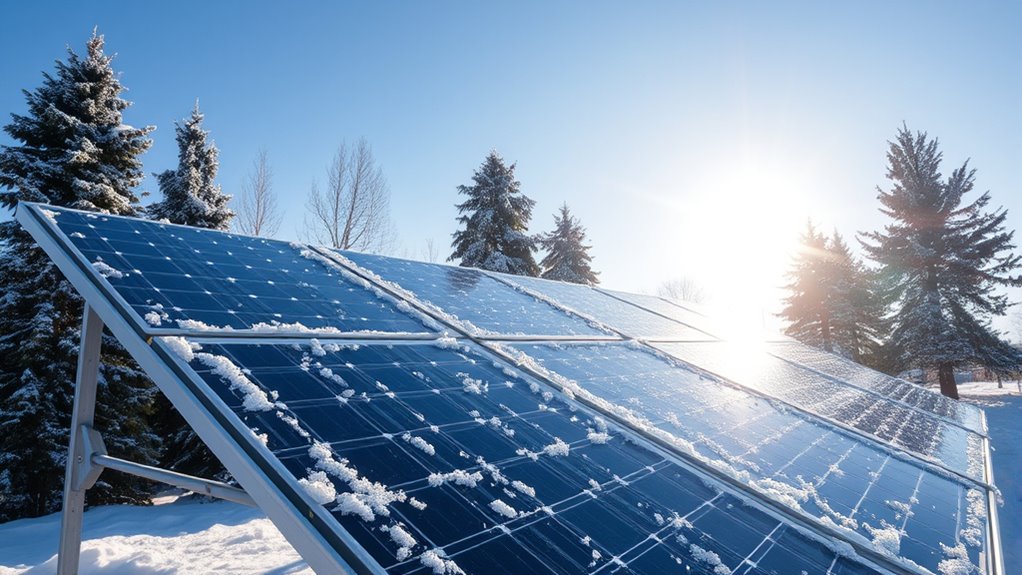
When temperatures drop, your solar panels actually become more efficient at converting sunlight into electricity. Cold weather reduces the resistance in the electrical circuits within the panels, allowing electrons to flow more freely.
This means your panels can produce more power per unit of sunlight compared to hot days. Plus, solar cells operate best at cooler temperatures, so when it’s chilly outside, they don’t overheat and lose efficiency.
You might notice your panels perform better on a bright, cold winter day than on a hot summer afternoon with the same sunlight intensity. Just remember, this benefit only applies if there’s enough sunlight hitting your panels—cold weather alone won’t help if it’s cloudy or dark.
How Do Shorter Days Affect Solar Panel Power?
Since daylight hours are shorter in winter, your solar panels have less time to capture sunlight each day. This reduction directly impacts how much energy you can generate.
Even if your panels work efficiently in cold weather, fewer sunlight hours mean lower overall daily power output. To understand this better, compare average daylight hours and potential energy production:
| Month | Average Daylight Hours | Estimated Energy Output (%) |
|---|---|---|
| December | 8 | 40 |
| January | 9 | 45 |
| February | 10 | 50 |
| March | 12 | 60 |
Knowing this helps you plan energy use and manage expectations during winter’s shorter days. It’s good to be prepared so you’re not caught off guard by lower power levels.
How Can You Keep Snow and Ice Off Your Solar Panels?
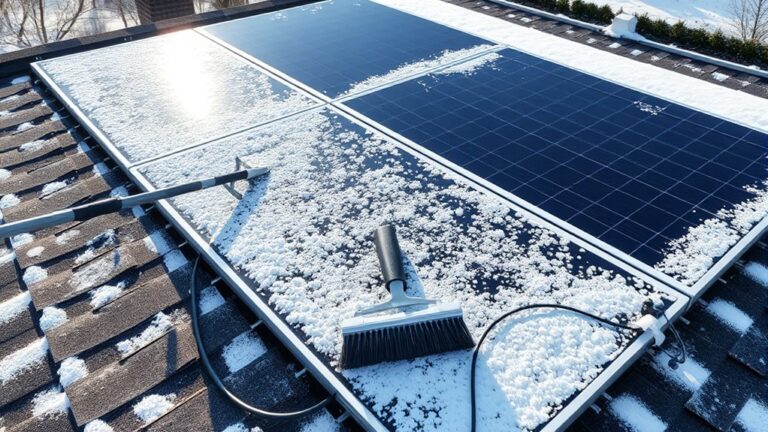
If you want your solar panels to perform well during winter, you’ll need to keep snow and ice from building up on them. Start by gently brushing off snow with a soft broom or a roof rake designed for solar panels to avoid damaging the surface.
Avoid using sharp tools or excessive force. Installing panels at a steeper angle can help snow slide off naturally.
You might also consider applying a hydrophobic coating that reduces ice adhesion. For heavy snow areas, heated cables or mats placed near the panels can melt ice, but these require extra energy.
Always prioritize safety—never climb onto icy roofs. Regularly clearing snow guarantees your panels capture sunlight efficiently, maintaining power output even on cold winter days.
What Are the Best Ways to Maximize Winter Solar Output?
Keeping your solar panels clear of snow and ice sets the stage for better performance, but there are additional steps you can take to maximize their output during winter.
First, optimize the tilt angle of your panels to capture more sunlight when the sun sits lower in the sky. Adjusting panels closer to vertical can help snow slide off more easily and improve energy absorption.
Second, trim any nearby trees or branches that could cast shadows, as even small shading reduces output appreciably.
Third, monitor your system’s performance regularly to spot and address issues early.
Finally, consider installing microinverters or power optimizers to reduce the impact of partial shading or snow coverage on your overall system’s efficiency. These measures will help you get the most from your solar investment during winter.
What Should You Expect From Your Solar Panels Year-Round?
Although solar panels produce less energy during winter months, you can still expect a reliable output throughout the year by understanding seasonal variations. Your panels generate the most electricity during sunnier months when days are longer.
In winter, shorter daylight and lower sun angles reduce power, but they don’t stop production entirely. Even on cold or cloudy days, panels work efficiently, as they perform better in cooler temperatures.
To set realistic expectations, anticipate around 20-40% less energy in winter compared to summer, depending on your location. Tracking your system’s performance monthly helps you spot trends and optimize use.
Frequently Asked Questions
How Does Solar Panel Maintenance Differ Between Winter and Summer?
You’ll focus more on removing snow and ice in winter, while summer maintenance involves cleaning dust and debris.
You’ll also check for shading from growing foliage in summer but less so during winter’s bare branches.
Can Winter Storms Damage Solar Panels?
Winter storms can test your solar panels like a heavyweight boxer, but they’re designed to withstand snow, ice, and wind.
Just make sure you inspect them afterward and clear any heavy snow to keep them working efficiently.
Are There Specific Solar Panel Types Better for Winter Conditions?
Yes, you’ll want monocrystalline panels since they perform better in low light and cold temperatures.
Also, consider bifacial panels that capture reflected light, boosting efficiency during snowy conditions. Keep them clear of snow for best results.
How Do Solar Batteries Perform in Cold Weather?
You’ll find solar batteries perform less efficiently in cold weather because low temperatures slow chemical reactions inside.
To maximize performance, keep your batteries insulated or heated, and monitor their charge regularly during winter months.
It’s pretty important to stay on top of things when the temperature drops. That way, your batteries can keep working well even in the cold.
What Incentives or Rebates Exist for Winter Solar Installations?
You can find federal tax credits, state rebates, and utility incentives that support winter solar installations. Check your local programs and energy providers—they often offer bonuses or discounts to encourage solar use year-round, including colder months.
It’s worth taking a closer look at what’s available in your area. Sometimes, there are special deals just for installing solar during the winter. So, don’t miss out on those extra savings!
Conclusion
You might worry that winter means your solar panels won’t perform, but they actually work well in cold weather and can even be more efficient. While shorter days do reduce power, you can maximize output by keeping panels clear of snow and optimizing their angle.
With a little care, your solar system can deliver reliable energy year-round. This proves that winter doesn’t have to slow down your clean energy benefits.
So, yes—solar works in winter! By maintaining your panels and adjusting for seasonal changes, you can enjoy efficient solar power no matter the weather. Maximizing efficiency during colder months ensures you get the most from your investment and keep your energy bills low all year long.