How Do Solar Panels Work at Night?
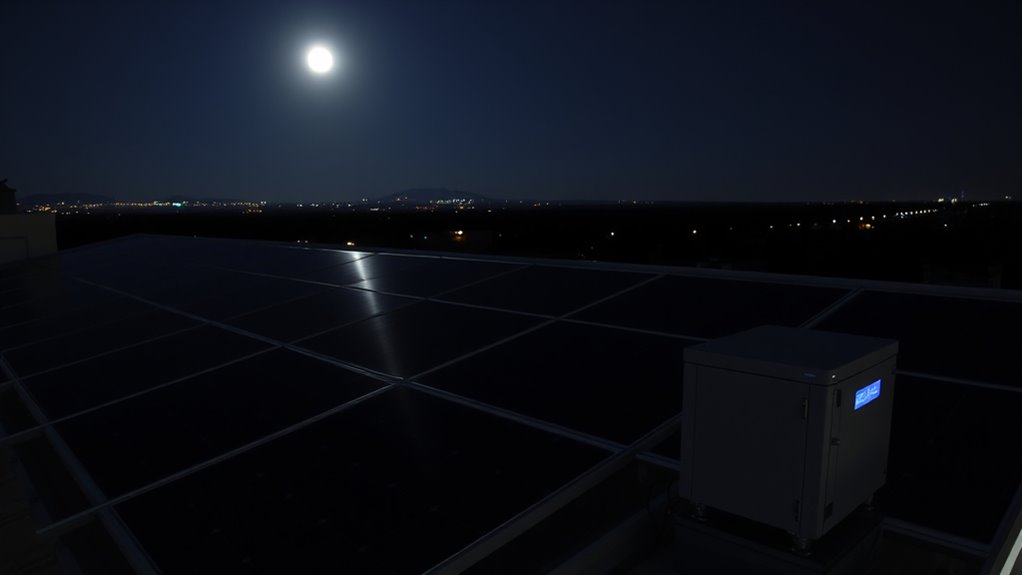
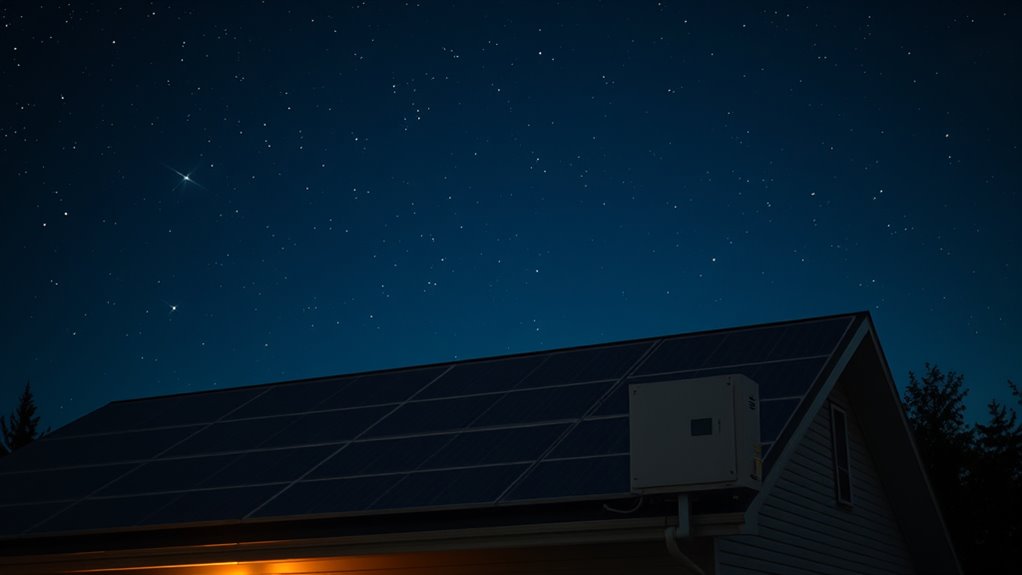
You won’t get power from solar panels at night because they need sunlight to generate electricity by exciting electrons. Without sunlight, no current flows through the panels. So, when the sun goes down, the panels simply stop producing energy.
Instead, your home relies on batteries charged during the day or backup from the grid to stay powered after dark. These batteries store the excess energy produced while the sun is shining, giving you power when it’s needed most.
Hybrid systems can combine these options for continuous energy. They help keep your lights on and devices running 24/7 without interruption.
If you want to understand how to keep your power flowing all day and night, and choose the right setup for your needs, keep exploring the details ahead. It’s easier than you think to stay powered around the clock!
Key Takeaways
- Solar panels do not produce electricity at night because there’s no sunlight or photons.
- Photovoltaic cells need sunlight to excite electrons and create an electric current.
- Batteries come into play by storing the extra solar energy collected during the day, so you can use it at night.
- When solar panels and batteries can’t meet the demand, the electrical grid steps in to supply power.
- Some systems mix solar, batteries, and other energy sources to keep the power flowing 24/7 without interruptions.
How Solar Panels Produce Power During the Day
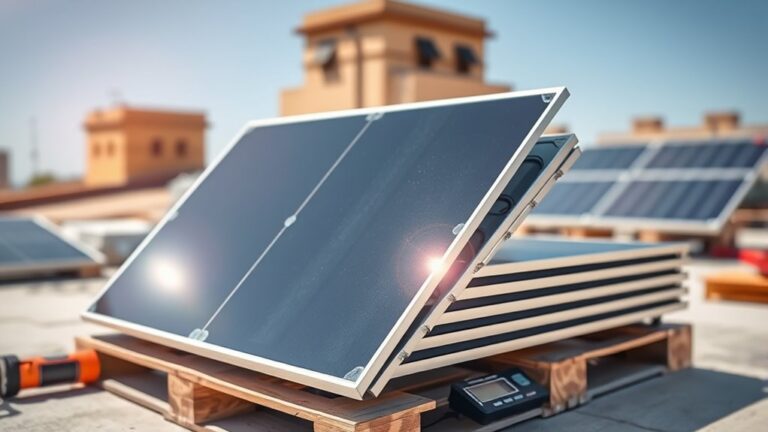
Although solar panels don’t generate power at night, they produce electricity during the day by converting sunlight into energy. When sunlight hits the solar cells in the panels, it excites electrons, creating an electric current.
Solar panels convert sunlight into electricity by exciting electrons in their cells during the day.
You’ll find these cells made of semiconductor materials like silicon, which makes the process efficient. The current generated is direct current (DC), but since your home runs on alternating current (AC), an inverter converts it so you can use the power immediately.
You can see that the more sunlight your panels get, the more electricity they produce. This process happens continuously during daylight, allowing you to power your home, charge batteries, or even send excess energy back to the grid.
It’s a smart way to harness clean, renewable energy every day.
Why Solar Panels Stop Producing Power at Night
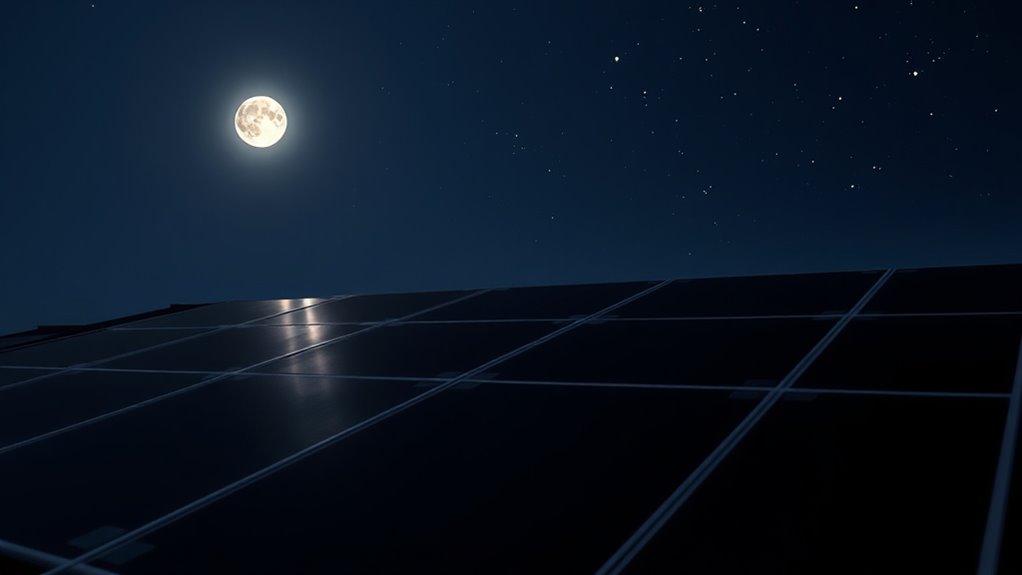
You’ll notice solar panels stop producing power at night because there’s no sunlight to trigger their photovoltaic cells. These cells rely on sunlight to create electricity, so without it, they simply can’t generate power.
It’s pretty straightforward when you think about it. This is why solar energy depends so heavily on daylight.
Lack Of Sunlight
Because solar panels rely on sunlight to generate electricity, they stop producing power once the sun sets. When there’s no sunlight, the solar cells inside the panels don’t receive the energy they need to create an electric current.
Even on cloudy or rainy days, solar panels still produce some power because diffuse sunlight reaches them, but at night, that source completely disappears. Without photons hitting the solar panel surface, there’s no energy to convert into electricity.
This means your solar system can’t generate power during nighttime hours. To keep your home powered, you’ll need to rely on stored energy, like batteries, or draw electricity from the grid until sunlight returns and your panels start working again.
Photovoltaic Cell Function
How exactly do photovoltaic cells stop generating power when night falls? These cells rely on sunlight to create electricity. When photons from the sun hit the solar panel, they excite electrons, creating an electric current.
Without sunlight, this process halts, and no current flows. At night, no photons reach your panels, so the cells simply stop producing electricity.
Here’s a quick look at how photovoltaic cells work during the day versus night:
| Condition | Photon Presence | Electron Movement | Power Output |
|---|---|---|---|
| Daylight | High | Active | Generates |
| Night | None | Inactive | Stops |
| Cloudy Day | Reduced | Limited | Low |
| Artificial Light | Minimal | Negligible | None |
You can see why your panels don’t work after sunset. It’s pretty straightforward once you think about it!
How Batteries Power Your Home at Night
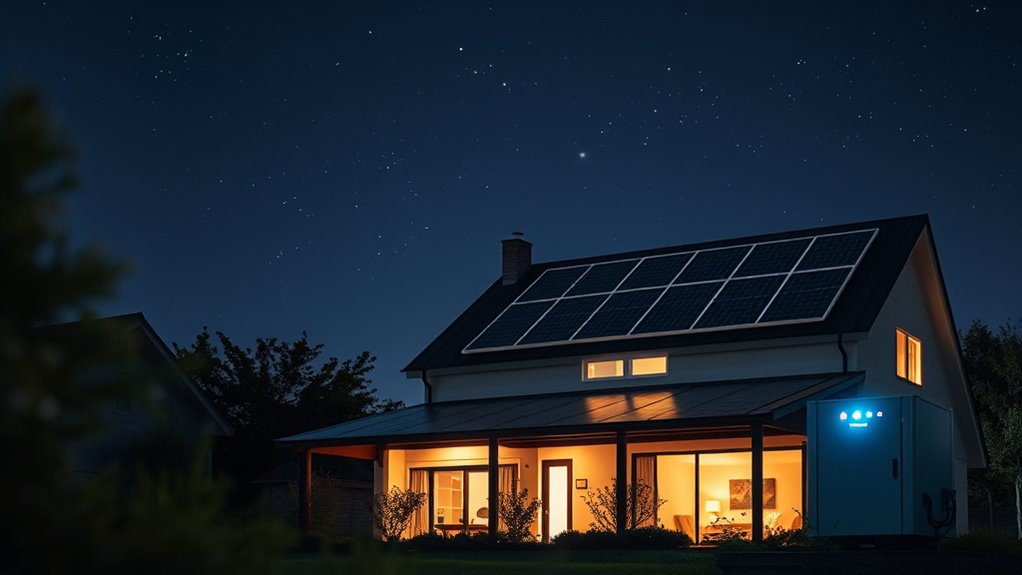
Batteries often play a crucial role in keeping your home powered when the sun goes down. During daylight, your solar panels generate electricity, and any excess energy they produce gets stored in these batteries.
Batteries store excess solar energy, ensuring your home stays powered after the sun sets.
When night falls and solar panels stop producing power, the batteries automatically supply the stored electricity to your home. This smooth changeover guarantees you still have power for lights, appliances, and electronics without interruption.
The batteries discharge energy efficiently, meeting your household needs until the sun rises again. By using batteries, you reduce your reliance on the grid and maximize the benefits of your solar system.
Properly sized and maintained batteries help you enjoy continuous, clean energy even when the sun isn’t shining. It’s a smart way to keep your home running smoothly around the clock.
How The Grid Supports Solar Panels at Night
Even when your solar panels aren’t producing energy at night, the grid steps in to keep your home powered. When the sun goes down, your home automatically draws electricity from the grid. This seamless switch guarantees you don’t experience any interruption in power.
If you generate excess energy during the day and use a net metering system, the grid also credits you for that surplus. At night, you can use those credits, effectively “borrowing” power without additional cost.
The grid acts as a reliable backup, balancing supply and demand. So, while your solar panels rest, the grid maintains your home’s energy flow, giving you continuous power without extra hassle or worry.
Hybrid Solar Panel Systems for 24/7 Power
While solar panels alone can’t generate power at night, hybrid solar panel systems combine solar energy with battery storage or other power sources to provide electricity around the clock. When the sun sets, your system switches seamlessly from solar power to stored energy in batteries, ensuring your home stays powered without interruption.
Some hybrids also integrate wind turbines or connect to the grid, giving you multiple energy sources. This setup not only boosts reliability but also helps you reduce dependence on the grid, saving you money. By storing excess energy generated during the day, hybrid systems maximize your solar investment.
If you want consistent power 24/7, a hybrid solar system offers a smart, efficient solution that keeps your lights on even after dark. It’s a great way to make sure you never have to worry about outages or losing power when you need it most.
How to Choose a Nighttime Solar Power System
If you’re considering a hybrid solar setup to keep your power flowing at night, choosing the right system for your needs is key. Start by evaluating your energy consumption after dark—know how much power you’ll require.
Considering a hybrid solar system? First, assess your nighttime energy needs to choose the perfect setup.
Next, look for solar batteries with enough storage capacity to cover your nighttime use without overpaying for excess. Consider battery type: lithium-ion batteries offer longer life and better efficiency but cost more upfront, while lead-acid batteries are budget-friendly but bulkier.
Also, ensure your inverter supports battery integration for seamless switching between solar and stored power. Finally, check compatibility with your existing solar panels and evaluate warranties and customer support.
Making informed choices means you’ll enjoy reliable, uninterrupted power even when the sun’s down. It’s all about matching the system to your lifestyle and budget!
Frequently Asked Questions
Can Solar Panels Generate Power From Moonlight?
You can’t rely on solar panels to generate much power from moonlight because it’s far too dim. They need sunlight’s intensity, so at night, you’ll need batteries or another energy source to keep things running.
Basically, moonlight just doesn’t pack enough punch for solar panels to work well. So, if you want power after sunset, having a backup system is the way to go.
Do Solar Panels Work During Cloudy Nights?
No, your solar panels don’t generate power during cloudy nights since they need sunlight.
However, if you have a battery storage system, you can use stored energy to power your home when it’s dark and cloudy. So, even when the sun isn’t out, you’re still covered.
How Long Do Solar Panels Last With Nighttime Use?
Wondering how long solar panels last with nighttime use? Since they don’t generate power at night, their lifespan isn’t affected by darkness.
You can expect them to last 25 to 30 years, regardless of nighttime conditions.
Are There Solar Panels That Store Energy Without Batteries?
No, solar panels don’t store energy themselves; you’ll need batteries or other storage systems to save power.
However, some setups use thermal storage or grid-tied systems to manage energy without traditional batteries. It’s a different way to handle the power your panels generate.
Can Solar Panels Be Used for Outdoor Lighting at Night?
Think of solar panels as diligent bees gathering nectar by day, storing sweetness for night’s bloom.
Yes, you can use them for outdoor lighting at night—they capture sunlight, then power your lights when darkness falls.
Conclusion
While solar panels don’t produce power at night, you’re not left in the dark. Did you know that over 60% of solar users rely on battery storage or the grid to keep their homes running after sunset?
By choosing a hybrid system or investing in quality batteries, you can enjoy reliable, 24/7 solar energy. These options ensure your home stays powered even when the sun isn’t shining.
Understanding how solar panels work at night and exploring battery storage or grid connection helps you make the best choice for your nighttime power needs. This way, you can keep your home bright around the clock and make the most out of your solar energy system.