How Do You Put Solar Panels on a Metal Roof?
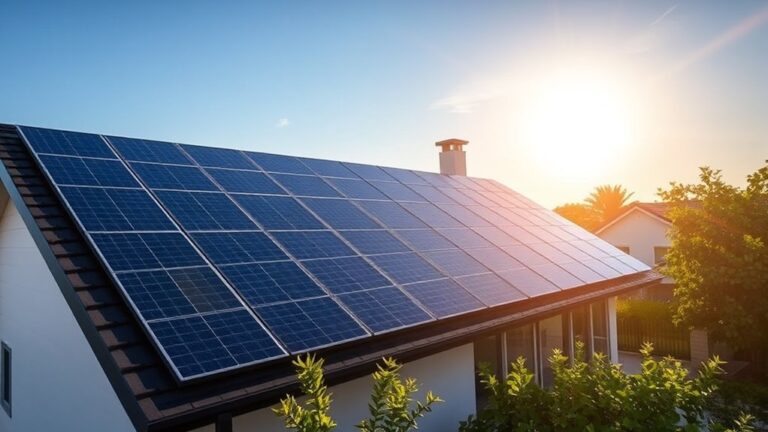
To install solar panels on your metal roof, start by choosing a mounting systems like clamp mounts. These attach securely without drilling into the roof, which helps preserve its integrity.
Next, locate the rafters and use metal-specific brackets with sealant to prevent leaks. This way, you keep your roof safe from water damage.
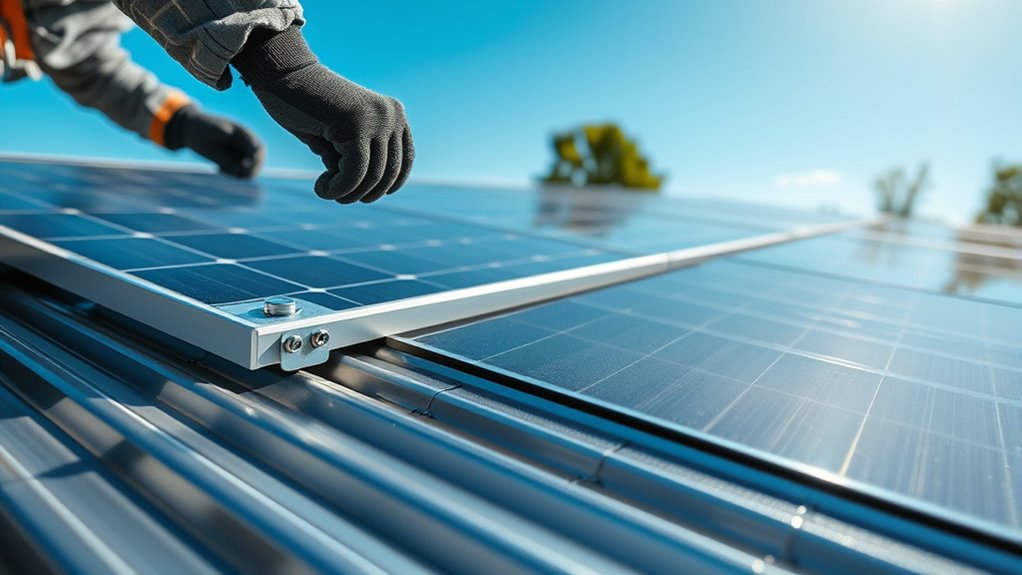
Then, attach rails and secure the panels with clamps or bolts.
This method takes advantage of your roof’s durability and reflective surface. It also helps keep your home cooler by reflecting sunlight.
If you want to explore installation details and maintenance tips, keep going. There’s plenty more to learn about making the most of your solar setup!
Key Takeaways
– Identify roof rafters and install metal-specific mounting brackets aligned with them for secure attachment.
This ensures your panels have a solid foundation and won’t shift over time.
– Use clamp mounts to attach panels to standing seams without penetrating or damaging the roof.
It’s a great way to keep your roof intact while still getting the panels securely in place.
– Apply proper sealant when fastening to prevent leaks and maintain roof waterproof integrity.
You definitely don’t want any water sneaking in and causing problems later on.
– Attach rails to brackets for stable and level panel positioning before securing solar panels.
This step helps keep everything aligned and sturdy, which is important for performance.
– Regularly inspect and maintain mounting hardware and panels to ensure long-term system performance.
A little upkeep goes a long way in keeping your solar setup running smoothly for years.
Why Metal Roofs Are Great for Solar Panels
Although many roofing materials can support solar panels, metal roofs offer unique advantages that make them an ideal choice. You’ll find that metal roofs are durable and long-lasting, often outliving the solar panels themselves.
This means you won’t need to remove the panels for roof repairs anytime soon. Metal roofs also provide excellent structural support, so you can securely attach solar panels without worrying about damage.
Their reflective surface helps keep your home cooler, improving the efficiency of your solar system. Plus, the standing seams on many metal roofs allow for easy, non-invasive mounting options, preserving the roof’s integrity.
How to Choose the Right Mounting System for Metal Roofs
You’ll need to pick a mounting system that fits both your metal roof type and your solar panels. Different systems work better with specific roof materials, so compatibility is key.
Let’s explore the main types to help you make the right choice. It’s easier than it sounds once you know what to look for!
Types Of Mounting Systems
Choosing the right mounting system for your metal roof is essential for ensuring a secure and efficient solar panel installation. Here are four common types to evaluate:
- Clamp Mounts – These attach directly to standing seams without penetrating the roof, which helps preserve waterproofing. It’s a neat option if you want to avoid any roof damage.
- Lag Screw Mounts – They secure panels by drilling into the roof’s framing. This offers a strong hold but does require proper sealing to keep things watertight.
- Tile Block Mounts – These use weighted bases to hold panels in place without any roof penetration. They’re ideal for flat or low-slope roofs where you want to avoid drilling.
- Rail Mount Systems – This system involves rails fastened to the roof, giving you flexible panel positioning and making maintenance easier.
Each system fits different roof styles and preferences. So, you’ll want to match your choice to your roof’s design and your installation goals.
Compatibility With Roof Materials
Since metal roofs come in various styles and materials, you need to make certain your mounting system works well with your specific roof type. For example, standing seam roofs require clamps that attach without penetrating the metal, preserving roof integrity.
Corrugated or ribbed metal roofs often need mounting brackets that align with the ribs and use sealed fasteners to prevent leaks. You should also consider the metal’s thickness and coating to verify compatibility with mounting hardware and avoid corrosion.
Choosing the right system means matching mounts designed for your roof’s profile and material, which ensures a secure fit and long-term durability. It’s a good idea to consult manufacturers’ guidelines and, if needed, a professional installer to confirm your mounting choice suits your metal roof perfectly.
How to Secure Solar Panels Without Drilling on Metal Roofs
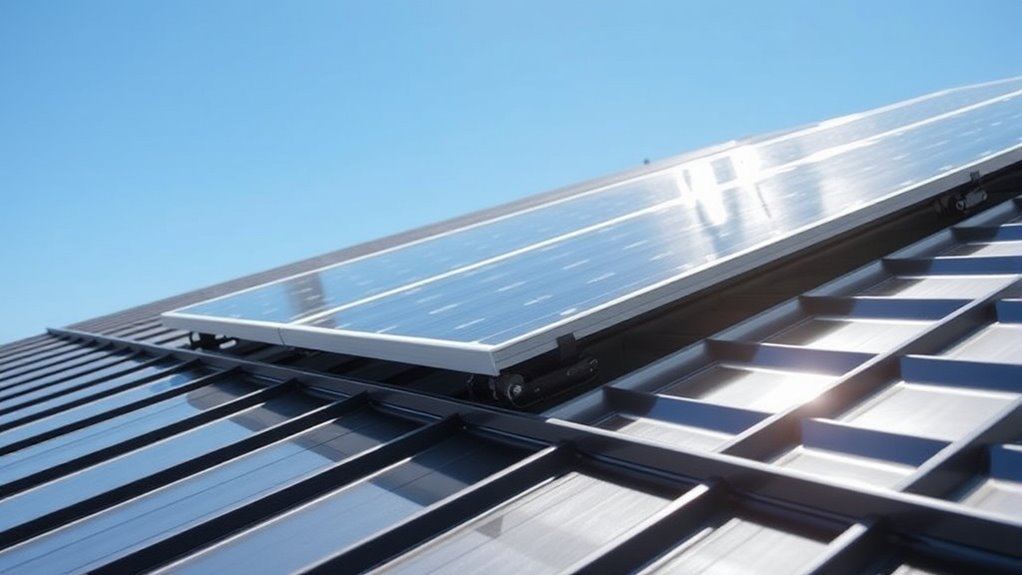
When installing solar panels on metal roofs, securing them without drilling can protect the roof’s integrity and prevent leaks. You can use alternative mounting methods designed to keep your roof intact.
Here are four ways to secure solar panels without drilling:
- Ballasted Mounts – Use weighted racks to hold panels in place. This method is ideal for flat or low-slope metal roofs.
- Clamp Systems – Attach panels by clamping onto standing seams without penetrating the metal. It’s a neat solution that keeps your roof safe.
- Adhesive Mounts – Employ strong industrial adhesives specifically made for metal roofing. These bond mounts securely without any drilling.
- Magnetic Mounts – Use powerful magnets on ferrous metal roofs for a non-invasive hold. It’s quick and damage-free.
These options help you install solar panels safely while maintaining your roof’s waterproof seal and structural soundness. So, you get clean energy without worrying about roof damage!
Installing Solar Panels on a Metal Roof: Step-by-Step
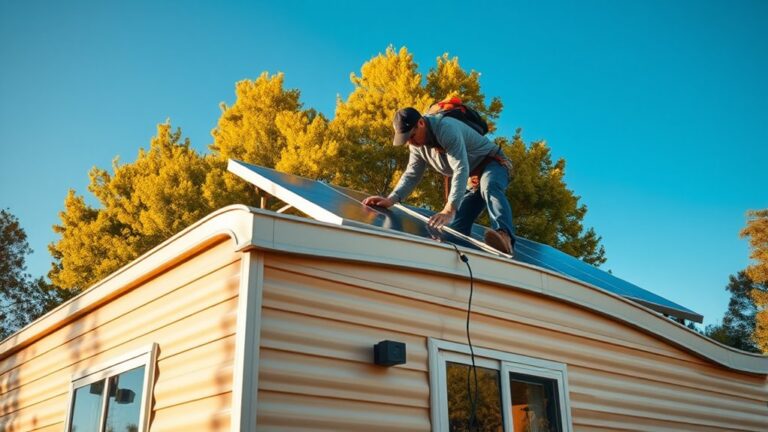
Although metal roofs require special care, you can confidently install solar panels by following a clear, step-by-step process. First, locate the roof’s rafters to guarantee secure attachment points.
Next, install the mounting brackets specifically designed for metal roofs, aligning them with the rafters. Use proper sealant to prevent leaks when fastening the mounts.
Then, attach the rails to the brackets, making sure they’re level and sturdy. After that, position the solar panels on the rails and secure them with the provided clamps or bolts.
Double-check all connections for tightness and stability. Finally, inspect your work for any gaps or loose fittings to assure the system withstands weather conditions.
Following these steps will help you install solar panels safely and effectively on your metal roof.
How to Keep Your Solar Wiring Safe and Sound
To keep your solar wiring safe and sound, you need to prioritize proper routing and secure connections. Exposed or loose wires can cause damage, reduce efficiency, or even pose safety risks.
So, it’s important to follow these steps to protect your wiring:
- Use Conduit or Cable Trays – Shield wires from weather and physical damage by running them through protective conduits or trays. This helps keep everything neat and safe.
- Secure with Clips or Ties – Fasten cables tightly along the metal roof to prevent movement and wear. It stops them from shifting around when the wind blows.
- Seal All Connections – Apply waterproof sealant around connectors to avoid moisture intrusion and corrosion. Keeping water out means fewer problems down the line.
- Avoid Sharp Edges – Route wires away from sharp metal edges or cover them with grommets to prevent insulation cuts. You don’t want any accidental damage messing with your setup.
Maintaining Solar Panels on Metal Roofs for Long-Lasting Performance
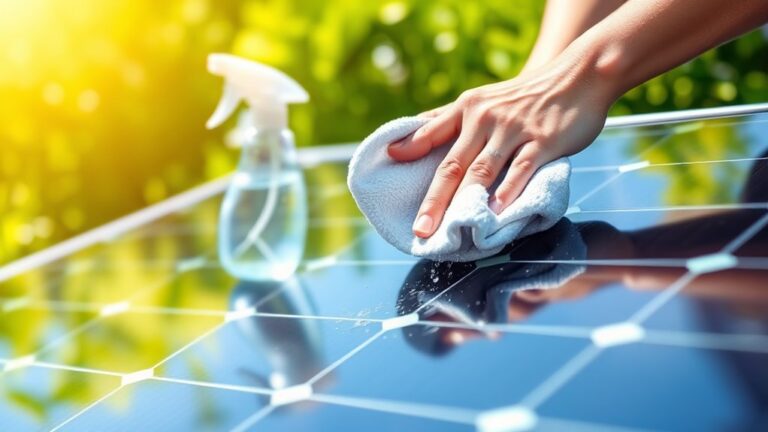
Proper maintenance guarantees your solar panels on a metal roof keep delivering peak performance for years to come. Regularly inspect panels for dirt, debris, or damage, cleaning them with a soft brush and mild soap as needed.
Check mounting brackets and fasteners to make certain they remain secure and rust-free. Tighten or replace parts if necessary to keep everything in good shape.
Monitor your system’s output to spot any drops in efficiency early, and address issues promptly. It’s a good way to catch problems before they get worse.
Keep gutters and roof surfaces clear to prevent water buildup that might affect panel integrity. This simple step can save you from headaches down the road.
Finally, schedule professional inspections every few years to examine electrical components and overall system health. By staying proactive, you’ll protect your investment and enjoy clean, efficient solar energy well into the future.
Frequently Asked Questions
How Do Solar Panels Affect Metal Roof Insulation?
Solar panels can improve your metal roof’s insulation by creating a shading layer that reduces heat absorption. They lower roof temperature, helping you save energy and keep your home cooler during hot days.
It’s like giving your roof a little extra protection from the sun. This shading effect means less heat gets through, so your indoor spaces stay more comfortable without cranking up the AC.
Can Solar Panels Withstand Hail on Metal Roofs?
Think of solar panels as armor for your roof—they can usually withstand hail thanks to tempered glass that’s tough as a knight’s shield.
Still, you should check specific ratings to make certain they handle your area’s hailstorms well.
It’s always better to be safe than sorry, right? Knowing your panels’ durability can save you from unexpected damage later on.
What Is the Average Lifespan of Solar Panels on Metal Roofs?
You can expect solar panels on metal roofs to last around 25 to 30 years. With proper maintenance, they’ll keep generating power efficiently.
Often, they outlast the roof itself, which means you get great long-term value. It’s a solid investment that pays off over time.
Are There Tax Incentives for Solar Panels on Metal Roofs?
You can get federal tax credits covering 30% of your solar panel costs, even on metal roofs.
Don’t forget, many states offer extra incentives, so you’ll want to check local programs to maximize your savings.
It’s definitely worth looking into because these perks can make a big difference in your overall investment.
How Do Solar Panels Impact Metal Roof Resale Value?
You’ll boost your metal roof’s resale value by adding solar panels since buyers often see them as energy-saving upgrades.
Just make sure the installation is clean and well-maintained to avoid any concerns about roof damage.
Conclusion
Installing solar panels on your metal roof is a smart move—did you know solar energy can cut your electricity bills by up to 70%? By choosing the right mounting system and securing your panels without drilling, you protect your roof while maximizing efficiency.
Keep your wiring safe and perform regular maintenance to guarantee your panels last for decades. It’s easier than you think to maintain your system and keep everything running smoothly.
With these steps, you’re not just saving money—you’re investing in a cleaner, greener future for your home and family. Installing solar panels on a metal roof not only boosts your property value but also helps reduce your carbon footprint. So, if you want reliable, long-lasting solar energy that works perfectly with your metal roof, following these tips will set you on the right path toward sustainable living!