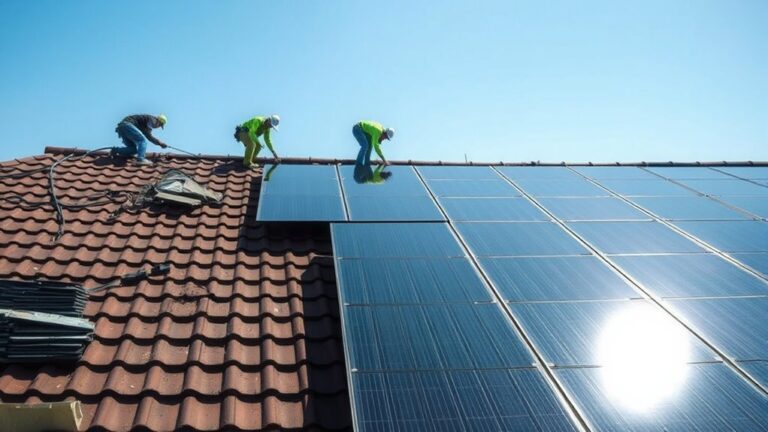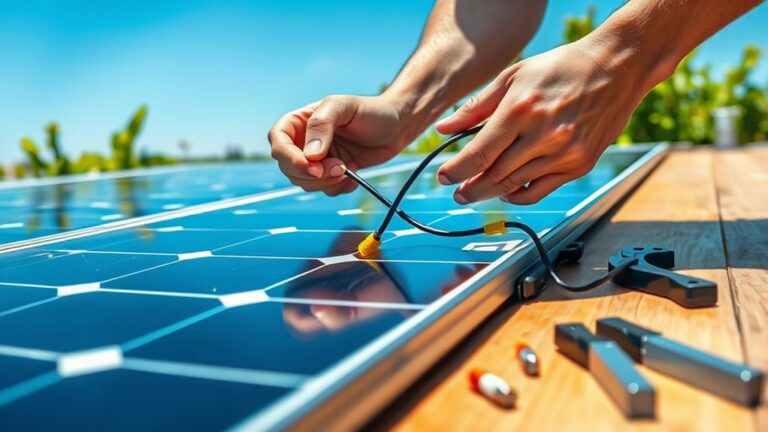
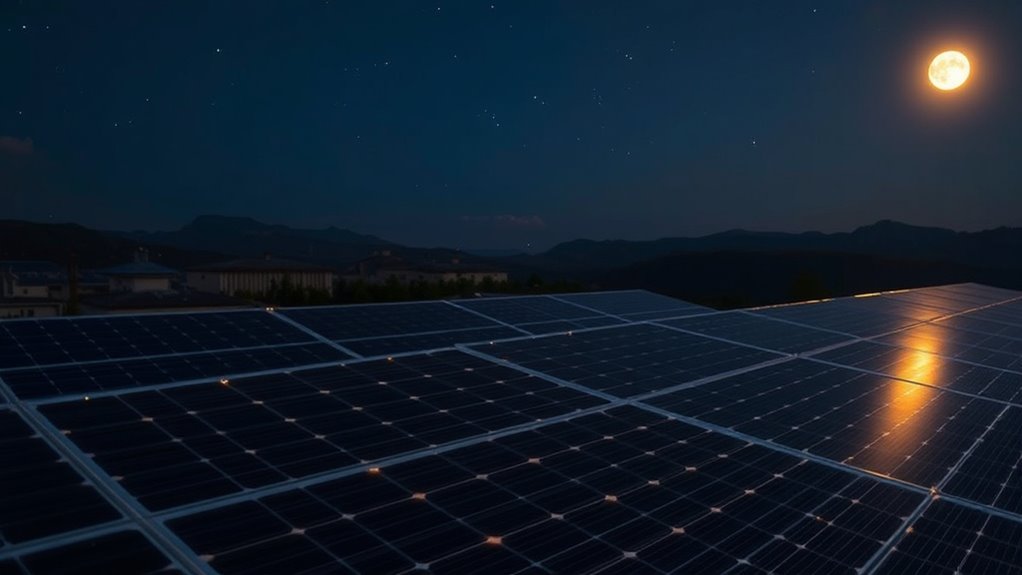
How Does Solar Energy Work at Night?
You can use solar energy at night by tapping into power stored during the day. Solar panels capture sunlight and turn it into electricity when it’s sunny, but they don’t work without light.
So, how does solar energy work at night?
To keep your home powered after dark, battery systems or thermal storage save excess energy from the sun. These solutions release stored power when you need it, ensuring steady electricity even without sunlight. It’s pretty clever, right?
If you want to understand how this works and other ways to maximize solar power anytime, keep exploring. There’s a lot to learn about making the most of solar energy, day or night!
Key Takeaways
- Solar panels do not generate electricity at night because there’s no sunlight.
- But don’t worry, the extra solar energy produced during the day gets stored in batteries or thermal storage. This saved energy is what powers your home after the sun goes down.
- Once it’s nighttime, the stored energy kicks in to keep things running smoothly, even when solar panels aren’t producing power.
- Some systems are hybrids, combining solar with energy storage and other renewable sources. This setup makes sure you have reliable energy all night long.
- Plus, smart home systems help manage your stored energy efficiently. They automatically switch between solar, storage, and grid power so you always have what you need without wasting energy.
How Solar Panels Generate Power: And Why Not at Night
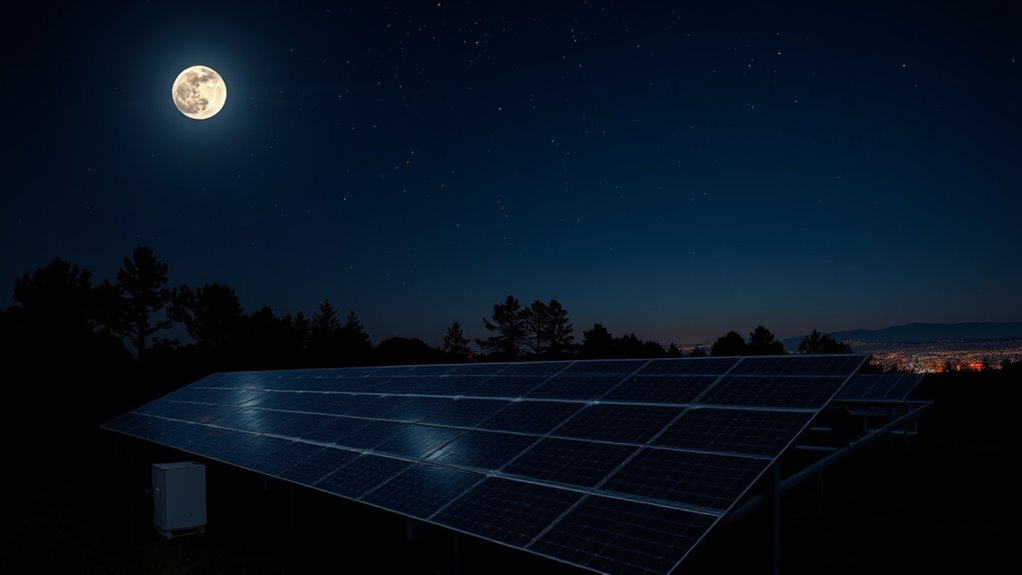
Although solar panels capture sunlight to produce electricity, they can’t generate power at night because they rely on direct sunlight to activate their photovoltaic cells. When sunlight hits these cells, it excites electrons, creating an electric current you can use.
During the day, this process happens continuously, powering your home or business. But once the sun sets, no sunlight reaches the panels, so the photovoltaic cells stop producing electricity.
Even on cloudy days, solar panels work less efficiently since they depend on sunlight intensity. You might wonder if moonlight or streetlights help, but their light isn’t strong enough to trigger the cells.
How Battery Storage Provides Solar Power After Dark
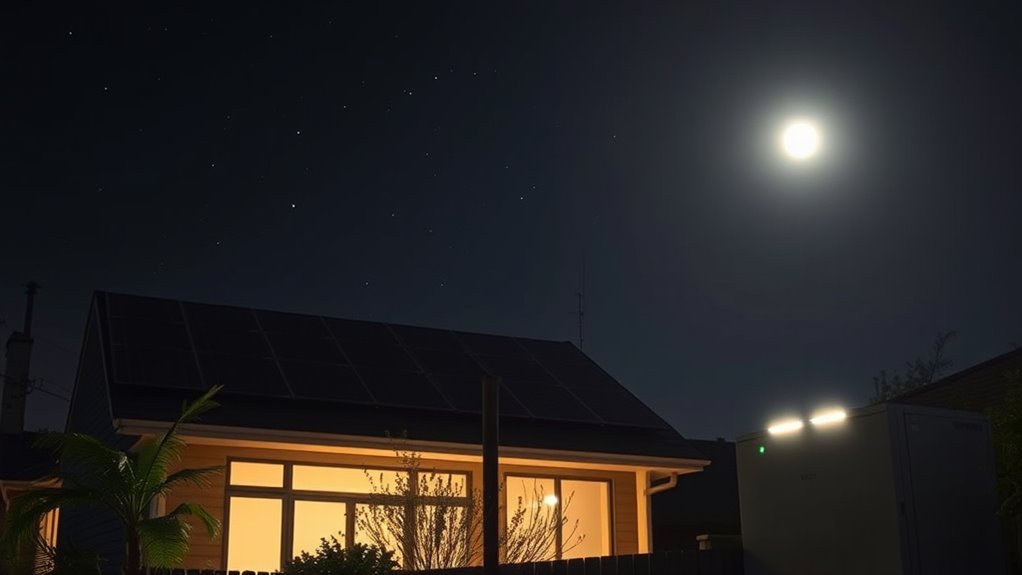
Since solar panels don’t produce electricity at night, battery storage systems step in to keep your power flowing. These batteries store excess energy your panels generate during the day.
When the sun sets, they release that stored electricity to power your home or business. You don’t have to worry about losing power after dark because the battery kicks in automatically.
This smooth changeover ensures you enjoy a consistent energy supply, even when the sun isn’t shining. By using battery storage, you maximize the benefits of your solar investment, reduce reliance on the grid, and increase energy independence.
Plus, with advancements in battery technology, these systems are becoming more efficient and affordable. That means nighttime solar power is becoming accessible to more people like you.
Using Thermal Storage to Keep Solar Heat at Night
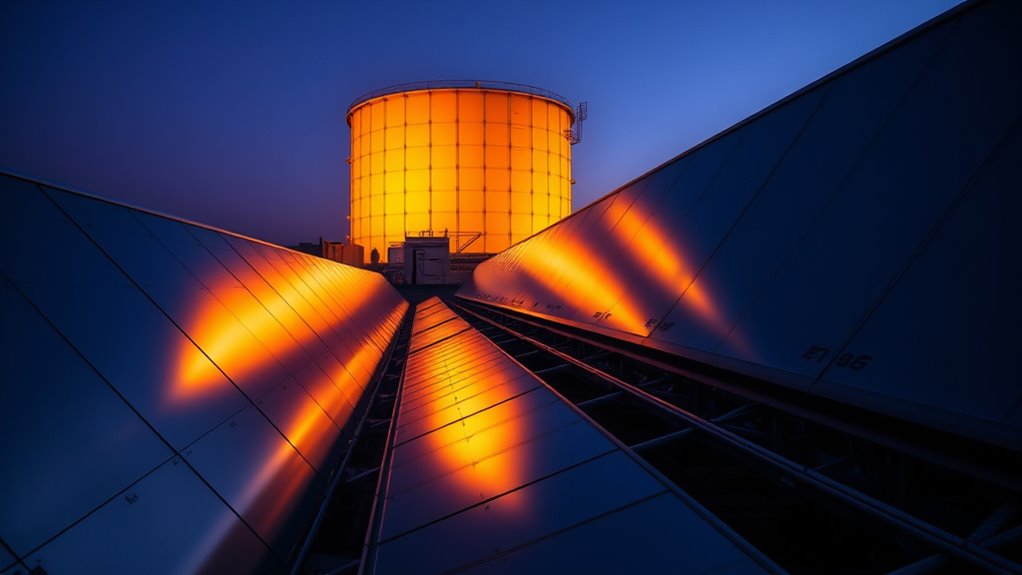
Battery storage plays a big role in powering your home after dark, but it’s not the only way to hold onto solar energy once the sun goes down. Thermal storage lets you capture the sun’s heat during the day and save it for nighttime use.
You can store this heat in materials like water, molten salt, or specially designed bricks that retain warmth efficiently. When night falls, the stored heat can be released to warm your home or generate electricity using steam turbines.
This method is especially useful for solar thermal power plants and can complement battery storage by reducing reliance on electrical energy alone. By using thermal storage, you make your solar system more flexible and efficient in providing energy around the clock.
How Smart Home Systems Manage Solar Energy 24/7
When you combine solar panels with smart home systems, you gain real-time control over your energy use day and night. These systems monitor your solar energy production, battery storage levels, and household consumption constantly.
They automatically adjust how energy flows—prioritizing solar power during the day and switching to stored energy or the grid at night. You can set preferences to maximize savings or guarantee backup power during outages.
Smart thermostats, lighting, and appliances respond to this energy data, optimizing efficiency without your intervention. With a smart home system, you don’t have to guess when to use or store solar energy; it manages everything seamlessly.
Future Solar Technology for Nighttime and Cloudy Days
You’re going to see big improvements in how solar energy works during the night and on cloudy days. Advanced energy storage, new solar panel designs, and hybrid systems combining multiple renewables will keep your power flowing smoothly.
It’s pretty exciting! Let’s explore how these technologies are shaping the future of solar energy.
Advanced Energy Storage Solutions
How can solar energy keep powering your home after the sun sets or on cloudy days? The answer lies in advanced energy storage solutions.
These technologies store excess solar power generated during sunny periods and release it when sunlight isn’t available. You can rely on batteries like lithium-ion, flow batteries, and emerging solid-state batteries to maintain a steady energy supply.
| Storage Type | Capacity (kWh) | Benefits |
|---|---|---|
| Lithium-ion | 5-20 | High efficiency, widely used |
| Flow Batteries | 10-100+ | Long cycle life, scalable |
| Solid-state | 1-10 | Safer, higher energy density |
| Thermal Storage | Varies | Stores heat for electricity |
These storage solutions guarantee your solar system performs effectively, day or night.
Innovative Solar Panel Designs
Although traditional solar panels rely on sunlight, innovative designs are pushing the boundaries to capture energy even at night or on cloudy days.
You can expect future solar technology to become more versatile and efficient in various conditions. Here are four exciting advancements:
- Bifacial panels – These capture sunlight on both sides, boosting energy collection during cloudy days.
- Thermal solar panels – They store heat from the sun, which can generate energy after sunset.
- Infrared solar cells – These harvest low-energy infrared light emitted by the Earth at night.
- Luminescent solar concentrators – They absorb diffuse light and re-emit it toward solar cells, improving performance in low-light conditions.
With these innovations, you’ll see solar energy becoming more reliable around the clock. Cool, right?
Hybrid Renewable Energy Systems
Innovations like bifacial panels and infrared solar cells are reshaping how solar energy performs after dark or on cloudy days, but combining multiple renewable sources can take reliability even further. Hybrid renewable energy systems blend solar power with wind, hydro, or battery storage to guarantee you get consistent energy anytime.
When the sun isn’t shining, wind turbines or stored energy kick in, keeping your home or business powered without interruption. These systems smartly balance different energy inputs, so you’re not solely dependent on one source.
Maximizing Solar Energy Use Around the Clock
To keep your solar energy flowing 24/7, you’ll want to explore energy storage solutions like batteries that save power for nighttime use.
You can also combine solar with other power sources in hybrid systems to guarantee a steady energy supply.
Let’s look at how these options help you maximize solar energy around the clock.
Energy Storage Solutions
How can you keep harnessing solar power when the sun isn’t shining? Energy storage solutions make this possible by capturing excess energy generated during the day and releasing it at night.
You can rely on various technologies to maximize solar energy use around the clock:
- Lithium-ion batteries – Popular for their high efficiency and long lifespan, ideal for home and commercial use.
- Flow batteries – Offer scalable storage with easy capacity adjustments, perfect for large-scale applications.
- Thermal storage – Stores heat generated by solar energy to produce electricity or heating later.
- Mechanical storage – Includes pumped hydro and flywheels, converting energy to potential or kinetic forms for later use.
Choosing the right storage method guarantees you enjoy solar power’s benefits 24/7 without interruption. It’s all about picking what works best for your needs!
Hybrid Power Systems
Although solar energy alone can’t provide a constant power supply, hybrid power systems combine solar with other energy sources to keep your electricity flowing day and night. You can pair solar panels with wind turbines, batteries, or even traditional generators to create a reliable energy mix.
When the sun sets, wind or stored energy can kick in, preventing power interruptions. These systems balance renewable and conventional power, maximizing energy use while reducing costs and emissions.
By integrating different technologies, you guarantee your home or business runs smoothly regardless of weather or time. Hybrid setups give you flexibility, resilience, and efficiency, making the most out of solar energy without depending solely on sunlight.
This way, you enjoy clean, continuous power around the clock.
Frequently Asked Questions
Can Solar Panels Generate Electricity on Cloudy Days?
Yes, your solar panels can generate electricity on cloudy days, but not as much as on sunny days. They still capture diffused sunlight, so your system produces power, just at a reduced rate compared to clear skies.
It’s pretty cool how they work even when the sun isn’t shining directly. So, while you might notice a drop in energy production, your panels are still doing their job.
How Long Do Solar Panels Typically Last?
You’ll find solar panels typically last 25 to 30 years, but don’t count your chickens before they hatch.
With proper care, they can keep producing clean energy well beyond that, saving you money long-term.
What Maintenance Do Solar Panels Require?
You’ll need to clean your solar panels regularly to remove dirt and debris. It’s also important to check for any damage or shading issues that might affect their performance.
Make sure the connections are secure too. Scheduling annual professional inspections is a smart move. This helps keep your panels running efficiently and extends their lifespan.
Are Solar Panels Environmentally Friendly to Produce?
Yes, solar panels are generally environmentally friendly to produce, but you should know manufacturing involves energy and materials.
Recycling and advances are reducing impacts, so you’re supporting cleaner energy with a smaller carbon footprint than fossil fuels.
How Does Solar Energy Impact Property Value?
You’ll find solar energy boosts your property value by lowering utility costs and appealing to eco-conscious buyers.
Homes with solar panels often sell faster and at higher prices because they offer long-term savings and energy independence.
It’s a win-win situation for both sellers and buyers who want to save money and help the environment.
Conclusion
So, you’re wondering how solar panels work at night? Spoiler: they don’t—unless you’ve got a magic wand or a battery stash. But hey, thanks to clever storage systems and smart tech, you can pretend your solar setup never sleeps.
Future innovations might even turn moonlight into power, but until then, just enjoy the sun’s generosity by day and let your batteries do the heavy lifting by night. Solar energy is a daytime superstar, but at night, it relies on energy storage to keep things running smoothly.
In short, solar energy works best when the sun is shining, but with smart battery storage, you can use solar power around the clock. This way, your solar energy system stays efficient and reliable, even after the sun goes down. So, while solar panels don’t generate power at night, energy storage solutions make sure you still benefit from solar energy 24/7.