How Hot Can Solar Panels Get and How to Manage Temperatures
Solar panels can reach surface temperatures between 110°F and 150°F during peak sun hours, often feeling much hotter than the surrounding air. This heat buildup is pretty common and something you’ll want to keep an eye on because excessive warmth reduces their efficiency and shortens their lifespan.
Managing this heat isn’t too complicated. Simple steps like ensuring good ventilation, cleaning panels regularly, and adjusting angles help keep them cooler. These small actions can make a big difference in how well your solar panels perform and how long they last.
If you want to get more effective methods and monitoring tips, there are plenty of ways to optimize your solar panel’s performance and durability.
Keeping an eye on temperature and maintenance is key to getting the most out of your solar investment.
Key Takeaways
- Solar panels can reach surface temperatures between 110°F and 150°F (43°C to 65°C) during peak sunlight hours. That’s pretty hot!
- Excess heat reduces panel efficiency by increasing internal resistance and causing voltage drops. So, keeping them cool is really important.
- Proper ventilation, such as spacing panels from the roof, helps dissipate heat and lower temperatures. This simple step can make a big difference.
- Regular cleaning removes dust and debris that trap heat and create hot spots on panels. It’s a quick way to keep things running smoothly.
- Advanced cooling methods include active water or air circulation, phase change materials, and heat pipes for temperature control. These options are great if you want to get serious about managing heat.
Typical Surface Temperatures of Solar Panels in Sunlight
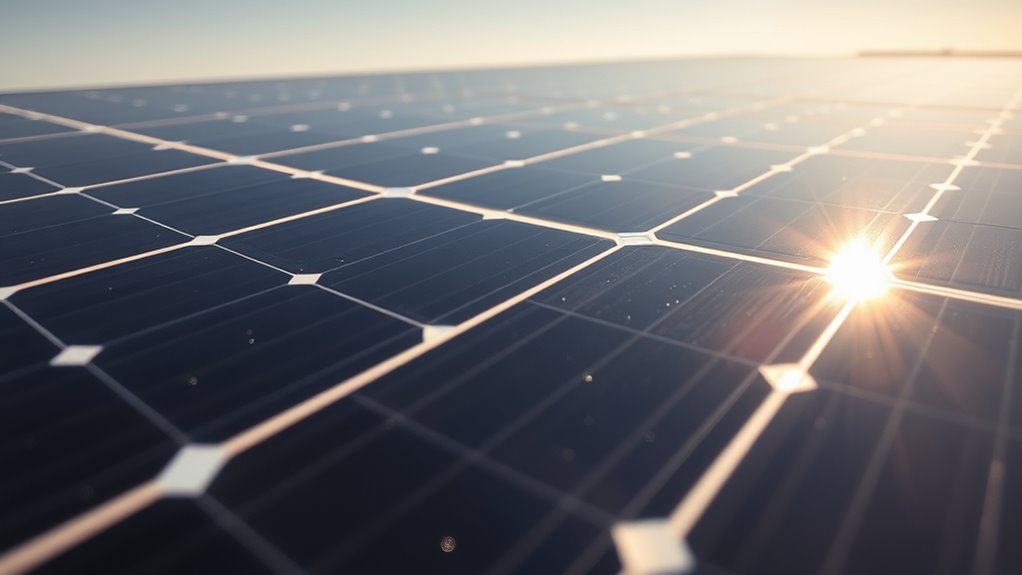
Although solar panels are designed to absorb sunlight and convert it into energy, they can reach surprisingly high surface temperatures during peak sun hours. You’ll often see panel surfaces heating up to between 110°F and 150°F (43°C to 65°C) on a sunny day.
This happens because the panels absorb not only the light but some heat as well. You might notice that solar panels feel warmer than the surrounding air temperature, sometimes by 20°F or more.
These temperatures are typical and expected, but it’s important to know that the heat can affect the panel’s efficiency slightly. By understanding these typical temperature ranges, you’ll be better equipped to monitor your panels and recognize when anything unusual might be going on.
Factors That Increase Solar Panel Heat
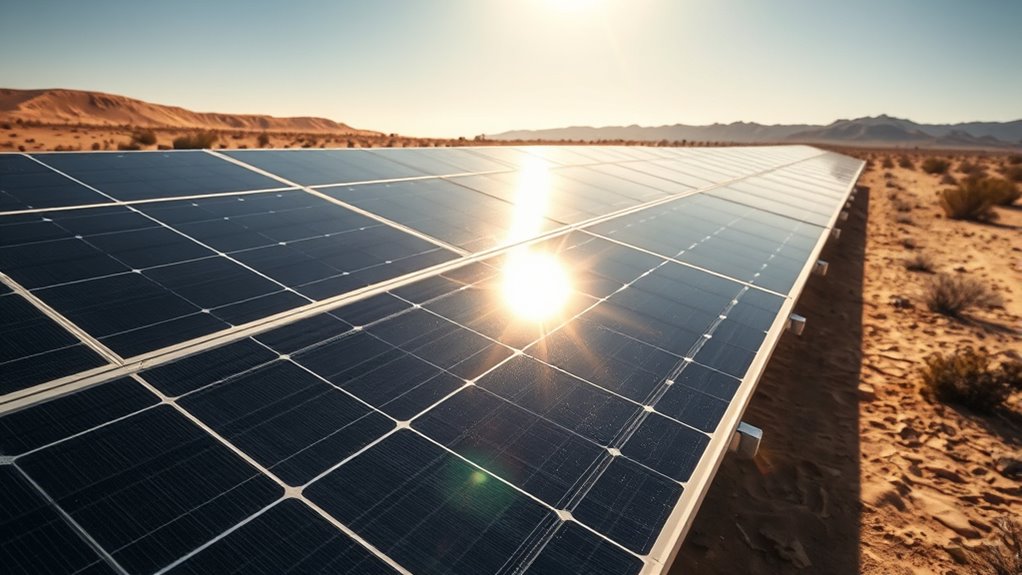
When solar panels absorb more sunlight than they can convert into electricity, the excess energy turns into heat, raising their temperature. Several factors can increase this heat.
Intense sunlight and high ambient temperatures naturally elevate panel heat. If your panels lack proper ventilation or are mounted too close to a roof, heat can build up since air can’t flow freely to cool them.
Dark-colored roofs absorb more heat, which transfers to the panels, pushing their temperature higher. Dust, dirt, and grime on the panels reduce their efficiency, causing them to absorb more heat instead of converting sunlight.
Additionally, shading from nearby objects can create hot spots, further increasing localized heat on your panels. Understanding these factors helps you manage panel temperature effectively.
Why Too Much Heat Hurts Your Solar Panels
Excess heat from factors like poor ventilation and intense sunlight can markedly reduce your solar panels’ efficiency. When your panels get too hot, their ability to convert sunlight into electricity drops substantially, meaning you get less power output.
Excess heat from poor ventilation and strong sunlight can significantly lower your solar panels’ efficiency.
High temperatures increase the resistance within the solar cells, causing voltage to decrease. This directly impacts the overall energy production, so your investment doesn’t perform as expected.
Heat can also accelerate material degradation, leading to faster wear and tear, shortening your panels’ lifespan. Additionally, excessive heat can cause microcracks and solder joint failures, further compromising performance.
Understanding why too much heat hurts your solar panels helps you appreciate the importance of managing their temperature effectively. That way, you can maintain ideal energy generation and prolong their durability.
Simple Ways to Keep Solar Panels Cooler
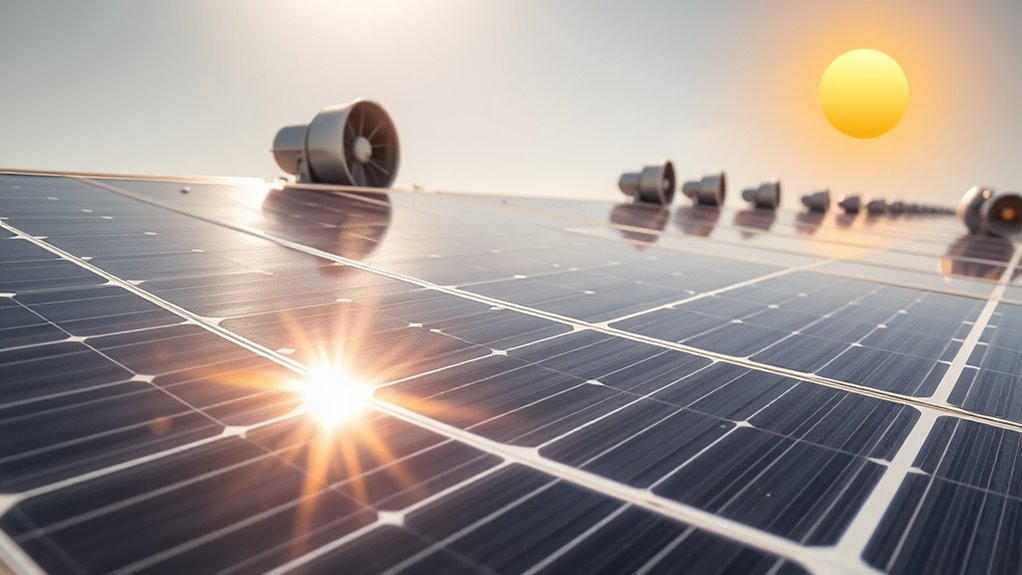
To keep your solar panels running efficiently, you’ll want to focus on simple cooling strategies that prevent overheating. Start by ensuring proper ventilation around your panels. Installing them with a gap between the roof and panels allows air to flow underneath, naturally cooling the system.
Regularly clean your panels to remove dust and debris, which can trap heat and reduce performance. If possible, angle your panels to catch breezes, enhancing airflow and heat dissipation.
You can also use reflective surfaces nearby to minimize heat absorption without shading the panels. Finally, avoid planting trees or placing objects that block airflow or create heat pockets.
These easy steps help maintain ideal temperatures, keeping your solar panels effective without complex or costly modifications. It’s really about working with your setup to keep things cool and efficient.
Advanced Cooling Techniques for Solar Panels
Although basic cooling methods can help, advanced techniques offer more effective temperature control for solar panels. This is especially true in hot climates or high-performance setups.
You can use active cooling systems like water or air circulation to reduce heat more efficiently. Phase change materials (PCMs) absorb and release heat, which helps maintain stable panel temperatures. Another option is heat pipes, which transfer heat away from panels quickly.
| Technique | Method | Benefit |
|---|---|---|
| Water Cooling | Circulation system | Rapid heat dissipation |
| Phase Change Material | Thermal storage | Temperature stabilization |
| Heat Pipes | Heat transfer | Efficient heat removal |
Monitoring Solar Panel Temperature for Better Performance
When you monitor your solar panel temperature regularly, you can spot overheating issues before they reduce efficiency or cause damage. Using temperature sensors or infrared thermometers, you can track the surface heat of your panels throughout the day.
Many solar monitoring systems now include temperature data, helping you identify trends and sudden spikes. If you notice temperatures rising above recommended levels, you can take immediate action—like improving ventilation or adding cooling mechanisms.
Staying on top of your panels’ thermal performance helps maintain ideal energy output and prolongs their lifespan. By integrating temperature monitoring into your routine maintenance, you guarantee your solar investment performs efficiently, even under intense sunlight or extreme heat conditions.
Frequently Asked Questions
Can Solar Panels Still Generate Electricity on Cloudy Days?
Yes, your solar panels can still generate electricity on cloudy days, but their efficiency drops. They capture diffused sunlight, so you’ll get less power, but they’ll keep working as long as there’s some light.
It’s kind of like when you’re outside on a cloudy day — it’s not as bright, but you can still see. So, your solar panels won’t produce as much energy as on a sunny day, but they won’t stop working entirely.
How Does Panel Tilt Angle Affect Energy Production?
You’d think tilting solar panels just a little won’t matter, but it can skyrocket your energy output!
Adjusting the angle to catch the sun’s rays maximizes power, so don’t just leave them flat—tilt smartly!
What Materials Are Solar Panels Made From?
Solar panels are mainly made from silicon cells, framed in aluminum, with tempered glass on top.
You’ll also find plastic backsheets and wiring that connect everything, ensuring your system efficiently converts sunlight into electricity. It’s pretty cool how all these materials work together to capture sunlight and turn it into power for your home.
Are There Any Health Risks Associated With Solar Panel Radiation?
Worried about solar panel radiation harming you? You don’t need to be.
Solar panels emit minimal electromagnetic radiation, far below harmful levels. So, you’re safe using them without any health risks from radiation exposure.
How Long Do Solar Panels Typically Last?
Solar panels typically last 25 to 30 years, but many keep producing electricity beyond that.
You should monitor performance and maintain them to guarantee efficiency. This helps you get the most lifespan out of your investment.
Conclusion
Solar panels can reach surface temperatures as high as 150°F (65°C) on sunny days. This heat can cut their efficiency by up to 25%, which is a big deal when you rely on them for energy.
To keep your panels performing at their best, you’ll want to manage heat through simple tricks like shading and airflow. There are also more advanced cooling methods if you want to get serious about temperature control.
By actively monitoring temperatures, you can catch overheating early and protect your investment. Keeping your solar system cool and efficient year-round is key to maximizing energy output and extending the life of your panels. Managing solar panel heat isn’t just about comfort—it’s about ensuring your solar setup delivers reliable, efficient power for years to come.