5 Tips to Get Snow Off Solar Panels Safely
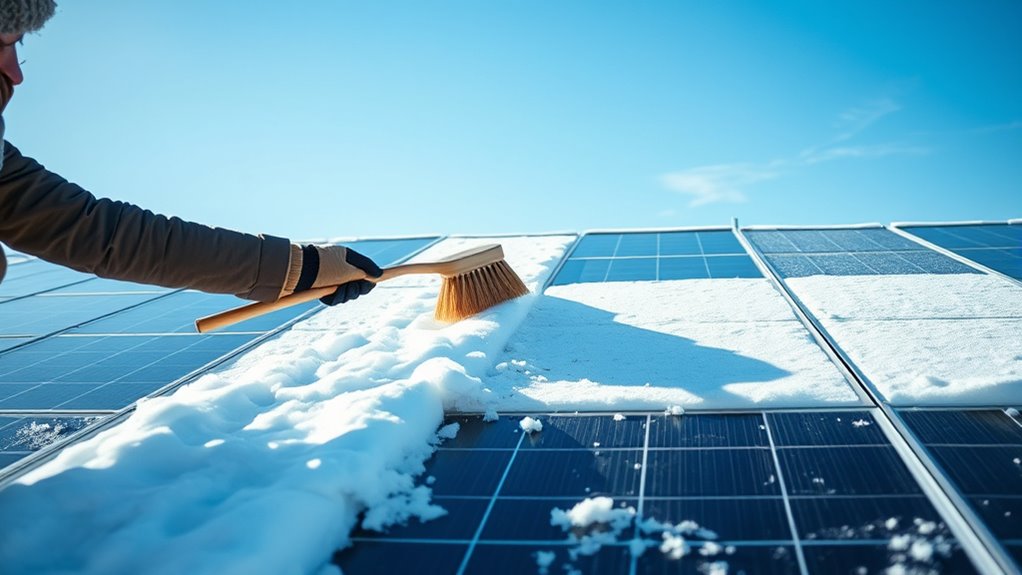
To get snow off your solar panels safely, it’s important to avoid sharp tools that can scratch or crack the glass. Instead, use a soft roof rake with a foam head. This way, you can gently pull the snow downward while standing on stable ground.
You might also consider melting the snow with warm water around 90°F, which helps avoid damage to the panels.
Protecting your panels from ice buildup is just as important, so make sure they’re installed at proper angles and consider applying safe coatings for extra protection.
Keep an eye on your solar panel performance throughout the winter season. This way, you can catch any issues early and keep your panels running efficiently all season long.
Taking these simple steps will help you maintain your solar panels safely and effectively during snowy weather.
Key Takeaways
- Use a soft roof rake with a foam or rubber head to gently pull snow off without scratching the panels. This helps keep your solar panels safe while clearing them.
- Avoid sharp tools to prevent glass damage, scratches, and efficiency loss. You definitely don’t want to risk harming your panels.
- Pour warm water around 90°F gently to melt snow without causing glass cracking or pooling. Just be careful not to pour it too fast or too hot.
- Clear snow from stable ground without climbing on the roof to ensure safety and prevent panel damage. It’s always better to stay safe and avoid accidents.
- Install panels at an angle and consider ice-resistant coatings to reduce snow and ice buildup naturally. These steps can save you effort in the long run.
Why Avoid Sharp Tools on Solar Panels
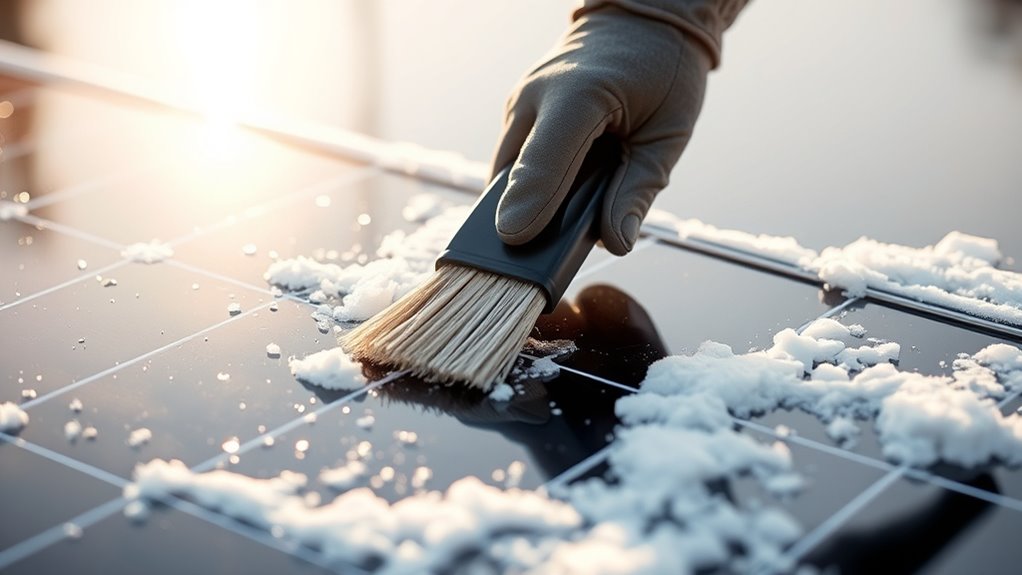
Although it might seem easier to scrape snow off your solar panels with a sharp tool, you should avoid doing this because it can easily scratch or damage the surface. Solar panels have delicate glass and coatings designed to maximize sunlight absorption.
Using sharp tools risks chipping or cracking the glass, which reduces efficiency and may lead to costly repairs. Even small scratches can create weak spots where moisture seeps in, causing further damage over time.
Instead, you want to preserve the integrity of your panels while removing snow. By steering clear of sharp objects, you protect your investment and keep your system running at its best.
How to Use a Soft Roof Rake to Clear Snow Safely
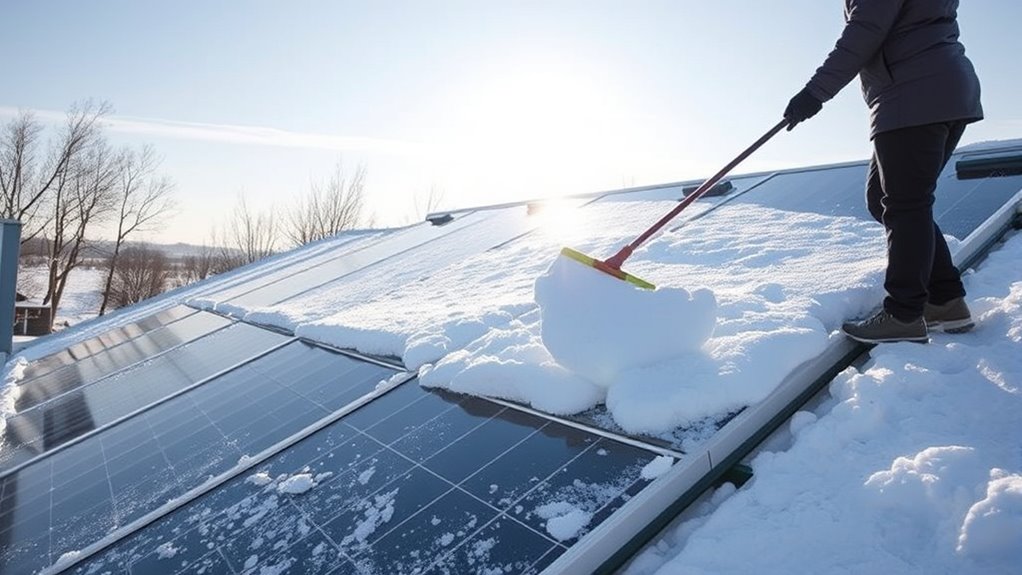
When you need to clear snow from your solar panels, using a soft roof rake is one of the safest methods you can choose. Start by selecting a rake with a foam or rubber head to avoid scratching the panels.
Using a soft roof rake with a foam or rubber head safely clears snow without damaging your solar panels.
Stand firmly on the ground or a stable surface—never climb onto the roof to prevent damage or injury. Gently pull the snow downward in slow, controlled strokes, avoiding any sharp or sudden movements.
Keep the rake at an angle to minimize pressure on the panels. Clear just the snow covering the panels; don’t scrape down to the surface.
Make sure to check your progress regularly so you’re not applying too much force. This method helps protect your panels while keeping you safe during snow removal.
How Warm Water Can Melt Snow Safely
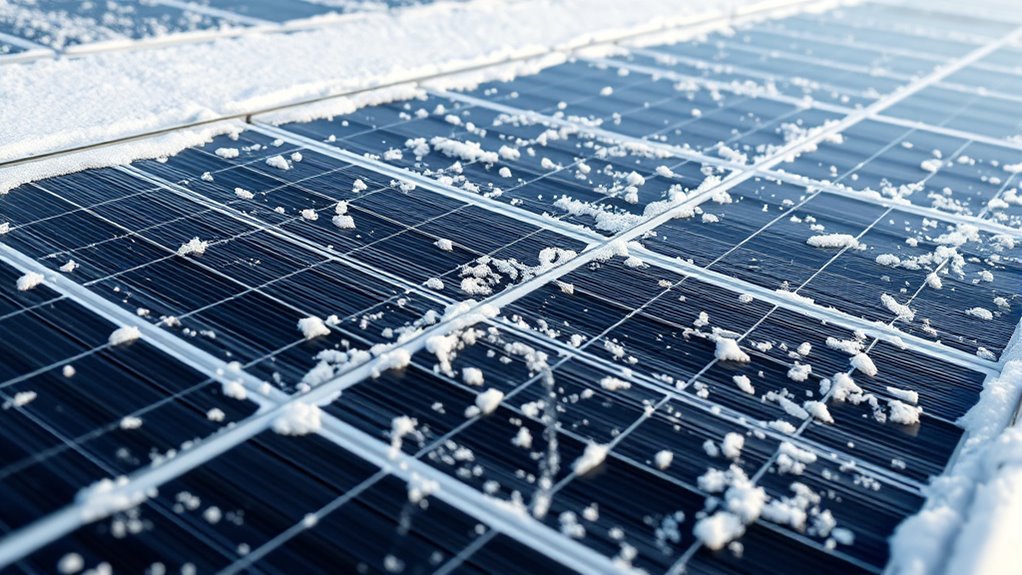
Using warm water is a simple way to melt snow on your solar panels without risking damage. You should avoid hot water, as extreme temperatures can cause the glass to crack.
Instead, use water that’s just warm to the touch, around 90°F (32°C). Gently pour the water over the snowy areas, letting gravity and warmth do the work.
Don’t use a hose under high pressure, as that can harm seals or wiring. Also, avoid excessive amounts of water that could pool and freeze later, causing ice buildup.
After melting, any remaining wet snow will slide off more easily. This method is gentle, effective, and won’t scratch or stress your panels, making it a smart choice when snow piles up.
How to Protect Your Solar Panels From Ice Damage
Since ice buildup can cause serious damage to your solar panels, protecting them from freezing conditions is essential. You can start by ensuring your panels are installed at an angle that encourages ice and snow to slide off naturally.
Applying a non-toxic, ice-resistant coating can also help reduce ice adhesion. Be sure to check your panel mounts and seals regularly for cracks where ice might penetrate and cause damage.
Installing a gentle heating system designed for solar panels can prevent ice accumulation without harming the equipment. Just avoid using sharp tools or harsh chemicals, as they can scratch or degrade the panels.
Taking these proactive steps will help you maintain your panels’ efficiency and extend their lifespan during icy weather. It’s definitely worth the effort to keep things running smoothly!
How to Monitor Solar Panel Performance in Winter
Protecting your solar panels from ice damage is just one part of winter maintenance; keeping an eye on their performance is equally important. You want to guarantee your panels are producing efficiently despite snow and shorter daylight hours.
Ensuring your solar panels perform well in winter is as vital as protecting them from ice damage.
Here’s how to monitor their performance effectively:
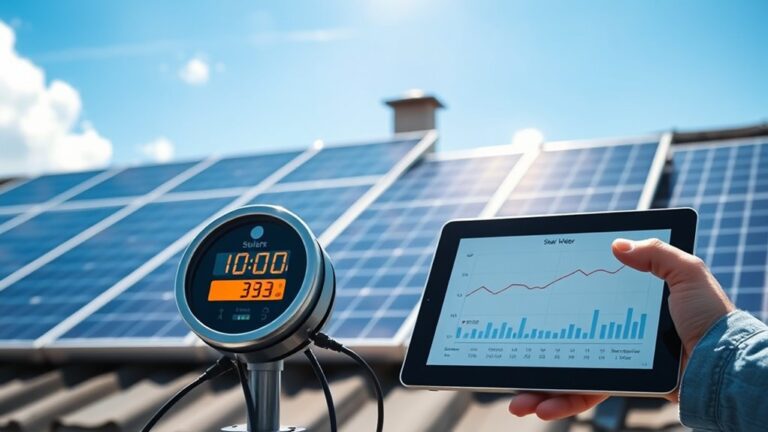
- Use a monitoring app or system provided by your solar provider to track real-time energy output.
- Check inverter lights regularly; a red or blinking light often signals an issue.
- Compare winter output to historical data to spot significant drops unrelated to weather.
- Inspect panels visually for persistent snow or ice buildup that could reduce efficiency.
Frequently Asked Questions
Can Snow Damage the Wiring of Solar Panels?
Yes, snow can damage your solar panel wiring if it melts and refreezes, causing moisture and ice buildup. This can lead to potential problems with the wiring.
You should regularly check your panels and gently clear away any snow. Doing this helps prevent water damage or short circuits in the wiring. It’s a simple step that can save you a lot of trouble down the road.
How Often Should I Inspect Solar Panels in Snowy Regions?
You should inspect your solar panels at least once a month during snowy seasons—like checking for hidden treasure.
Regular checks help spot damage early, keep performance ideal, and prevent costly repairs down the line.
It’s a simple habit that can save you a lot of headaches later on. Just a quick look can make a big difference!
Does Snow Accumulation Reduce Solar Panel Efficiency Significantly?
Yes, snow accumulation can considerably reduce your solar panel efficiency by blocking sunlight. You’ll want to clear heavy snow promptly to maintain energy production.
But always do so safely to avoid damaging the panels or risking injury. It’s better to be cautious while keeping your system working well.
Are There Specific Solar Panels Designed for Heavy Snow Areas?
If you’re in heavy snow zones, you’ll want panels like SunPower’s high-efficiency models with textured glass that sheds snow faster. They’re designed for durability and performance, ensuring you get power even during harsh winters.
These panels really help keep things running smoothly when the snow piles up. So, you don’t have to worry about losing energy just because of the weather.
Can Snow Removal Void My Solar Panel Warranty?
Yes, removing snow improperly can void your solar panel warranty. You should follow the manufacturer’s guidelines and use recommended tools to avoid damage.
Always check your warranty terms before attempting snow removal. It’s better to be safe than sorry!
Conclusion
Now that you know the safest ways to clear snow from your solar panels, you might think you’re all set. But what if the cold isn’t the only challenge lurking this winter?
Protecting your panels goes beyond just snow removal—it’s about staying vigilant and proactive. Keep an eye on performance, avoid shortcuts, and trust the right tools.
The real test of your efforts might be closer than you expect. Stay prepared by regularly checking your solar panels for any buildup and addressing issues promptly. Snow removal is important, but maintaining overall panel health during winter ensures they keep working efficiently.
Remember, safe snow removal combined with ongoing care is key to protecting your solar investment through the cold months. Stay safe and keep your solar panels clear to maximize energy output all winter long.