Do You Still Have an Electric Bill With Solar Panels?
You’ll likely still have an electric bill with solar panels because they only produce power during sunlight hours. They can’t cover all your energy use, especially at night or on cloudy days.
Plus, fixed fees from your utility usually remain.
However, if your system is sized well and you use net metering credits effectively, you could reduce or even eliminate costs.
To understand why bills persist and how to maximize your savings, keep exploring these essential factors.
Key Takeaways
- Solar panels reduce your electric bills, but they usually don’t get rid of them completely. This is because you still use electricity at night and on cloudy days when your panels aren’t producing much power.
- If your electricity use goes beyond what your solar panels produce, you’ll see charges on your bill. Plus, there are fixed utility fees and grid maintenance costs that you have to pay even with solar.
- With net metering, any extra solar energy you send back to the grid earns you credits. This helps lower your bill, but it doesn’t always bring it down to zero.
- To really cut down or even eliminate your electric bill, it’s important to size your system right and be mindful of your energy habits. That way, you get the most out of your solar setup.
How Solar Panels Affect Your Electric Bill
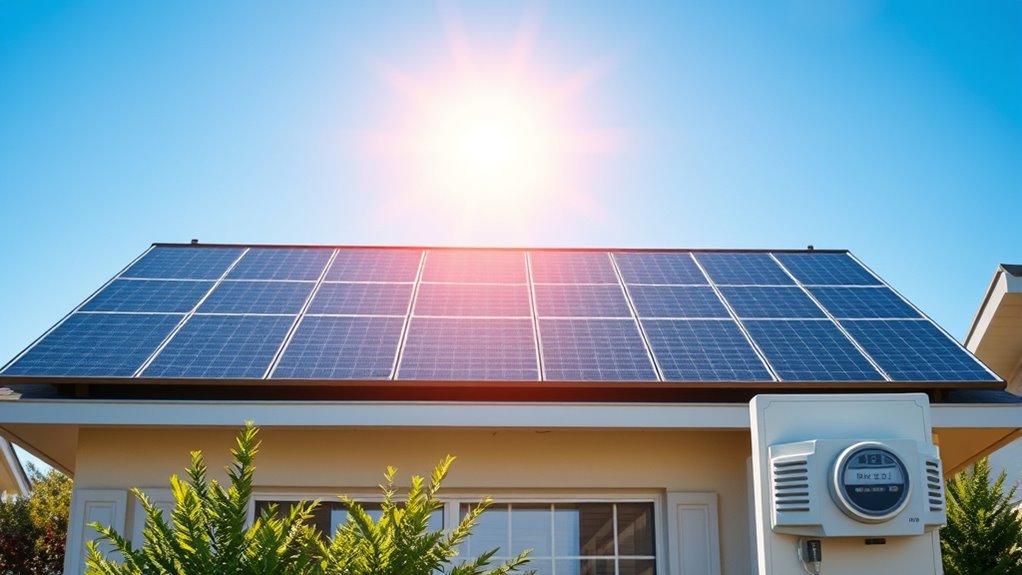
Although solar panels generate electricity from sunlight, you might still receive an electric bill. That’s because solar panels typically reduce the amount of electricity you buy from the grid but don’t eliminate it entirely.
Your panels produce power only when the sun shines, so at night or on cloudy days, you still need electricity from your utility company. Plus, your home might use more electricity than your panels generate, especially during high-demand times.
Your electric bill will show the net amount of electricity you consume from the grid after offsetting what your panels produce. You’ll likely pay a reduced bill, but some fixed fees or charges for grid maintenance usually remain.
Understanding this helps you set realistic expectations about your electric costs with solar panels. It’s good to know what to expect so you’re not caught off guard by a bill now and then.
When Can Solar Panels Eliminate Your Electric Bill?
You can eliminate your electric bill when your solar panels produce as much or more energy than you use. Understanding your energy consumption and how much your system generates is key.
Plus, net metering lets you get credit for extra energy sent back to the grid. This can help reduce or even erase your bill.
Energy Consumption vs Production
How much energy your solar panels produce compared to how much you use determines whether your electric bill disappears. If your system generates as much or more electricity than your household consumes, you can potentially eliminate your monthly charges.
But if your consumption exceeds production, you’ll still face some costs. Factors like the size of your solar setup, local sunlight hours, and your daily energy habits directly impact this balance.
For instance, running high-energy appliances during peak sunlight boosts solar efficiency. Monitoring your usage and adjusting habits can help maximize your solar investment.
Ultimately, your goal is to align energy consumption with production as closely as possible to minimize or erase your electric bill entirely.
Net Metering Benefits
A key factor in eliminating your electric bill with solar panels is net metering, a system that credits you for the excess electricity your panels send back to the grid. When your solar panels produce more energy than you use, net metering allows you to bank those extra kilowatt-hours as credits.
Later, when your panels aren’t generating enough—like at night or on cloudy days—you can draw from those credits instead of paying for electricity from your utility. This effectively reduces or even wipes out your bill, depending on your energy consumption and system size.
To maximize net metering benefits, you should monitor your usage and production closely. Make sure your system is properly sized and aligned with your energy needs. It’s all about balancing what you use and what you produce.
Why You Might Still See an Electric Bill After Going Solar
Even after installing solar panels, you might still get an electric bill because your system may not cover all your energy needs all the time. Solar panels only generate power when the sun is shining. So, at night or on cloudy days, you’ll still rely on the grid.
Also, if your solar system is smaller than your total energy use, any extra electricity you need comes from your utility provider. Some utility companies charge fixed fees or minimum monthly amounts no matter how much energy you use.
And sometimes, if your system has maintenance issues or shading that cuts down its output, you’ll have to draw more power from the grid. So, seeing an electric bill after going solar is totally normal and depends on how you use energy and how your system is set up.
How Net Metering Affects Your Solar Electric Bill
Because solar panels generate electricity during the day, net metering lets you send any extra power back to the grid and earn credits. These credits offset the electricity you use when your panels aren’t producing enough, like at night or on cloudy days.
When your solar system produces more than you need, your meter runs backward, lowering your bill. At the end of the billing cycle, your utility company calculates your net usage—how much electricity you consumed minus what you sent back.
If you generate more than you use, you might get a credit that rolls over to future bills. However, the rules and rates for net metering vary by location, so understanding your local policy helps you gauge how much your electric bill will shrink.
Key Factors That Determine Your Solar Electric Bill Savings
Your solar electric bill savings largely depend on the size of your solar system and how your utility charges for electricity. A larger system can generate more power, reducing what you buy from the grid.
Understanding your utility’s rate structure helps you maximize those savings. It’s all about knowing how you’re billed so you can get the most out of your solar setup.
Solar System Size
When planning your solar setup, the size of your system plays a crucial role in determining how much you’ll save on your electric bill. A properly sized system can cover more of your energy needs, reducing your reliance on the grid.
If your system is too small, you’ll still pay for some electricity. Oversizing can lead to wasted energy or higher upfront costs without proportional savings.
Consider these factors to size your solar system effectively:
- Your average daily electricity consumption
- Roof space available for solar panels
- Local sunlight exposure and climate
- Budget constraints and financing options
- Future energy needs or additions like electric vehicles
Balancing these elements helps maximize your savings and get the most from your solar investment. It’s all about finding the right fit for your home and lifestyle.
Utility Rate Structures
How much you save on your electric bill with solar panels depends heavily on your utility’s rate structure. Utilities use different methods to charge for electricity, such as flat rates, time-of-use (TOU) rates, or tiered pricing.
With flat rates, you pay a fixed price per kilowatt-hour, so your savings come directly from the solar energy you generate. TOU rates charge more during peak hours and less during off-peak, meaning your savings increase if your panels produce when rates are highest.
Tiered pricing raises rates as you use more energy, so reducing your grid consumption through solar can lower your bill considerably. Understanding your utility’s specific rate plan helps you estimate potential savings and optimize your solar system’s performance.
How to Keep Your Electric Bill Low After Going Solar
Even after installing solar panels, you can take several steps to keep your electric bill low. Managing your energy use efficiently maximizes savings and reduces reliance on the grid.
Start by monitoring your consumption regularly to spot high-usage patterns. Use energy-efficient appliances and switch to LED lighting to cut power needs.
Try adjusting your habits by running major appliances during peak solar production hours. Finally, consider installing a home battery to store excess solar energy for nighttime use.
- Monitor daily energy consumption
- Use Energy Star-rated appliances
- Run heavy appliances midday
- Switch to LED bulbs
- Invest in a home battery storage system
Frequently Asked Questions
How Long Do Solar Panels Typically Last?
Solar panels typically last about 25 to 30 years, but they can keep producing electricity beyond that with slightly reduced efficiency.
You’ll want to maintain them and monitor performance to get the most out of your investment.
It’s a good idea to keep an eye on how they’re doing so you can catch any issues early.
That way, you make sure they keep working well for as long as possible.
What Maintenance Do Solar Panels Require?
Keeping your solar panels in tip-top shape isn’t rocket science; you’ll just need to clean them a couple of times a year and check for shading or damage.
Regular inspections guarantee you’re getting the most bang for your buck. It’s really about staying on top of things so your panels keep working efficiently.
Can Solar Panels Increase My Home’s Value?
Yes, solar panels can increase your home’s value by making it more energy-efficient and attractive to buyers.
You’ll likely see a higher resale price and quicker sale thanks to lower utility costs and eco-friendly appeal. It’s a win-win!
Are There Tax Incentives for Installing Solar Panels?
You’re in luck—installing solar panels often unlocks some friendly government rewards, like tax credits and rebates.
These incentives can soften upfront costs, making your eco-friendly upgrade feel even more like a smart, wallet-wise choice.
How Do Weather Conditions Affect Solar Panel Efficiency?
Weather conditions directly impact your solar panel efficiency. Cloudy or rainy days reduce sunlight, lowering energy production.
Snow or dirt can block panels, while extreme heat may also decrease performance. Regular maintenance helps you maximize output.
Conclusion
You might think solar panels mean your electric bill vanishes, but that’s not always the case. Sometimes, hidden factors keep a bill showing up.
The real question is—will your solar setup save you as much as you hoped? Before you decide, understand net metering, your energy use, and system size.
The answer isn’t simple, and it could surprise you. Ready to uncover the truth about your solar savings?
Even with solar panels, you may still have an electric bill due to connection fees, energy consumption beyond what your system produces, or less-than-ideal net metering policies. To really know if your solar investment pays off, consider how much energy you use, the size and efficiency of your solar setup, and how your utility credits excess power. Understanding these factors helps you manage expectations and maximize your solar savings. So, while solar panels can significantly reduce your electric bill, they don’t always eliminate it entirely.