
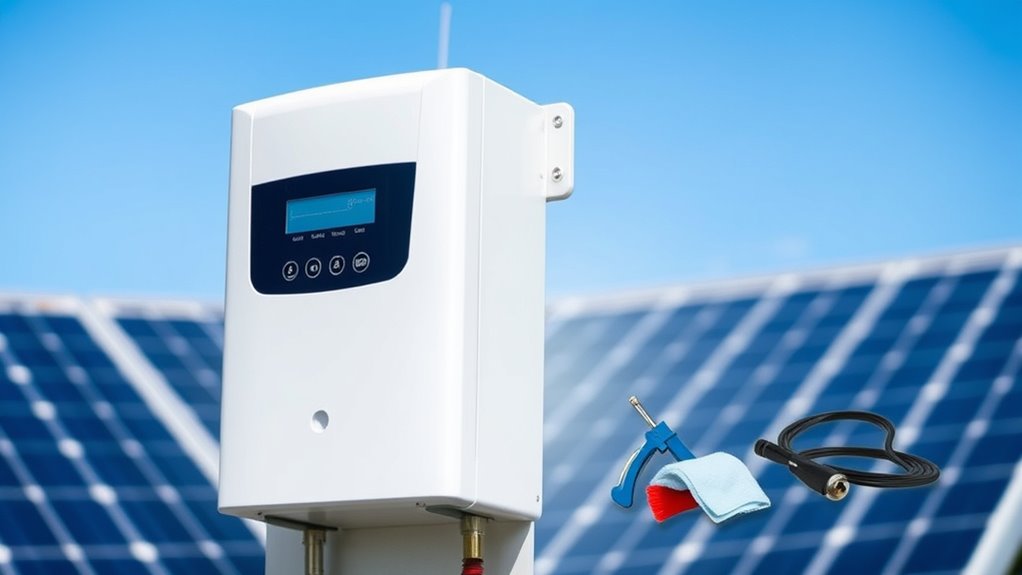
How Long Do Solar Inverters Last and How to Maintain Them
You can expect your solar inverter to last around 10 to 15 years, especially if you choose a quality unit and maintain it well. A reliable solar inverter is key to getting the most out of your solar power system, so it’s worth investing in a good one.
Proper care can really stretch its lifespan and keep your energy flowing smoothly.
Keep it cool by installing it in a shaded, ventilated spot. Make sure to clean the vents regularly to avoid overheating.
Watch for signs like frequent shutdowns or unusual noises. These could mean your inverter needs attention.
Also, don’t forget to update the firmware when needed to keep it running efficiently.
Avoid electrical surges and moisture to extend its life. Following these simple tips will help you pick the best inverter and troubleshoot common issues with ease.
Key Takeaways
- Solar inverters typically last 10 to 15 years. High-quality units can even reach the upper end of that range.
- Regular maintenance is key. This includes cleaning vents, checking wiring, updating firmware, and scheduling professional inspections.
- To avoid overheating, install your inverter in shaded, well-ventilated areas. Also, keep the components dust-free for better performance.
- Keep an eye out for signs like frequent shutdowns, drops in energy output, unusual noises, or error codes. These can mean it’s time for a replacement.
- When choosing an inverter, look for strong warranties, good thermal management, and compatibility with your solar system. That way, you’re covered for the long haul.
How Long Do Solar Inverters Typically Last?
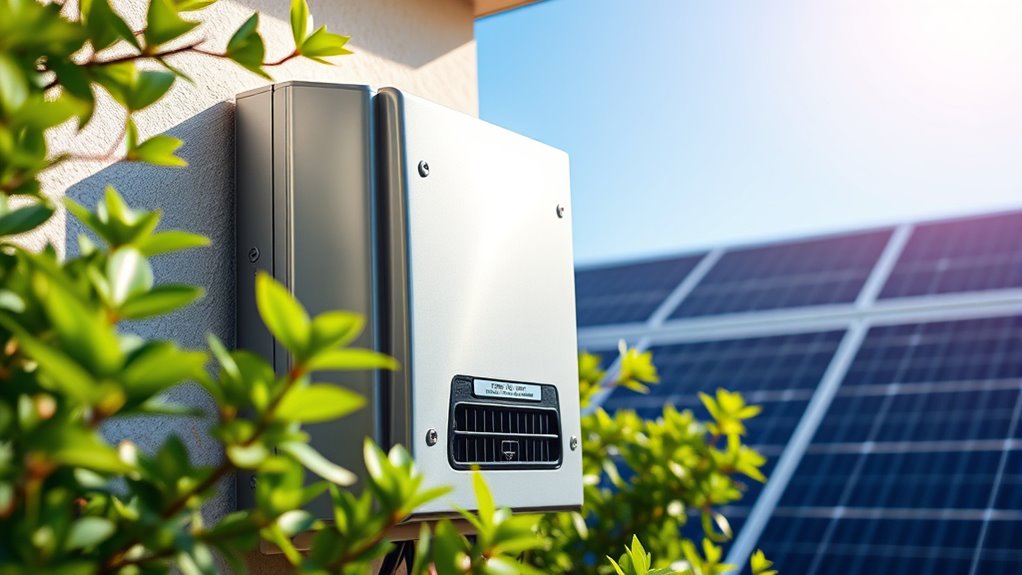
While the lifespan of solar inverters can vary, they typically last between 10 to 15 years. You’ll find that this range depends on factors like the inverter’s quality, how well it’s maintained, and the environment it operates in.
If you choose a high-quality inverter and keep it clean and cool, you can anticipate it to reach the upper end of that range. Many manufacturers offer warranties around 10 years, giving you a good idea of expected durability.
As you use your solar system, you might notice slight efficiency drops as the inverter ages, but it usually remains functional throughout its lifespan. Planning for a replacement after 10 to 15 years ensures your system keeps running smoothly without unexpected downtime.
What Shortens Your Inverter’s Lifespan?
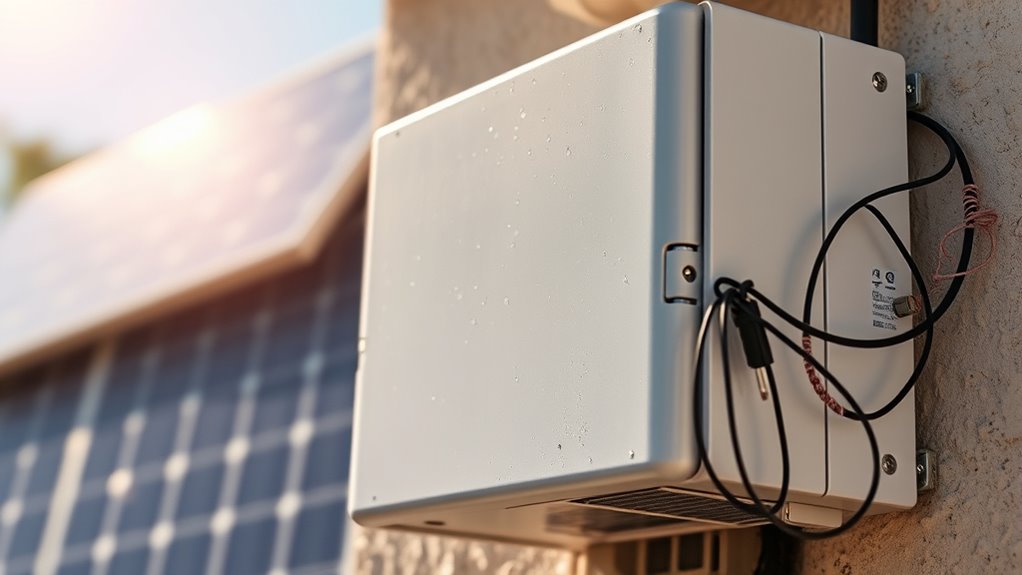
You’ll find that excessive heat and frequent temperature fluctuations can wear down your inverter faster than you’d expect.
Electrical surges and spikes also put a lot of stress on its components, leading to premature failure. Protecting your inverter from these factors is key to extending its lifespan.
Heat and Temperature Effects
Because solar inverters convert DC electricity to AC, they generate heat that can strain their components over time. Excessive heat accelerates wear, causing parts to degrade faster and reducing your inverter’s lifespan.
To protect your system, make sure it’s installed in a well-ventilated area. Also, clean cooling fans regularly to keep things running smoothly.
| Heat Source | Effect on Inverter | Prevention Tip |
|---|---|---|
| Ambient Temperature | Increases internal heat | Install in shaded locations |
| Solar Radiation | Raises inverter surface temp | Use reflective covers |
| Poor Ventilation | Traps heat inside inverter | Maintain airflow and clear vents |
Managing temperature effectively really helps keep your inverter running smoothly. Plus, it extends its operational life.
Electrical Surges and Spikes
Heat isn’t the only factor that can shorten your inverter’s lifespan; electrical surges and spikes also take a serious toll. These sudden increases in voltage can damage your inverter’s sensitive electronic components, leading to premature failure.
Surges often result from lightning strikes, grid fluctuations, or switching operations on the power line. To protect your inverter, install surge protectors or voltage stabilizers.
Regularly check your system for signs of electrical stress, like flickering or unexpected shutdowns. Don’t ignore these warning signs, as repeated exposure weakens internal circuits.
How to Know When Your Inverter Needs Replacing
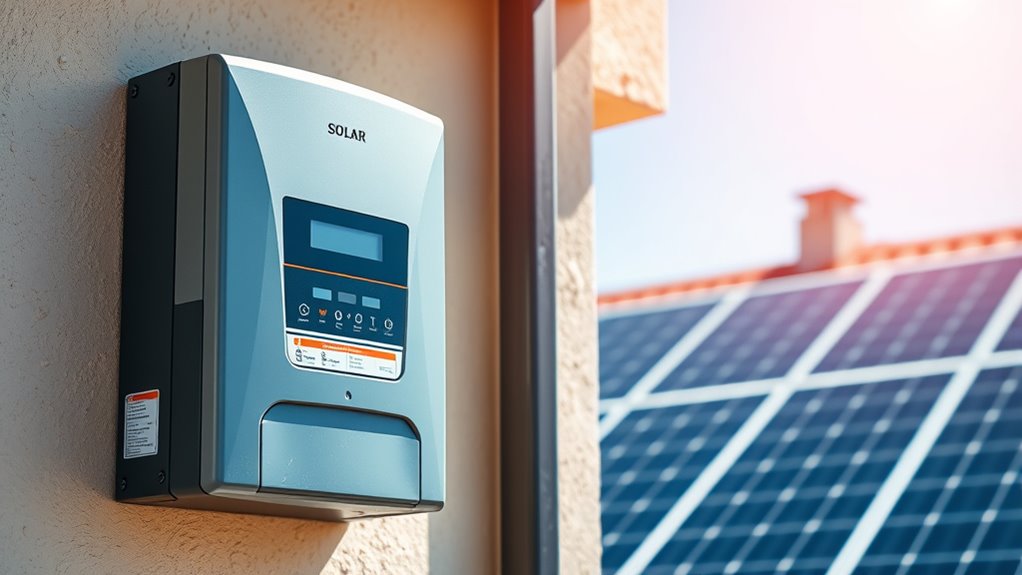
Although solar inverters typically last between 10 to 15 years, you’ll need to watch for signs that indicate it’s time for a replacement. If you notice your system’s energy output dropping consistently despite clean panels, your inverter could be struggling.
Frequent shutdowns or the inverter failing to start are also red flags. Pay attention to unusual noises or overheating, which suggest internal wear.
Additionally, if your inverter’s display shows error codes you can’t resolve or if it’s become unreliable, consider replacement. Regular monitoring helps you catch these issues early.
Don’t ignore warning lights or persistent faults; addressing them promptly protects your investment and guarantees your solar system runs efficiently. Replacing your inverter at the right time helps maintain peak energy production and avoids costly downtime.
Common Inverter Problems and Fixes
You might face common inverter problems like overheating, wiring connection issues, or software glitches. Knowing how to spot and fix these can save you time and money.
Let’s look at what causes these problems and how you can address them.
Overheating Issues
Since solar inverters work continuously to convert energy, they can sometimes face overheating issues that reduce their efficiency and lifespan. You’ll want to keep an eye on your inverter’s temperature to prevent damage and maintain peak performance.
Overheating often happens due to poor ventilation, excessive dust, or high ambient temperatures. So, it’s important to be proactive about it.
To avoid overheating problems:
- Ensure the inverter is installed in a well-ventilated, shaded area.
- Regularly clean dust and debris from vents and cooling fans.
- Avoid placing the inverter near heat sources or direct sunlight.
- Monitor inverter temperature readings through the system interface if available.
Taking these steps will help your inverter run cooler, last longer, and keep your solar setup efficient. It’s definitely worth the effort!
Wiring Connection Problems
Overheating isn’t the only issue that can disrupt your solar inverter’s performance; wiring connection problems also pose significant risks. Loose or corroded connections can cause intermittent power loss or even damage your inverter.
You should regularly inspect all wiring terminals and connectors for tightness and signs of wear, such as discoloration or fraying. If you spot corrosion, clean it carefully with a contact cleaner and a soft brush.
Damaged wires must be replaced promptly to prevent short circuits. Additionally, verify that all connections comply with your inverter’s specifications to avoid electrical faults.
Software Malfunction Solutions
Although hardware issues are common, software malfunctions can equally disrupt your solar inverter’s operation. When your inverter’s software glitches, it might cause incorrect readings, unexpected shutdowns, or communication failures.
To fix these problems, start by checking for updates—manufacturers often release patches that resolve bugs. If updates don’t help, try rebooting the inverter to reset its internal system.
Should issues persist, perform a factory reset, but back up your settings first to avoid data loss. Finally, consult the user manual or contact customer support for specific troubleshooting steps.
- Regularly update inverter firmware
- Reboot the system to clear temporary errors
- Perform factory reset if necessary
- Reach out to support for complex issues
Following these steps keeps your inverter running smoothly.
Easy Tips to Keep Your Inverter Running Longer
To keep your solar inverter running smoothly for years, you need to perform regular maintenance and monitor its operating conditions closely. First, verify the inverter is installed in a cool, well-ventilated area to prevent overheating.
Clean dust and debris from vents and surfaces regularly using a soft brush or cloth. Check all electrical connections periodically to confirm they’re tight and free of corrosion.
Avoid exposing the inverter to direct sunlight or moisture. Keep an eye on performance indicators or error messages and address issues promptly.
Also, schedule professional inspections every couple of years to catch hidden problems early. By following these simple steps, you’ll extend your inverter’s lifespan and maintain its efficiency without hassle.
Picking a Solar Inverter That Lasts
When choosing a solar inverter, you’ll want to focus on models known for durability and reliable performance. Picking the right one guarantees fewer breakdowns and longer life, saving you money and hassle.
Look for inverters with solid warranties, as they indicate the manufacturer’s confidence in their product. Also, consider units with high-quality components and good heat dissipation to prevent overheating.
Compatibility with your solar panels and system size is vital to avoid strain and inefficiency. It’s worth taking the time to match everything up properly.
Keep these factors in mind:
- Manufacturer reputation and customer reviews
- Warranty length and coverage
- Efficiency ratings and thermal management
- Compatibility with your solar setup
Frequently Asked Questions
Can Solar Inverters Be Recycled or Disposed of Safely?
Yes, you can recycle solar inverters safely by taking them to electronic waste facilities. Don’t just throw them away.
Many parts contain valuable metals and hazardous materials that need proper handling to protect the environment.
Do Solar Inverters Require Software Updates?
Think of your solar inverter as a smartphone—it needs software updates to stay sharp and efficient. You’ll want to install updates regularly to fix bugs, improve performance, and keep your energy system running smoothly and safely.
Just like your phone, these updates help your inverter adapt to new features and maintain its reliability. So, keeping your inverter’s software up to date is a smart move for long-term energy savings.
How Does Inverter Efficiency Impact Overall Solar System Performance?
Inverter efficiency directly affects your solar system’s energy output. Higher efficiency means less energy loss during conversion, so you get more usable power from your panels.
This boosts overall performance and maximizes your investment returns. It’s like getting more juice out of the same amount of sunshine!
Are There Warranties Specific to Solar Inverters?
Think of solar inverter warranties as a safety net beneath a tightrope walker—they’re designed to catch you if the inverter fails.
Yes, you’ll find specific warranties, usually spanning 5 to 12 years, protecting your investment.
Can Solar Inverters Be Upgraded Without Replacing the Entire System?
Yes, you can upgrade solar inverters without replacing the entire system.
You’ll just need a compatible inverter model and might require professional installation to guarantee it integrates smoothly with your existing solar panels and electrical setup.
It’s a great way to boost performance without starting from scratch.
Conclusion
When it comes to your solar inverter, remember that “a stitch in time saves nine.” By spotting issues early and maintaining your system regularly, you can extend its lifespan and avoid costly replacements.
Keep an eye on performance, clean it gently, and choose quality parts to guarantee your inverter serves you well for years. Taking these simple steps means you’ll get the most from your investment and enjoy reliable solar power without unexpected downtime.
Regular maintenance is key to how long solar inverters last. Simple things like monitoring efficiency and cleaning can prevent bigger problems down the line. Plus, using quality components ensures your inverter stays durable and efficient.
In the end, proper care not only extends the life of your solar inverter but also maximizes your system’s overall performance. So, if you want to enjoy consistent, reliable solar energy and avoid surprise breakdowns, keep up with maintenance and stay proactive. It’s the best way to protect your investment and power your home smoothly for years to come.



One Comment