Can Solar Panels Catch Fire and How to Prevent It
Yes, your solar panels can catch fire, but it’s pretty rare when they’re installed and maintained properly. Most fire problems come from faulty wiring, damaged panels, or poor ventilation that causes overheating or sparks.
To prevent fires, it’s important to use certified installers and inspect all connections regularly. Keeping debris clear and ensuring proper cleaning also helps a lot.
It’s a good idea to watch for warning signs like burning smells or discoloration. These can alert you early to any issues.
Keep following along to understand exactly what to watch for and how to keep your solar system safe and fire-free.
Key Takeaways
- Solar panels can catch fire due to faulty wiring, poor installation, or damaged equipment, though incidents are pretty rare when you take good care of them.
- Fire risks go up because of things like overheating, short circuits, and debris building up near the panels.
- You might notice warning signs like discoloration, burning smells, flickering output, or cracked panels that expose electrical parts.
- To prevent fires, make sure you hire certified installers and stick to local electrical codes closely.
- Also, regular inspections, cleaning, removing debris, and using surge protection can really help cut down fire risks effectively.
Can Solar Panels Catch Fire?
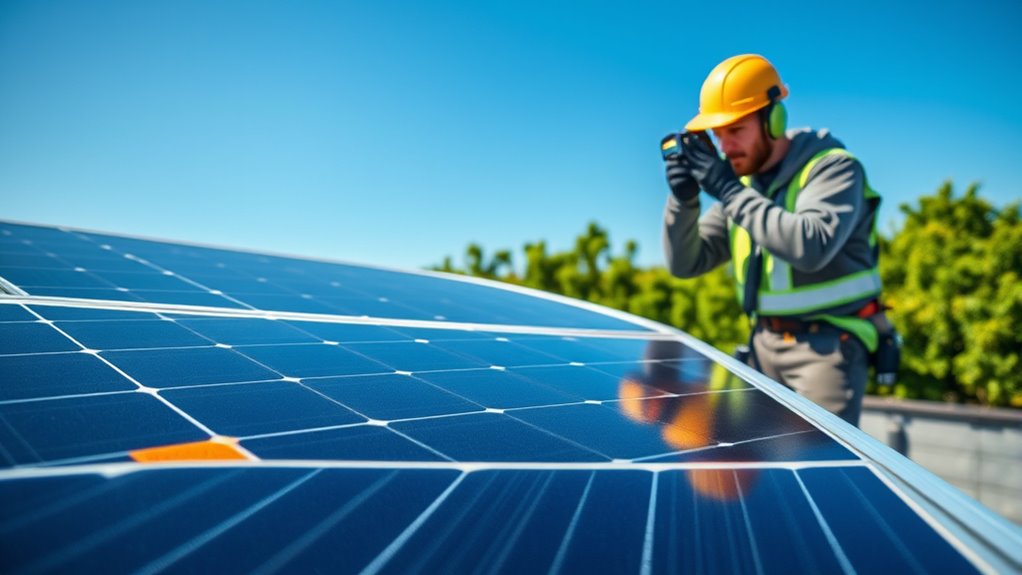
Although solar panels are designed with safety in mind, they can catch fire under certain conditions. You might be surprised to learn that while these systems are generally safe, no technology is entirely risk-free.
If something goes wrong—whether due to installation issues or equipment defects—a fire could start. You should understand that solar panels contain electrical components, and like any electrical device, they carry some fire risk.
However, these incidents are rare, and most solar panels operate safely for decades. By staying informed and maintaining your system properly, you’ll reduce the chances of any problems.
What Causes Solar Panel Fires?
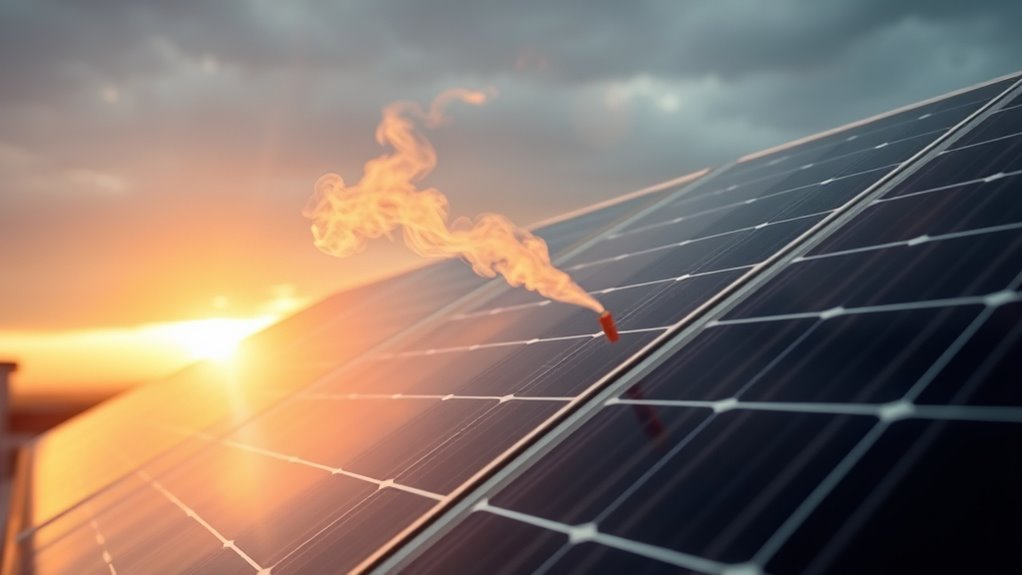
When you understand what causes solar panel fires, you can take steps to prevent them. Fires usually start from faulty wiring or poor installation. If the electrical connections aren’t secure, they can spark and ignite.
Damaged panels or equipment can also create short circuits, increasing fire risk. Overheating is another cause—panels get hot, and if ventilation is poor or components fail, heat can build up dangerously.
Using substandard materials or neglecting regular maintenance can worsen these issues. Even debris or leaves trapped near panels might catch fire if exposed to intense heat.
Signs Your Solar Panels May Pose a Fire Risk
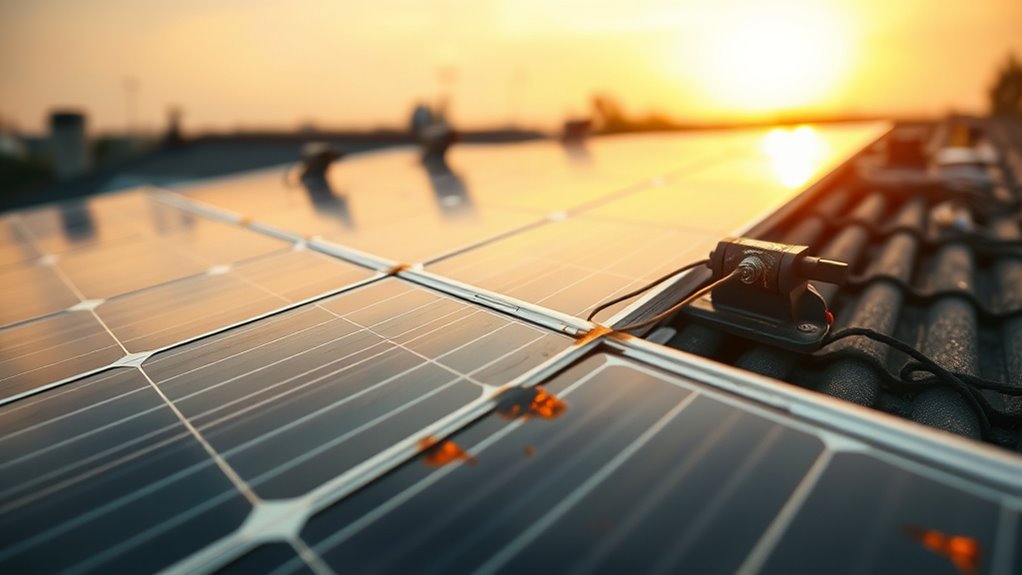
How can you tell if your solar panels might be a fire hazard? Watch for discolored or melted spots on the panel surface or wiring junctions. These can indicate overheating.
Also, pay attention to unusual smells like burning plastic or rubber near your solar setup. If you notice flickering or inconsistent energy output, it might signal internal damage or degraded components.
Check for cracked or broken panels too. These can expose electrical parts and increase fire risk.
Loose mounting hardware or panels that shift in the wind could cause friction or damage wiring. So, keep an eye on that.
Regularly inspect your system for any signs of wear or damage. And don’t ignore unusual heat buildup around the panels or inverter.
Early detection helps prevent fire hazards before they escalate. It’s always better to be safe!
How Faulty Wiring Can Cause Fires
Faulty wiring poses a serious fire risk in your solar panel system because it can cause overheating, sparks, or short circuits. When wires are improperly connected or damaged, they create resistance, generating heat that can ignite surrounding materials.
Loose connections also increase the chance of arcing, which produces dangerous sparks. Regular inspections help identify frayed or exposed wires before they become a hazard.
| Issue | Effect |
|---|---|
| Loose connections | Sparks and arcing |
| Damaged insulation | Short circuits |
| Overloaded wires | Overheating |
| Improper gauge | Excess heat buildup |
| Corroded contacts | Electrical faults |
Understanding these wiring problems helps you recognize potential fire hazards in your system early on. It’s always better to catch these issues before they become serious problems.
Easy Ways to Prevent Solar Panel Fires
Although solar panel fires are rare, you can considerably reduce the risk by following simple maintenance and safety practices. First, guarantee your system is installed by a certified professional who follows local electrical codes.
Regularly inspect your panels and wiring for damage, corrosion, or loose connections. Keep the area around your panels clear of debris and flammable materials.
Inspect panels and wiring regularly, and keep the area clear of debris and flammable materials.
Clean your panels periodically to prevent dirt buildup, which can cause overheating. Use quality components and avoid cheap, uncertified parts that may fail.
Additionally, install proper surge protection to guard against electrical spikes. Finally, schedule routine professional check-ups to catch potential issues early.
What to Do If You Think Your Solar Panels Are Unsafe
If you suspect your solar panels might be unsafe, don’t ignore the warning signs. First, turn off the system if you notice sparks, burning smells, or unusual heat.
Next, avoid touching the panels or wiring to prevent electric shock. Contact a certified solar technician immediately to inspect and repair any issues.
While waiting for help, keep your family and pets away from the area. Also, inform your local fire department about your concerns so they’re prepared in case of an emergency.
Regularly schedule professional maintenance to catch potential problems early. Finally, check your homeowner’s insurance policy to make certain your solar panel system is covered in case of fire or damage.
Taking quick, cautious action can prevent serious hazards. So, don’t wait around if something feels off.
Frequently Asked Questions
Do Solar Panel Fires Affect Home Insurance Coverage?
Yes, solar panel fires can affect your home insurance coverage. You’ll want to check your policy details and notify your insurer about the installation.
Keeping panels well-maintained helps prevent issues and guarantees coverage remains valid. It’s always better to stay on top of things to avoid surprises later.
Can Extreme Weather Increase Solar Panel Fire Risk?
Absolutely, storms love turning your solar panels into a fiery spectacle. But you can outsmart nature by securing mounts, inspecting wiring, and installing surge protectors—because who wouldn’t want their roof to double as a fireworks show?
Are There Specific Solar Panel Brands With Higher Fire Safety Ratings?
You’ll find that brands like SunPower and LG consistently earn higher fire safety ratings due to rigorous testing and quality materials.
Always check certification labels and independent reviews before choosing your solar panels to guarantee safety. It’s a smart way to make sure you’re getting a reliable product.
How Often Should Solar Panel Systems Be Professionally Inspected?
You should have your solar panel system professionally inspected at least once a year. Studies show regular inspections can reduce fire risks by up to 50%.
This helps keep your home safe and your panels working efficiently. It’s a simple step that pays off in the long run.
Do Solar Panels Pose Fire Risks During Power Outages?
During power outages, your solar panels won’t pose fire risks if your system includes proper safety features like automatic shutoff.
Without these, backfeeding electricity can create hazards, so always confirm your setup meets safety standards.
It’s really important to double-check your system’s safety measures. That way, you won’t have to worry during a blackout!
Conclusion
Just like a tiny spark can ignite a forest fire, a small issue with your solar panels can lead to serious danger. But you’re not powerless—by regularly checking for faulty wiring and signs of damage, you can keep your system safe and sound.
Remember, prevention is your best defense. Stay vigilant, and your solar panels will keep powering your home safely. With proper maintenance, you can enjoy turning sunshine into energy without the risk of fire.
Taking simple precautions like inspecting your panels and ensuring all connections are secure helps prevent electrical faults that could cause fires. So, make it a habit to monitor your solar power system regularly. That way, you’ll protect your home and maximize the benefits of clean, renewable energy while minimizing any fire hazards.