Does Solar Panels Emit Radiation: How to Understand
You don’t need to worry about harmful radiation from solar panels because they don’t emit dangerous types like X-rays or gamma rays. Solar panels convert sunlight into electricity using the photovoltaic effect, producing only safe, non-ionizing electromagnetic fields.
These fields are similar to those from everyday household devices, so they’re not something to be concerned about.
Any heat or light that solar panels release is completely harmless. They’re designed with strict safety standards to minimize any exposure, so you can trust that their use is safe around your home or business.
If you’re curious and want to understand their radiation impact more fully, there’s definitely more to explore. But overall, solar panels are a safe and clean energy choice.
Key Takeaways
- Solar panels do not emit harmful radiation. They work by converting sunlight into electricity through something called the photovoltaic effect.
- The type of radiation linked to solar panels is non-ionizing. This includes low-level electromagnetic fields and heat infrared radiation.
- Solar panels don’t have any radioactive materials in them. They also don’t produce X-rays, gamma rays, or any other dangerous emissions.
- The exposure to electromagnetic fields (EMF) from solar panels is very minimal. It’s about the same as what you’d get from everyday household appliances, so there’s no real health risk.
- To stay safe, it’s a good idea to choose certified solar panels. Make sure they have proper grounding and shielding to meet radiation safety standards.
Do Solar Panels Emit Radiation?
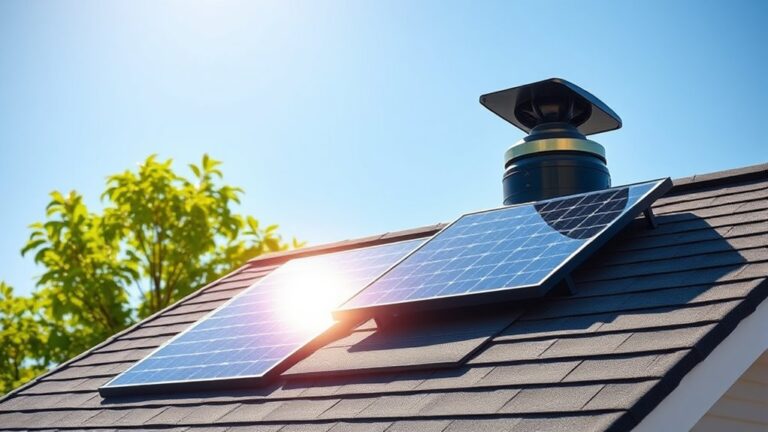
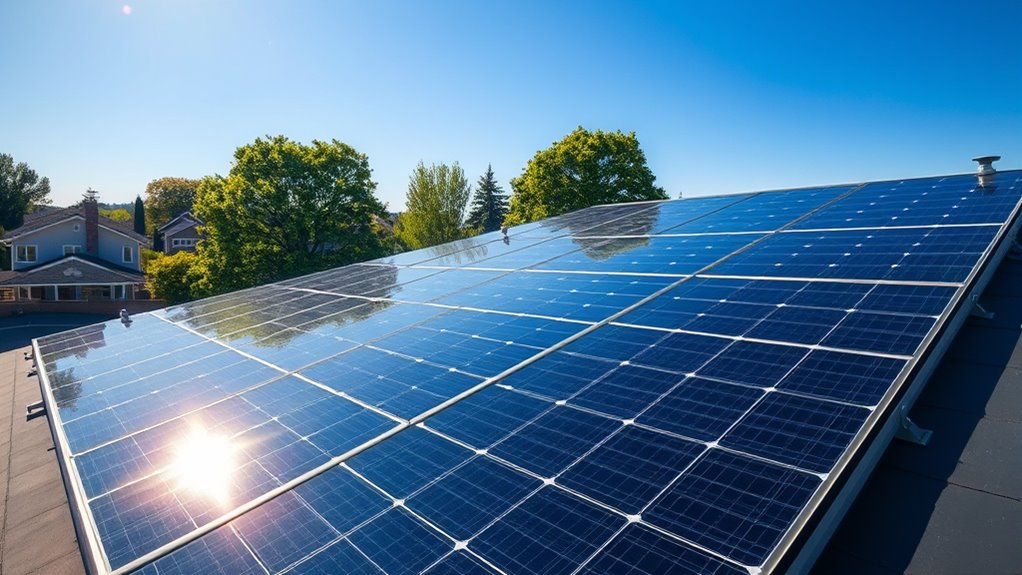
Although solar panels generate electricity from sunlight, they don’t emit harmful radiation like X-rays or gamma rays. When you install solar panels, you might worry about radiation exposure, but rest assured, solar panels operate without releasing dangerous radiation.
The energy they produce comes from converting sunlight into electricity using semiconductor materials, not by emitting radiation themselves. You won’t find any radioactive components in typical solar panels, so they’re safe to have on your roof or in your yard.
While solar panels do interact with electromagnetic waves, these are non-ionizing and harmless to your health. So, if you’re concerned about radiation risks, you can confidently use solar panels without fear of exposure to harmful radiation.
How Solar Panels Work Without Radiation
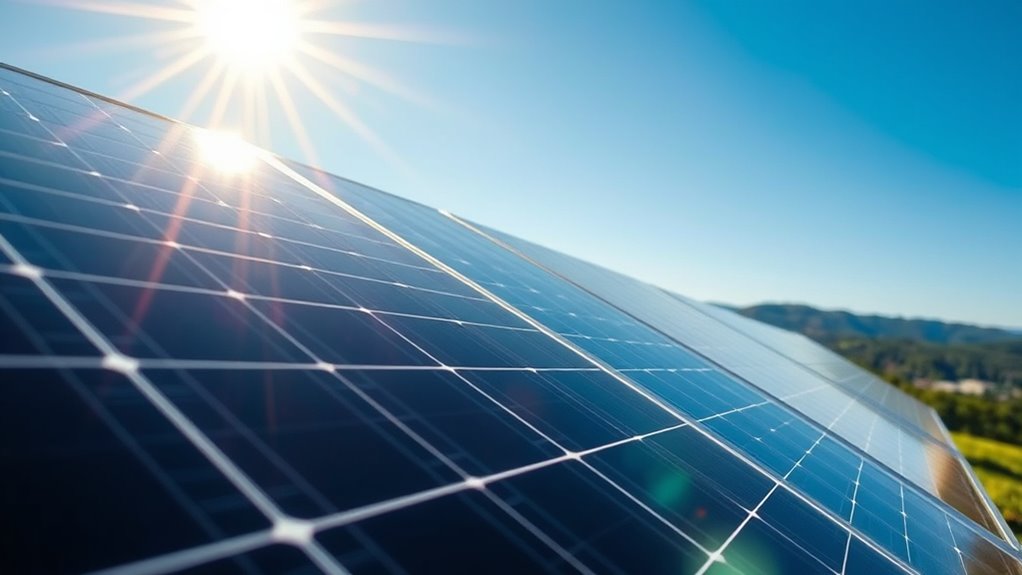
Because solar panels convert sunlight directly into electricity through a process called the photovoltaic effect, they don’t produce harmful radiation. When sunlight hits the solar cells, it excites electrons, creating an electric current.
This process involves no emission of radiation beyond the light they absorb. You can trust that solar panels generate clean energy safely without exposing you to radiation.
Here’s a simple breakdown of how solar panels operate without radiation:
| Step | Description | Radiation Presence |
|---|---|---|
| Sunlight Absorption | Solar cells absorb photons | No emission, only absorption |
| Electron Excitation | Electrons get energized | No radiation produced |
| Current Generation | Electric current flows | No radiation involved |
| Power Output | Electricity powers devices | Safe, radiation-free |
What Types of Radiation Could Solar Panels Produce?

You might wonder what kinds of radiation solar panels could produce. They can emit electromagnetic fields, ultraviolet rays, and infrared heat radiation.
Let’s explore how each of these affects you and your environment. It’s pretty interesting once you dig into the details!
Electromagnetic Fields Emission
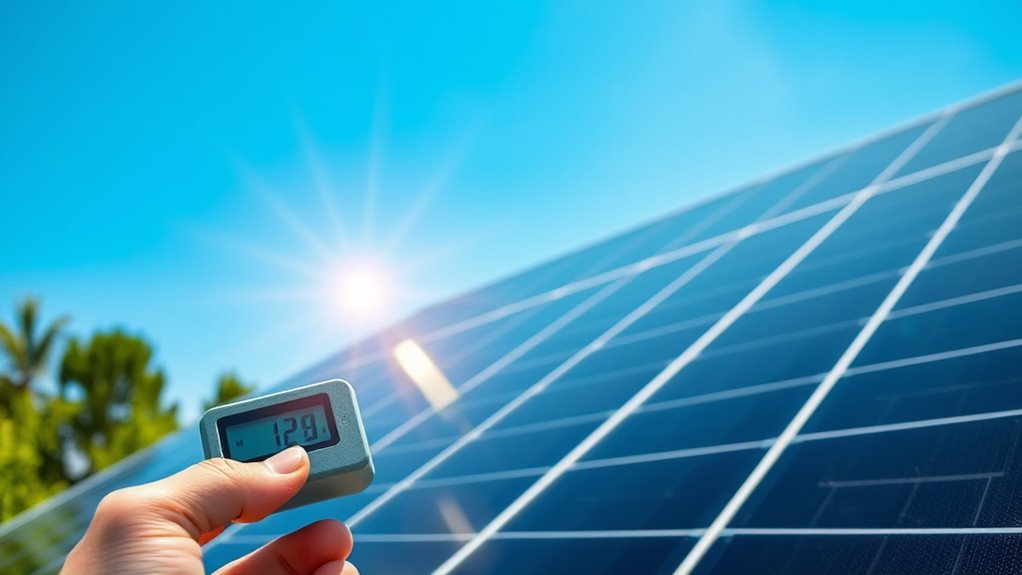
When solar panels convert sunlight into electricity, they generate electromagnetic fields (EMFs) as a natural byproduct of their electrical activity. These EMFs are similar to those produced by common household appliances and power lines.
You might wonder what types of radiation this involves and whether it’s harmful. Here’s a quick breakdown:
- Low-frequency EMFs: Produced by the flow of electric current through wiring.
- Magnetic fields: Created by the inverter converting DC to AC electricity.
- Electric fields: Generated by the voltage present in the system.
- Non-ionizing radiation: Unlike X-rays, EMFs from solar panels don’t carry enough energy to damage cells or DNA.
Understanding these helps you see that solar panels emit only low-level, non-ionizing EMFs, which are generally considered safe. So, there’s really no need to worry about harmful radiation from your solar panels.
Ultraviolet Radiation Exposure
Although solar panels primarily generate electricity, they can also interact with sunlight in ways that involve ultraviolet (UV) radiation. When UV rays hit the surface of solar panels, some of this radiation is absorbed, while a small amount is reflected.
You won’t find solar panels emitting UV radiation themselves; instead, they manage the UV rays coming from the sun. The materials used in solar panels are designed to withstand UV exposure without degrading quickly, so they don’t increase UV radiation around you.
However, the reflective surfaces might cause minor UV reflections, but these are minimal and pose no significant health risk. So, while solar panels deal with UV radiation, they don’t produce or emit harmful UV rays on their own.
Infrared Heat Radiation
Solar panels not only interact with ultraviolet rays but also influence infrared heat radiation. When sunlight hits the panels, they absorb some energy and convert it into electricity, while the rest is released as heat.
This heat emits infrared radiation, which is completely natural and non-ionizing. You don’t need to worry about harmful effects from this type of radiation.
Here’s what you should know about infrared radiation from solar panels:
- Infrared radiation is a form of heat energy, not harmful radiation.
- Solar panels emit infrared radiation mainly due to absorbed sunlight.
- This emission doesn’t pose health risks or environmental concerns.
- Infrared radiation from solar panels is similar to heat you feel from other warm objects.
Understanding this helps you see solar panels as safe and eco-friendly technology.
Are Solar Panels Linked to Health Risks?
Even though many worry about radiation from solar panels, current research shows they don’t pose significant health risks. Solar panels primarily emit very low levels of non-ionizing radiation, which lacks the energy to harm your cells or DNA.
You won’t find evidence linking them to cancer or other serious health problems. So, no need to stress about that!
Here’s a quick comparison to help you understand:
| Radiation Type | Health Risk Level |
|---|---|
| Ionizing Radiation | High (e.g., X-rays) |
| Non-Ionizing Radiation | Low (e.g., solar panels) |
| Background Radiation | Minimal (natural) |
Choosing Solar Panels That Minimize Radiation Exposure
When selecting panels, you can reduce radiation exposure by focusing on models with certified low electromagnetic emissions. Look for panels that meet international safety standards, as these have undergone testing to guarantee minimal radiation output.
Selecting panels with certified low electromagnetic emissions helps minimize radiation exposure and ensures safety compliance.
You should also consider the panel’s design—some use materials that naturally emit less electromagnetic radiation. Additionally, choose panels with proper shielding and grounding features to further limit exposure. Here are key tips to keep in mind:
- Verify certifications like IEC or UL for low emissions
- Opt for monocrystalline panels, which often have better shielding
- Check for integrated grounding systems in the panel design
- Avoid cheaper panels lacking transparency about radiation levels
What Experts Say About Solar Panel Radiation Safety
Several experts emphasize that the radiation emitted by solar panels is minimal and well within established safety limits. You don’t need to worry about harmful exposure since solar panels primarily produce low-level electromagnetic fields (EMFs) similar to everyday household devices.
Health organizations, including the World Health Organization, confirm that the EMF levels from solar panels are too low to pose any significant risk. When you install solar panels, experts suggest focusing on proper installation and maintenance rather than radiation concerns.
They also recommend using certified products that meet regulatory safety standards. So, while you might hear about radiation risks, the consensus among professionals is clear: solar panels are safe, and the radiation they emit won’t harm you or your family.
Frequently Asked Questions
How Long Do Solar Panels Typically Last?
Solar panels typically last about 25 to 30 years. You’ll notice they gradually produce less energy over time, but with proper care, they can keep powering your home efficiently for decades beyond their warranty period.
It’s pretty impressive when you think about it. So, even after the warranty runs out, your panels can still do a great job for many more years. Just a little maintenance goes a long way!
Can Solar Panels Function During Cloudy Weather?
Cloudy days won’t stop your solar panels; they’ll keep working, just like a flashlight in twilight. They produce less energy without direct sunlight, but they still generate power.
What Maintenance Do Solar Panels Require?
You’ll need to clean your solar panels regularly to remove dirt and debris. It’s also important to check for shading or damage. Plus, make sure the electrical connections are secure.
Scheduling professional inspections every year helps keep your system running efficiently. It also extends the lifespan of your solar panels. Keeping up with these simple steps makes a big difference!
Are Solar Panels Recyclable?
You might picture mountains of waste, but solar panels are recyclable. You can send them to specialized facilities where materials like glass, metal, and silicon get recovered.
This helps reduce environmental impact and supports a circular economy. It’s a smart way to keep things sustainable and make the most of valuable resources.
How Much Do Solar Panels Cost on Average?
You’ll pay around $15,000 to $25,000 for an average residential solar panel system before incentives. Prices vary by size, brand, and installation complexity.
But don’t worry, you can often lower costs with tax credits and local rebates. These incentives really help make solar more affordable!
Conclusion
In the bright garden of renewable energy, solar panels stand like silent sun-catchers, soaking up light without throwing off harmful radiation. You don’t need to worry about invisible waves sneaking into your home—they’re not part of the deal.
Choosing the right panels is like picking the safest path through a sunny meadow. Experts agree: these energy champions are here to power your life safely, turning sunlight into clean energy without casting any shadow of health risk.
So, when it comes to whether solar panels emit radiation, the answer is clear—they don’t release any harmful radiation. This makes them a safe and eco-friendly choice for your home or business. Embracing solar panels means harnessing the power of the sun without any radiation worries, ensuring clean, renewable energy that’s good for both you and the planet.