
Do You Know If Your Solar Panels Are Working Properly?
You can tell if your solar panels are working properly by regularly checking their power output on the inverter display or using monitoring apps like SolarEdge or Enphase Enlighten. These tools make it easy to keep an eye on your system’s performance from your phone or computer.
Keep an eye out for drops caused by dirt, shading, or debris, and clean panels as needed. A little maintenance can go a long way in keeping your solar power system efficient.
If output stays low despite maintenance, a professional check might be needed. Understanding these basics helps you maximize your system’s efficiency and avoid costly issues down the line.
Key Takeaways
- Regularly check the inverter display or monitoring app for real-time energy production. Compare it to what you expect your system to produce.
- Track daily and monthly energy data to spot any trends or sudden drops in performance. It helps you catch issues early.
- Inspect your panels for dirt, debris, shading, or any damage. These things can really reduce how efficiently your system works.
- Use monitoring tools like SolarEdge or Enphase Enlighten. They give you detailed performance analytics and can send alerts if something’s off.
- If you notice output drops that don’t go away, or if panels look damaged, don’t hesitate to get professional maintenance. Also, call a pro if your system keeps showing errors.
Checking Your Solar Panels’ Power Output
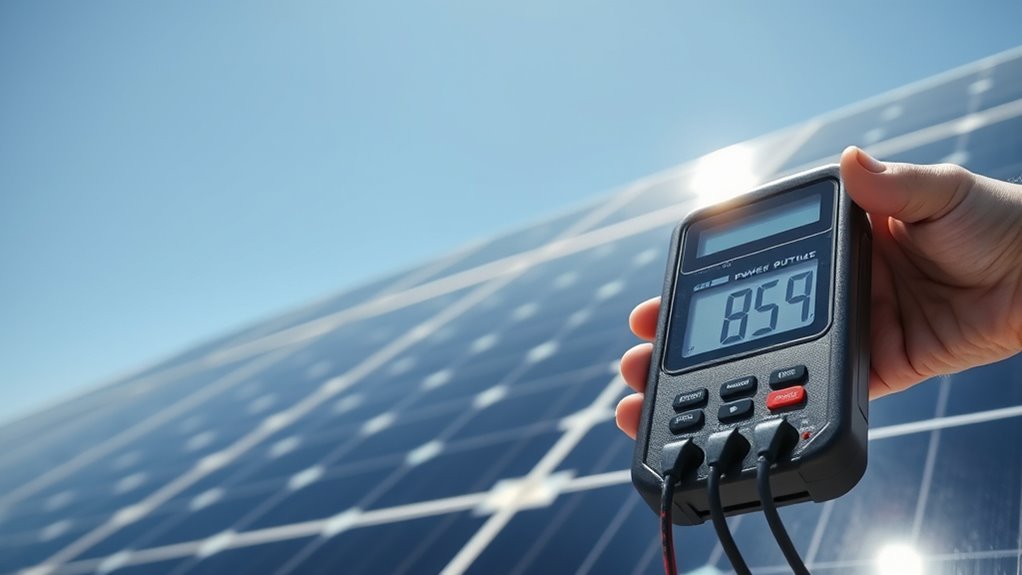
Although your solar panels work silently, you can easily check their power output to guarantee they’re performing well. Start by monitoring the inverter display, which shows real-time energy production.
Many modern systems also offer apps or online portals where you can track daily, weekly, or monthly output. Compare your current readings to expected values based on your system’s size and local sunlight conditions.
If the output is consistently below average, it might indicate a problem. Regularly logging your power output helps you spot trends and detect issues early.
You don’t need special equipment—just stay consistent with your checks. By keeping an eye on these numbers, you assure your solar investment pays off and contributes efficiently to your energy needs.
Top Causes of Reduced Solar Panel Efficiency
You might not realize that dirt and debris can block sunlight and lower your panels’ efficiency. Even small shading from trees or nearby objects can considerably reduce their output.
Let’s look at how these common issues affect your solar system’s performance. It’s pretty interesting once you see what’s going on!
Dirt And Debris
When dirt and debris accumulate on your solar panels, they block sunlight and cut down your system’s efficiency. Even a thin layer of dust, leaves, or bird droppings can reduce energy output considerably.
To keep your panels working at their best, you should regularly inspect them for visible dirt or grime. It’s a good idea to clean your panels with water and a soft brush or cloth.
Just be sure to avoid harsh chemicals that might damage the surface. And if the buildup is stubborn or extensive, don’t hesitate to schedule a professional cleaning.
Shading And Obstructions
Since even small shadows can drastically reduce your solar panels’ output, it’s crucial to keep them free from shading and obstructions. Trees, nearby buildings, or even utility poles can cast shadows that limit sunlight reaching your panels.
You should regularly check for new growth or construction that might block sunlight during peak hours. Even partial shading on one panel affects the entire system’s performance, especially if panels are wired in series.
You can use shading analysis tools or smartphone apps to identify problematic spots. If you notice reduced energy production, inspect your panels for any new obstructions.
Removing or trimming nearby branches and relocating objects can restore efficiency. Staying proactive helps guarantee your solar investment keeps delivering maximum power every day.
Best Tools and Apps to Track Your Solar Panels
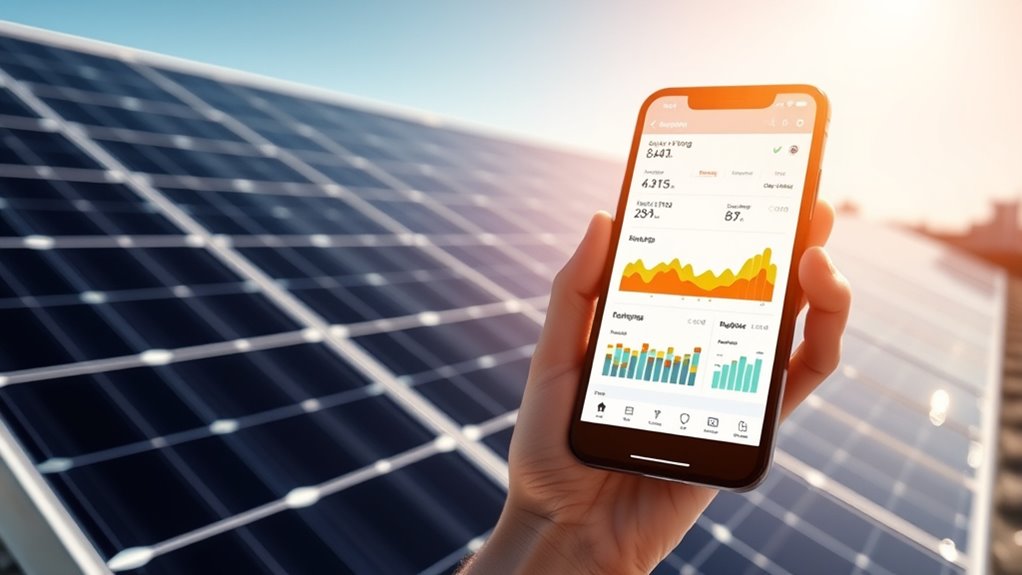
Although monitoring your solar panels manually can be time-consuming, using specialized tools and apps makes it effortless to track their performance in real time. These tools give you instant insights, alert you to issues, and help optimize energy production.
Specialized apps simplify real-time solar panel monitoring, offering instant insights and alerts to optimize energy output.
Here are some of the best options to contemplate:
- SolarEdge Monitoring: Offers detailed analytics and real-time data on each panel’s output.
- Enphase Enlighten: Provides easy-to-understand visuals and performance reports.
- Sunny Portal by SMA: Tracks system efficiency and sends alerts for potential problems.
- Aurora Solar: Combines monitoring with design tools to maximize system performance.
With these apps, you’ll stay informed and verify your solar investment is always working at its best. It’s a smart way to keep everything running smoothly!
When and How to Clean Solar Panels
You should clean your solar panels regularly to keep them working efficiently, but the frequency depends on your location and weather conditions. Using gentle tools and safe cleaning methods helps avoid damage while removing dirt and debris.
Let’s explore the best times to clean and how to do it effectively. It’s easier than you might think, and it can really boost your panels’ performance!
Optimal Cleaning Frequency
When dirt, dust, and debris accumulate on your solar panels, their efficiency takes a hit. To keep them working at their best, you need to clean them regularly. But how often depends on your environment and local conditions.
Here’s a quick guide to help you determine the ideal cleaning frequency:
- In dusty or dry areas, clean your panels every 1-2 months.
- After heavy pollen seasons, schedule a cleaning to prevent buildup.
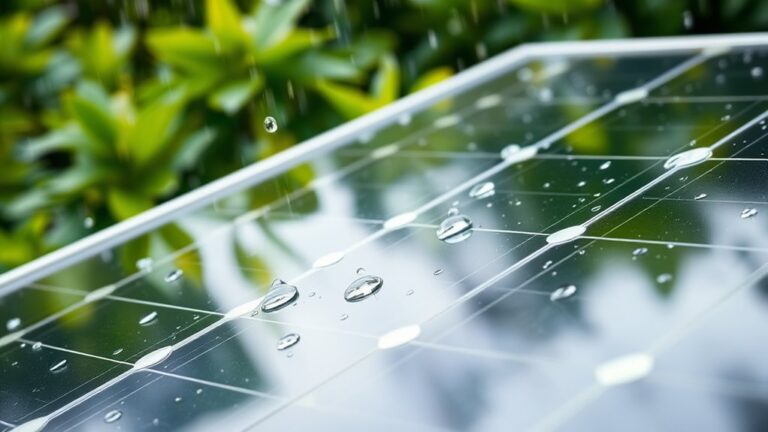
- If you live in a rainy region, natural rain might reduce cleaning needs to every 3-4 months.
- Check your panels visually or monitor output drops; clean immediately if you spot significant dirt.
Adjusting your cleaning schedule based on these factors ensures your solar panels stay efficient without unnecessary washing. It’s all about finding the right balance for your specific situation.
Effective Cleaning Methods
Knowing how often to clean your solar panels is only part of the equation; choosing the right methods can make a big difference in maintaining their efficiency.
You should clean your panels early in the morning or late in the afternoon when they’re cool to avoid thermal shock or streaks from quick drying.
Use soft brushes or sponges with plain water or a mild soap solution to gently remove dust, dirt, and bird droppings.
Avoid abrasive materials or harsh chemicals that can scratch or damage the panels.
If your panels are hard to reach, consider hiring professionals who have the right tools and experience.
Regular, careful cleaning guarantees your solar system performs at its best, boosting energy production and extending its lifespan.
Signs Your Solar System Needs Professional Maintenance
Although solar panels are designed to be low-maintenance, certain signs indicate your system might require professional attention. Ignoring these warning signals can reduce your system’s efficiency and lead to costly repairs.
Solar panels need little upkeep, but warning signs mean professional help is essential to avoid efficiency loss and costly repairs.
Watch out for:
- Consistent drop in energy output despite clear weather and clean panels
- Visible damage or cracks on the panels or wiring
- Unusual noises from the inverter or electrical components
- Frequent error messages or system shutdowns on your monitoring app
If you notice any of these, it’s time to call a professional. They can diagnose hidden issues and perform necessary repairs, ensuring your solar system runs smoothly and safely for years to come.
Don’t wait until minor problems turn into major expenses.
Easy Fixes to Boost Your Solar Panels’ Output
If you’ve spotted warning signs that your solar system needs maintenance, you might be wondering what simple steps you can take yourself to improve its performance. Start by cleaning your panels gently with water and a soft brush to remove dirt, dust, or bird droppings that block sunlight.
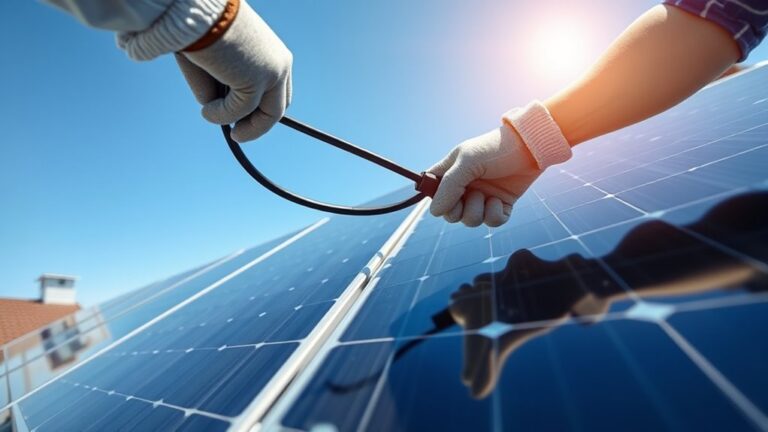
Check for shading caused by growing trees or new structures and trim branches if needed. Guarantee all wiring looks intact and connections are secure to prevent energy loss.
Adjust the tilt angle if your panels aren’t positioned perfectly for the season. Finally, monitor your inverter’s display for error messages or performance drops.
These easy fixes can boost your solar output without professional help, keeping your system effective and saving you money.
Frequently Asked Questions
How Long Do Solar Panels Typically Last?
Solar panels typically last about 25 to 30 years, but you can expect them to keep generating electricity beyond that.
You’ll just see a gradual efficiency drop, so regular maintenance helps you maximize their lifespan.
It’s kind of like any other tech — a little care goes a long way!
Can Solar Panels Work During Cloudy Days?
Yes, your solar panels can produce about 10-25% of their usual power on cloudy days. They still convert diffused sunlight, so even without direct sun, you’re generating energy and saving on your electric bill.
It might not be as much as on a sunny day, but it definitely helps. So, no need to worry about cloudy weather stopping your solar power completely!
Are Solar Panels Affected by Extreme Weather?
Yes, extreme weather can affect your solar panels. High winds, hail, and heavy snow might damage them or reduce efficiency.
But don’t worry too much—most panels are built to withstand harsh conditions. Regular checks can help keep them functioning well.
Do Solar Panels Increase Home Value?
Yes, solar panels can boost your home’s value by making it more energy-efficient and attractive to buyers.
You’ll find many buyers willing to pay extra for lower utility bills and eco-friendly features.
It’s a win-win because you save money and make your home stand out in the market.
What Incentives Are Available for Installing Solar Panels?
You can get federal tax credits, state rebates, and local incentives when installing solar panels.
Some areas offer net metering too, letting you earn credits for excess energy you send back to the grid.
It’s a great way to save money and make the most out of your solar investment!
Conclusion
If you’re not monitoring your solar panels regularly, you could be missing out on up to 25% less energy than expected. Keeping an eye on your system’s output is key.
Cleaning panels when needed and addressing minor issues quickly can make a big difference. It’s easier than you might think!
With the right tools and a bit of care, you’ll guarantee your solar investment works efficiently. This means saving you money and helping the environment every day.
Don’t let small problems go unnoticed! Regular maintenance and monitoring ensure your solar panels are working properly, maximizing energy production and boosting your savings. Staying proactive with your solar system not only protects your investment but also contributes to a greener planet. So, keep track, clean those panels, and fix issues fast to enjoy the full benefits of your solar energy system.


One Comment