Can You Power Wash Solar Panels Safely?
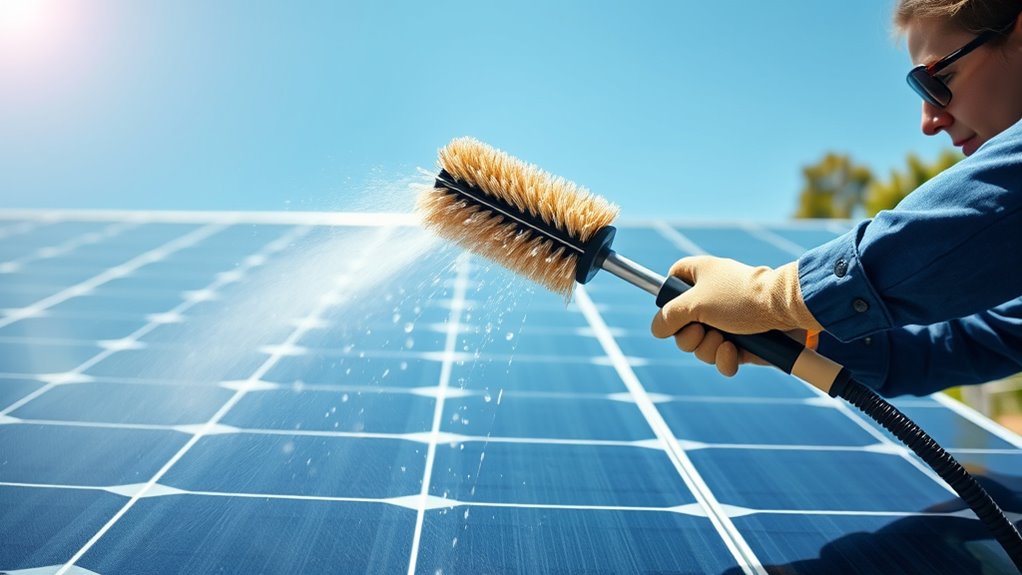
You can safely power wash your solar panels if you use moderate pressure and keep the nozzle at a proper distance to avoid damage. Power washing solar panels can be a quick and effective way to clean them, but it’s important to do it right.
Make sure to follow your manufacturer’s guidelines and avoid extreme weather like hot, windy, or rainy conditions.
Using gentle spray settings helps protect the glass and seals from cracking or moisture issues.
If you’re careful, power washing can boost your panels’ efficiency by removing dirt and debris that block sunlight.
Just remember, the key is moderation and caution.
Keep going to discover the best practices and safer cleaning alternatives for maintaining your solar panels without risking damage.
Key Takeaways
- Power washing solar panels is safe if done with moderate pressure and proper distance to avoid damage. Always follow manufacturer guidelines and recommended pressure limits before power washing.
- Avoid power washing during hot, windy, or rainy conditions. This helps prevent cracking and electrical hazards.
- Use a soft spray nozzle and clean panels during cooler parts of the day, like early morning or late afternoon.
- If you’re unsure about power washing safety, consider gentler alternatives like soft brushes or garden hose rinses. It’s better to be safe than sorry!
Does Power Washing Harm Your Solar Panels?
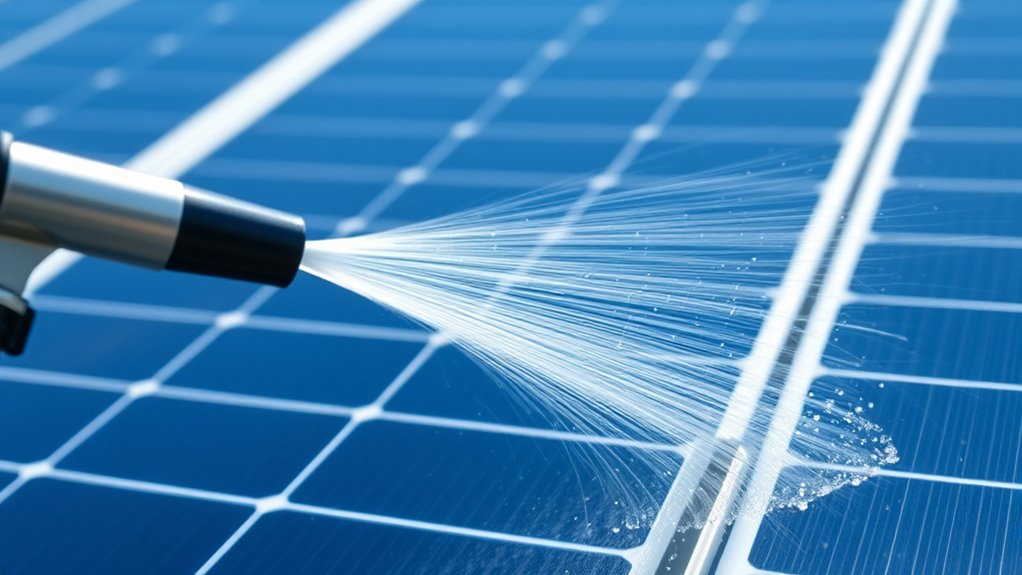
Although you might worry that power washing could damage your solar panels, when done correctly, it’s generally safe and effective. You just need to use the right pressure settings and avoid harsh chemicals.
Most modern panels have durable glass surfaces designed to withstand cleaning. When you power wash, keeping the pressure moderate prevents cracking or loosening any seals.
You should also maintain a safe distance, letting the water do the work instead of forceful blasts. Additionally, power washing removes dirt, dust, and grime that can reduce efficiency.
By regularly cleaning your panels this way, you help maximize their energy output. Just remember to follow manufacturer guidelines and consider professional help if you’re unsure about the technique.
This way, your panels stay clean without harm.
What Are the Risks of Power Washing Solar Panels?
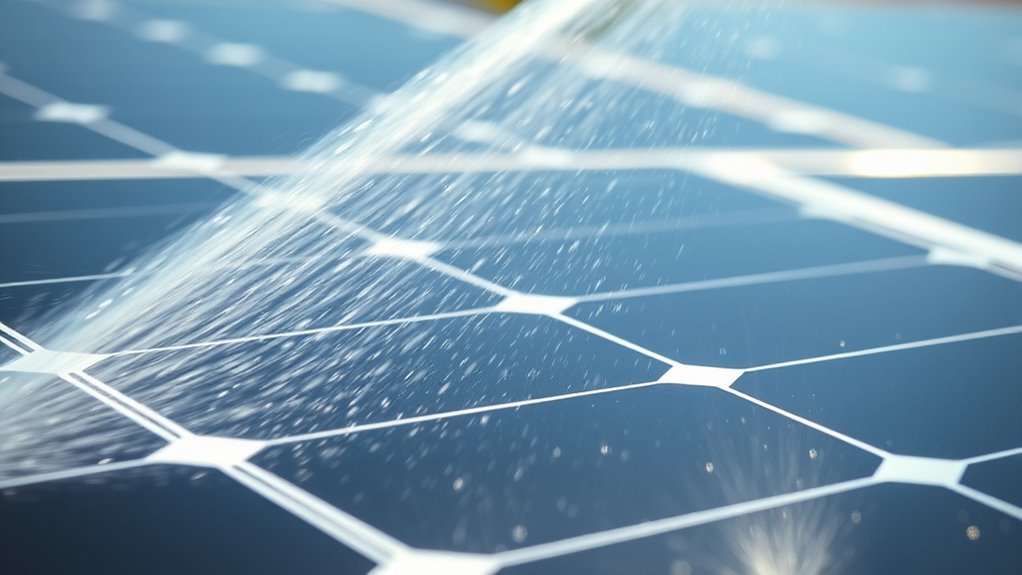
You need to be careful when power washing your solar panels because the high pressure can cause physical damage like cracks or loosened seals.
There’s also the risk of electrical hazards if water gets into the wrong places.
Understanding these dangers will help you protect both your panels and yourself.
Potential Physical Damage
When power washing solar panels, you risk causing physical damage that can reduce their efficiency or lead to costly repairs. The high-pressure water stream might crack or chip the delicate glass surface, especially if the nozzle is too close or the pressure too high.
You could also loosen or break seals around the panels, allowing moisture to seep inside, which harms internal components. Abrasive debris propelled by the water can scratch the surface, diminishing light absorption.
Additionally, improper angles or excessive force might dislodge mounting brackets or wiring. To protect your investment, use low-pressure settings and keep the nozzle at a safe distance.
Avoid harsh scrubbing or sharp tools that could scratch or damage panels. Taking these precautions helps maintain your panels’ longevity while effectively cleaning them.
Electrical Safety Hazards
Power washing solar panels introduces significant electrical safety hazards that can put you at risk of shocks or short circuits. Water is a conductor, and using high-pressure water near electrical components increases the chance of accidental contact with live wires.
If the panel’s seals are compromised, water can seep inside, causing internal damage or electrical faults. You might also inadvertently spray water into junction boxes or wiring, risking system failure or fire hazards.
To safeguard yourself, always turn off the solar power system before cleaning and avoid spraying directly at electrical parts. If you’re unsure about handling electrical components safely, it’s best to hire a professional.
Taking these precautions helps prevent accidents and ensures your solar panels stay safe and functional. It’s definitely worth the extra care!
When Is Power Washing Solar Panels Safe?
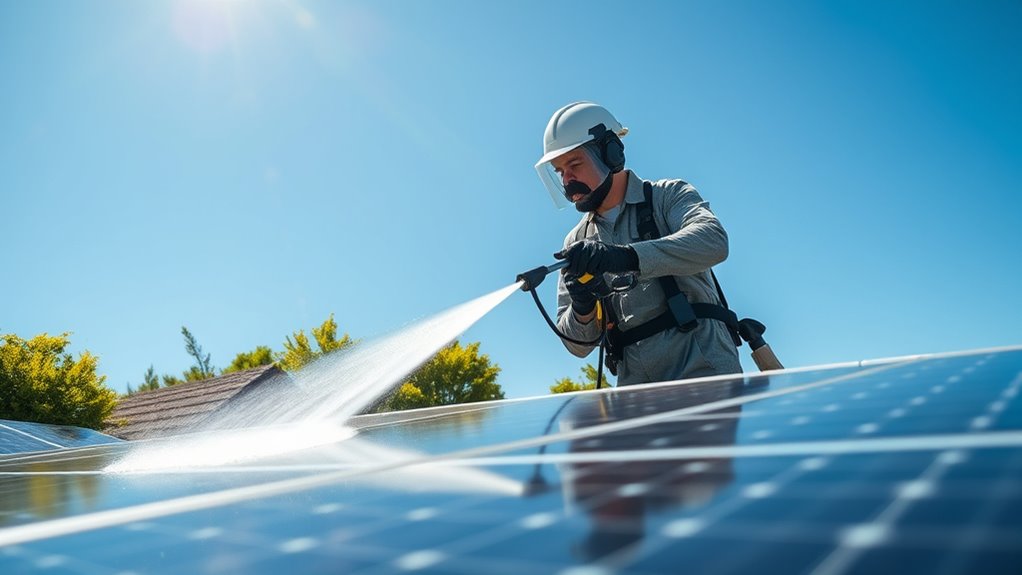
You should always check your panel manufacturer’s guidelines before power washing to make sure you won’t void any warranties. Also, consider weather conditions—avoid power washing on extremely hot or windy days to prevent damage.
Following these precautions helps keep your panels safe and effective. It’s all about staying careful and protecting your investment!
Panel Manufacturer Guidelines
Although cleaning solar panels might seem straightforward, you should always check your panel manufacturer’s guidelines before using power washing methods. Some manufacturers explicitly warn against power washing because it can cause damage or even void your warranty.
Others provide specific pressure limits and recommended cleaning techniques to keep your panels safe.
Here’s a quick reference to what different manufacturers advise:
| Manufacturer | Power Washing Policy |
|---|---|
| SunPower | Avoid high pressure; use soft spray |
| LG Solar | Allowed under 1000 psi |
| Panasonic | Use only manual cleaning methods |
Following these guidelines helps prevent damage and preserves your warranty.
If you’re unsure, it’s a good idea to contact the manufacturer directly or just stick to gentler cleaning options to protect your investment.
Weather Conditions Consideration
When cleaning solar panels with a power washer, choosing the right weather conditions can make all the difference in safety and effectiveness. You should avoid power washing on hot, sunny days because the rapid temperature change can cause the glass to crack.
Early mornings or late afternoons, when the panels are cooler, are ideal times. Also, steer clear of windy or rainy days to prevent slipping hazards and electrical risks.
Overcast days offer a safer, more controlled environment for cleaning. Additionally, confirm the panels are dry before power washing to avoid water damage.
Are There Safer Alternatives to Power Washing Solar Panels?
A variety of safer alternatives to power washing solar panels exist that can help you maintain their efficiency without risking damage. You can use a soft-bristled brush or sponge with plain water or a mild soap solution to gently clean the panels. This method reduces the risk of scratching the surface or dislodging components.
Another option is using a garden hose with a gentle spray setting to rinse off dirt and debris. If you prefer automation, specialized solar panel cleaning kits or robotic cleaners designed for delicate surfaces offer safe, effective cleaning.
Avoid harsh chemicals or abrasive tools, as they can degrade the panels’ protective coating. By choosing these gentler methods, you can keep your solar panels clean and functional without the risks associated with power washing.
How Should You Prepare Solar Panels Before Cleaning?
Before cleaning your solar panels, you should turn off the system to guarantee safety and prevent electrical issues. Next, check the weather forecast to pick a cool, overcast day—cleaning under direct sunlight can cause water to evaporate too quickly, leaving streaks or damage.
Gather soft cleaning tools like a sponge or brush with non-abrasive bristles. Avoid harsh materials that could scratch the panels.
Inspect your panels for visible dirt, bird droppings, or debris, so you know what to target. Use a hose with gentle water pressure instead of a power washer to avoid damaging seals or wiring.
Finally, wear appropriate safety gear and use a stable ladder if your panels are on the roof. Preparing carefully ensures an effective, safe cleaning process.
How Often Should You Clean Your Solar Panels?
How often should you clean your solar panels to keep them operating efficiently? Generally, cleaning them once or twice a year works well for most locations.
However, if you live in a dusty or pollen-heavy area, you might need to clean them more frequently—every three to four months. Keep an eye on your panels’ performance; if you notice a drop in energy output, it could mean dirt or debris is blocking sunlight.
Rain can help wash away some grime, but it often isn’t enough to keep panels spotless. Regular cleaning guarantees maximum sunlight absorption and maintains your system’s efficiency.
Frequently Asked Questions
Can Power Washing Improve Solar Panel Efficiency?
Yes, power washing can improve your solar panel efficiency by removing dirt and grime that block sunlight.
Just be careful to use low pressure and avoid damaging the panels to keep them working at their best.
What Equipment Is Best for Cleaning Solar Panels?
Think of a soft brush and a gentle hose as your solar panels’ best friends. You’ll want a microfiber cloth, mild soap, and a squeegee, too—these tools will keep your panels sparkling without risking damage.
They’re all pretty simple to use, and nothing too harsh. Just a little care goes a long way in keeping your solar setup efficient.
Can I Power Wash Solar Panels Myself Safely?
You shouldn’t power wash solar panels yourself because high pressure can damage them. Instead, use gentle cleaning tools and mild soap.
Or better yet, hire professionals to guarantee safety and maintain your panels’ efficiency. It’s worth being careful with your investment!
Does Power Washing Remove Bird Droppings Effectively?
You might worry about damage, but yes, power washing removes bird droppings effectively when done carefully.
Just avoid high pressure too close to the panels, and you’ll restore their efficiency without harming them.
How Long Does It Take to Clean Solar Panels?
Cleaning solar panels usually takes about 15 to 30 minutes, depending on their size and dirt level.
You’ll want to work carefully and methodically to make sure every panel’s spotless and working efficiently.
Conclusion
You might think power washing your solar panels is quick and easy, but could it actually cause damage? Before you grab that hose, consider the risks and whether it’s truly safe for your setup.
Sometimes, gentler methods work better and protect your investment. Want to know the best way to keep your panels shining without harm? Stick around—you’re closer than you think to discovering the perfect cleaning routine.
Power washing solar panels can seem tempting for a quick clean, but it might lead to scratches or water intrusion if not done properly. Instead, using soft brushes, mild soap, and plenty of water usually does the trick.
So, to keep your solar panels efficient and damage-free, avoid harsh power washing. Opt for safer cleaning methods that maintain their performance and longevity. That way, you keep your energy flowing strong while protecting your valuable investment.