5 Reasons I Should Lock My Solar Panels in California
You should lock your solar panels in California to protect them from theft and vandalism. It creates a tough barrier that stops quick removal, giving your investment extra security.
Plus, locking your panels helps keep them safe during storms, preventing wind or water damage that could be costly to fix.
It also lowers your liability risk by avoiding hazards like falling debris or loose wiring. And here’s a bonus—having locks can simplify insurance claims if something does happen.
In some cases, it might even reduce your insurance costs.
Keep exploring to see how easy locking options make all this possible and why securing your solar panels is a smart move for peace of mind.
Key Takeaways
- Locks deter theft and vandalism by creating a secure physical barrier around solar panels. This helps keep your investment safe and sound.
- Securing panels also prevents damage and displacement during California’s frequent storms and high winds. It’s a smart way to protect your system from the elements.
- Locked panels reduce liability risks from falling debris or loose components causing injury or damage. You’ll have peace of mind knowing everything is held firmly in place.
- Locking solar panels simplifies insurance claims by proving preventive maintenance and reducing disputes. It shows you’ve taken steps to care for your property.
- Durable, weather-resistant locks allow easy access while ensuring long-lasting panel security and protection. So, you get both convenience and safety rolled into one.
How to Choose Easy Locking Options for Your Solar Panels
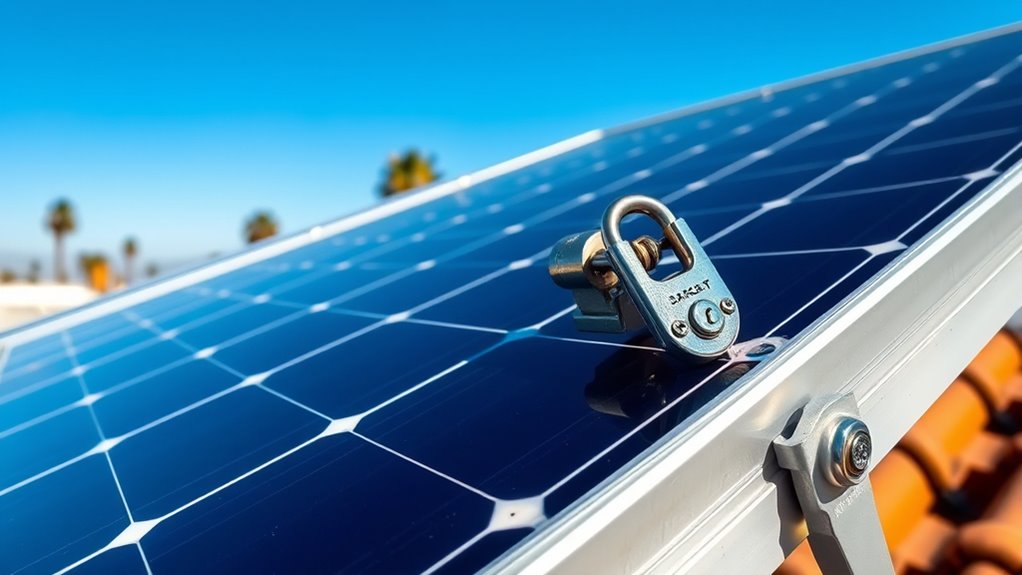
When selecting locking options for your solar panels, you’ll want to focus on solutions that combine security with simplicity. Start by looking for locks that are easy to install and maintain, so you won’t spend extra time or money on complicated setups.
Choose locking mechanisms made from durable, weather-resistant materials to guarantee longevity under California’s sun and rain. Also, consider options that don’t require specialized tools for regular access. That way, you can perform maintenance without any hassle.
You might prefer locks designed specifically for solar panel frames or mounting racks. These offer a snug fit and help reduce tampering risks.
Finally, prioritize models with clear instructions and customer support. This way, you’ll feel confident securing your investment without unnecessary stress.
How Locking Panels Prevents Theft and Vandalism in California
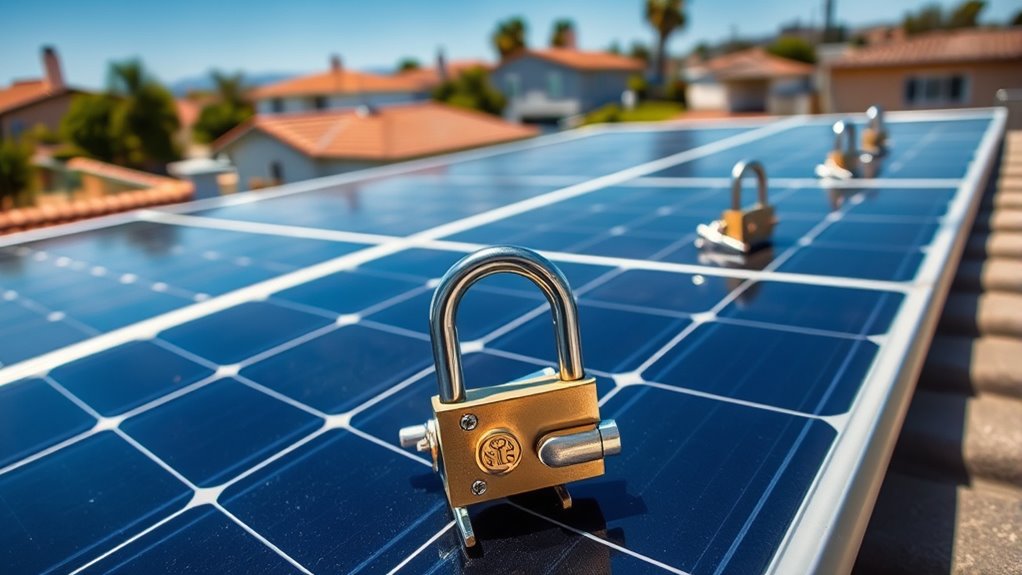
Locking your solar panels substantially reduces the risk of theft and vandalism by creating a physical barrier that’s hard to bypass. When you secure your panels, you’re making it clear that tampering won’t be easy, discouraging opportunistic thieves and vandals.
Securing your solar panels creates a strong deterrent against theft and vandalism by blocking easy access.
This simple step protects your investment and guarantees your energy system stays intact.
Here’s how locking helps:
- Prevents quick removal by unauthorized individuals
- Deters vandals looking for easy targets
- Keeps essential wiring and components safe
- Minimizes repair costs from tampering damage
- Enhances your overall property security
Why Locking Solar Panels Reduces Damage From Extreme Weather
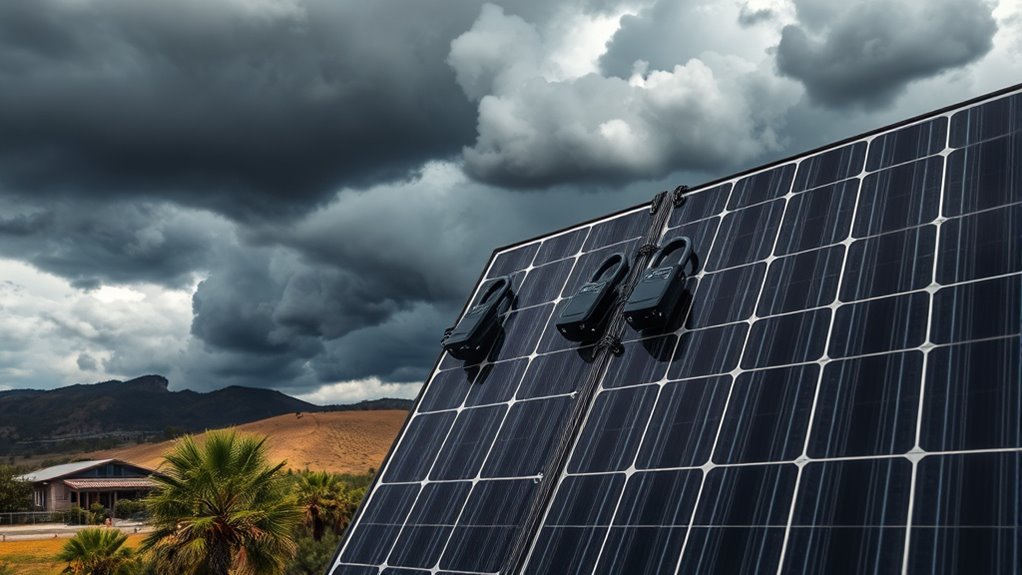
Since California often faces intense weather like strong winds and heavy rain, securing your solar panels can make a big difference in protecting them from damage. When you lock your panels firmly in place, you reduce the risk of them shifting, loosening, or detaching during storms.
This prevents costly repairs or replacements caused by panels flying off or breaking. Plus, locked panels are less likely to suffer from water intrusion at connection points because they stay tightly sealed.
How Locking Solar Panels Lowers Your Liability Risks
Because unsecured solar panels can shift or fall, they pose significant liability risks to property owners. When you lock your panels, you reduce the chance of accidents that could lead to injuries or property damage.
This proactive step helps you avoid costly legal claims and protects your reputation.
Here’s how locking solar panels lowers your liability risks:
- Prevents panels from detaching during high winds or earthquakes
- Minimizes risk of falling debris harming people or vehicles
- Secures panels against vandalism or theft-related accidents
- Reduces hazards related to loose wiring or structural instability
- Demonstrates responsible maintenance, supporting your duty of care
How Locking Solar Panels Simplifies Insurance Claims
When you secure your solar panels properly, you make it much easier to file insurance claims after damage or theft. Insurers often require proof that you took reasonable precautions to prevent losses.
Locked panels show you’ve minimized risk, speeding up claim approval. Without locks, companies might deny or delay payments, citing negligence.
You’ll also reduce disputes over responsibility, making the process smoother and less stressful.
| Benefit | Explanation |
|---|---|
| Proof of Prevention | Locks demonstrate you safeguarded your property |
| Faster Processing | Insurers approve claims more quickly |
| Reduced Disputes | Less argument over fault |
| Lower Deductibles | Some policies offer discounts |
| Peace of Mind | You know your investment is protected |
Locking your panels directly supports a hassle-free insurance experience.
Frequently Asked Questions
Are There Any Legal Restrictions on Locking Solar Panels in California?
You won’t find specific legal restrictions on locking solar panels in California, but you should check local codes and HOA rules.
Locking your panels can protect your investment without violating any general state laws.
It’s always a good idea to make sure you’re following any neighborhood guidelines too. That way, you stay on the safe side while keeping your panels secure.
Can Locking Solar Panels Affect Their Energy Efficiency?
Think of your solar panels as sunflowers basking freely; locking them won’t block sunlight or reduce energy. You won’t affect efficiency, but make sure locks don’t shade or damage the panels.
Keep them in good shape so they keep soaking up rays effectively. Just a little care goes a long way!
How Often Should I Inspect Locked Solar Panels for Maintenance?
You should inspect your locked solar panels at least twice a year to guarantee they’re secure and clean. Regular checks help spot any damage or debris.
This keeps your system efficient and protected from potential issues. It’s a simple step that really makes a difference!
Do Locked Solar Panels Impact Home Resale Value in California?
You might be surprised—locked solar panels usually don’t hurt your home’s resale value in California.
In fact, they can boost buyer confidence by showing you protect your investment and maintain your system’s longevity. It’s like a signal that you care about keeping things in good shape.
What Tools Are Needed to Unlock Solar Panels in an Emergency?
You’ll need a wrench or socket set to remove bolts, a screwdriver for any screws, and possibly a ladder for access. Having these tools handy guarantees you can quickly access your solar panels in an emergency.
It’s always good to be prepared, right? That way, if something happens, you’re not scrambling to find what you need. Just keep these tools nearby, and you’ll be all set.
Conclusion
Locking your solar panels isn’t just smart—it’s essential. Did you know California experiences over 1,200 wildfires annually? That’s a lot of natural risk to consider.
Securing your panels helps protect your investment from theft, weather damage, and liability risks. Plus, it makes insurance claims easier if something goes wrong.
By choosing easy locking options, you’re safeguarding your home and peace of mind. Don’t wait—lock your panels today and enjoy the benefits of extra security and protection.
Taking this simple step not only protects your solar panels from theft but also shields them from harsh weather and wildfire damage common in California. It reduces your liability and streamlines any insurance claims, giving you real peace of mind. So, locking your solar panels is a smart move that keeps your investment safe, enhances your home’s security, and helps you avoid costly repairs or replacements down the road. Make the decision now and enjoy all the benefits that come with properly secured solar panels in California.