
Are Solar Panels Worth It in Ohio?
You can definitely save money and shrink your carbon footprint by installing solar panels in Ohio. Solar energy is a smart choice here because, even though the state’s sunlight changes with the seasons, panels still produce power all year round.
Plus, with rising electricity rates, switching to solar can really help you cut costs over time.
Federal tax credits and local incentives make getting started more affordable by lowering upfront costs. Ohio’s net metering policies also mean you can earn credits for the extra energy your panels generate, boosting your long-term savings.
With efficient panel options and proper roof placement, solar panels pay off in the long run. If you want to understand costs, climate effects, and incentives in detail, keep exploring.
Key Takeaways
- Solar panels can really help cut down your electricity bills in Ohio. You’ll see long-term savings, even though the amount of sunlight changes with the seasons.
- Plus, the Federal ITC offers a 30% tax credit, which is a nice chunk off your installation costs. Local utility rebates can make it even more affordable.
- If you have a south-facing roof with little shading, that’s ideal for getting the most out of your solar panels in Ohio’s climate.
- Net metering means you get credits for any extra energy your panels produce. That can boost your savings, especially as utility rates keep going up.
- On top of saving money, installing solar panels can increase your property value. And you’ll be doing your part to shrink your carbon footprint too.
Are Solar Panels Worth It for Ohio Homeowners?
How can Ohio homeowners know if solar panels are worth the investment? First, you should evaluate your current electricity bills and consider how much you could save by generating your own power.
Check for local incentives and tax credits that reduce upfront costs, making solar more affordable. Also, think about your home’s roof condition and orientation—south-facing roofs with minimal shading work best.
If you plan to stay in your home for several years, solar panels can offer long-term savings and increase your property’s value. You’ll also contribute to reducing your carbon footprint.
How Does Ohio’s Climate Affect Solar Panel Performance?
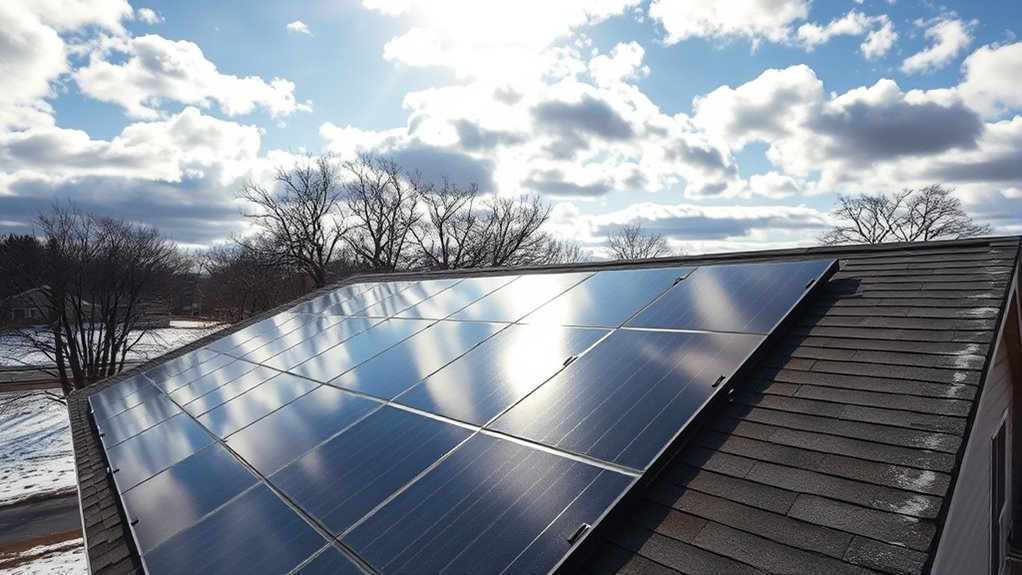
You’ll notice Ohio’s seasonal sunlight changes can impact how much energy your solar panels produce throughout the year. Weather patterns like cloudy days and snow also play a role in their overall efficiency.
Understanding these factors helps you set realistic expectations for your solar investment. It’s all about knowing what to expect so you can get the most out of your panels.
Seasonal Sunlight Variations
Although Ohio experiences noticeable seasonal changes, its solar panels can still generate meaningful energy throughout the year. Winter days are shorter and sunlight is less intense, but your panels keep working, capturing what they can.
Spring and fall bring moderate sunlight, balancing energy production. Summer shines brightest, giving you peak performance and maximum savings.
Here’s a quick look at how seasons affect your solar energy:
| Season | Sunlight Hours | Energy Output |
|---|---|---|
| Winter | 9-10 hours | Lower, but steady |
| Spring | 12-14 hours | Moderate, reliable |
| Summer | 14-15 hours | High, ideal |
No matter the season, your solar investment keeps paying off, adapting to Ohio’s rhythms.
Impact Of Weather Patterns
Wondering how Ohio’s unpredictable weather impacts your solar panels? Ohio experiences a mix of sunny days, cloudy periods, rain, and snow, all of which influence solar panel performance.
While cloudy skies reduce sunlight, modern panels still generate power efficiently on overcast days. Snow can temporarily block panels, but it usually slides off or melts quickly, especially if your system is angled properly.
Temperature also plays a role; solar panels actually perform better in cooler weather, so Ohio’s moderate summers are ideal. However, frequent storms might pose risks if your installation isn’t sturdy.
How Much Do Solar Panels Cost in Ohio?
The cost of solar panels in Ohio typically ranges between $15,000 and $25,000 before incentives, depending on the size and type of system you choose. Smaller systems, around 4 kW, tend to be on the lower end, while larger setups, like 8 kW or more, push toward the higher side.
The system type—monocrystalline or polycrystalline—also affects price, with monocrystalline panels generally costing more but offering higher efficiency. Installation complexity, roof type, and additional equipment like inverters and mounting hardware further influence the total cost.
When budgeting, you should also consider potential maintenance expenses, although solar panels require minimal upkeep. Knowing these factors can help you make a well-informed decision about investing in solar energy for your Ohio home.
What State and Local Incentives Are Available for Ohio Solar?
You can lower your solar panel costs in Ohio by taking advantage of state tax credits designed to reward clean energy investments.
Additionally, some local utilities offer rebates that make going solar even more affordable.
Let’s look at how these incentives can boost your savings.
Ohio Solar Tax Credits
Although Ohio doesn’t offer a state solar tax credit like some other states, you can still take advantage of several local incentives and federal tax credits that make installing solar panels more affordable.
The key benefit is the federal Investment Tax Credit (ITC), which lets you deduct 30% of your solar system’s cost from your federal taxes. This considerably lowers your upfront expense.
While Ohio lacks a specific state tax credit, some local governments and municipalities provide property tax exemptions or credits to reduce your tax burden after installation. These vary by location, so checking with your local tax office or solar installer will help you identify available savings.
Combining the federal ITC with local perks can make solar an economically smart choice in Ohio. It’s definitely worth exploring what’s available in your area!
Local Utility Rebates
Since local utility companies in Ohio often offer rebates and incentives, checking with your provider can help lower the cost of installing solar panels. Many utilities participate in programs that provide upfront rebates or performance-based incentives, rewarding you for the energy your system produces.
For example, companies like AEP Ohio and Dayton Power & Light occasionally have rebate programs to encourage solar adoption. These offers can *substantially* reduce your initial investment, making solar more affordable.
Besides utility rebates, some local governments and municipalities may provide additional incentives or property tax exemptions. To maximize your savings, reach out directly to your utility company and local government offices.
Staying informed about these programs ensures you take full advantage of all available financial benefits when going solar in Ohio. It’s definitely worth a quick call or visit to their websites before you start your solar project!
What Savings Can Ohio Homeowners Expect From Solar Panels?
When you invest in solar panels in Ohio, you can expect notable savings on your energy bills over time. Ohio’s average electricity rates mean that generating your own power can considerably reduce monthly expenses.
On sunny days, your system can produce enough energy to lower or even eliminate your utility bills. Plus, net metering lets you earn credits for excess energy sent back to the grid, which helps cut costs even more.
Over the lifespan of your solar panels—typically 25 to 30 years—you could save thousands, depending on your system size and energy use. These savings tend to grow as utility rates rise.
Sure, the initial costs might seem high, but the long-term financial benefits usually outweigh them. That’s why solar panels are a smart investment for many Ohio homeowners.
Top Solar Panel Types and Brands for Ohio Homes
Choosing the right solar panels can make a big difference in your home’s energy efficiency and overall savings. In Ohio, you’ll want panels that perform well in varied weather and lower sunlight.
Monocrystalline panels are a top choice—they’re highly efficient and handle cloudy days better. Polycrystalline panels cost less but offer slightly lower efficiency.
For brands, consider SunPower, known for high efficiency and durability, or LG, which balances performance and warranty support. Canadian Solar is also popular for affordability without sacrificing quality.
When picking panels, look for strong warranties and certifications that guarantee reliability in Ohio’s climate. By selecting the right type and brand, you’ll maximize your solar investment and enjoy consistent energy savings year-round.
Frequently Asked Questions
How Long Does the Solar Panel Installation Process Take in Ohio?
The solar panel installation process in Ohio usually takes about one to three days. You’ll need to account for permits and inspections, which can add a few weeks.
Can I Install Solar Panels Myself in Ohio?
You can install solar panels yourself in Ohio, but it’s complex and requires permits, inspections, and electrical knowledge.
It’s not just about slapping panels on your roof. You need to make sure everything is up to code and safe.
Hiring a professional guarantees safety, proper setup, and maximizes efficiency.
Plus, it saves you time and helps avoid potential costly mistakes down the road.
What Maintenance Do Solar Panels Require in Ohio’s Environment?
Like a garden needing occasional care, your solar panels in Ohio require gentle cleaning and yearly inspections.
You’ll clear debris and check for damage, ensuring they soak up the sun’s energy without missing a beat.
How Do Solar Panels Affect Home Insurance in Ohio?
You might see a slight increase in home insurance premiums because solar panels add value and risk. However, many insurers offer discounts for energy-efficient upgrades, so check with your provider to get the best coverage and rates.
It’s a good idea to shop around and ask about any special deals or incentives. That way, you can make sure your solar investment is well protected without breaking the bank.
Are Solar Panels Effective During Ohio’s Winter Months?
Yes, solar panels still work during Ohio’s winter months. While shorter days and snow reduce efficiency, they still generate electricity.
You can maximize output by keeping panels clear and using energy storage for cloudy periods. It’s all about making the most of the sunlight you do get!
Conclusion
If you want to save money, reduce your carbon footprint, and increase your home’s value, solar panels in Ohio are worth considering. They offer a great way to cut down on electricity bills while doing something good for the planet.
If you want reliable energy, government incentives, and long-term benefits, solar power fits your needs. Ohio has some solid programs that make switching to solar more affordable than you might think.
If you want to make a smart investment, protect the environment, and enjoy energy independence, installing solar panels is your answer. With Ohio’s climate and incentives, now is the perfect time to go solar.
In short, solar panels in Ohio are definitely worth it. They not only help you save money over time but also increase your home’s value and reduce your environmental impact. Plus, with state and federal incentives available, the initial cost is more manageable. So, if you’re looking for a smart, eco-friendly energy solution, solar power in Ohio makes a lot of sense right now.