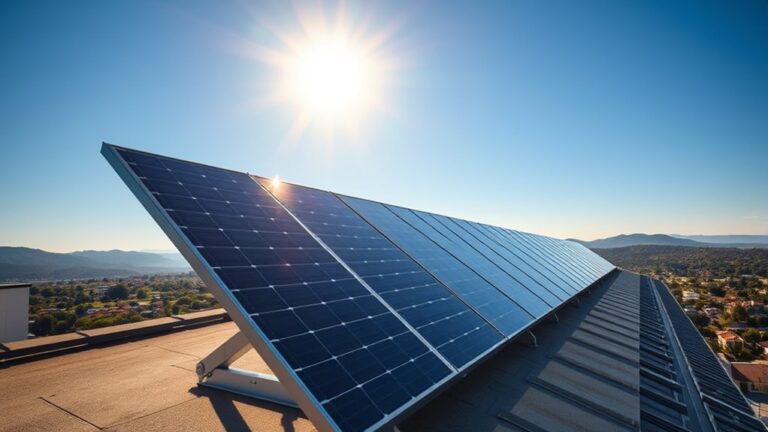
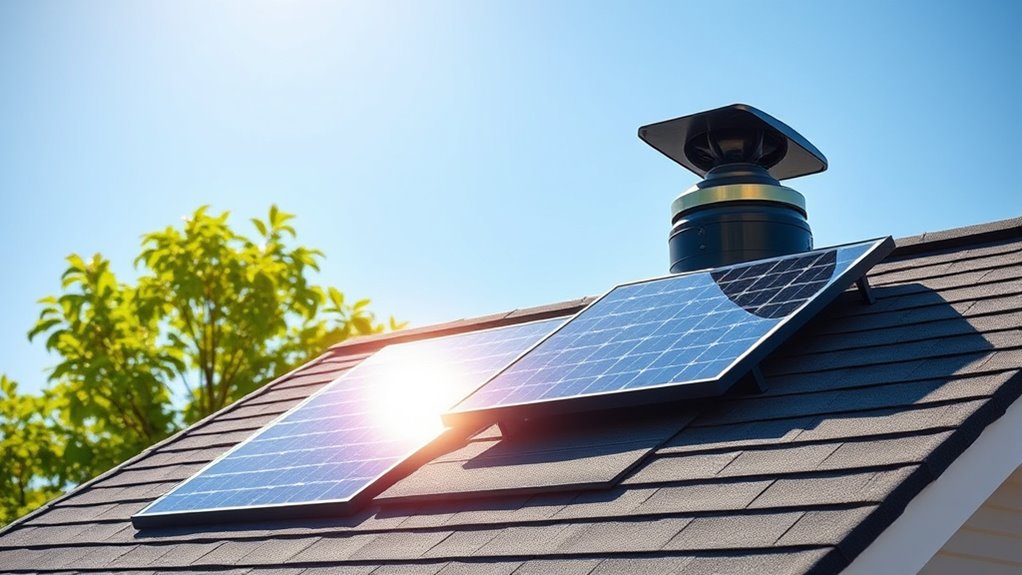
Are Solar Powered Attic Fans Worth It?
Solar powered attic fans can be worth it if you want to lower your attic’s temperature without raising electric bills. These fans run entirely on sunlight, helping to cut down heat build-up in your attic.
By doing so, they ease the workload on your air conditioner, especially if you live in a sunny climate.
That said, their performance depends a lot on sun exposure and proper installation. On cloudy days, they might not work as efficiently.
Plus, while they help ventilate your attic, they won’t solve all ventilation problems by themselves.
So, if you’re considering solar attic fans, keep reading. We’ll share tips on cost, ideal placement, and other ventilation methods to help you boost your home’s comfort and energy efficiency.
Key Takeaways
- Solar powered attic fans reduce attic heat and lower cooling costs by up to 15% without increasing electricity bills. They work by using the sun’s energy, so you’re not adding to your power bill.
- They operate efficiently during sunny, warm days but have limited effectiveness on cloudy days or at night. So, if the weather isn’t great, their performance might dip a bit.
- Proper installation and roof orientation, especially south-facing, maximize solar fan performance and energy savings. Getting it right upfront really makes a difference.
- Solar attic fans help prevent moisture buildup, mold, and extend roofing lifespan by maintaining balanced attic ventilation. This means fewer problems down the line for your roof and home.
- Initial costs range from $150 to $400, with potential long-term energy savings justifying the investment in suitable climates. If you live somewhere sunny, it could definitely be worth it!
How Do Solar Powered Attic Fans Work?
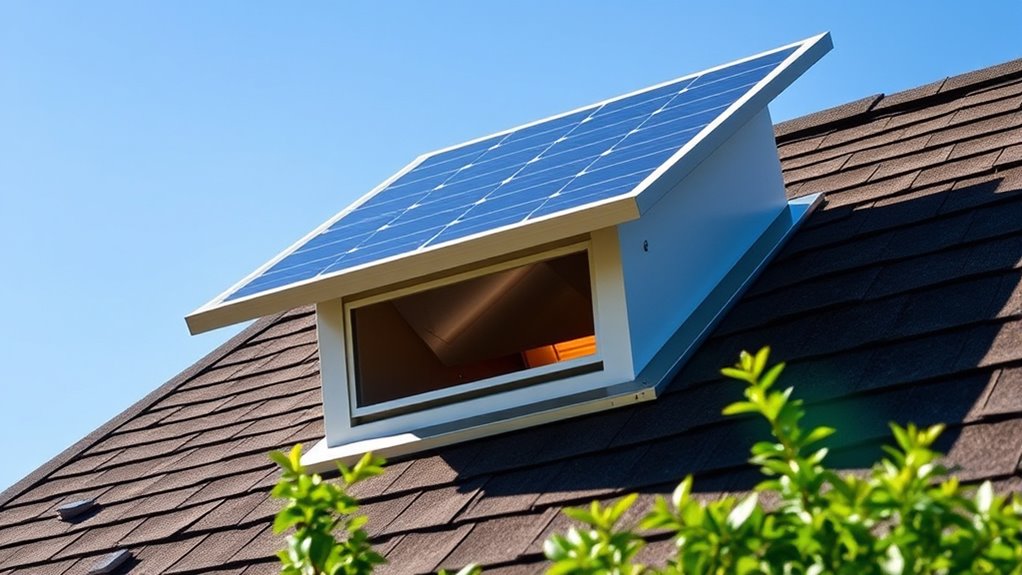
Although solar powered attic fans might seem complex, they operate on a straightforward principle: converting sunlight into energy to ventilate your attic. When sunlight hits the solar panel, it generates electricity that powers the fan motor.
This fan then pulls hot air out of your attic, helping to lower the temperature inside. Since it runs directly on solar energy, you don’t need to worry about wiring or increasing your electric bill.
The fan only works when the sun is shining, which is exactly when your attic needs ventilation the most. You simply install the fan on your roof or gable, and the solar panel captures sunlight to keep the fan running efficiently throughout the day.
What Are the Benefits and When Are They Most Effective?
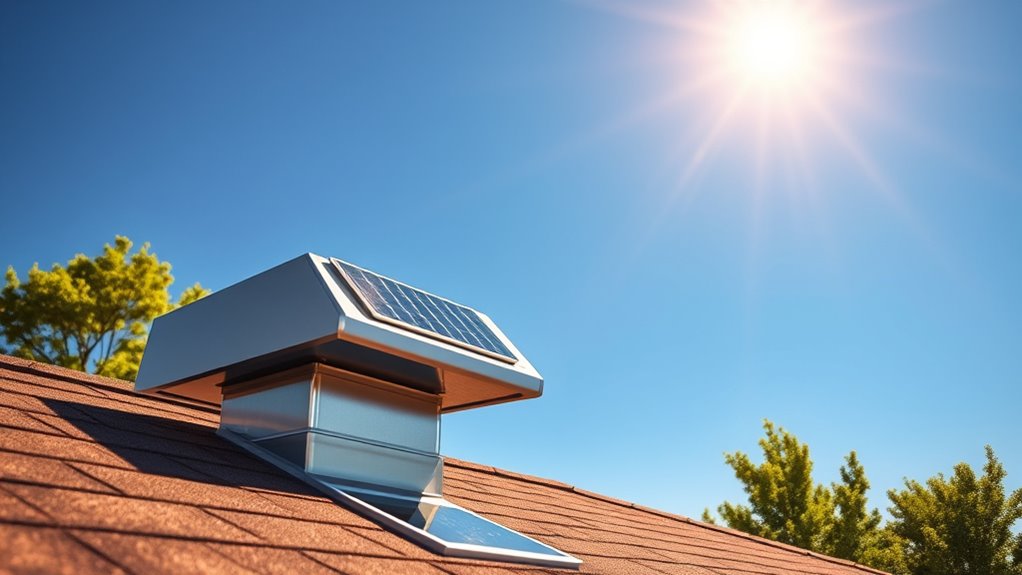
A solar powered attic fan offers several key benefits that can make a noticeable difference in your home’s comfort and energy costs. It helps reduce heat buildup in your attic, lowering indoor temperatures and easing the load on your air conditioner.
Because it runs on solar energy, you won’t see an increase in your electricity bill. That makes it an eco-friendly and cost-effective choice.
Running on solar power means no added electricity costs, making it both eco-friendly and budget-smart.
These fans are most effective during hot, sunny days when your attic heats up the most. They also help prevent moisture buildup, which reduces the risk of mold and structural damage.
If your attic lacks proper ventilation or your home tends to overheat in summer, a solar powered attic fan can *considerably* improve airflow. It helps maintain a healthier living environment, too.
What Are the Common Drawbacks and Limitations?
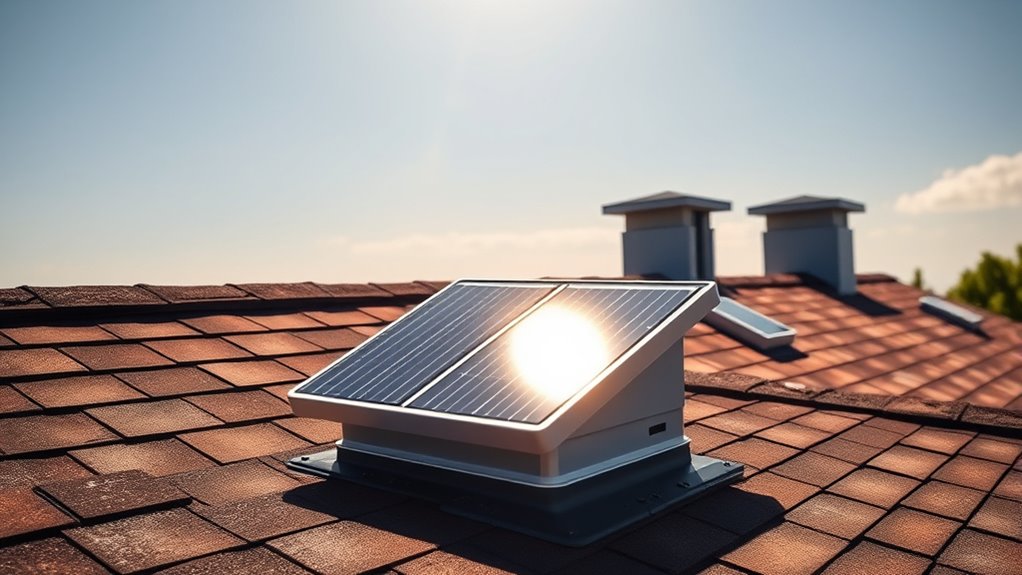
When considering a solar powered attic fan, you should also be aware of some common drawbacks and limitations that might affect its performance. First, these fans rely entirely on sunlight, so their effectiveness drops on cloudy days or at night when heat buildup can still occur.
You may find that the fan doesn’t run consistently throughout the day, limiting ventilation during critical times. Additionally, installation can be tricky without proper roofing knowledge, and improper placement might reduce efficiency.
Solar panels on these fans can also accumulate dirt or debris, requiring occasional cleaning to maintain output. Finally, if your attic has significant insulation or sealing issues, a solar fan alone won’t solve underlying ventilation problems, so it’s important to address those separately.
Is a Solar Attic Fan Worth the Cost?
You’ll want to weigh the upfront cost of a solar attic fan against the energy savings it can deliver over time. Don’t forget to factor in any ongoing maintenance expenses that could affect overall value.
Initial Investment Considerations
Although solar attic fans offer long-term savings on energy bills, their upfront cost can make you hesitate. You’ll need to evaluate the price of the fan itself, which typically ranges from $150 to $400, plus any installation expenses if you’re not doing it yourself.
Quality and features like thermostat controls or better solar panels can push the price higher. Keep in mind, a DIY installation can save you money but requires some skill and tools.
Also, factor in the durability and warranty—choosing a reliable brand might cost more initially but can save you from future repairs or replacements. Weighing these costs against your budget and how long you plan to stay in your home will help you decide if the investment makes sense for you right now.
Energy Savings Potential
How much can a solar attic fan actually save you on energy bills? You’ll likely see noticeable reductions, especially during hot months when cooling costs spike. By improving attic ventilation, these fans help reduce the workload on your air conditioner, cutting energy use.
Here’s what contributes to the savings:
- Lower indoor temperatures reduce AC runtime
- Solar power means no extra electricity cost
- Improved attic ventilation prevents heat buildup
- Reduced strain on HVAC systems extends their efficiency
While exact savings vary based on your home and climate, many users report a 5-15% drop in cooling costs. So, investing in a solar attic fan can be a smart move to trim energy expenses without increasing your electric bill.
Long-Term Maintenance Costs
Because solar attic fans rely on simple components and renewable energy, their long-term maintenance costs tend to be lower than traditional attic fans. You won’t have to worry about wiring issues or electrical bills since solar power runs the fan independently.
Plus, with fewer moving parts and no need for a direct power source, the risk of mechanical failures decreases. You’ll just need to keep the solar panel clean and clear of debris to guarantee peak performance, which is a quick, occasional task.
Traditional fans often require professional servicing, wiring inspections, and can increase your energy costs over time. So, when you factor in maintenance, solar attic fans offer a cost-effective, hassle-free option that saves you money and effort in the long run.
How Does Climate and Roof Orientation Affect Performance?
When you install a solar powered attic fan, its efficiency largely depends on your local climate and the direction your roof faces. If you live in a sunny, warm area, your fan will perform better since it relies on solar energy.
On the other hand, in cloudy or cooler climates, the fan might not run as often, which reduces its benefits.
Your roof’s orientation also plays a vital role:
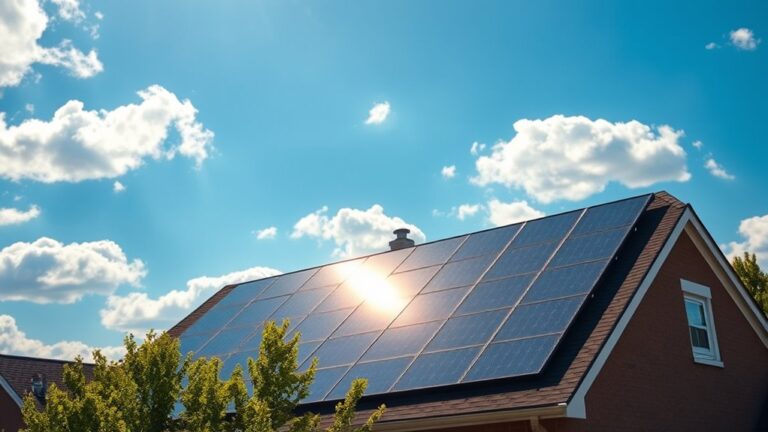
The direction your roof faces significantly impacts how effectively your solar attic fan operates.
- South-facing roofs receive the most sunlight, maximizing fan performance.
- East or west-facing roofs get moderate sunlight, offering decent efficiency.
- North-facing roofs receive the least direct sun, limiting fan operation.
- Roof pitch affects how much sunlight hits the solar panel throughout the day.
What Are Other Ways to Ventilate Your Attic?
You’ve got more options than just solar fans to keep your attic ventilated. Ridge vents and soffit vents work together to create natural airflow.
Powered attic fans give you added control. Let’s explore how each method can help improve your attic’s ventilation.
Ridge Vent Benefits
Though solar-powered attic fans offer a modern solution, ridge vents remain a popular and effective way to ventilate your attic. They run along the peak of your roof, allowing hot air to escape naturally and continuously.
Ridge vents work without electricity, making them low-maintenance and energy-efficient. Plus, they blend seamlessly with your roofline, keeping your home’s appearance clean.
Here are some key benefits of ridge vents:
- Provide consistent airflow by allowing hot air to exit along the entire roof ridge
- Reduce attic heat buildup, which helps protect roofing materials
- Minimize moisture and mold growth by improving ventilation
- Work quietly without moving parts, unlike fans
Ridge vents offer a passive, reliable way to keep your attic cooler and extend your roof’s lifespan. They’re a simple solution that works quietly in the background, helping your home stay comfortable and protected.
Soffit Ventilation Options
How can you improve your attic’s airflow beyond ridge vents? One effective way is to add soffit vents. These vents are installed under the eaves of your roof, allowing fresh air to enter your attic from below.
By bringing in cooler air at the soffits and letting warm air escape through ridge vents, you create a natural airflow cycle that helps regulate temperature and moisture. You can choose from continuous soffit vents, which run along the entire eave, or individual vents spaced evenly.
Either option promotes balanced ventilation, preventing heat buildup and reducing the risk of mold. Proper soffit ventilation works hand-in-hand with ridge vents to keep your attic cooler and extend the life of your roofing materials.
Powered Attic Fans
While natural ventilation methods like soffit and ridge vents work well, you might want to contemplate powered attic fans for more effective airflow control. These fans actively pull hot air out of your attic, speeding up ventilation when natural airflow isn’t enough.
Here are some benefits and considerations for powered attic fans:
- They reduce attic temperatures quickly, potentially lowering cooling costs.
- You can choose electric or solar-powered models depending on your energy preference.
- Installation requires electrical wiring or solar panel setup, which might increase upfront costs.
- Overuse can lead to negative pressure, pulling conditioned air from your living space if not balanced correctly.
Powered attic fans offer a proactive way to keep your attic cooler but require careful selection and installation to work efficiently. So, make sure you weigh the pros and cons before deciding if they’re right for your home.
Frequently Asked Questions
How Difficult Is It to Install a Solar Powered Attic Fan?
Installing a solar-powered attic fan isn’t too difficult if you’re comfortable with basic electrical work and roofing. You’ll need to mount the fan, connect the solar panel, and guarantee proper ventilation.
Safety precautions are essential. It’s really about taking it step by step and making sure everything is secure. If you’re handy and patient, you can definitely handle it yourself!
Do Solar Attic Fans Require Regular Maintenance?
Think of your solar attic fan like a bicycle chain—it needs occasional oiling.
You don’t have to do much; just clean the solar panel and check the fan yearly to keep it running smoothly and efficiently.
It’s pretty simple, really! A little upkeep goes a long way to make sure everything works just right.
Can Solar Attic Fans Operate During Cloudy or Rainy Days?
Solar attic fans can still operate during cloudy or rainy days, but their efficiency drops since they rely on sunlight. You might notice reduced airflow.
That said, they’ll work better than nothing, especially if equipped with a battery backup. So, even on less sunny days, they can keep things moving.
Are There Tax Credits or Rebates for Installing Solar Attic Fans?
Like finding a hidden treasure, you can snag tax credits or rebates for installing solar attic fans depending on your location.
Check local and federal programs—they often offer incentives that make your investment shine even brighter.
How Noisy Are Solar Powered Attic Fans When Running?
You won’t find solar powered attic fans noisy; they run quietly since they use efficient, low-speed motors.
You can barely hear them over typical household sounds, making them a peaceful addition to your home ventilation system.
Conclusion
If you’re looking to cut energy costs and keep your attic cool, solar powered attic fans can be a bright idea—literally. They work best in sunny climates and well-oriented roofs, but don’t expect them to be a magic bullet.
Like any tool, they have their limits, so weigh the benefits against the cost carefully. In the end, solar powered attic fans can be a helpful breeze in your home’s ventilation strategy. They reduce heat buildup, which can lower cooling bills and extend the life of your roof.
So, if you live in a sunny area and want an eco-friendly way to improve attic ventilation, these fans are worth considering. Just remember, they work best as part of a broader approach to keeping your home comfortable and energy-efficient.