What Does It Take for You to Run a House on Solar Power Alone?
To run your house solely on solar power, you’ll need to size your solar power system carefully based on your daily energy use and the amount of sunlight your location receives.
Picking the right solar panels and battery storage is key to making sure you have power even on cloudy days or during outages.
You’ll also want a reliable backup option, like a generator or a connection to the grid, just in case.
Plus, regular monitoring and maintenance are important to keep everything running efficiently.
If you want to make the most of solar energy, understanding these key steps is essential. It’s all about balancing your energy needs with the right equipment to live comfortably on solar power alone.
Key Takeaways
- Assess your home’s sunlight exposure and energy consumption to determine suitable solar panel size and system requirements. It’s important to know how much sun your roof actually gets.
- Calculate daily energy needs using utility bills and factor in sunlight hours plus system inefficiencies for accurate sizing. This helps you pick the right size for your solar setup.
- Choose the right solar panels and battery storage based on efficiency, capacity, cost, and backup power needs. You want something that fits your budget but also keeps your power steady.
- Install monitoring and maintenance routines to maximize system performance and ensure reliable energy production. Keeping an eye on your system helps avoid surprises.
- Prepare for weather variability and outages with backup systems like batteries and generators for continuous power supply. It’s always good to have a plan B when the sun isn’t shining.
Is Fully Solar Power Right for Your Home?
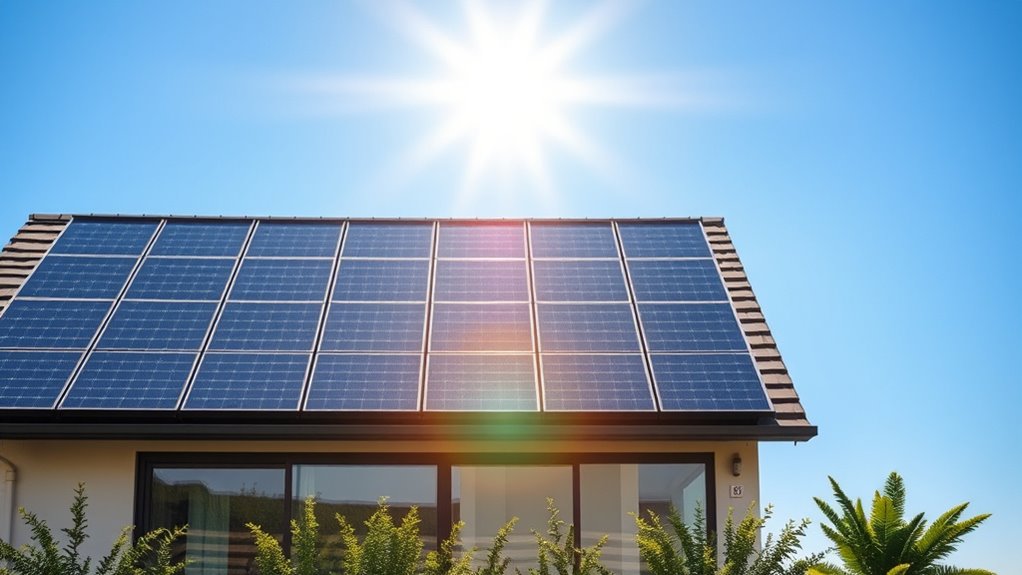
Although solar power offers clear benefits, you should consider your home’s location, energy needs, and budget before going fully solar. If your home gets plenty of sunlight throughout the year, solar panels will perform efficiently.
Consider your home’s sunlight, energy use, and budget before committing to solar power.
However, shaded areas or frequent cloudy weather can reduce their effectiveness. You’ll also want to evaluate your typical energy consumption—if it’s very high, you may need a larger system, which increases costs.
Budget plays a key role too; while solar panels have become more affordable, the upfront investment can still be significant. Think about whether you want to install the system outright or explore financing options.
Also, check local incentives that can offset costs. Taking these factors into account helps you decide if fully switching to solar is the right move for your home.
How to Calculate Your Home’s Solar Energy Needs
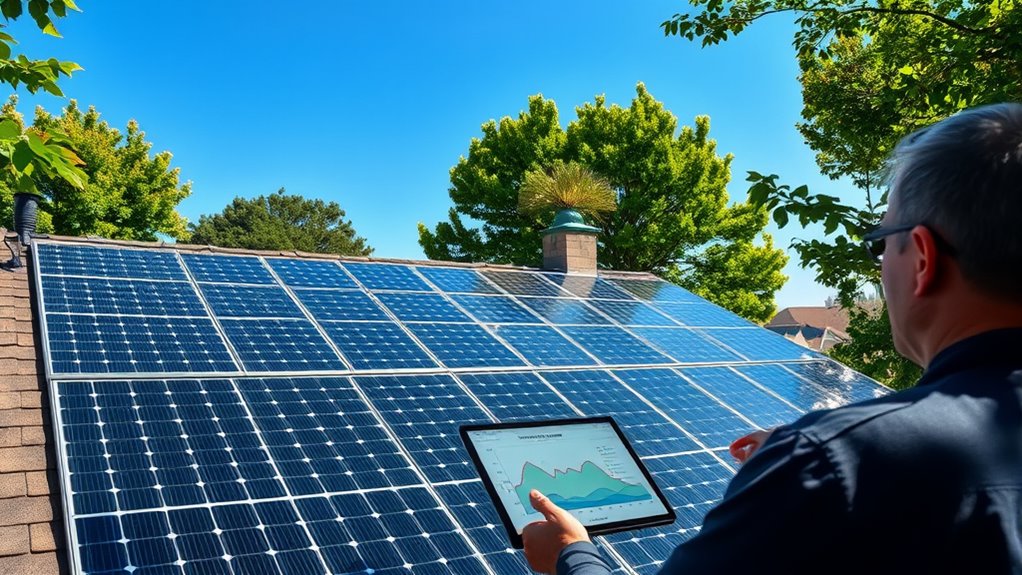
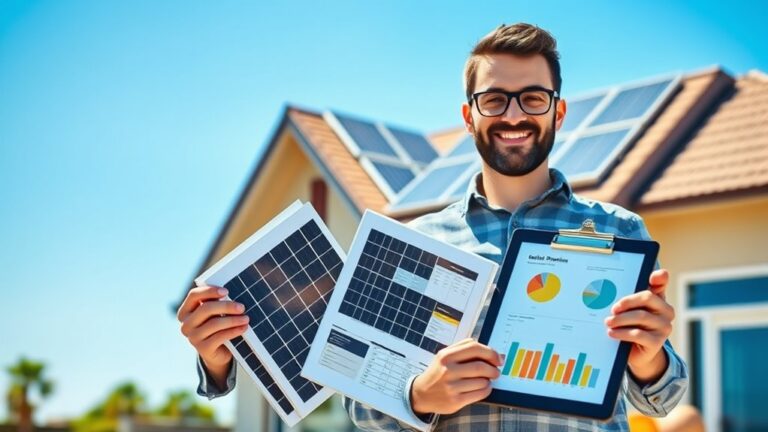
Before installing solar panels, you need to calculate your home’s energy needs to guarantee the system meets your daily consumption. Start by reviewing your electricity bills to find your average monthly usage in kilowatt-hours (kWh).
Divide this number by 30 to get your daily energy use. Next, consider your location’s sunlight hours, as this affects how much energy your panels can generate each day.
Multiply your daily energy use by a safety factor, usually 1.2 to 1.5, to account for inefficiencies and future increases in consumption. This gives you the total solar energy your system should produce daily.
Choosing Solar Panels to Meet 100% of Your Energy Needs
Now that you know your energy needs, it’s time to choose the right solar panels. You’ll want to compare panel types and calculate the system size that covers 100% of your consumption.
This guarantees your home runs entirely on solar power without any gaps. It’s all about making sure you get the most out of your system.
Assess Energy Consumption
How much energy does your household actually use? Start by gathering your utility bills from the past year to see your monthly electricity consumption in kilowatt-hours (kWh). This gives you a clear baseline for what your solar system must cover.
Next, consider any seasonal variations—heating in winter or cooling in summer can spike usage. Don’t forget to account for any planned changes, like adding an electric vehicle or new appliances.
Use an energy monitor or smart meter for more precise, real-time data. Once you know your average daily and monthly consumption, you can estimate the total solar capacity needed to power your home fully.
Accurately evaluating your energy use helps you avoid under-sizing or over-spending on your solar system. It’s all about getting the right fit for your needs!
Select Panel Types
With a clear understanding of your home’s energy consumption, you can choose the right solar panels to meet those needs fully. Selecting the right panel type is vital for efficiency and cost-effectiveness.
Consider these factors:
- Efficiency – Higher efficiency panels generate more power in limited space.
- Durability – Look for panels with strong warranties and weather resistance.
- Cost – Balance upfront costs with long-term savings and panel lifespan.
- Aesthetics – Choose panels that blend well with your roof if appearance matters.
Monocrystalline panels offer high efficiency but cost more, while polycrystalline panels are budget-friendly with slightly lower output. Thin-film panels provide flexibility but are less efficient.
Calculate System Size
Before you select your solar panels, you need to calculate the system size that will fully cover your energy consumption. Start by reviewing your electricity bills to find your average daily usage in kilowatt-hours (kWh).
Then, factor in your location’s peak sun hours—this tells you how much sunlight your panels will get each day. Divide your daily energy needs by the peak sun hours to estimate the kilowatt size of the solar system required.
Don’t forget to include a margin for inefficiencies like shading, inverter losses, and weather variations; adding 20% extra capacity is a good rule of thumb. This calculation guarantees you choose enough panels to meet 100% of your household’s power needs without falling short or overspending on unnecessary capacity.
Which Battery Storage Options Work Best for Solar Homes?
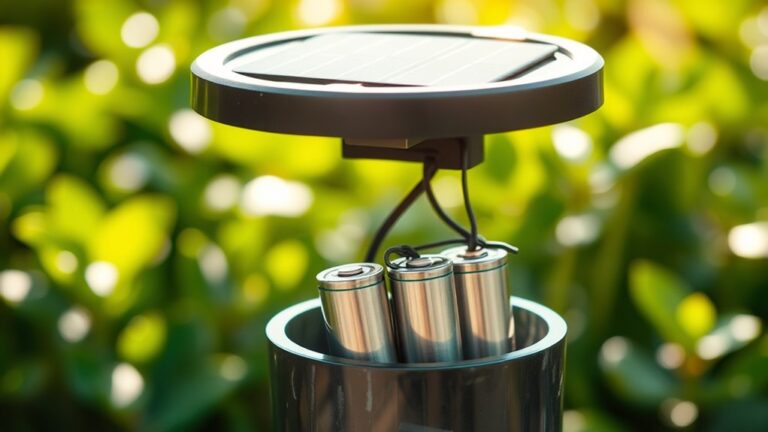
To make the most of your solar power system, you’ll need the right battery storage. You’ll want to think about different types, their capacity and efficiency, plus how much they cost and how long they last.
Let’s take a look at which options work best for your solar home. It’s all about finding the right fit for your needs and lifestyle.
Types of Battery Storage
Choosing the right battery storage for your solar-powered home can make a huge difference in efficiency and cost savings. You have several types to evaluate:
- Lead-Acid Batteries – Affordable and reliable, but heavier and require maintenance.
- Lithium-Ion Batteries – Popular for their long lifespan, high efficiency, and compact size.
- Nickel-Based Batteries – Durable and perform well in extreme temperatures but come with a higher price tag.
- Flow Batteries – Offer scalability and long cycle life, ideal for larger solar systems but are bulkier.
Each type has unique benefits and drawbacks. Your choice depends on your budget, space, and energy needs.
Understanding these options helps you pick a battery system that best supports your goal of running your house solely on solar power.
Capacity and Efficiency
How do you determine which battery storage option offers the best capacity and efficiency for your solar-powered home? Start by looking at the battery’s usable capacity—how much energy it can store and deliver reliably. You want a battery that matches your daily energy needs without frequent deep discharges, which reduce effectiveness and lifespan.
Pay attention to the round-trip efficiency percentage, indicating how much energy you get back compared to what you put in. Higher percentages mean less energy loss. Lithium-ion batteries typically provide high efficiency and stable capacity, making them popular for solar homes.
Also consider how the battery handles different temperatures and charge rates, as these factors affect real-world performance. Choosing a battery with ideal capacity and efficiency ensures your solar system runs smoothly and meets your energy demands.
Cost and Lifespan
Several factors influence the cost and lifespan of battery storage options for your solar-powered home. When choosing the best battery, consider these key elements:
- Battery Type: Lithium-ion batteries cost more upfront but last longer and perform better than lead-acid alternatives.
- Cycle Life: This tells you how many charge and discharge cycles the battery can handle before capacity drops markedly.
- Depth of Discharge (DoD): Batteries with a higher DoD let you use more of their stored energy without damaging their lifespan.
- Warranty and Maintenance: Longer warranties and low maintenance reduce your long-term expenses.
Balancing these factors helps you invest in a battery that fits both your budget and energy needs. That way, you can make sure your home runs efficiently on solar power for years.
Setting Up Backup Power for Cloudy Days and Emergencies
Although solar panels provide reliable energy on sunny days, you’ll need backup power solutions to keep your house running during cloudy weather or emergencies. Start by investing in a high-capacity battery storage system to store excess energy generated on sunny days.
This guarantees you have power when the sun isn’t shining. Additionally, consider a generator as a secondary backup; propane or natural gas generators can quickly supply electricity during extended outages.
You should also ensure your system includes an automatic transfer switch, which seamlessly shifts your home’s power source to backup during outages. Finally, regularly maintain your backup systems to guarantee they function properly when needed.
Tips for Managing Solar Power and Overcoming Common Challenges
When you rely on solar power, staying proactive in managing your system is key to maximizing efficiency and avoiding common pitfalls.
Here are some essential tips to keep your solar setup running smoothly:
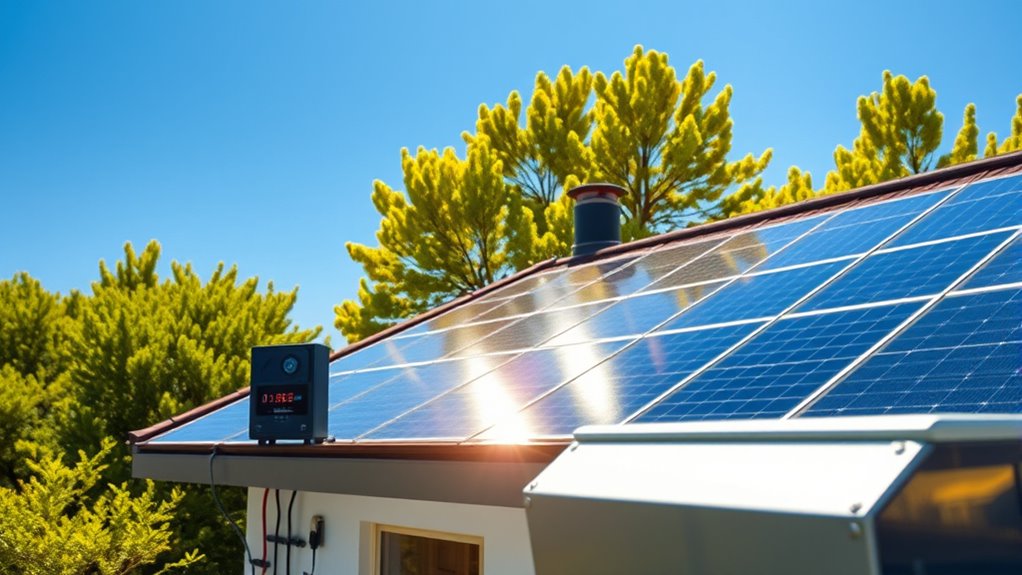
- Monitor Your System Regularly: Track energy production and consumption to spot issues early. This way, you can adjust usage patterns before they become a problem.
- Keep Panels Clean: Dirt and debris reduce efficiency, so clean your panels periodically. This helps ensure you get maximum sunlight absorption.
- Optimize Energy Usage: Try to use high-energy appliances during peak sunlight hours. It’s a simple way to make the most of your solar power.
- Prepare for Weather Variability: Have a backup plan like battery storage or grid connection. This will help you handle cloudy days and unexpected power needs without stress.
Frequently Asked Questions
How Do Solar Panels Affect My Home’s Resale Value?
Solar panels usually increase your home’s resale value because buyers love energy savings and eco-friendly features. You’ll attract more offers and potentially sell faster, especially if your system is owned, not leased, and in good condition.
Plus, having solar panels can make your home stand out in the market. People are often willing to pay a bit more for the benefits that come with lower utility bills and a smaller carbon footprint.
What Maintenance Is Required for Solar Panel Cleaning?
You’ll need to clean your solar panels a few times a year, removing dirt and debris with water and a soft brush.
Try to avoid harsh chemicals or abrasive tools. They can damage your panels and reduce their efficiency.
Keeping them clean like this helps your system work its best over time.
Are There Government Incentives for Installing Solar Power?
Absolutely, you’ll find government incentives everywhere—like piles of cash raining down! Tax credits, rebates, and grants make solar affordable.
Don’t miss out; these incentives can slash your costs and power up your savings big time!
Can Solar Panels Work During a Power Outage?
Solar panels usually won’t work during a power outage unless you have a battery backup system. Without it, the grid shutdown cuts off power to prevent safety risks.
How Long Do Solar Panels Typically Last?
Think of solar panels as tireless guardians; they typically last 25 to 30 years. You’ll rely on their steady energy harvest.
But remember to maintain them well so they keep shining bright for decades. A little care goes a long way with these hardworking panels.
Conclusion
Running your home on solar power alone is like steering a sailboat—you need the right sails (solar panels), a sturdy hull (battery storage), and a keen eye on the changing winds (weather and energy use).
By calculating your energy needs and preparing for cloudy days, you guarantee smooth sailing through every season.
With careful planning and management, your solar-powered home will glide confidently toward a cleaner, brighter future.
To make the most of solar power, it’s essential to size your solar panels correctly and invest in reliable battery storage to keep your home running even when the sun isn’t shining. Watching your energy use and keeping an eye on weather patterns can help you stay ahead of any power shortfalls.
Ultimately, running a house on solar power alone takes thoughtful preparation and ongoing attention. But with the right setup, you can enjoy energy independence and contribute to a sustainable lifestyle that benefits both your wallet and the planet.