How Do Solar Lights Need Direct Sunlight to Maximize Performance?
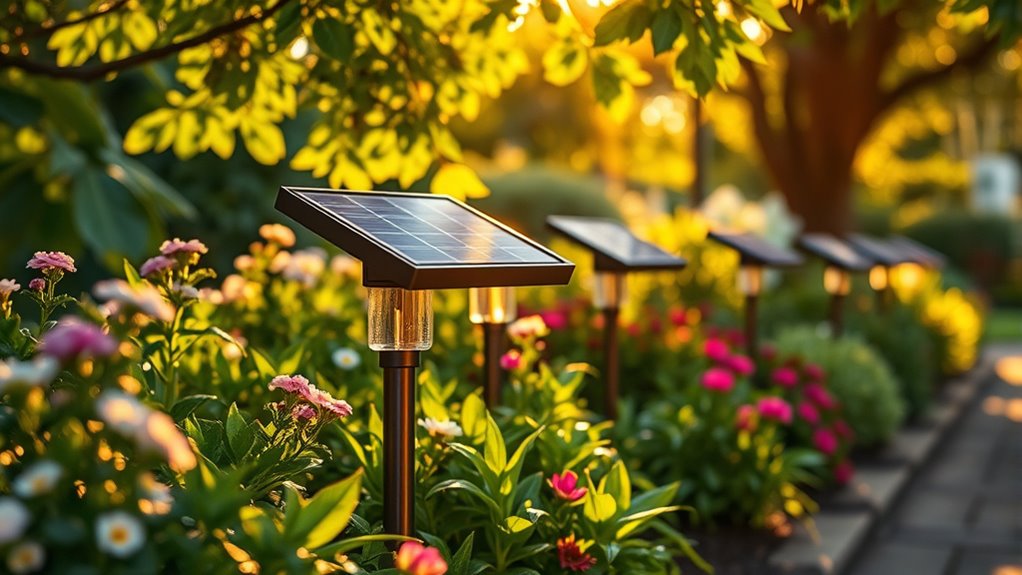
You need to give your solar lights at least 6 to 8 hours of direct sunlight daily to guarantee they fully charge and shine brightly all night.
Direct sunlight boosts the solar panel’s efficiency, keeping batteries well-powered and your lights bright and long-lasting. This is key for maximizing the performance of your solar lights.
Without enough sun, expect dimmer lights and shorter runtimes, especially in shady or cloudy conditions.
It’s all about that daily sunlight – the more your solar panel soaks up, the better your lights work.
Keep exploring to find tips on the best placement and upgrading your solar lighting for top performance.
With the right setup, your solar lights can truly shine all night long!
Key Takeaways
- Solar lights need direct sunlight to fully charge their batteries. This ensures they shine bright and stay lit longer at night.
- Ideally, they get at least 6 to 8 hours of sunlight without interruptions every day. That’s when their solar panels work best.
- If there’s shade, clouds, or anything blocking the sun, the lights won’t store as much energy. So, they end up dimmer and don’t last as long.
- It’s important to place them where shadows won’t fall. This way, they soak up sunlight consistently and perform reliably.
- Keep in mind, sunlight changes with the seasons. Moving your lights around a bit can help them keep charging well all year long.
How Many Hours of Direct Sunlight Do Solar Lights Need?
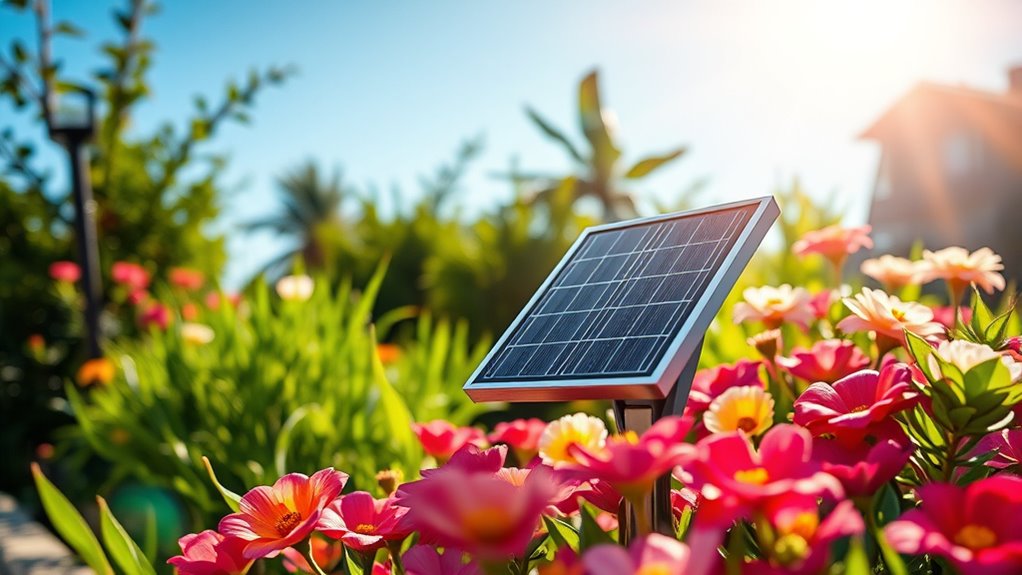
Although solar lights can still work on cloudy days, they need about 6 to 8 hours of direct sunlight daily to charge fully and perform at their best.
If you place your solar lights in a shaded area or where sunlight is limited, the batteries won’t store enough energy. This causes dimmer light and shorter runtime.
You should aim to position your solar lights where they’ll get uninterrupted sunlight during the day, especially between 10 a.m. and 4 p.m., when the sun is strongest.
Keep in mind that seasonal changes affect sunlight duration. So, in winter, you might need to adjust the location or supplement with other lighting.
Meeting this daily sunlight requirement *guarantees* your solar lights stay bright and reliable throughout the night.
Why Does Direct Sunlight Boost Solar Light Brightness and Runtime?
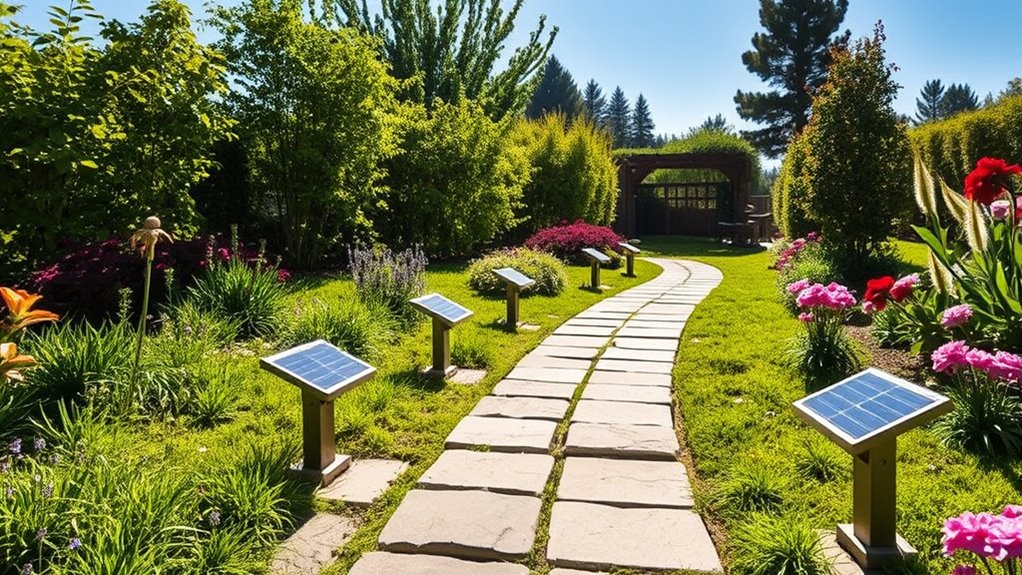
Getting enough direct sunlight is key because it fundamentally impacts how well your solar lights charge their batteries. When sunlight hits the solar panel, it converts light energy into electricity, which stores in the battery.
The more intense and consistent the sunlight, the more energy your lights gather during the day. This means brighter illumination and longer runtimes at night.
If your lights only receive weak or indirect sunlight, they won’t charge fully, leading to dimmer light output and shorter operating hours. So, by ensuring your solar lights get ample direct sunlight, you maximize their energy storage.
This allows them to shine brighter and last longer when darkness falls. Direct sunlight essentially powers both the brightness and the endurance of your solar lighting system.
How Can You Find the Best Solar Light Spots in Your Yard?
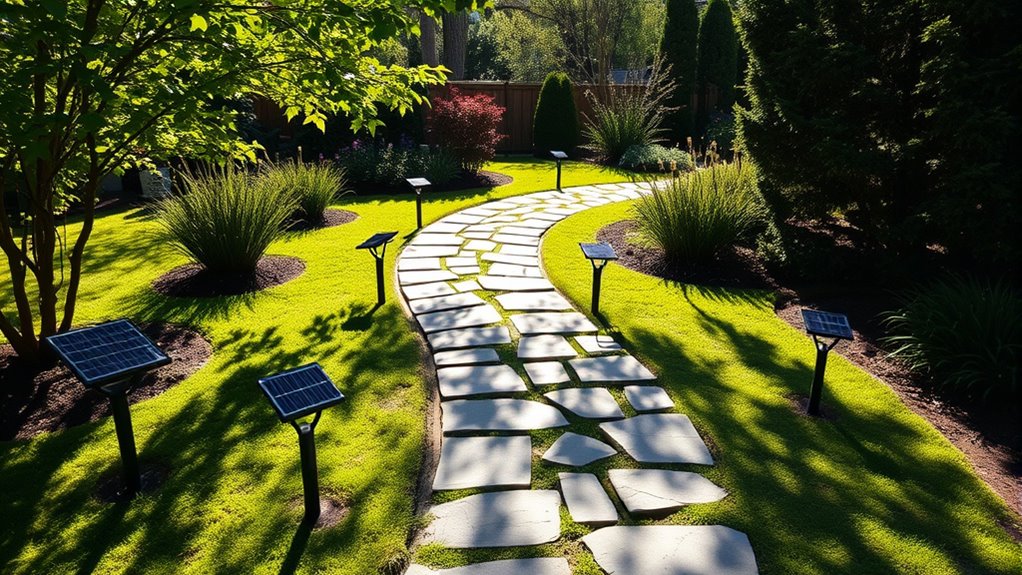
To find the best solar light spots in your yard, start by checking how much direct sunlight each area gets throughout the day. It’s important to notice any shaded spots caused by trees, buildings, or other structures.
Try tracking the sun’s path daily. This will help you pick the locations that get the most exposure and boost your solar lights’ performance.
Assess Sunlight Exposure
Where exactly should you place your solar lights to make sure they soak up enough sunlight? First, observe your yard throughout the day to see which spots get consistent sunlight.
Next, consider these tips to assess sunlight exposure effectively:
- Track sunlight duration in different areas using a simple timer or smartphone app.
- Choose locations that receive at least 6 hours of direct sunlight daily for maximum charging.
- Avoid spots near tall structures or dense foliage that can block sunlight during peak hours.
Identify Shaded Areas
After pinpointing areas with ample sunlight, you’ll want to identify spots where shade might interfere with your solar lights’ performance. Walk around your yard during different times of the day and note where shadows fall, especially from trees, buildings, or fences.
Pay close attention to spots shaded during peak sunlight hours, as these areas won’t provide enough energy for your solar lights to charge fully. Use a small stick or marker to mark shaded zones so you can avoid placing solar lights there.
Also, consider seasonal changes—some areas might be sunny now but shaded later in the year. By carefully spotting shaded areas, you’ll ensure your solar lights get the direct sunlight they need to shine bright and last longer each night.
Track Daily Sun Paths
Although sunlight shifts throughout the day, tracking the sun’s path in your yard helps you find the best spots for solar lights. To maximize their performance, you need to position them where they’ll soak up the most direct sunlight.
Here’s how you can track the sun’s movement effectively: Observe your yard at different times—morning, noon, and late afternoon—to see where sunlight hits.
You can also use a smartphone app or compass to map the sun’s trajectory relative to your yard. Don’t forget to note any obstacles like trees or buildings that cast shadows during peak sunlight hours.
What Happens to Solar Lights in Shade or Cloudy Conditions?
When your solar lights sit in shade or on cloudy days, they don’t store as much energy. You’ll notice their light output gets dimmer, and they won’t stay lit as long at night.
It’s good to keep this in mind so you can manage your expectations. Plus, it helps when you’re deciding where to place them for the best results.
Reduced Energy Storage
Since solar lights rely on sunlight to charge their batteries, placing them in shaded areas or during extended cloudy periods reduces their energy storage considerably. When solar panels don’t get enough sunlight, the batteries won’t fully charge, which limits how long your lights can operate at night.
You might notice your lights turning off earlier than expected or not lighting up at all. Here’s what happens with reduced energy storage:
- Batteries store less power, shortening the light’s operational time
- Insufficient charge can degrade battery lifespan over time
- Solar lights may fail to activate if energy levels drop too low
To maximize performance, make sure your solar lights get direct sunlight every day. Try to avoid shade and minimize exposure to cloudy conditions whenever you can.
Dimmer Light Output
How much dimmer do solar lights get in shade or cloudy weather? When sunlight is limited, solar panels produce less energy, so the lights glow dimmer.
You’ll notice the difference especially on overcast days or under tree canopies. Here’s how light output typically changes:
| Condition | Solar Energy Produced | Light Output Level |
|---|---|---|
| Full Sunlight | 100% | Bright |
| Partial Shade | 60-80% | Moderately Dim |
| Heavy Shade | 30-50% | Noticeably Dim |
| Cloudy Weather | 40-70% | Dim |
Shorter Illumination Duration
Although solar lights can still function in shaded or cloudy conditions, you’ll notice they don’t stay illuminated as long as they do after a full day of direct sunlight. This happens because their batteries don’t charge fully without enough solar energy.
When you place solar lights in less sunny spots, the stored energy runs out quicker, leading to shorter illumination times. To get the most from your solar lights, consider these points:
- Limited sunlight means less battery power stored during the day
- Reduced charge causes the lights to dim and shut off earlier at night
- Consistent shade or cloudy weather can gradually degrade battery efficiency
How Can You Improve Solar Light Panel Exposure Without Moving Them?
If you can’t move your solar light panels, you can still boost their exposure by trimming nearby branches or removing obstacles that cast shadows. Clear any leaves, dirt, or debris from the panels regularly to guarantee they soak up as much sunlight as possible.
You might also clean the panels with a soft cloth and mild soap to remove grime that blocks light. Another trick is to use reflective surfaces nearby—like white walls or light-colored stones—to bounce extra sunlight onto the panels.
Positioning these reflectors thoughtfully can increase the light your panels receive without relocating them. By maintaining cleanliness and reducing shade, you help your solar lights charge more efficiently, maximizing their performance throughout the day and assuring longer illumination at night.
When Should You Upgrade Your Solar Lights for Better Sunlight Use?
While maintaining your solar lights can extend their lifespan, you should consider upgrading them when you notice consistent dimming or reduced charge times despite proper care. Newer models often feature improved solar panels and batteries, helping you maximize sunlight use more efficiently.
You might also want to upgrade if your current lights don’t meet your brightness needs or if they suffer from frequent weather damage. It’s worth keeping an eye out for these signs to know when it’s time for an upgrade.
Look for these signs to decide when to upgrade:
- Your lights don’t stay lit through the night even after full charging.
- The solar panels look outdated or less efficient compared to new technology.
- You want brighter illumination or smarter features like motion sensors.
Upgrading guarantees better performance and longer-lasting outdoor lighting. So, if your current setup isn’t cutting it, it might be time to invest in something new.
Frequently Asked Questions
Are Solar Lights Waterproof for Outdoor Use?
Yes, most solar lights are waterproof and designed for outdoor use. You should check the IP rating to guarantee they withstand rain and moisture.
Proper waterproofing helps them last longer and perform well in various weather conditions. It’s a good idea to double-check before you buy, just to be sure.
How Long Do Solar Light Batteries Typically Last?
You’ll find solar light batteries typically last 1 to 3 years, depending on usage and quality.
If you take good care of them and avoid overcharging, they’ll keep your lights shining bright for a long time. It’s all about giving them a little TLC to get the most out of their lifespan.
Can Solar Lights Work in Winter Months?
Yes, your solar lights can work in winter months, but they’ll charge slower due to shorter days and less sunlight.
Keep them clean and positioned well to maximize energy absorption despite the cold and cloudy conditions.
It might take a bit longer for them to fully charge, but with the right care, they’ll still shine bright for you.
Do Solar Lights Attract Insects at Night?
When it comes to attracting insects, solar lights can be a bit of a double-edged sword. You’ll notice some bugs hovering around, especially those drawn to light.
But honestly, they’re generally less inviting than traditional bulbs at night. So, while some insects might show up, it’s usually not as many as you’d expect.
Are There Solar Lights Suitable for Indoor Use?
Yes, you can find solar lights designed for indoor use. They usually have a detachable solar panel you place outside to capture sunlight while the light stays indoors.
This setup gives you eco-friendly lighting without needing direct sun exposure inside. Pretty handy, right?
Conclusion
Want your solar lights to shine their brightest and last longest? They need plenty of direct sunlight—usually around 6 to 8 hours daily—to charge fully and perform well. Without it, their brightness and runtime decrease considerably.
So, why settle for dim lights when a little planning can maximize their glow? By choosing the best spots and optimizing panel exposure, you’ll keep your yard beautifully lit all night long.
Remember, solar lights need direct sunlight to maximize performance. Finding sunny locations and avoiding shade ensures your lights absorb enough energy during the day. This way, you get brighter illumination and longer-lasting light throughout the night, making your outdoor space safer and more inviting.