5 Steps to Connect a Solar Water Heater to Your Pool
To connect a solar water heater to your pool, start by choosing a system that’s perfectly sized for your pool’s volume and climate. This ensures you get the best heating efficiency and comfort.
Next, plan your plumbing routes carefully, aiming for minimal bends to keep water flowing smoothly.
Position your solar panels in sun-rich, south-facing areas to maximize heat absorption. Once you’ve got the layout, securely mount the panels and connect them to your pool pump using insulated, UV-resistant pipes.
Don’t forget to install control valves where needed to manage water flow easily.
Finally, set up a solar controller with a temperature sensor to automate the heating process. Be sure to test the entire system for leaks and proper flow.
Regular maintenance will keep your solar water heater running efficiently all season long. Keep going to explore each step in detail!
Key Takeaways
- Securely mount the solar panels on a sturdy frame or roof in a sun-rich, south-facing location. This helps maximize the amount of sunlight the panels receive.
- Connect inlet and outlet pipes from the solar panels to the pool’s filtration system using insulated, UV-resistant piping. This ensures the water stays warm and the pipes last longer.
- Install valves or bypass systems to control water flow through the solar heating system. It makes managing the temperature and flow much easier.
- Attach a solar controller and temperature sensor to monitor panel temperature and activate the pool pump automatically. This way, you don’t have to do it manually.
- Test the system by running the pump, checking for leaks, proper flow, and controller activation to ensure efficient operation. Fix any issues you find right away to keep everything running smoothly.
Why Choose a Solar Water Heater for Your Pool?
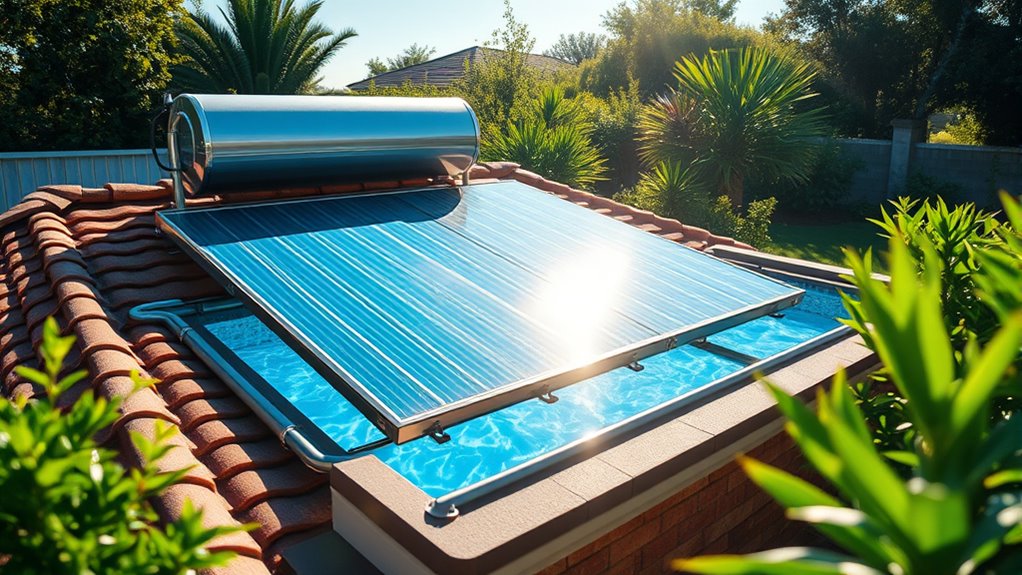
Why should you consider a solar water heater for your pool? It’s a smart, eco-friendly way to keep your pool warm without racking up high energy bills. Solar heaters use the sun’s energy, so you’ll reduce your reliance on electricity or gas, saving money over time.
Consider solar water heating to keep your pool warm, eco-friendly, and save on energy bills over time
Plus, you’re cutting down on harmful emissions, making it better for the environment. You’ll also enjoy longer swimming seasons by maintaining a comfortable temperature naturally.
Installation is straightforward, and solar heaters require minimal maintenance, so you won’t waste time or money on upkeep. Choosing solar heating means you’re investing in a sustainable solution that pays off both financially and environmentally.
In the end, it makes your pool experience more enjoyable year-round.
How to Pick the Right Solar Water Heater for Your Pool
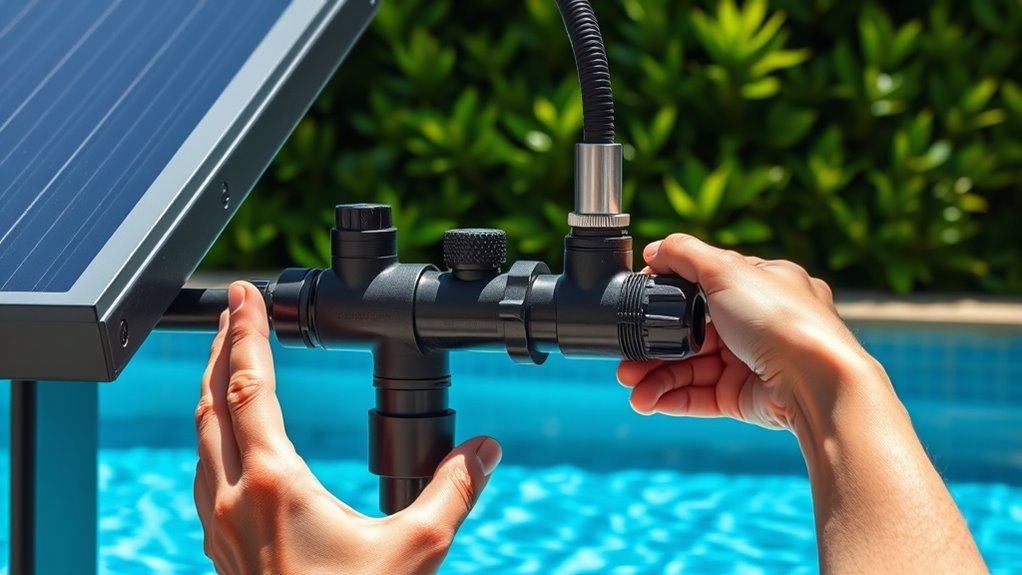
Now that you understand the benefits of solar water heaters, it’s important to select the right one for your pool. Choosing the perfect heater guarantees efficient warming and long-term savings.
Focus on these key factors:
- Size and Capacity: Match the heater’s size to your pool’s volume. A unit that’s too small won’t heat effectively, while an oversized one wastes energy and space.
- Material and Durability: Look for corrosion-resistant materials like polypropylene or copper. This is especially important if you use saltwater or harsh chemicals in your pool.
- Installation Type: Decide between flat-plate collectors, which are durable and efficient, or evacuated tube collectors. The latter perform better in cooler climates but do tend to cost more.
Considering these points really helps you pick a solar water heater that fits your pool’s needs and climate perfectly.
Planning Your Pool’s Plumbing and Solar Panel Setup for Solar Water Heating
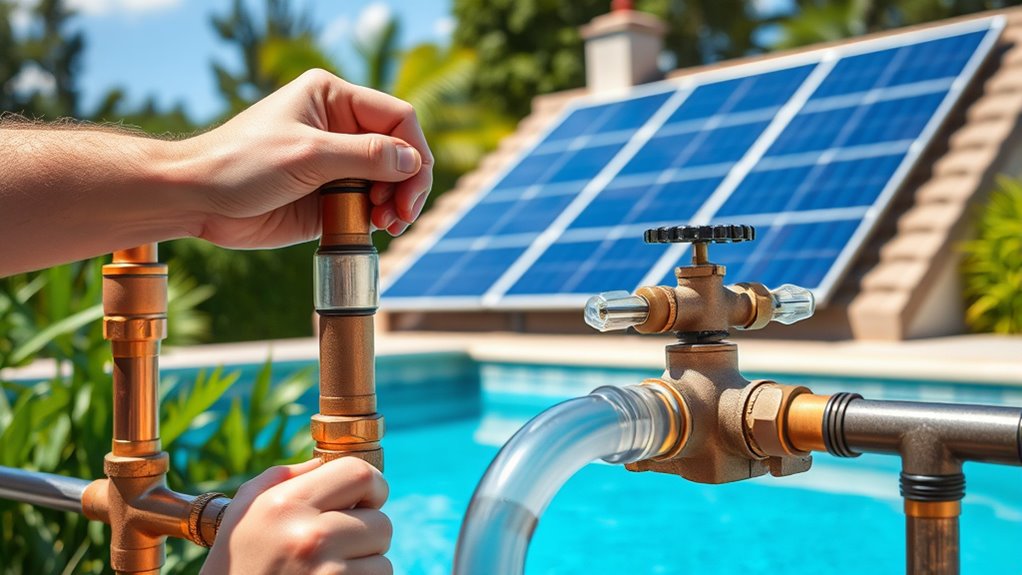
Before you start installing your solar water heater, you’ll need to carefully plan your pool’s plumbing and solar panel layout to guarantee peak performance. Begin by mapping the route for your plumbing, making sure to keep bends to a minimum. This helps reduce flow resistance.
Next, position your solar panels where they get the most sunlight—usually a south-facing roof or an open area. Think about how close your pool pump is, too, since minimizing pipe length can improve efficiency. Also, plan for easy access to valves so maintenance is hassle-free.
| Component | Ideal Placement | Key Consideration |
|---|---|---|
| Solar Panels | South-facing, unobstructed | Maximize sun exposure |
| Pool Pump | Near pool, accessible | Minimize pipe length |
| Plumbing Pipes | Short, straight runs | Reduce flow resistance |
| Valves & Controls | Accessible location | Simplify maintenance access |
Installing Solar Panels and Connecting to Your Pool Pump
Once you’ve chosen the ideal location for your solar panels, you can begin mounting them firmly and connecting the plumbing to your pool pump. Start by fixing the panels on a sturdy frame or roof using appropriate brackets and hardware to guarantee stability against wind and weather.
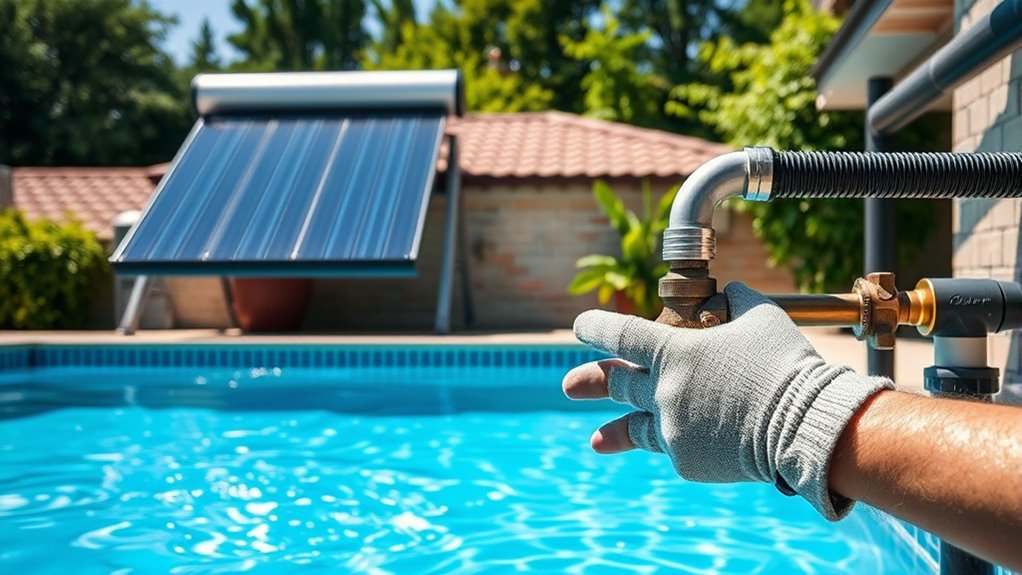
Next, connect the inlet and outlet pipes from the solar panels to your pool’s filtration system. Make sure to use insulated, UV-resistant piping to minimize heat loss.
Finally, integrate a valve or bypass system to control water flow through the solar heater, allowing you to divert water when solar heating isn’t needed.
- Securely mount solar panels using durable brackets.
- Connect insulated piping between panels and pool pump.
- Install valves to regulate water flow through the heater.
Setting Up Controls, Testing, and Maintaining Your Solar Water Heater
Although installing the panels and plumbing is essential, setting up the controls guarantees your solar water heater operates efficiently and safely. Begin by installing a solar controller, which monitors water temperature and activates the pump when heating is needed. Make certain the temperature sensor is properly placed on the solar collector.
Next, test the system by running your pool pump and observing whether the controller turns it on when the collector is warm. Check for leaks or unusual noises in the plumbing.
For maintenance, regularly clean the solar panels to ensure maximum sunlight absorption, inspect pipes for damage or blockages, and verify the controller’s settings seasonally. Doing these steps keeps your heater working smoothly, extends its lifespan, and ensures your pool stays comfortably warm.
Frequently Asked Questions
How Much Can I Save on Energy Bills With a Solar Water Heater?
You can save up to 50-70% on your energy bills by using a solar water heater. It cuts down your reliance on electric or gas heating, lowering costs while providing eco-friendly, efficient pool heating all year round.
Pretty great, right? Plus, it’s not just about saving money — you’re also doing your part for the planet by using clean energy.
Are Solar Water Heaters Effective in Cloudy or Cold Climates?
You’ll find solar water heaters less effective in cloudy or cold climates, but they still provide some warmth.
Using a backup heater or hybrid system can help maintain your pool’s temperature when sunlight is limited.
That way, you get the best of both worlds—solar savings when the sun is out, and reliable heat when it’s not.
Can a Solar Water Heater Increase My Pool’s Resale Value?
You’ll likely find your pool’s appeal gently enhanced with a solar water heater, as it adds eco-friendly charm and cost savings. Buyers often appreciate these subtle comforts, which can pleasantly influence your property’s market value.
It’s one of those features that doesn’t scream for attention but definitely adds a nice touch. Plus, who doesn’t like the idea of saving on energy bills while being kind to the planet?
What Is the Average Lifespan of a Solar Water Heating System?
You can expect a solar water heating system to last around 15 to 20 years with proper maintenance. Regular checks and cleaning help guarantee it performs efficiently throughout its lifespan.
This way, you save both money and energy. Keeping up with maintenance really pays off in the long run!
Are There Any Government Incentives or Rebates for Solar Pool Heaters?
You’re in luck—many regions offer friendly nudges like tax credits or rebates for solar pool heaters.
Check local programs and energy departments to discover these helpful opportunities.
They make your eco-friendly upgrade easier on your wallet.
Conclusion
Now that you’ve got the steps down, imagine your pool warmed by the sun’s free energy every day. But here’s the secret—getting it right the first time saves you headaches later.
Take your time choosing and installing your solar water heater, because once your system’s humming smoothly, you’ll wonder why you didn’t start sooner. It’s all about making sure your solar pool heater works efficiently and lasts for years.
Ready to plunge into comfort and savings? The sun’s waiting to heat your pool—are you ready to harness it? Installing a solar water heater for your pool means enjoying warm water while cutting energy costs and reducing your carbon footprint. So go ahead, soak up the benefits of renewable solar energy and make your pool the perfect place to relax all season long.