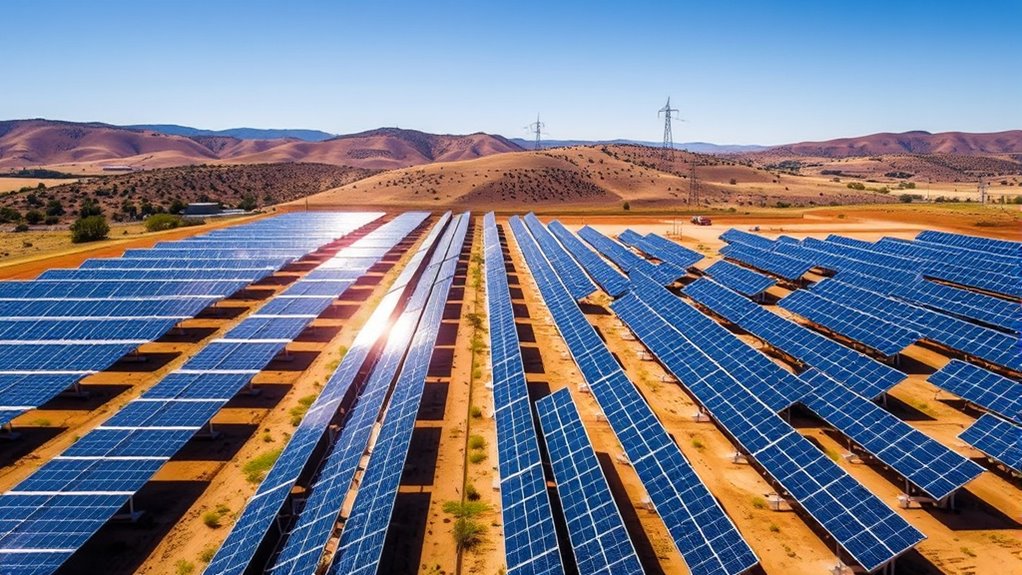
10 Factors That Affect How Much Ground-Mounted Solar Panels Cost
When figuring out how much ground-mounted solar panels will cost you, there are several key factors to keep in mind. Things like panel type and quality can really affect both the efficiency and the price you’ll pay.
Your site’s terrain and preparation needs might add extra expenses, especially if the land is uneven or hard to reach.
Installation choices, such as the type of mounting systems and wiring used, also influence labor and material costs.
Don’t forget about permits, local regulations, and the overall system size—these all play important roles in the total price.
Plus, ongoing maintenance and warranties add to long-term costs, so it’s good to think about those upfront.
Understanding these key elements helps you make smarter decisions about your solar investment and ensures you get the best value for your money.
Key Takeaways
– Panel type, quality, and efficiency significantly influence upfront costs and long-term savings for ground-mounted solar systems.
It’s important to choose panels that fit your budget and energy goals.
– Site terrain, accessibility, and preparation needs directly impact installation complexity and overall expenses.
Rough or uneven land can make things trickier and more costly.
– Mounting system choice, including fixed racks or tracking systems, affects material and labor costs.
Tracking systems usually cost more but can boost energy production.
– Permitting, zoning, and regulatory compliance can add fees and cause project delays, increasing total costs.
Always check local rules early to avoid surprises.
– Labor rates, installation difficulty, and ongoing maintenance requirements shape the total investment and lifecycle expenses.
Finding experienced installers can save money down the line.
Understanding Ground-Mounted Solar Panel Costs: Key Factors
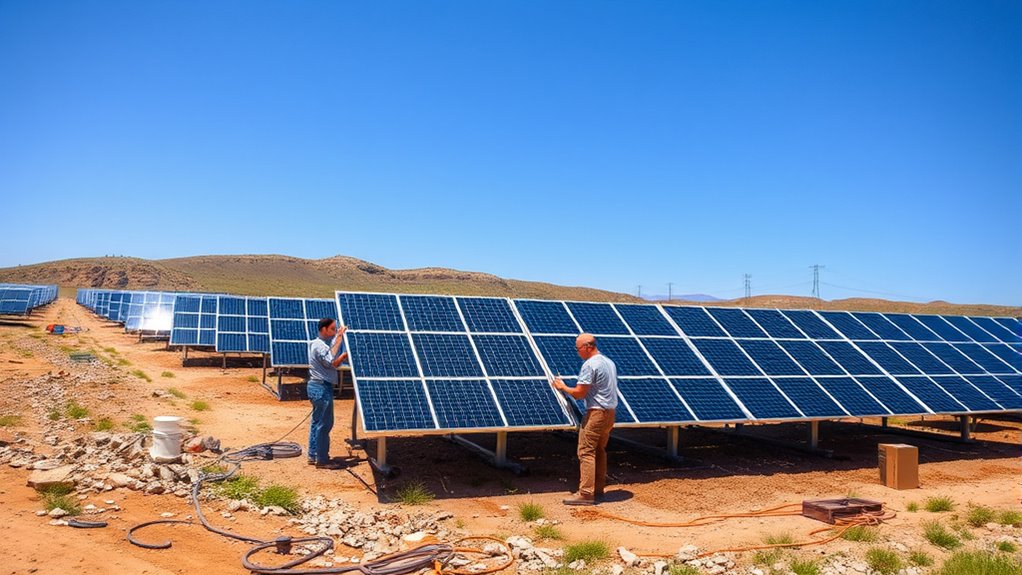
When you’re considering ground-mounted solar panels, understanding the factors that influence their costs is essential. You’ll find that panel quality, system size, and mounting structure type directly impact the price.
Higher-efficiency panels often cost more upfront but can save you money over time through better energy production. The size of your system matters too; larger setups require more materials and labor, increasing costs.
Investing in higher-efficiency panels and larger systems increases upfront costs but boosts long-term savings and energy output.
The choice between fixed or adjustable mounts also affects pricing—adjustable ones offer flexibility but at a premium. Additionally, inverter type and battery storage options can add to your budget.
Knowing these key factors helps you make informed decisions without surprises. This way, your investment aligns with your energy goals and financial plan.
How Site Preparation and Land Terrain Affect Costs
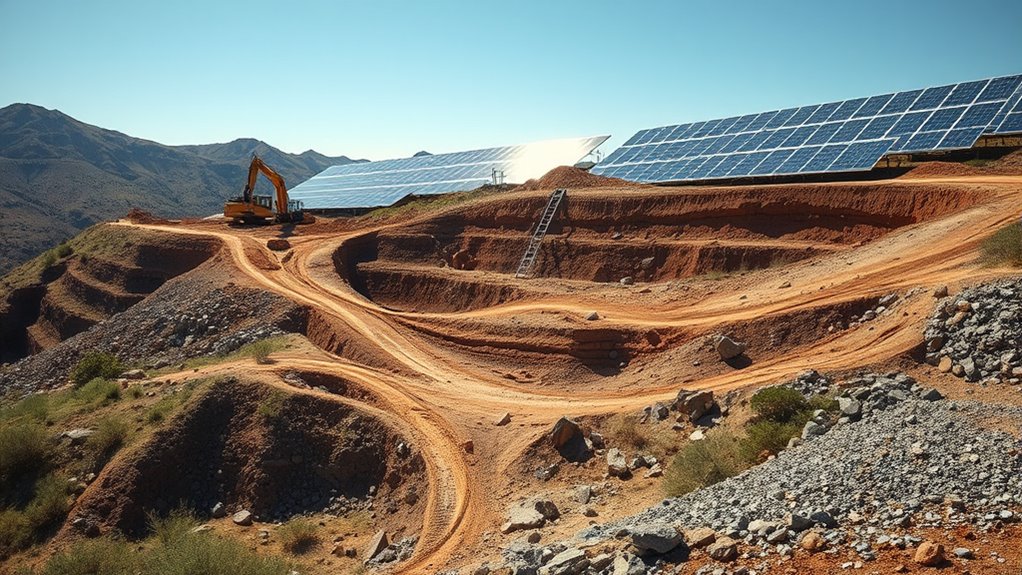
Beyond panel quality and system size, the condition of your site plays a big role in your overall expenses. Preparing uneven or rocky terrain can substantially increase costs, as contractors may need heavy machinery to clear and level the land.
If your site has dense vegetation, removing trees and brush adds labor and disposal fees. Soil type matters too—soft or sandy soils might require more robust foundations to secure your panels safely.
Additionally, accessibility impacts expenses; if your site is remote or difficult to reach, transporting equipment and materials becomes pricier.
Consider these factors:
- Land grading and leveling requirements
- Vegetation clearing and debris removal
- Soil stability and foundation needs
- Site accessibility for transport and equipment
Addressing these early can help you budget more accurately. It’s always better to know what you’re dealing with upfront!
Why Panel Type Influences Ground-Mounted Solar Prices
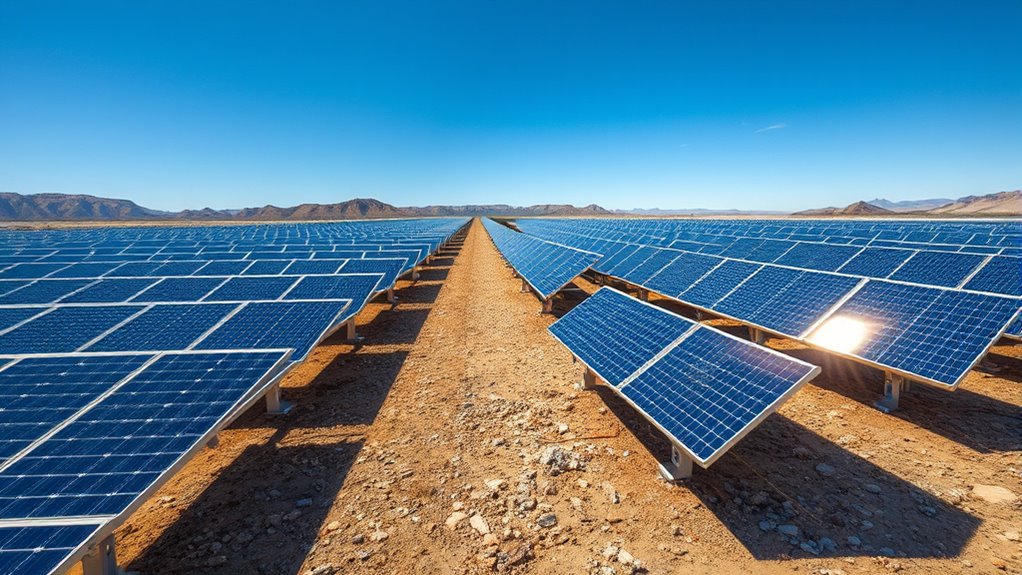
Because different panel types vary in efficiency, durability, and manufacturing costs, they directly influence the price of your ground-mounted solar system. Monocrystalline panels, for example, offer higher efficiency and a sleek design but typically come at a higher cost.
Different solar panel types impact system cost through variations in efficiency, durability, and manufacturing expenses.
Polycrystalline panels are usually less expensive but provide slightly lower efficiency. Thin-film panels tend to be cheaper and more flexible but may degrade faster and require more space, potentially increasing your land use costs.
Your choice depends on your budget and energy goals. Higher-efficiency panels might reduce the number of panels you need, saving on installation and land costs.
On the other hand, opting for less expensive panels could increase long-term expenses due to lower output or shorter lifespan. Understanding these trade-offs helps you balance upfront investment with long-term savings.
How Mounting Systems Impact Installation Expenses
You’ll find that the type of mounting system you choose plays a big role in your installation costs. Different systems require varying amounts of labor and materials, which directly affect your budget.
Understanding these options can help you make smarter decisions and manage expenses effectively. It’s all about knowing what works best for your situation.
Types Of Mounting Systems
How do different mounting systems influence the overall cost of installing ground-mounted solar panels? Your choice of mounting system directly affects installation complexity, material needs, and site preparation.
Some systems are simpler and more affordable, while others offer greater flexibility but can drive up expenses. Here are common types to evaluate:
- Standard Fixed-Tilt Racks: Economical and straightforward, ideal for flat terrain.
- Pole Mounts: Elevated panels reduce shading but require deeper foundations.
- Tracking Systems: Follow the sun for higher efficiency but add mechanical parts and costs.
- Ballasted Mounts: Use weights instead of ground penetration, useful on delicate or rocky soil.
Labor And Material Costs
When selecting a mounting system, labor and material costs can vary considerably based on complexity and site conditions. If you choose a simple fixed-tilt system, installation will be quicker and less costly because it requires fewer materials and less specialized labor.
However, tracking systems, which follow the sun’s movement, involve more intricate components and longer installation times. This increases both labor and material expenses.
Additionally, if your site has uneven terrain or requires custom foundations, expect higher labor costs due to added preparation and mounting challenges. Materials also fluctuate in price depending on durability and design—steel frames, for instance, cost more than aluminum but offer greater strength.
Why Installation Complexity Raises Solar Panel Costs
When you face uneven or rocky terrain, installation gets trickier and costs go up. You’ll spend more time and need skilled labor to handle these challenges.
Plus, specialized equipment often becomes necessary, driving up the overall price. It’s just one of those things that makes the whole process a bit more complicated—and expensive.
Terrain Challenges Impact Pricing
Because uneven or rocky terrain complicates the installation process, you’ll often face higher costs when setting up ground-mounted solar panels on challenging sites. Difficult terrain requires specialized equipment and extra preparation to guarantee stability and safety.
You might need to clear rocks, level the ground, or reinforce the foundation, all of which add to expenses. Plus, site access can affect the cost if heavy machinery can’t reach easily.
Key terrain challenges that impact pricing include:
- Sloped or hilly land needing grading or terracing
- Rocky or compacted soil requiring excavation
- Poor drainage areas needing soil amendments
- Dense vegetation that must be cleared or managed
All these factors increase material use and prep time. So, naturally, they drive up your overall installation costs.
Labor Time Requirements
Although the terrain plays a big role, the amount of labor time needed for installation has a direct impact on your solar panel costs. The more complex the site, the longer it takes to set up mounting structures and wire the panels, which increases labor expenses.
Even straightforward sites vary based on team experience and weather conditions, affecting how quickly work progresses.
Here’s a quick look at how installation complexity influences labor time and costs:
| Installation Type | Estimated Labor Hours | Cost Impact |
|---|---|---|
| Simple, flat ground | 10-15 | Low |
| Moderate slope | 15-25 | Medium |
| Difficult terrain | 25+ | High |
Understanding this helps you anticipate how labor affects your overall solar panel investment. It’s good to keep these factors in mind when planning your project.
Specialized Equipment Needs
Labor time isn’t the only factor that can drive up your solar panel costs—complex sites often require specialized equipment to handle unique challenges.
When your installation site has uneven terrain, rocky soil, or limited access, standard tools won’t cut it. You’ll need equipment designed to safely and efficiently manage these conditions, which increases costs.
Here are some examples of specialized equipment that might be necessary:
- Excavators or mini-diggers for tough ground preparation
- Crane or lift systems for heavy panel placement
- Custom mounting systems for uneven or sloped terrain
- Trenchers or directional drills for underground wiring
How Local Permits and Regulations Affect Your Budget
When you plan to install ground-mounted solar panels, local permits and regulations play a crucial role in shaping your budget. You’ll need to research zoning laws, building codes, and permit fees, which vary widely by location.
These factors can add unexpected costs or cause delays. It’s smart to factor in permit application fees, inspection charges, and potential modifications to meet local standards. Skipping this step could lead to fines or costly redesigns.
| Factor | Impact on Budget |
|---|---|
| Permit Fees | Direct cost, varies by area |
| Zoning Restrictions | May require design changes |
| Inspection Costs | Additional fees post-installation |
| Compliance Delays | Can increase labor costs |
How Wiring and Electrical Components Influence Costs
When planning your ground-mounted solar system, wiring material quality can considerably affect your overall cost. You might also need electrical panel upgrades to handle the new load, which adds to expenses.
Plus, labor and installation fees for these components can vary, so it’s smart to budget accordingly. It’s always better to be prepared for these extra costs upfront.
Wiring Material Quality
Although wiring might seem like a small detail, the quality of your wiring and electrical components can considerably impact the overall cost of a ground-mounted solar panel system. Choosing high-quality materials guarantees safety, efficiency, and durability, reducing long-term maintenance costs.
Cheaper wiring might save you money upfront, but it can lead to problems like overheating or power loss.
When selecting wiring materials, consider:
- Copper vs. aluminum wiring: copper is more efficient but costlier
- Insulation types: weather-resistant insulation lasts longer outdoors
- Wire gauge: thicker wires handle more current but cost more
- Connectors and junction boxes: durable components prevent faults and corrosion
Investing in quality wiring materials pays off by enhancing system performance and avoiding costly repairs. So, it’s worth spending a bit more now to save headaches later!
Electrical Panel Upgrades
Since your ground-mounted solar panel system relies on efficient electrical flow, upgrading your electrical panel often becomes necessary to handle increased capacity. When you add solar panels, your existing panel might not support the extra power without risking overloads or safety issues.
Upgrading usually involves installing a larger breaker panel or adding subpanels to accommodate new circuits. This guarantees your system runs smoothly and meets local electrical codes.
Keep in mind, the cost of panel upgrades varies depending on the panel size, brand, and complexity of integrating it with your current setup. Also, if your wiring and components aren’t compatible with the upgrade, you might need additional replacements, which can increase your overall costs.
Planning this early can help manage expenses effectively. It’s always better to be prepared than surprised later on!
Labor and Installation
Because wiring and electrical components form the backbone of your solar panel system, their quality and complexity directly impact labor and installation costs. When your system requires intricate wiring or specialized electrical parts, installers spend more time ensuring everything meets safety standards and functions correctly.
The more complex the setup, the higher the labor charges. It’s really about the time and care needed to get everything just right.
Consider these factors that influence your costs:
- Length and type of wiring needed
- Complexity of electrical connections
- Accessibility of the installation site
- Required permits and inspections
Why System Size and Capacity Matter for Pricing
When you choose a larger ground-mounted solar system, you’ll generally pay more upfront, but your cost per watt often decreases. This happens because bigger systems benefit from economies of scale—bulk purchasing of panels and materials usually lowers the overall price.
Plus, many fixed costs, like permitting and design, don’t increase proportionally with system size, so those expenses get spread out over more capacity.
However, you should balance size with your energy needs and budget. Oversizing a system might mean paying for unused capacity, while undersizing could limit your savings.
The system’s capacity, measured in kilowatts (kW), directly influences how much electricity you generate and, ultimately, your return on investment. Understanding these factors helps you make informed decisions that optimize both costs and energy output.
How Labor Rates Drive Ground-Mounted Solar Installation Costs
Although equipment costs play a big role in your ground-mounted solar project, labor rates can substantially impact your final price. Labor involves site preparation, mounting structure assembly, panel installation, and electrical work, all requiring skilled workers.
Depending on where you live, labor rates can vary greatly, affecting overall expenses.
Here’s how labor rates influence your costs:
- Higher local wages increase installation charges.
- Complex terrain or soil conditions demand more labor time.
- Specialized skills for certain mounting systems can raise hourly rates.
- Project size impacts how efficiently labor is utilized.
Understanding labor costs helps you budget better and choose installers wisely. Don’t overlook this key factor when planning your solar panel investment.
Why Maintenance and Warranties Add to Total Expenses
Since ground-mounted solar panels require ongoing care to perform at their best, maintenance and warranties play an essential role in your total expenses. You’ll need regular inspections, cleaning, and occasional repairs to keep the system efficient and safe.
Neglecting maintenance can reduce energy output, leading to higher costs over time. Warranties add upfront costs but offer valuable protection against defects and system failures, saving you from unexpected expenses.
Choosing a thorough warranty might increase your initial investment but lowers long-term risks. Understanding these factors helps you budget realistically and avoid surprises.
Frequently Asked Questions
How Long Do Ground-Mounted Solar Panels Typically Last?
Ground-mounted solar panels typically last 25 to 30 years, but you can expect them to keep producing electricity beyond that with slightly reduced efficiency.
Regular maintenance helps you maximize their lifespan and performance over time. It’s a good idea to keep an eye on them now and then to catch any issues early.
Can Ground-Mounted Solar Panels Be Relocated After Installation?
Yes, you can relocate ground-mounted solar panels, but it’s not simple. You’ll need to dismantle the system carefully, move the hardware, and reinstall it properly.
This process can be time-consuming and may incur extra costs. So, it’s a good idea to plan the original installation location carefully to avoid the hassle later.
What Are the Environmental Impacts of Ground-Mounted Solar Panels?
Ground-mounted solar panels are like a gentle footprint on earth, reducing carbon emissions but sometimes disrupting habitats or soil.
You’ll want to balance clean energy benefits with careful site selection to minimize environmental impacts.
How Do Weather Conditions Affect Ground-Mounted Solar Panel Efficiency?
You’ll see reduced efficiency in cloudy or snowy weather because less sunlight reaches the panels. High temperatures can also lower output.
But when it’s sunny and cool, your ground-mounted solar panels really shine. These ideal conditions help them perform at their best.
Are There Financing Options Available for Ground-Mounted Solar Systems?
Yes, you can find various financing options for ground-mounted solar systems, including loans, leases, and power purchase agreements. These help you spread out costs, making solar more affordable and easier to install on your property.
It’s pretty great because you don’t have to pay everything upfront. Instead, you can pick a plan that works best for your budget and get started without a huge initial expense.
Conclusion
When it comes to ground-mounted solar panels, every factor—from site prep to labor rates—shapes your final cost. You might think it’s just about the panels, but it’s like a puzzle where each piece matters.
By understanding these ten factors, you can piece together the true price and make smarter choices. Remember, the sun’s power is within your reach, but the details determine how brightly your investment will shine.
Knowing what influences the cost of ground-mounted solar panels helps you plan better and avoid surprises. From installation challenges to equipment quality, each element plays a role in your overall expenses.
So, take a closer look at these factors before you start your solar project. That way, you’ll make informed decisions and get the most value out of your solar panel investment. After all, a well-planned setup will maximize your savings and energy benefits for years to come.