
Do Solar Panels Require Direct Sunlight to Work?
You don’t need direct sunlight for solar panels to work because they can generate electricity from diffused and indirect light too. This means even on cloudy or overcast days, your solar panels are still doing their job, just at a reduced rate. So, while bright sun is best, it’s not the only condition that keeps your system running.
Even partial shading doesn’t stop them completely, but it can lower output.
If you want to get the most out of your solar power system, it’s helpful to understand how different light conditions affect performance. Knowing this can guide you in making choices that boost efficiency and keep your panels working well.
Key Takeaways
- Solar panels generate electricity primarily from direct sunlight but can also operate with diffused and indirect light. They don’t need full-on sun all the time to work.
- Panels keep producing power even on cloudy or overcast days, though their efficiency does drop compared to bright, sunny conditions. So, it’s not all or nothing.
- Partial shading and cloud cover do reduce the output, but they don’t completely stop energy generation. There’s still some juice coming in.
- Modern solar technology has gotten pretty good at performing under low-light and diffused conditions. This helps keep energy production steady even when the sun isn’t blazing.
- Consistent sunlight exposure definitely helps maximize efficiency, but direct sunlight isn’t strictly necessary for solar panels to work. They’re more flexible than you might think!
Do Solar Panels Need Direct Sunlight to Work?
Although solar panels perform best under direct sunlight, they don’t need it exclusively to generate electricity. When sunlight hits the panels, it excites electrons, creating energy. But even on cloudy days or in shaded areas, some sunlight still reaches the panels.
This means your solar setup can still produce power without perfect conditions. Of course, the efficiency drops compared to bright, direct sun, but your panels won’t stop working altogether.
How Solar Panels Generate Electricity With Indirect or Diffused Light
When sunlight scatters through clouds or bounces off surfaces, solar panels still catch those indirect or diffused rays. They convert this light into electricity, even if it’s not bright or direct.
You might think panels only work under strong, direct sun, but they’re actually designed to absorb a wide range of light. Inside each solar cell, photons from diffused light excite electrons and create an electric current.
This current is usually weaker than what direct sunlight produces, but it’s still enough to power many devices or help with your home’s energy needs. The panels’ semiconducting materials respond to different light angles and intensities.
How Diffused Light Helps Solar Panels Produce Energy
You might not realize that diffused light—sunlight scattered by clouds or particles in the air—still helps your solar panels generate electricity. While it’s less intense than direct sunlight, solar panels can convert this softer light into usable energy, though with slightly reduced efficiency.
Diffused Light Defined
Because sunlight scatters as it passes through clouds or atmospheric particles, diffused light reaches solar panels even on overcast days. You might think solar panels need direct sunlight, but diffused light provides scattered rays that still carry energy.
This indirect light arrives from multiple angles, allowing solar panels to absorb sunlight without the sun being fully visible. When sunlight isn’t harsh and direct, diffused light fills the sky more evenly, reducing shadows and hotspots on the panel surface.
While it’s less intense than direct sunlight, diffused light still triggers the photovoltaic cells inside your solar panels to generate electricity. Understanding diffused light helps you realize solar panels keep working even when the sun’s rays aren’t shining straight on them.
Energy Production Efficiency
Although diffused light is less intense than direct sunlight, it still enables your solar panels to produce a meaningful amount of energy. Solar cells respond to all available light, not just the rays coming straight from the sun.
When sunlight scatters in the atmosphere, it spreads more evenly, reaching your panels from multiple angles. This means your panels keep generating power even when the sun is behind clouds or trees.
While the efficiency drops compared to bright, direct sunlight, modern solar technologies have improved to capture and convert diffused light effectively. So, even on days without clear skies, your system continues to work.
This helps you harness renewable energy consistently and reduce reliance on the grid.
Benefits On Cloudy Days
Even on cloudy days, solar panels continue to generate electricity by capturing diffused light scattered through the atmosphere. You might think solar panels only work with direct sunlight, but they actually absorb this indirect light effectively.
Diffused light allows panels to keep producing energy, though at a slightly reduced rate compared to sunny conditions. This means you won’t lose all your power generation just because the sky is overcast.
Plus, diffused light is more evenly spread, so solar panels don’t overheat as much, which can improve their efficiency. So, even when clouds cover the sun, your solar panels stay active, providing a steady energy supply.
This helps you rely less on the grid during those gloomy days. It’s pretty cool that even on less-than-sunny days, your panels are still doing their job.
How Cloudy and Overcast Conditions Affect Solar Panel Performance
How do cloudy and overcast skies influence your solar panels’ efficiency? While clouds do reduce the amount of sunlight reaching your panels, they don’t stop them from generating electricity entirely.
Solar panels rely on sunlight, not just direct beams, so diffused light on cloudy days still produces power. However, you’ll notice a drop in output—typically between 10% to 25% compared to a clear day.
Solar panels generate power from diffused sunlight, but output drops 10% to 25% on cloudy days.
Thick, dense clouds can cut efficiency even more, sometimes by up to 50%. Despite this, your panels keep working, making the most of whatever light is available.
Understanding this helps set realistic expectations for your system’s performance during less sunny weather. So, even on overcast days, your solar setup continues contributing to your energy needs.
Choosing Solar Panels for Low-Light Conditions
When you expect frequent cloudy or shaded conditions, selecting solar panels designed for low-light performance guarantees you still get reliable energy. Look for panels with high-efficiency monocrystalline cells, as they capture sunlight more effectively even when it’s diffused.
Consider panels with anti-reflective coatings, which enhance light absorption by reducing surface reflection. Some manufacturers offer panels specifically engineered to perform better in low-light or partial shade, so check product specifications carefully.
You might also want to evaluate the panel’s temperature coefficient—panels that maintain efficiency in cooler, cloudier weather work better in less sunny climates. By choosing the right technology, you assure your system delivers steady power despite less-than-ideal sunlight.
This choice helps you maximize energy production without relying solely on bright, direct sunlight. It’s all about making the most of whatever light you get!
How to Maximize Solar Power in Low Light
To get the most from your solar panels in low light, you’ll want to optimize their placement for maximum exposure. Choosing high-efficiency cells can also boost energy capture when sunlight is limited.
These steps help guarantee you generate power even on cloudy days. It’s all about making the most out of the light you do get!
Optimize Panel Placement
Where you place your solar panels can make a big difference in how well they work, especially when the light is low. You want to put them where they get the most indirect sunlight throughout the day.
Try to avoid shady spots caused by trees, buildings, or anything else that might block the light. If you’re in the northern hemisphere, aim for a south-facing direction. And if you’re in the southern hemisphere, go north-facing—this helps you catch the most sun.
Also, adjust the tilt of your panels to match your latitude. This way, they can soak up more of the diffuse light. In winter, tilting them steeper can help since the sun stays lower in the sky.
Use High-Efficiency Cells
How can you get the most energy from your solar panels even on cloudy days or in shaded areas? One effective way is to use high-efficiency solar cells. These advanced cells capture more sunlight and convert it into electricity better than standard panels, making them ideal for low-light conditions.
When choosing panels, look for options with higher efficiency ratings, like monocrystalline or newer technologies such as PERC or bifacial cells. They perform well even when sunlight is diffused or indirect. Investing in high-efficiency cells means you’ll generate more power throughout the day, not just during peak sun hours.
This boosts your system’s overall output and reliability. So, you can count on getting consistent energy regardless of weather or partial shading.
Frequently Asked Questions
How Long Do Solar Panels Typically Last?
You can expect solar panels to last about 25 to 30 years. They gradually lose efficiency but still produce electricity beyond that.
Regular maintenance helps you maximize their lifespan and energy output over time. It’s a good idea to keep an eye on them now and then to make sure they’re working well.
What Maintenance Do Solar Panels Require?
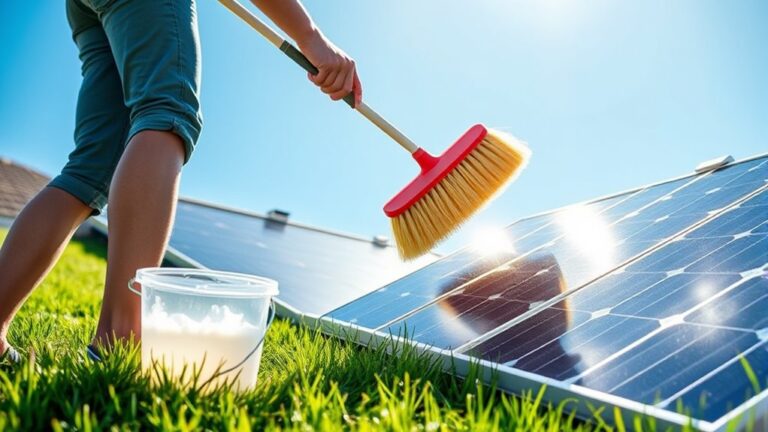
Like tending a garden, you’ll need to clean your solar panels occasionally and check for debris or damage.
You don’t have to do much, but regular inspections help keep your system shining strong and efficient.
Can Solar Panels Work During Nighttime With Battery Storage?
Yes, you can use solar panels at night if you have battery storage. The panels generate power during the day, storing excess energy in batteries.
That way, you can draw from them when the sun isn’t shining. Pretty handy, right?
How Much Do Solar Panels Cost on Average?
You can expect to pay around $15,000 to $25,000 for a typical residential solar panel system before tax credits. Prices vary based on system size, location, and installer.
But don’t worry, there are incentives that can help lower your upfront cost. So, it’s worth looking into those to save some money.
Are Solar Panels Harmful to the Environment?
Like Prometheus gifting fire, solar panels bring clean energy with minimal harm. You won’t see much pollution, but manufacturing and disposal have environmental costs.
Still, you’re choosing a greener path compared to fossil fuels. It’s a trade-off that makes a big difference for the planet.
Conclusion
You don’t need perfect sunshine to harness solar power—think of it like your favorite song playing softly in the background; even on cloudy days, your panels still hum along.
Just like how a shadow can’t stop the sun from shining, diffused light keeps your solar energy flowing. So, don’t wait for clear skies—embrace every ray, and let your solar panels work their quiet magic, rain or shine.
Solar panels don’t require direct sunlight to work effectively. They can still generate energy from indirect or diffused light, which means they perform well even on overcast days. This makes solar power a reliable and sustainable energy source, no matter the weather. So whether it’s bright sunshine or a cloudy afternoon, your solar panels keep producing clean energy and helping you save on electricity bills.


10 Comments