How Many Kilowatts Does a Solar Panel Produce?
You can expect a typical solar panel to produce between 250 and 400 watts each.
So, your home’s system might generate anywhere from 3 to 10 kilowatts depending on how many panels you have and their efficiency.
Larger or business systems often produce 10 kilowatts or more.
Factors like sunlight exposure, panel size, and positioning also affect output.
If you want to understand how to get the most from your solar setup, keep exploring the key details.
Knowing how many kilowatts a solar panel produces is a great place to start!
Key Takeaways
- Typical home solar panels produce between 250 and 400 watts each. That’s about 0.25 to 0.4 kilowatts per panel.
- Residential solar systems usually range from 3 to 10 kilowatts in total capacity. So, there’s quite a bit of variation depending on your setup.
- A 20-panel system rated at 350 watts per panel generates about 7 kilowatts. It’s a solid size for many homes.
- Actual kilowatt output depends on sunlight exposure, panel orientation, and shading conditions. These factors can really affect how much power you get.
- Larger, higher-efficiency panels produce more kilowatts. This helps maximize power when you have limited space.
Common Kilowatt Ranges for Home and Business Solar Panels
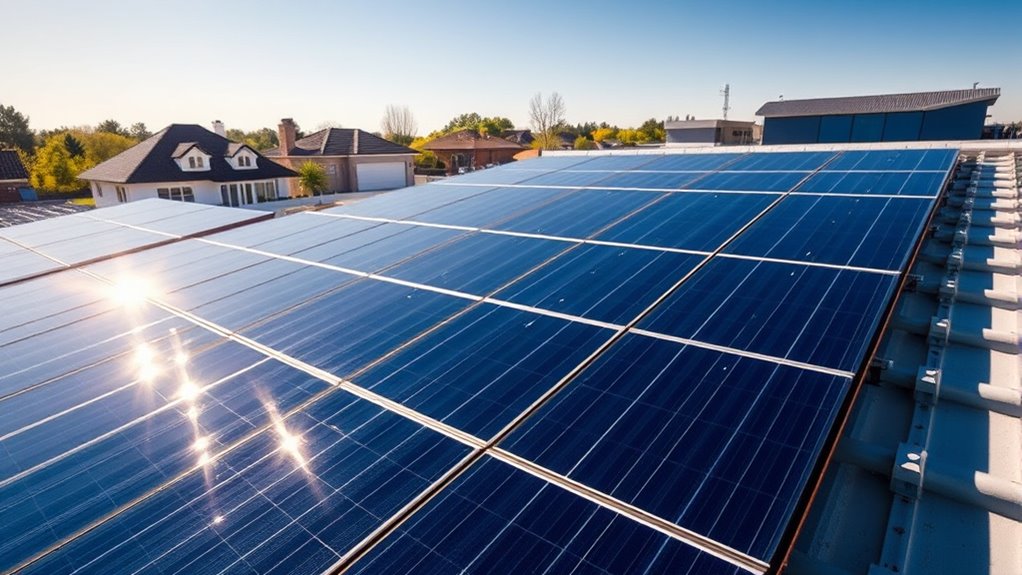
While the exact output varies, most home solar panels produce between 250 and 400 watts each, meaning a typical residential system ranges from 3 to 10 kilowatts. When you install solar panels on your home, the total kilowatt capacity depends on how many panels you use.
For example, if you have 20 panels rated at 350 watts each, your system would produce 7 kilowatts. Businesses, on the other hand, often require larger systems, ranging from 10 to 100 kilowatts or more, depending on their energy needs.
You’ll find commercial solar panels sometimes have higher wattage per panel to maximize energy production. Understanding these common kilowatt ranges helps you estimate the size and output of a solar installation whether it’s for your home or business.
Factors That Determine a Solar Panel’s Kilowatt Output
Understanding the common kilowatt ranges gives you a basic idea of what to expect from solar panels, but several factors influence their actual output.
Knowing typical kilowatt ranges helps, but your solar panel’s real output depends on many things.
You need to take into account environmental and technical elements that impact performance daily. It’s not just about the panel itself; where and how it’s used matters a lot.
Here are four key factors that determine a solar panel’s kilowatt output:
- Sunlight Exposure – More direct sunlight means higher energy production. So, the sunnier the spot, the better your panel will perform.
- Weather Conditions – Cloud cover, rain, and temperature fluctuations can reduce output. Yeah, those gloomy days can really make a difference.
- Panel Orientation and Tilt – Proper positioning toward the sun maximizes efficiency. Getting the angle just right helps catch more rays.
- Shading – Trees, buildings, or debris blocking panels considerably lower their output. Even a little shadow can cut down the power you get.
How Panel Size and Efficiency Influence Kilowatt Production
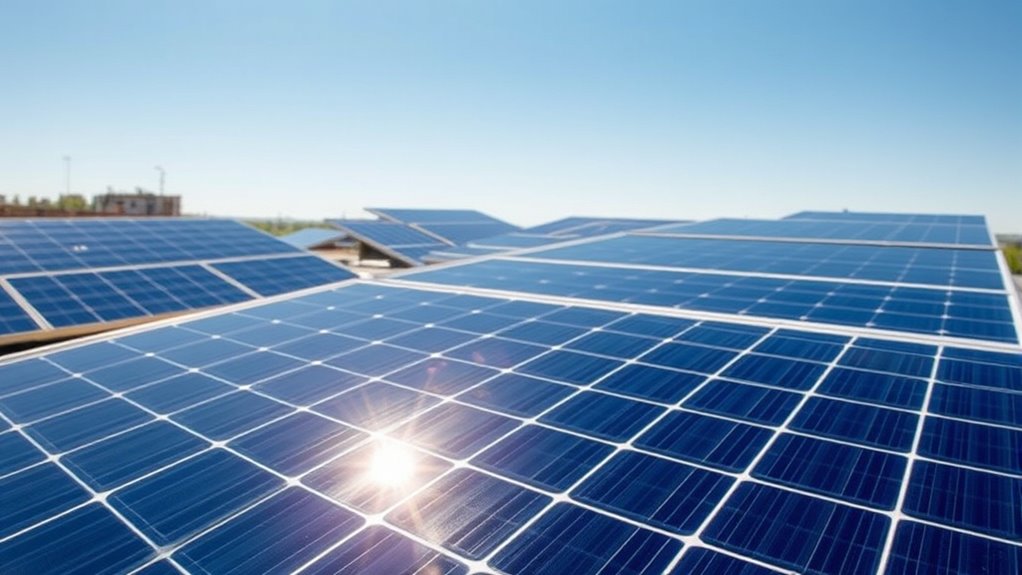
Because the size and efficiency of a solar panel directly affect how much electricity it generates, knowing these details helps you estimate your system’s output more accurately. Larger panels have more surface area to capture sunlight, so they typically produce more kilowatts than smaller ones.
However, size alone isn’t the full story. Efficiency measures how well a panel converts sunlight into electricity. A high-efficiency panel can produce more power in a smaller space, which is great if you have limited roof area.
When choosing panels, balance size and efficiency based on your energy needs and available installation space. This way, you’ll maximize your kilowatt production without wasting space or money on oversized or less efficient panels.
How Sunlight Exposure Affects Solar Panel Power Output
You’ll get the most power from your solar panels when sunlight hits them directly, so the angle of the sun matters a lot.
The longer your panels are exposed to sunlight each day, the more energy they can produce.
Let’s explore how these factors impact your panel’s kilowatt output.
Angle Of Sunlight
When sunlight hits your solar panel at the right angle, it maximizes the energy your system can generate. The angle of sunlight directly impacts how much solar radiation your panels absorb, affecting their power output.
To optimize this, consider these key points:
- Panel Tilt: Adjust your panel’s tilt to match your location’s latitude for the best year-round exposure.
- Sun Tracking: Use tracking systems that follow the sun’s path to keep panels perpendicular to sunlight.
- Seasonal Changes: Modify the angle seasonally to capture more sunlight during winter and summer.
- Avoid Shadows: Make sure the angle prevents shadows from nearby objects, which reduce efficiency.
Duration Of Exposure
Although the angle of sunlight plays a crucial role, the duration your solar panels receive direct sunlight each day considerably influences their total power output. The longer your panels are exposed to sunlight, the more energy they generate.
If your panels get only a few hours of sun due to shading or weather, their output drops markedly. Conversely, panels exposed to full sun for six to eight hours or more can produce close to their rated capacity.
You can maximize exposure by installing panels in locations free from obstructions and considering seasonal changes in daylight. Tracking systems that follow the sun can also extend effective exposure.
Ultimately, understanding and optimizing how long your panels soak up sunlight directly boosts the kilowatts they produce daily.
How to Calculate Your Solar System’s Total Kilowatt Capacity
Calculating your solar system’s total kilowatt capacity starts by understanding the power rating of each panel and the number of panels you have installed. Here’s how you can figure it out:
Start by checking each panel’s wattage and how many panels you have to find your system’s total kilowatts.
First, find the wattage rating on each solar panel (usually between 250-400 watts). Then, count the total number of panels in your system.
Next, multiply the wattage of one panel by the total number of panels to get the system’s total wattage. After that, convert watts to kilowatts by dividing the total wattage by 1,000 (since 1 kilowatt = 1,000 watts).
For example, if you have 20 panels rated at 300 watts each, multiply 20 by 300 (6,000 watts), then divide by 1,000 to get 6 kilowatts total capacity. Pretty simple, right?
Tips to Maximize Your Solar Panel’s Kilowatt Output
To get the most kilowatt output from your solar panels, you need to pay attention to factors like positioning, shading, and maintenance. Place panels where they get maximum sunlight, usually facing south in the Northern Hemisphere.
Keep them free from shade caused by trees or buildings. Regularly clean your panels to remove dust and debris, and inspect for damage to ensure efficiency.
| Tip | Action | Benefit |
|---|---|---|
| Positioning | Face panels south | Maximizes sun exposure |
| Avoid Shading | Trim trees, clear roofs | Prevents output reduction |
| Maintenance | Clean & inspect monthly | Keeps panels operating at peak |
Following these steps helps you get the highest kilowatt output from your solar setup consistently. It’s really about staying on top of things to make sure your panels perform their best.
Frequently Asked Questions
How Long Do Solar Panels Typically Last?
You can expect solar panels to last about 25 to 30 years. Over time, their efficiency slowly decreases, but they’ll still produce energy beyond that lifespan.
With proper maintenance and care, they can keep working well for many years. So, don’t worry too much about them stopping anytime soon!
What Maintenance Do Solar Panels Require?
You’ll clean your panels regularly, check for damage, and monitor performance. Also, don’t forget to trim any nearby trees that could block sunlight.
You’ll want to inspect wiring, remove debris, and schedule professional maintenance from time to time. Keeping up with these tasks helps your system run smoothly.
Consistent care guarantees efficiency, longevity, and peak energy production from your solar system. It’s worth the effort to get the most out of your investment!
Can Solar Panels Work During Cloudy Days?
Yes, your solar panels can still work on cloudy days, but they’ll produce less energy since clouds block some sunlight.
They’ll generate power, just not as efficiently as on bright, sunny days. So, even when it’s overcast, your panels are still doing their job.
Are There Government Incentives for Installing Solar Panels?
Yes, you can take advantage of government incentives like tax credits, rebates, and grants when installing solar panels. These programs help lower your upfront costs and make going solar more affordable and appealing for you.
It’s really great because these incentives can save you a good amount of money. Plus, they make the whole process of switching to solar a lot easier on your wallet.
How Does Temperature Affect Solar Panel Performance?
Imagine your solar panel in Arizona’s summer heat; temperature drops its efficiency. You’ll notice higher heat reduces voltage output, so your panel produces less power.
Cooler temperatures actually help your solar panels perform better overall. So, when it’s cooler, your panels work more efficiently and generate more electricity.
Conclusion
Think of your solar panel as a garden—its kilowatt output is the fruit it bears. Just like a well-tended garden thrives with sunlight, good soil, and care, your panel flourishes with proper size, efficiency, and exposure.
By nurturing these factors, you’ll harvest the energy you need, turning sunlight into power that fuels your life. So, tend your solar garden well, and watch your energy savings grow bright and strong.
Understanding how many kilowatts a solar panel produces depends on several key factors. These include the panel’s wattage rating, sunlight hours, and installation angle. When you optimize these, your solar panel can generate maximum kilowatt output.
In the end, knowing how many kilowatts your solar panel produces helps you make smart decisions about your energy needs. With the right care and setup, your solar panel becomes a reliable source of clean, renewable energy. This means lower electricity bills and a smaller carbon footprint—brightening your home and the planet.