
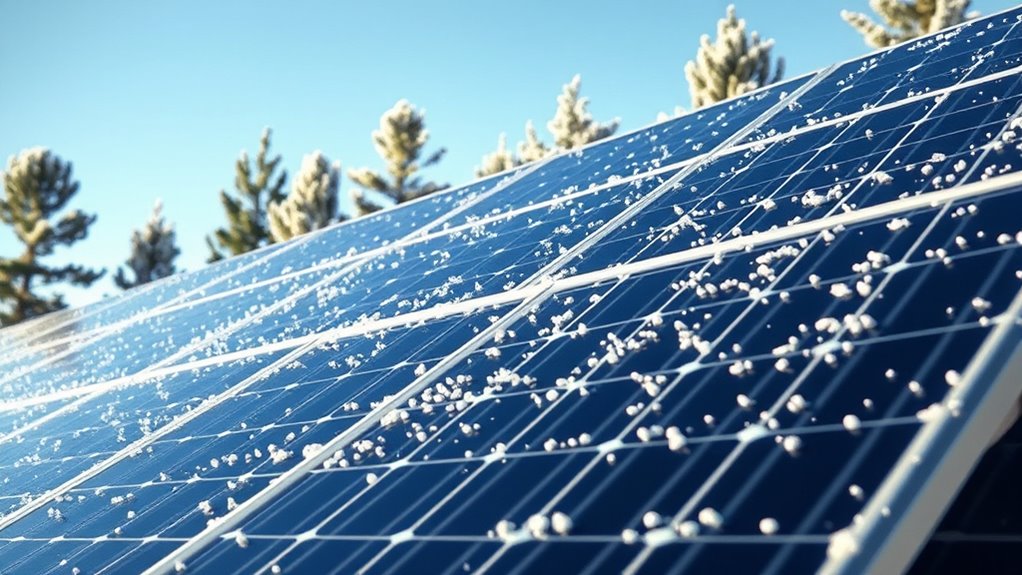
How Do Solar Panels Work Efficiently in Winter?
You’ll find solar panels actually work better in winter because cooler temperatures reduce resistance, making them more efficient.
Even with shorter days, strong midday sunlight and snow’s reflective surface boost power output by increasing light exposure.
Snow reflects sunlight onto your panels from multiple angles, helping maintain energy production despite less heat.
By adjusting panel angles and doing simple upkeep, you can maximize winter performance.
Keep exploring to discover how to optimize your system for cold months. With a few tweaks, your solar panels can deliver reliable energy all winter long!
Key Takeaways
- Solar panels actually work better in cold temperatures because the electrical resistance is lower, which helps them convert sunlight into energy more efficiently.
- Plus, snow can be a big help—it reflects up to 80% of sunlight onto the panels, boosting their light exposure and energy output.
- Even though winter days are shorter, the sunlight around midday is still pretty strong. This means solar panels can generate electricity effectively despite having fewer hours of daylight.
- Another trick is adjusting the panel’s tilt to a steeper angle. This matches the sun’s lower position in the sky during winter and helps capture more sunlight.
- Don’t forget regular maintenance, too. Gently removing snow and keeping the panels clean ensures they stay clear and perform at their best all season long.
Why Cold Weather Can Boost Solar Panel Efficiency?
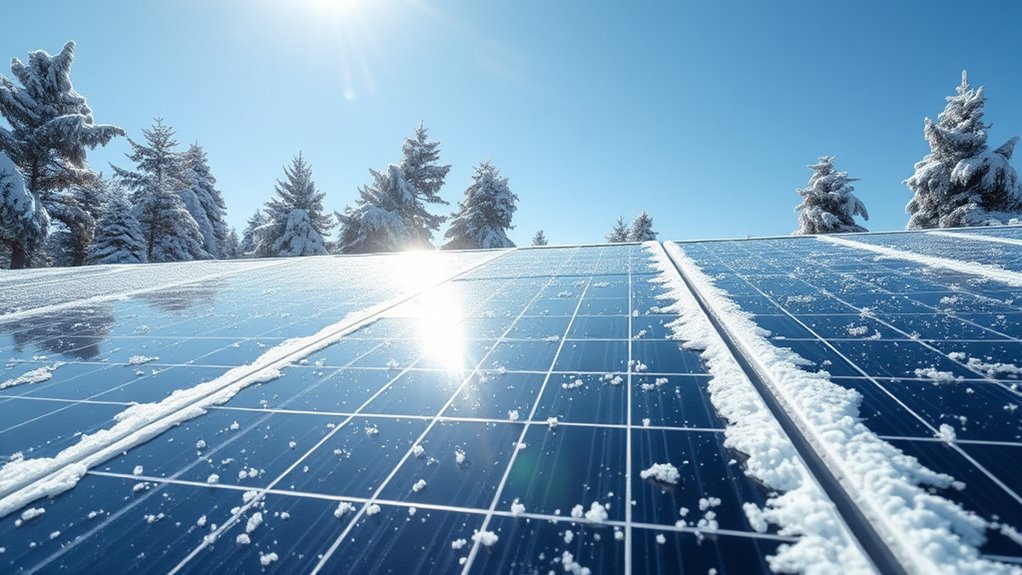
Although you might expect cold weather to hinder solar panels, it actually helps them perform better. When temperatures drop, solar panels operate more efficiently because heat reduces their ability to generate electricity.
Cooler conditions mean less resistance within the solar cells, so they can convert sunlight into energy more effectively. You’ll notice that solar panels produce more power per hour on a crisp, sunny winter day than on a hot summer afternoon.
Plus, cold air is often clearer and less humid, allowing more sunlight to reach your panels. So, even when it feels chilly outside, your solar system can capture energy efficiently, thanks to the benefits of low temperatures enhancing their performance.
Can Short Winter Days Still Power Solar Panels?
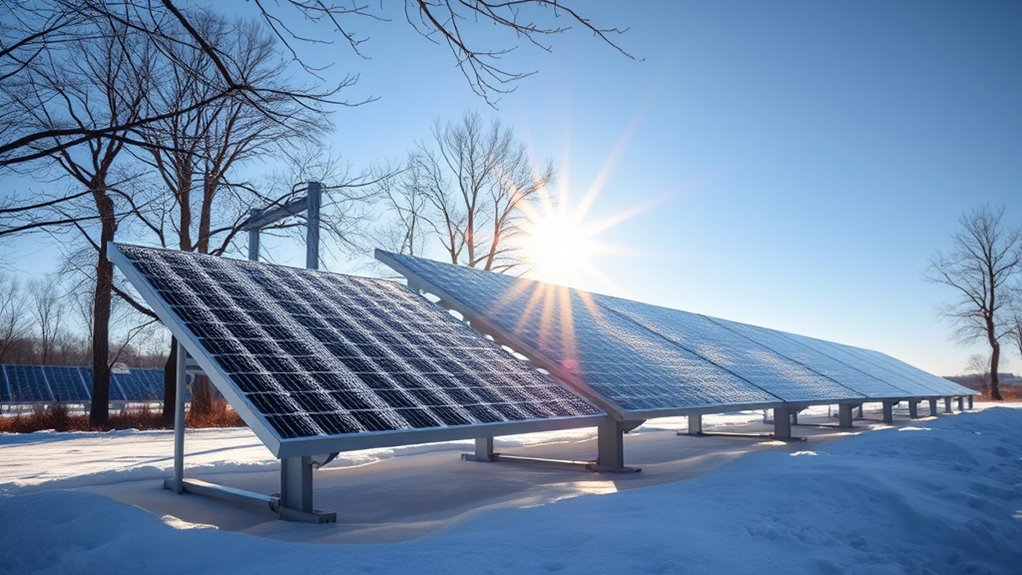
Even though winter days are shorter, your solar panels can still generate a significant amount of electricity. They start working as soon as sunlight hits them, so even a few hours of direct sun can produce power.
Solar panels don’t need long daylight to be effective; they rely on the intensity of sunlight, which remains strong during midday, even in winter. Plus, many solar systems store excess energy generated on sunnier days, ensuring you have power when the sun sets early.
How Snow Reflects Sunlight to Boost Solar Panel Performance
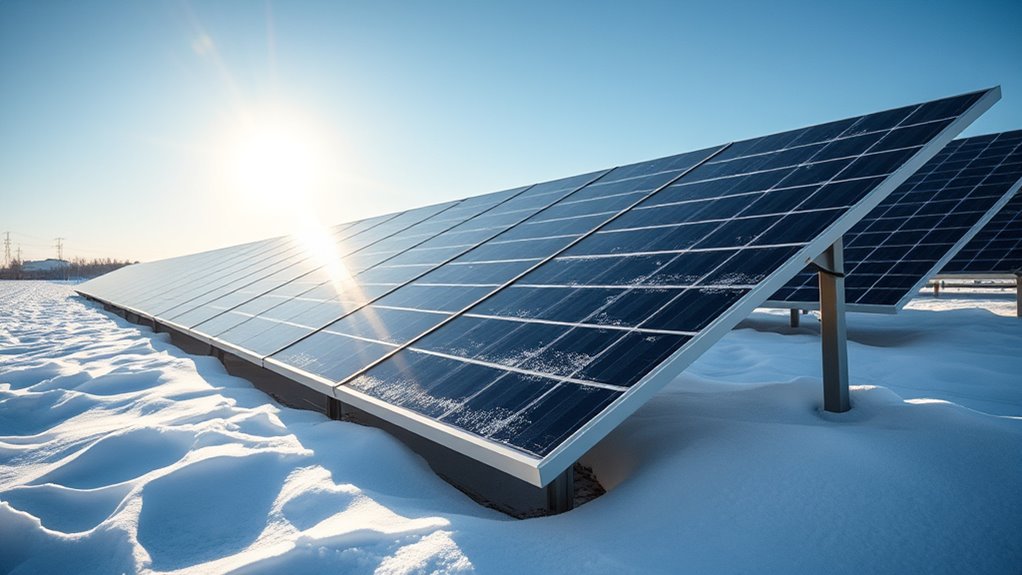
You might not realize it, but the snow covering the ground acts like a natural mirror, reflecting sunlight onto your solar panels. This reflection increases the amount of light your panels receive, even on shorter winter days.
It’s pretty cool, right? As a result, snow can actually boost your solar panel’s performance in cold months.
Snow’s Reflective Properties
How exactly does snow enhance the efficiency of solar panels during winter? Snow’s reflective surface plays a key role by bouncing sunlight onto your panels. This reflection increases the amount of light your solar panels receive, even if the sun sits low in the sky.
Since fresh snow can reflect up to 80% of sunlight, it fundamentally acts like a natural mirror, directing additional rays toward your panels. This means your solar system can capture more energy than it would on a snow-free but cloudy day.
Keep in mind, this benefit depends on the snow staying clean and bright; dirty or melting snow won’t reflect as well. So, by understanding snow’s reflective properties, you see how winter conditions can actually improve your solar panel output.
Increased Light Exposure
Building on snow’s reflective qualities, the increased light exposure considerably boosts your solar panels’ performance during winter. When snow blankets the ground, it acts like a giant mirror, bouncing sunlight onto your panels from multiple angles.
This reflected light supplements the direct sunlight your panels receive, increasing the total amount of light energy they capture. Even on cloudy days, the bright snow surface helps maintain higher light levels than you might expect.
Because solar panels generate electricity based on light—not heat—the extra reflected light means they often perform better than during some warmer, less reflective seasons. So, don’t worry if your panels look snowy; that snow could be helping them soak up more energy than you realize.
Winter Maintenance Tips for Solar Panels
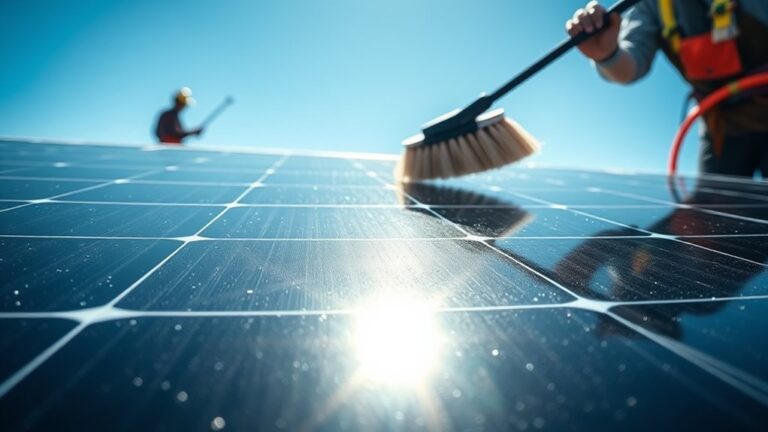
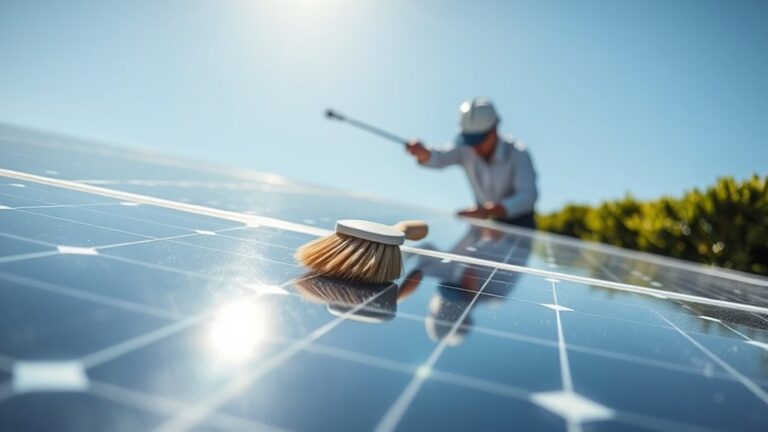
Although winter brings challenges like snow and ice, you can keep your solar panels running efficiently with proper maintenance. Regularly clear snow gently using a soft brush or a roof rake with a foam head to avoid damage.
Check for ice buildup and let it melt naturally if possible. Keep an eye on debris like leaves and dust that reduce sunlight absorption.
Monitor your system’s performance and call a professional if you notice drops in output.
| Challenge | Your Action |
|---|---|
| Snow Coverage | Gently clear using soft tools |
| Ice Buildup | Allow natural melting |
| Debris Accumulation | Clean panels regularly |
| Performance Drop | Contact a solar technician |
How to Adjust Solar Panel Angles for Better Winter Power
To get the most power from your solar panels in winter, you’ll want to adjust their tilt angle to catch more sunlight. Changing the angle seasonally helps match the sun’s lower path in the sky.
Let’s explore how tweaking these angles can boost your panel’s efficiency during colder months. It’s a simple change that can make a big difference!
Optimal Tilt Angles
How can you maximize your solar panels’ energy output during the shorter, colder days of winter? One key factor is setting the ideal tilt angle.
In winter, the sun sits lower in the sky, so you’ll want to increase your panels’ tilt angle compared to summer. A general rule is to tilt your panels at your location’s latitude plus 15 degrees.
This adjustment helps capture more direct sunlight, boosting power production when sunlight is scarce. Keep in mind, the best angle can slightly vary depending on your specific site and shading conditions.
Seasonal Angle Adjustments
Adjusting your solar panels’ angle throughout the year can considerably improve their winter performance. During winter, the sun sits lower in the sky, so you’ll want to increase your panels’ tilt angle to capture more sunlight.
Typically, this means angling your panels closer to vertical—around 60 to 70 degrees—compared to flatter angles in summer. You can adjust the tilt manually if your mounts allow it, or install adjustable brackets for easier seasonal changes.
This shift helps maximize exposure to the sun’s rays, boosting energy output despite shorter days. Remember to take into account your latitude when setting these angles, as it influences the sun’s path.
Best Solar Panel Types for Winter Performance
Although winter conditions can challenge solar energy production, choosing the right type of solar panel can help you maintain efficiency throughout the colder months. You want panels that perform well in low light, resist snow buildup, and operate efficiently at lower temperatures.
Winter challenges solar power, but the right panels keep your energy efficient and reliable in cold, low-light conditions.
Here are the best solar panel types for winter performance:
- Monocrystalline Panels – They offer high efficiency and handle cold temperatures better than other types.
- Bifacial Panels – These capture sunlight from both sides, maximizing energy even with snow reflections.
- Thin-Film Panels – Although less efficient overall, they perform well in diffuse light and are lightweight, making snow slide off easier.
Picking one of these options means your solar setup stays productive, even when winter tries to slow it down. It’s all about getting the most from your panels, no matter the season!
Frequently Asked Questions
How Do Solar Panels Perform During a Snowstorm?
During a snowstorm, your solar panels’ performance drops because snow blocks sunlight.
However, once the snow slides off or melts, they quickly resume generating power. It’s pretty cool that cold temperatures can actually boost their efficiency too!
Can Solar Panels Work Effectively in Extremely Low Temperatures?
Yes, your solar panels can work effectively in extremely low temperatures. They actually perform better in cold weather because they operate more efficiently when cool.
That is, as long as they receive enough sunlight without heavy snow covering them. So, cold weather isn’t really a problem for solar panels, as long as they can soak up the sun.
Do Solar Panels Require Special Warranties for Winter Damage?
Warranties won’t wildly waver—you don’t need special solar panel warranties just for winter damage. Most standard warranties cover weather woes, including snow and ice.
Still, check your contract carefully to confirm coverage and avoid costly surprises. It’s always better to be sure than sorry!
How Does Winter Affect Solar Battery Storage Efficiency?
Winter lowers your solar battery storage efficiency because cold temperatures slow chemical reactions inside the battery. You’ll notice reduced capacity and slower charging.
But don’t worry—keeping batteries insulated and warm helps maintain better performance during colder months. It’s a simple way to keep things running smoothly even when it’s chilly outside.
Are Solar Panels Safe to Clean With Hot Water in Winter?
You shouldn’t use hot water to clean solar panels in winter, as sudden temperature changes can cause damage.
Instead, use lukewarm water and a soft cloth or brush to safely remove dirt and snow buildup.
This way, you avoid any risk of cracking or harming the panels.
Just take it slow and gentle, and your solar panels will stay in great shape all season long!
Conclusion
You might think winter dims your solar power, but it actually gives your panels a cool advantage. Even with shorter days, the bright reflection of snow helps keep your energy flowing.
A little extra care and smart angle tweaks can make a big difference. So, don’t shy away from winter’s charm—embrace it, and watch your solar panels shine quietly but confidently through the season.
Winter solar power can be surprisingly efficient when you understand how to optimize it. Snow’s reflective surface boosts sunlight exposure, and cooler temperatures help panels work better. By adjusting the tilt and keeping panels clear of snow, you maximize energy production even in cold months. So, with just a bit of attention, your solar panels will keep delivering clean, renewable energy all winter long. Don’t let the season fool you—winter solar panels are a smart, reliable choice for year-round power.


22 Comments