Do Solar Panels Give Off Radiation?
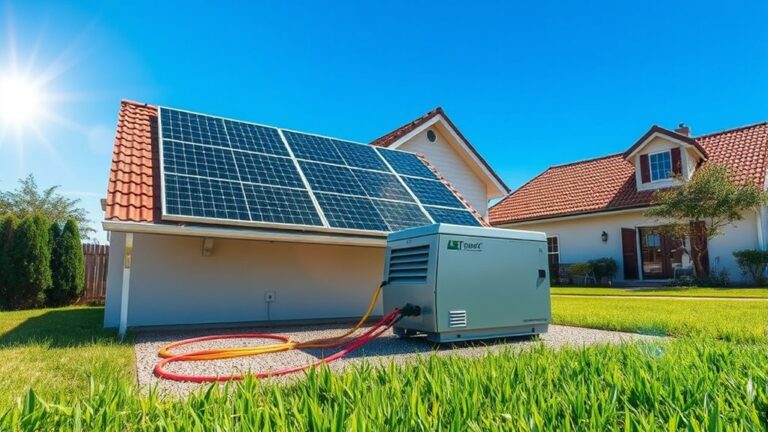
You don’t have to worry about solar panels giving off harmful radiation because they only emit very low levels of non-ionizing electromagnetic fields. These are similar to what you get from your household electronics, so nothing unusual there.
They don’t produce dangerous ionizing radiation like X-rays or gamma rays.
The small electromagnetic fields they do emit are safe and far below harmful limits. If you want to understand how this compares to other devices and the safety standards in place, keep exploring the details behind solar panel radiation. It’s pretty interesting once you dive into it!
Key Takeaways
- Solar panels do not emit harmful ionizing radiation like X-rays or gamma rays.
- They produce only very low levels of non-ionizing electromagnetic fields (EMF), similar to household appliances. EMF emissions from solar panels are well below safety limits set by regulatory bodies.
- Solar panels generate electricity by converting sunlight, without releasing any radioactive materials.
- There is no scientific evidence linking solar panels to health risks from radiation exposure. So, you can rest easy knowing they’re safe in that regard.
Do Solar Panels Give Off Radiation?
How safe are solar panels when it comes to radiation? You might worry that, since they capture sunlight, they could give off harmful radiation themselves.
The truth is, solar panels don’t emit dangerous radiation like X-rays or gamma rays. Instead, they work by converting sunlight into electricity using semiconductor materials, which doesn’t produce radiation you need to fear.
While they do interact with electromagnetic energy, this interaction is limited to visible light and harmless electric currents. You won’t find any radioactive elements inside typical solar panels, so you don’t have to worry about exposure.
Why Solar Panels Don’t Emit Harmful Radiation
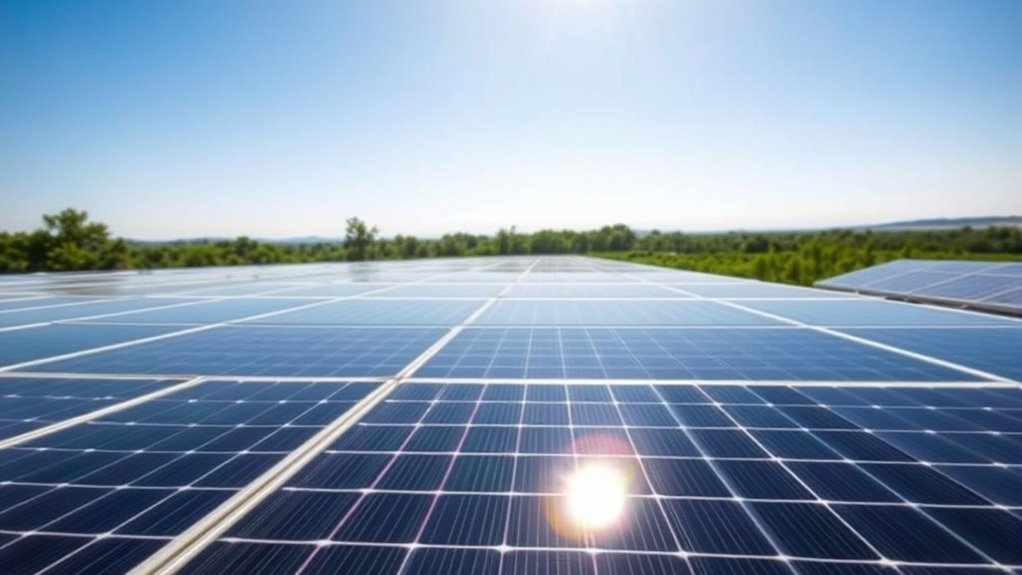
Since solar panels convert sunlight into electricity without generating radiation themselves, it’s important to understand the science behind why they don’t emit harmful radiation. When sunlight hits the solar cells, it excites electrons, creating an electric current.
This process involves the flow of direct current electricity, which doesn’t produce ionizing radiation or electromagnetic waves strong enough to be harmful. The materials used, like silicon, are stable and don’t emit radiation during operation.
Also, solar panels don’t contain radioactive substances, so there’s no source of radiation to worry about. You can confidently use solar panels knowing they harness clean energy safely, without exposing you or your environment to dangerous radiation.
Solar Panel Radiation vs. Household Devices
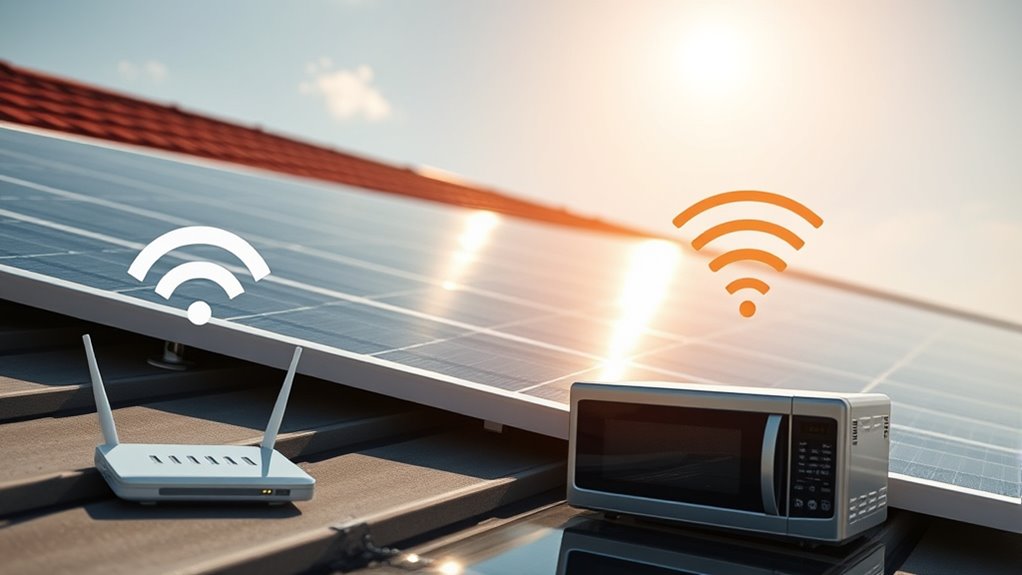
You might wonder how the radiation from solar panels stacks up against the devices you use every day. Let’s compare the types and levels of radiation each emits and see how they measure up to safety standards.
This will help you understand why solar panels are considered safe in your home environment. It’s pretty interesting once you break it down!
Types Of Radiation Emitted
What kinds of radiation do solar panels actually emit compared to the devices you use every day at home? Solar panels primarily emit extremely low frequency (ELF) electromagnetic fields. These are similar to those from household wiring and appliances.
These fields come from the electrical currents flowing through the panels and their inverters. Unlike devices such as microwaves or Wi-Fi routers, solar panels don’t produce radiofrequency radiation or ionizing radiation. Those are the types that can pose health risks at high levels.
Your microwave oven emits radio waves to heat food, and your phone uses radiofrequency signals for communication. But solar panels stay well within safe, low-frequency emissions.
Radiation Levels Comparison
Understanding the types of radiation solar panels emit sets the stage for comparing their radiation levels to those from everyday household devices. Solar panels primarily emit non-ionizing radiation, such as low-level electromagnetic fields (EMFs), which are generally much weaker than those from common electronics.
For example, the EMFs from your smartphone, Wi-Fi router, or microwave oven are typically higher and closer to you during use than those from solar panels installed on your roof. Even power lines and household wiring emit stronger electromagnetic fields than solar panels.
Safety Standards And Regulations
How do safety standards for solar panel radiation compare to those for household devices? Both undergo strict regulations to protect you from harmful exposure.
Solar panels emit extremely low levels of non-ionizing radiation, much less than common household devices like Wi-Fi routers or microwaves. Regulatory bodies such as the International Electrotechnical Commission (IEC) and Underwriters Laboratories (UL) set rigorous safety limits for solar panels, ensuring they meet or exceed standards for electromagnetic emissions.
Similarly, household devices must comply with Federal Communications Commission (FCC) guidelines to limit radiation exposure. When you install solar panels, you can trust they conform to these safety protocols, keeping radiation well within safe boundaries.
Are Solar Panels Harmful to Your Health?
Although solar panels are widely praised for their environmental benefits, you might wonder if they pose any risks to your health. The good news is that solar panels themselves are generally safe and don’t emit harmful radiation.
Most concerns come from electromagnetic fields (EMFs) or chemicals during manufacturing, but these risks are minimal when panels are properly installed and maintained.
| Potential Concern | Explanation |
|---|---|
| Electromagnetic Fields | Low-level, non-ionizing, safe |
| Chemical Exposure | Limited to production, not post-installation |
| Physical Hazards | Minimal; mainly during installation |
| Noise | Negligible; panels operate silently |
| Long-Term Effects | No evidence linking panels to health issues |
You can feel confident that solar panels won’t harm your health under normal use.
Radiation Safety Standards for Solar Panels
You need to know that solar panels must meet strict regulatory radiation limits to guarantee safety. Manufacturers have to follow specific safety certification requirements before their products reach the market.
Understanding these standards helps you trust that solar panels won’t expose you to harmful radiation. It’s good to be aware of these rules so you can feel confident about using solar energy.
Regulatory Radiation Limits
When dealing with solar panels, what radiation levels are considered safe? Regulatory bodies like the International Commission on Non-Ionizing Radiation Protection (ICNIRP) set strict limits on electromagnetic emissions from devices, including solar panels. These limits ensure the radiation remains far below levels known to cause harm.
You can rest easy knowing that solar panels emit extremely low electromagnetic fields (EMF), often comparable to common household appliances. Governments enforce these standards to protect public health, requiring manufacturers to comply before products reach the market.
If you’re installing solar panels, these regulations mean you won’t be exposed to unsafe radiation. In short, regulatory radiation limits provide a clear safety margin, so you can enjoy solar power without worrying about harmful radiation exposure.
Safety Certification Requirements
Regulatory radiation limits set the foundation for guaranteeing solar panel safety, but meeting these standards requires formal certification processes. When you choose solar panels, look for certifications that prove they comply with radiation safety standards.
These certifications ensure the panels emit no harmful levels of electromagnetic radiation. To navigate this, focus on key certifications like:
- IEC 61215: Verifies durability and safety under environmental stress.
- UL 1703/UL 61730: Confirms electrical and fire safety, including radiation limits.
- FCC Part 15: Ensures electromagnetic emissions remain within safe limits.
Is Radiation From Solar Panels a Health Concern?
Although solar panels generate electricity through exposure to sunlight, they don’t emit harmful radiation that poses health risks. When you install solar panels, you won’t be exposed to dangerous electromagnetic fields or radioactive materials.
The energy they produce is safe and environmentally friendly.
Here’s a quick comparison to help you understand radiation concerns:
| Source | Type of Radiation | Health Risk Level |
|---|---|---|
| Solar Panels | None (only electrical) | None |
| Cell Phones | Non-ionizing EMF | Very Low |
| X-Ray Machines | Ionizing Radiation | Moderate to High |
Knowing this, you can confidently use solar energy without worrying about radiation affecting your health.
Frequently Asked Questions
How Long Do Solar Panels Typically Last?
You can expect solar panels to last about 25 to 30 years. They gradually lose efficiency over time, but with proper care, you’ll get decades of clean energy before thinking about replacing them.
It’s pretty impressive when you think about it. Just a little maintenance can keep them running smoothly for a long time.
What Maintenance Do Solar Panels Require?
You’ll need to clean your solar panels regularly to remove dirt and debris. It’s also important to check for any shading or damage that might affect their performance.
Make sure the connections are secure too. Scheduling a professional inspection every few years is a smart move.
This helps keep your panels efficient and long-lasting. Staying on top of maintenance means you get the most out of your solar setup!
Can Solar Panels Work During Cloudy Days?
You can still generate about 20-25% of solar energy on cloudy days. So, don’t worry—your panels keep working, just less efficiently.
They turn diffuse sunlight into power even when the sky is overcast. It’s pretty cool how they still manage to capture energy, right?
How Much Do Solar Panels Cost to Install?
Solar panel installation typically costs between $15,000 and $25,000, depending on system size and location.
But here’s the good news: you can lower those costs with incentives and tax credits. That makes going solar more affordable and energy-efficient for your home.
Do Solar Panels Increase Home Property Value?
You’ll boost your home’s value faster than a rocket with solar panels!
Buyers love energy savings and eco-friendliness, so installing them can increase your property’s appeal and resale price.
It’s a smart investment for you, no doubt about it!
Conclusion
You might worry that solar panels give off harmful radiation, but they don’t. Unlike old-time radios or even your everyday household gadgets, solar panels operate safely within strict radiation standards.
So, you can confidently harness the sun’s power without fearing invisible rays. Just like you wouldn’t blame the telegraph for a spark, don’t fear solar panels—they’re designed to protect your health while helping the planet shine brighter.
In conclusion, solar panels do not emit any harmful radiation. They are safe to use and comply with all safety regulations. If you’re concerned about radiation from solar panels, rest assured that these devices only capture sunlight and convert it into electricity without releasing dangerous rays. Using solar panels is a great way to produce clean, renewable energy without putting your health at risk. So, go ahead and enjoy the benefits of solar power—safe, sustainable, and radiation-free!