How Many Solar Panels Power an Air Conditioner – Step by Step
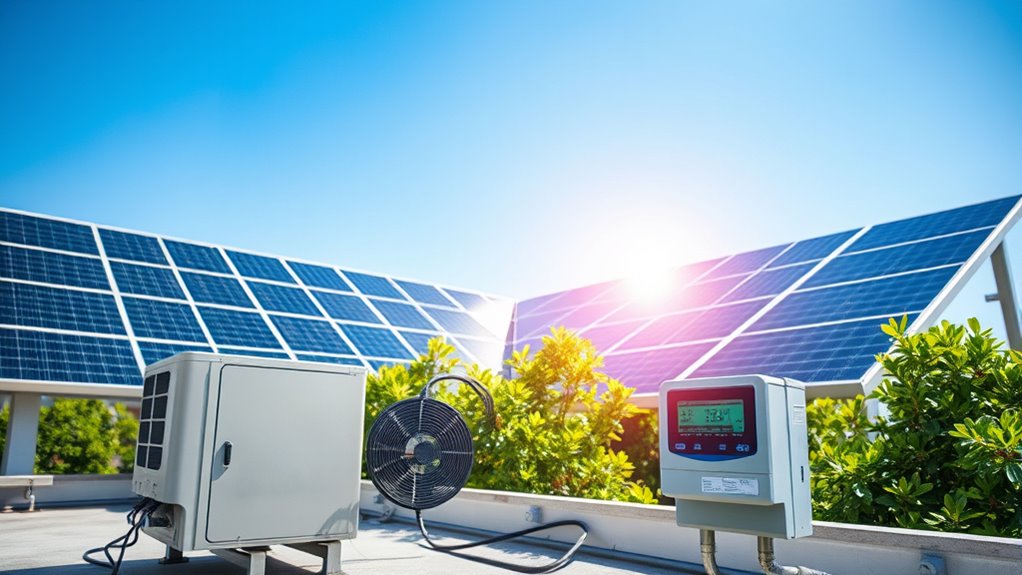
To power your air conditioner with solar panels, start by checking its wattage and daily usage. Most air conditioners use between 1.2 to 2.5 kWh per hour, so knowing this helps you figure out how much energy you’ll need. This is the first step to understanding how many solar panels you’ll actually need.
Next, estimate your local sunlight hours because this affects how much energy each panel can produce. The more sunlight you get, the fewer panels you might need. Then, pick solar panels that match your AC’s power requirements, keeping in mind factors like panel efficiency and weather conditions.
Remember, your cooling needs and sunlight availability can change with the seasons. So, it’s smart to adjust your system accordingly to keep everything running smoothly.
Follow these steps, and you’ll soon find the best way to optimize your solar setup for your air conditioner.
Key Takeaways
- Determine your AC’s wattage and average daily runtime to calculate total energy consumption in kWh. This gives you a clear idea of how much power your air conditioner uses each day.
- Estimate your location’s average daily sunlight hours to gauge potential solar panel output. Knowing this helps you figure out how much energy your panels can generate.
- Divide your AC’s daily energy needs by the wattage and efficiency of selected solar panels. This calculation shows how many panels you’ll need to keep your AC running.
- Adjust the number of panels seasonally based on varying cooling demands and sunlight availability. After all, your energy needs and sunlight can change throughout the year.
- Monitor and maintain your solar system to ensure panels operate efficiently and meet AC power requirements. Keeping an eye on performance helps you avoid surprises and keep things running smoothly.
Figuring Out How Much Power Your AC Uses
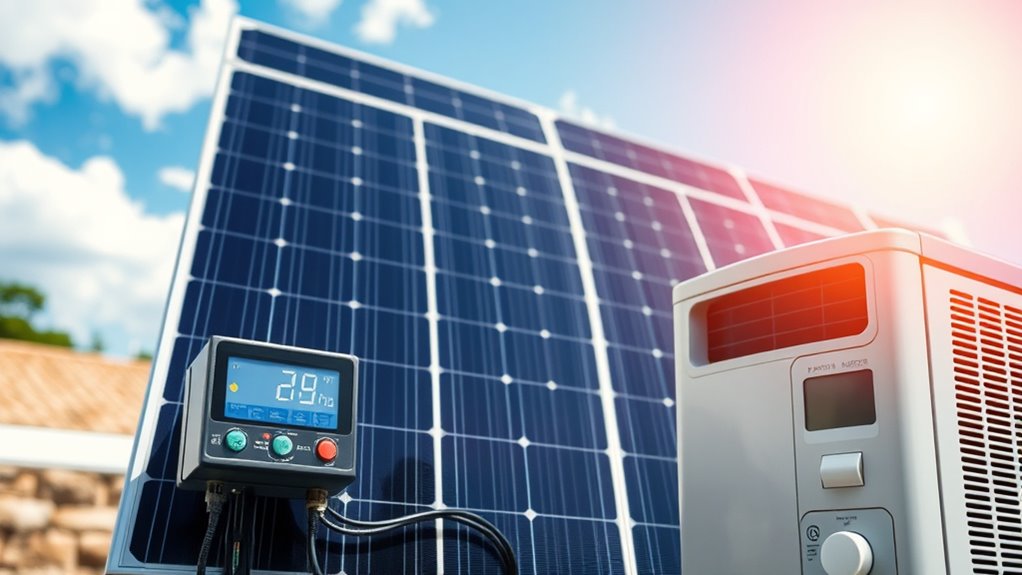
Before you can determine how many solar panels you need, you first need to figure out how much power your air conditioner uses. Start by checking the unit’s energy label or user manual to find its wattage.
If you can’t find this, look for the model number online to get its specifications. Remember, air conditioners don’t run at full power all the time—they cycle on and off. So, consider your AC’s running wattage and its average runtime during a day.
You can also use a plug-in energy monitor to measure actual consumption over time. Once you know the wattage and estimated daily usage, you’ll have a clear starting point for calculating the solar power needed to run your AC efficiently.
What a Typical AC Uses in Energy Each Day
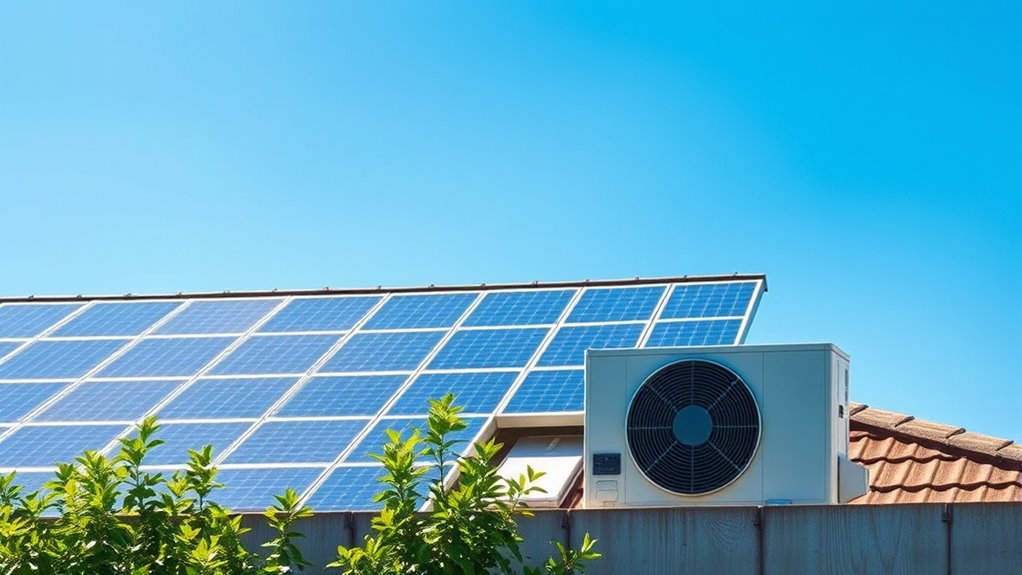
You’ll want to know how much energy your AC uses each day to size your solar setup correctly. Daily consumption depends on factors like your unit’s power rating, how long it runs, and the outside temperature.
Understanding these details helps you estimate the typical electricity your air conditioner needs. It’s pretty handy when planning your energy use!
Daily Energy Consumption
How much energy does your air conditioner actually use each day? It depends on the size, efficiency, and how long you run it.
On average, a typical AC unit consumes between 1.2 to 2.5 kilowatt-hours (kWh) per hour. If you run your AC for 8 hours daily, you’re looking at roughly 9.6 to 20 kWh each day.
This daily consumption helps you estimate how many solar panels you’ll need to power your unit.
| AC Size (Ton) | Avg. Daily kWh Used |
|---|---|
| 1 | 9.6 |
| 1.5 | 12 |
| 2 | 16 |
| 2.5 | 20 |
| 3 | 24 |
Knowing this, you can plan your solar setup accordingly. Easy, right?
Factors Affecting Usage
Although air conditioners have average energy use rates, several factors can cause your unit’s daily consumption to vary considerably. The size of your AC unit plays a big role—larger units use more energy to cool bigger spaces.
How often and how long you run the AC also affects consumption; running it nonstop during peak heat will increase energy use. Your local climate impacts usage too; hotter, more humid areas demand more cooling.
Additionally, the insulation and sealing of your home influence how hard your AC must work. If your home leaks cool air, your AC will consume more power to maintain temperature.
Finally, setting your thermostat lower than necessary can spike energy consumption, so adjusting it wisely can save energy. Understanding these factors helps you estimate daily energy needs accurately.
Typical Power Ratings
While energy use varies, most typical air conditioners consume between 1,000 and 2,500 watts per hour when running. How much power your AC uses depends on its size, efficiency, and how many hours you run it.
Knowing this helps you estimate the number of solar panels you’ll need to run it efficiently. It’s pretty handy to have a rough idea before making any decisions.
Here’s a quick look at typical daily energy consumption:
| AC Type | Daily Energy Use (kWh) |
|---|---|
| Small Window Unit | 4 – 6 |
| Medium Split AC | 6 – 10 |
| Large Central AC | 10 – 15 |
| High-Efficiency AC | 3 – 7 |
This should give you a good starting point to figure out what works best for your setup.
How Solar Panel Efficiency Affects the Number You Need
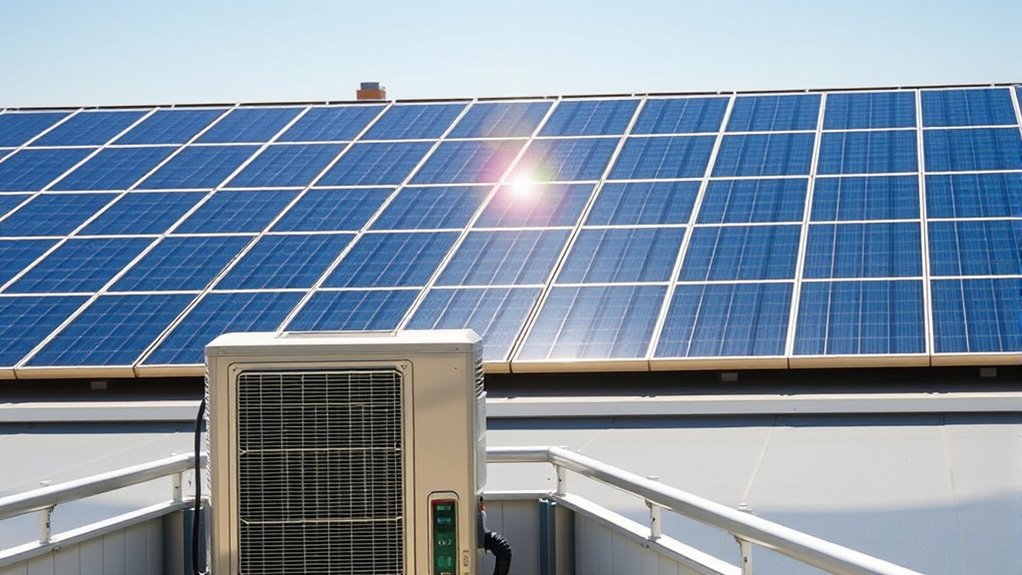
You’ll need to take into account how solar panel efficiency impacts the total number required to power your air conditioner. Factors like sunlight availability, temperature, and panel technology all affect output.
As solar tech improves, you might get more power from fewer panels. It’s pretty cool how better efficiency means less space and fewer panels to install.
Panel Output Variability
Because solar panel efficiency varies, the number of panels you need to power an air conditioner can change considerably. This variability depends on how much energy each panel produces under real-world conditions.
You might think one panel will generate a fixed amount of power, but in reality, output fluctuates. Factors influencing output include panel age and degradation, manufacturing quality differences, and temperature effects on performance.
Partial shading on the panel surface also plays a role, as does dust, dirt, or debris buildup. These elements cause your panels to produce less energy than their rated capacity at times.
Environmental Impact Factors
When environmental conditions affect your solar panel’s efficiency, you’ll need more panels to meet your air conditioner’s energy demands. Factors like temperature, shading, and dust directly impact how much power your panels generate.
Higher temperatures can reduce efficiency, meaning your panels produce less energy on hot days when your AC runs the most. Shade from trees or buildings cuts sunlight exposure, forcing you to add extra panels.
Dust and dirt buildup also block sunlight, lowering output. Even seasonal changes in sunlight intensity and duration influence panel performance.
Technology Advancements Effects
Although environmental factors play a big role, advances in solar panel technology have considerably improved efficiency, meaning you’ll need fewer panels to power your air conditioner. Modern panels convert sunlight to electricity more effectively, so you get more power from less space.
This means your setup can be smaller and more affordable. Here’s how technology impacts the number of panels you need:
- Higher efficiency panels generate more watts per square foot
- Improved materials reduce energy loss
- Better designs capture sunlight at various angles
- Enhanced durability guarantees long-term performance
- Advanced inverters maximize power conversion
Estimating Solar Panel Output for Your Location
To accurately estimate the solar panel output for your location, you’ll need to take into account factors like sunlight hours, weather patterns, and the angle of your panels. These variables directly affect how much energy your panels will generate daily.
For example, locations with more sunlight hours yield higher output. Seasonal changes also impact performance, so consider average values throughout the year.
Here’s a simple reference for average daily sunlight hours and expected panel output per 100W installed:
| Location | Avg. Sunlight Hours | Estimated Output (kWh) |
|---|---|---|
| Phoenix, AZ | 7.5 | 0.75 |
| Seattle, WA | 4.0 | 0.40 |
| Miami, FL | 5.5 | 0.55 |
| Denver, CO | 6.0 | 0.60 |
Use this info to tailor your system’s capacity accurately. It’s a handy way to get a quick idea before diving deeper into specifics.
Picking the Right Solar Panels for Your AC
Since air conditioners vary widely in power consumption, choosing the right solar panels means matching their output to your unit’s energy needs. Start by checking your AC’s wattage and daily usage hours.
Then, select panels that can generate enough energy during peak sunlight. It’s all about making sure your panels keep up with your AC without wasting space or money.
Consider these factors:
- Panel wattage rating (usually 250-400W)
- Efficiency percentage (higher means more power from less space)
- Physical size to fit your installation area
- Durability and warranty for long-term reliability
- Cost per watt to stay within budget
Tweaking Your Solar Setup for Seasonal Changes
Matching your solar panels to your AC’s power needs is just the start. As seasons change, your cooling demands and sunlight availability shift too.
Your solar setup begins with matching panels to AC needs but must adapt as seasons and sunlight change.
In summer, your AC runs longer, so you might need to add extra panels or optimize their angle for maximum sun exposure. During cooler months, you can reduce power output since your AC usage drops.
Adjust your panel tilt seasonally—steeper in winter to catch low sun, flatter in summer for direct rays. Also, monitor your system’s performance regularly and clean panels to keep efficiency high.
If you use a battery, tweak its charge settings to match seasonal usage. By fine-tuning your setup this way, you’ll assure consistent power, save money, and extend your system’s lifespan all year round.
Frequently Asked Questions
How Long Does It Take to Install Solar Panels for an AC?
It usually takes you one to three days to install solar panels for an AC, depending on your system size and roof complexity.
Your installer’ll handle wiring and setup efficiently, so you’ll be cooling with solar power soon!
Can Solar Panels Power Other Household Appliances Simultaneously?
Think of your solar panels as a river feeding many streams—you can power multiple household appliances simultaneously. Just make sure your system’s capacity matches your total energy needs.
Otherwise, you might run low during peak usage times. It’s all about balancing what you use with what you generate.
What Maintenance Do Solar Panels Require to Keep AC Running Efficiently?
You’ll need to clean your solar panels regularly, check for shading, and inspect wiring. It’s also important to monitor system performance closely.
Keeping panels dust-free and making sure connections are secure really helps your AC run efficiently. This way, you avoid interruptions or power loss.
Are There Government Incentives for Solar Panel Installation With AC Units?
Yes, you can often get government incentives like tax credits or rebates for installing solar panels with AC units.
It’s a good idea to check out federal, state, and local programs. That way, you can maximize your savings and make your installation more affordable.
How Do Weather Conditions Affect Solar Panel Performance for Air Conditioning?
Weather conditions directly impact your solar panel’s performance. Cloudy or rainy days reduce sunlight and energy output, which can affect how well your air conditioning runs.
Also, extreme heat can lower the panel’s efficiency. So, you’ll get the best power when it’s bright but not too hot.
In other words, moderate temperatures with plenty of sunshine are ideal for reliable air conditioning. It’s all about finding that sweet spot!
Conclusion
So, you want to power your air conditioner with solar panels and become the neighborhood’s eco-hero? Just remember, it’s not as simple as slapping a panel on the roof and chilling forever—unless you enjoy math, efficiency charts, and seasonal adjustments more than actual cool air.
But hey, if you love juggling watts and watts of sunshine, go ahead! Solar power your AC, and maybe even impress your cat with your tech-savvy coolness.
In reality, figuring out how many solar panels power an air conditioner takes a bit of planning. You need to consider the AC’s wattage, how much sunlight your panels get, and even how efficient your system is throughout the year. It’s all about balancing power needs with solar output to keep you cool without surprises on your electric bill. So, if you’re ready to dive into the world of solar energy and air conditioning, this guide will help you understand the steps to make your eco-friendly dream a reality.