
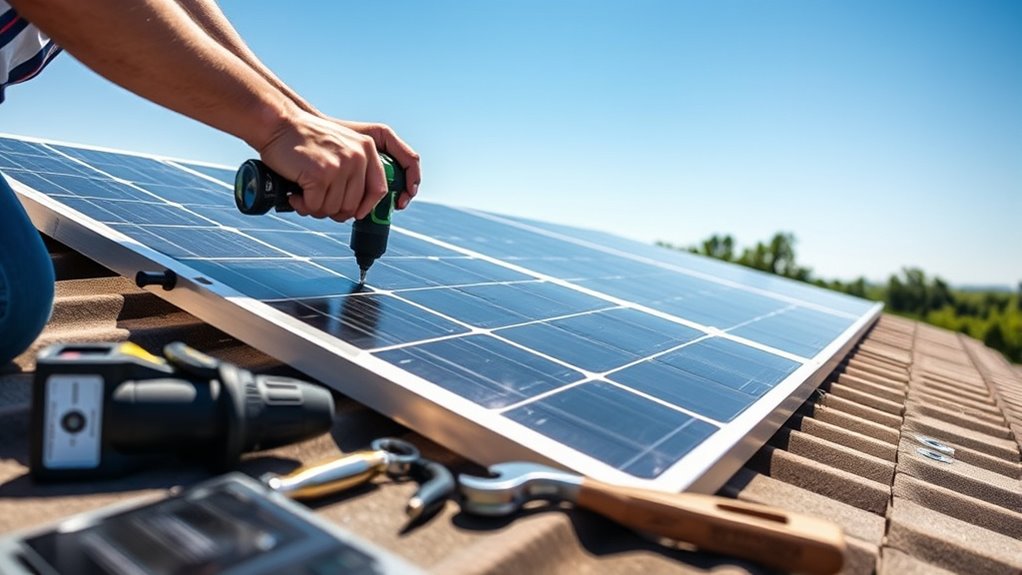
How to Remove Solar Panels in 3 Easy Steps
To remove solar panels safely, first gather your tools and safety gear like insulated gloves, safety goggles, and a sturdy ladder. Having the right equipment is super important to avoid accidents.
Next, fully power down the system to make sure there’s no electricity running through the panels.
Then, carefully disconnect electrical connectors and remove mounting bolts. Take your time working methodically, and be sure to lift the panels with help—it’s not a one-person job.
Finally, handle the panels by the frame to avoid damage. Store them flat with padding, and keep them protected from any bumps or scratches.
Keep going to uncover detailed tips for a smooth, secure removal process. You’ll see it’s easier than you might think when you follow these simple steps!
Key Takeaways
- Ensure the solar power system is fully powered down and wear insulated gloves for safety before starting removal.
- Unplug all electrical connectors carefully, noting their positions for reinstallation.
- Use appropriate tools like wrenches to remove mounting bolts securing the panels.
- Lift panels with assistance, handling by the frame and avoiding sudden movements to prevent damage.
- Store panels flat on a clean surface with padding, protecting them from weather and physical damage.
Gather Tools and Safety Gear to Remove Solar Panels Safely
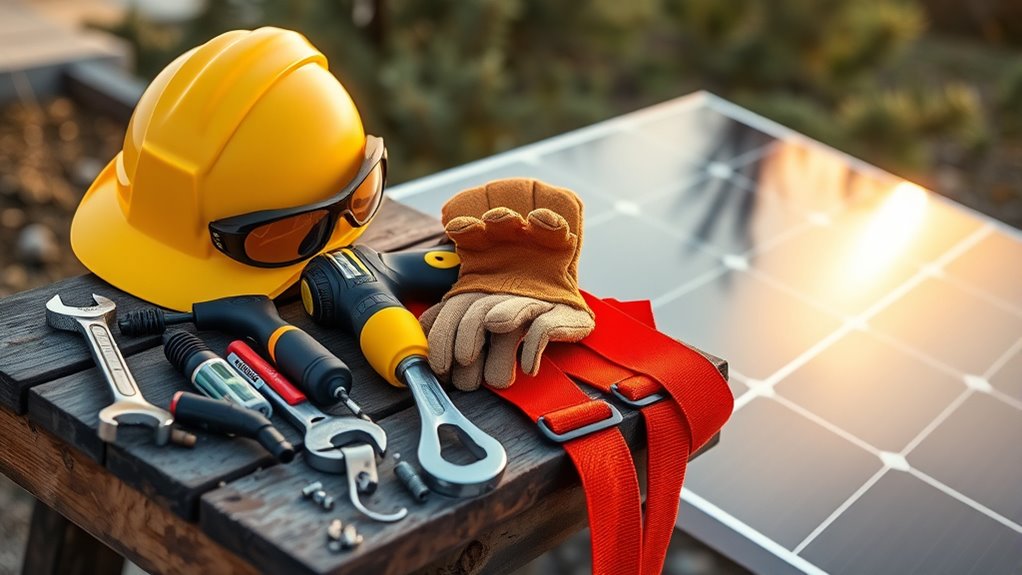
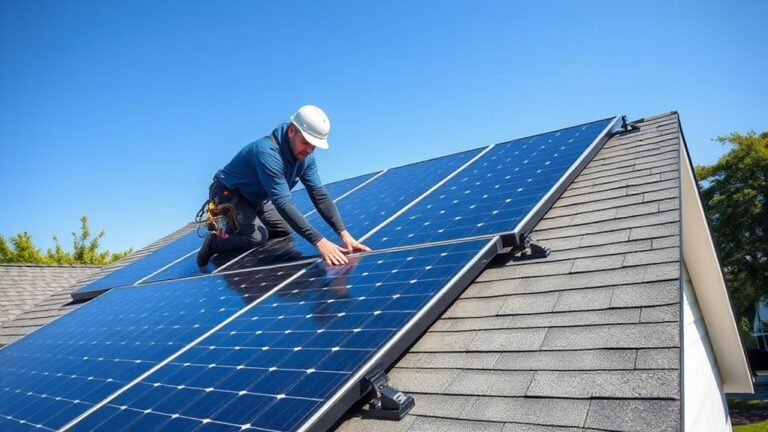
Before you start removing solar panels, make sure you have all the necessary tools and safety gear ready. You’ll need insulated gloves to protect against electrical shocks and a sturdy ladder to reach the panels safely.
Ensure you have insulated gloves and a sturdy ladder before beginning solar panel removal for safety.
Safety goggles will shield your eyes from debris, and a hard hat can protect your head from accidental bumps. Have a multimeter on hand to check for residual current before beginning work.
Gather basic hand tools like screwdrivers, wrenches, and a cordless drill for loosening bolts and mounting hardware. It’s essential to wear non-slip shoes to maintain secure footing.
Preparing these tools and gear beforehand ensures you stay safe and work efficiently, minimizing risks during the removal process. Don’t rush this step—it sets the foundation for a smooth and secure operation.
How to Disconnect and Remove Solar Panels Step-by-Step
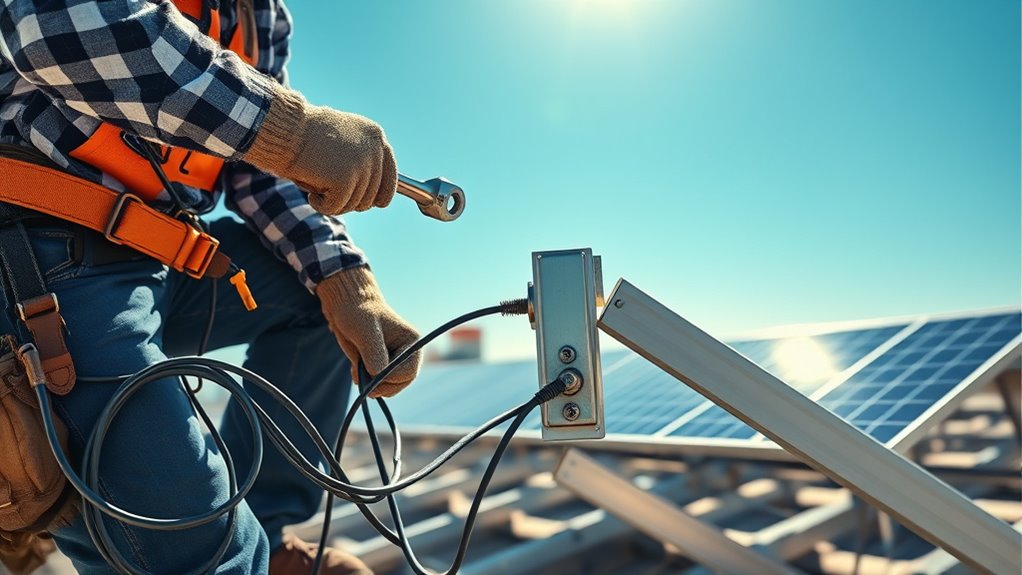
Once you’ve confirmed the system is fully powered down, start by disconnecting the electrical wiring connected to your solar panels. Carefully unplug the connectors, noting their positions for reassembly or disposal.
Next, remove the mounting bolts securing the panels to the racks. Use a wrench or socket set for this task, making sure you don’t strip the bolts.
Finally, lift the panels off the racks with help, avoiding any sudden movements. It’s best to have someone assist you to keep everything safe and steady.
| Step | Tool Needed | Key Tip |
|---|---|---|
| Disconnect wiring | Insulated pliers | Label connectors |
| Remove mounting bolts | Wrench/socket set | Work systematically |
| Lift panels off rack | Gloves | Get assistance for safety |
Remove and Store Solar Panels Without Damage
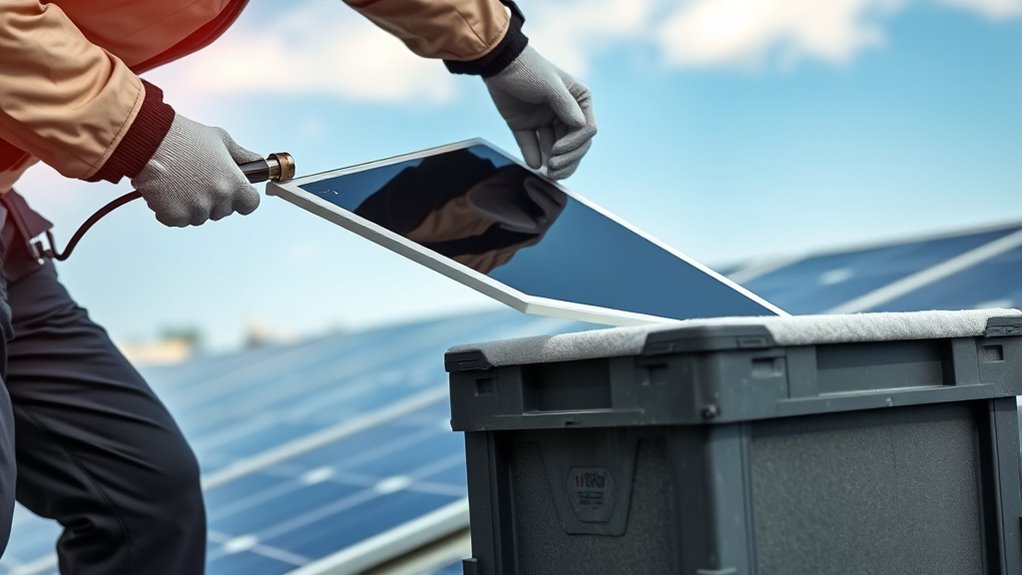
Although removing solar panels carefully is essential, storing them properly is just as important to prevent damage. Once you’ve detached each panel, handle them by the frame—not the glass—to avoid cracks.
Lay panels flat on a clean, dry surface, stacking them with soft padding like foam or blankets between each to cushion and prevent scratches. Keep panels indoors or under a weatherproof cover to protect them from moisture, dust, and extreme temperatures.
Avoid placing heavy objects on top, which could cause bending or breakage. Label each panel and keep all hardware together for easier reinstallation.
Frequently Asked Questions
Do I Need a Permit to Remove Solar Panels?
You usually don’t need a permit to remove solar panels, but it depends on your local regulations.
Check with your city or county building department to be sure before starting. That way, you stay compliant and avoid fines.
Can I Sell My Used Solar Panels?
Selling your used solar panels is like passing the torch—they still hold value if they’re in good shape.
You can sell them online or to local installers, but make sure to check their condition and warranties first.
It’s a smart way to give them a second life while getting some cash back. Just keep an eye on the details before you sell!
How Much Does Professional Solar Panel Removal Cost?
You’ll typically pay between $500 and $1,500 for professional solar panel removal, depending on your system’s size and complexity.
Prices vary, so getting multiple quotes helps you find the best deal without surprises. It’s always good to shop around and compare.
Will Removing Panels Affect My Home Insurance?
About 40% of homeowners report changes in insurance after solar panel adjustments.
Yes, removing panels can affect your home insurance. You’ll want to notify your insurer to update coverage and avoid any claim complications.
It’s a good idea to keep them in the loop so you don’t run into any surprises later on.
What Should I Do With the Wiring After Removal?
After removal, you should safely disconnect and label the wiring. Then, cap or insulate exposed ends to prevent hazards.
It’s always best to consult a licensed electrician. They can handle the wiring properly and make sure everything meets local codes.
Conclusion
Well, who knew removing solar panels could be this easy? With just a few tools and some caution, you’re already halfway to unplugging from the sun’s free energy.
It’s almost ironic how something designed to save you money and help the planet can be taken down in just three simple steps. But now that you’ve got the know-how, you’re all set to do it safely and keep those panels ready for their next sunny adventure.
Removing solar panels doesn’t have to be complicated or overwhelming. By following these easy steps, you can protect your investment and ensure the panels stay in great condition for future use. Whether you’re upgrading your system or relocating, knowing how to remove solar panels safely is key to maintaining their efficiency and value. So, take your time, use the right tools, and enjoy the process of handling your solar equipment like a pro!
2 Comments