
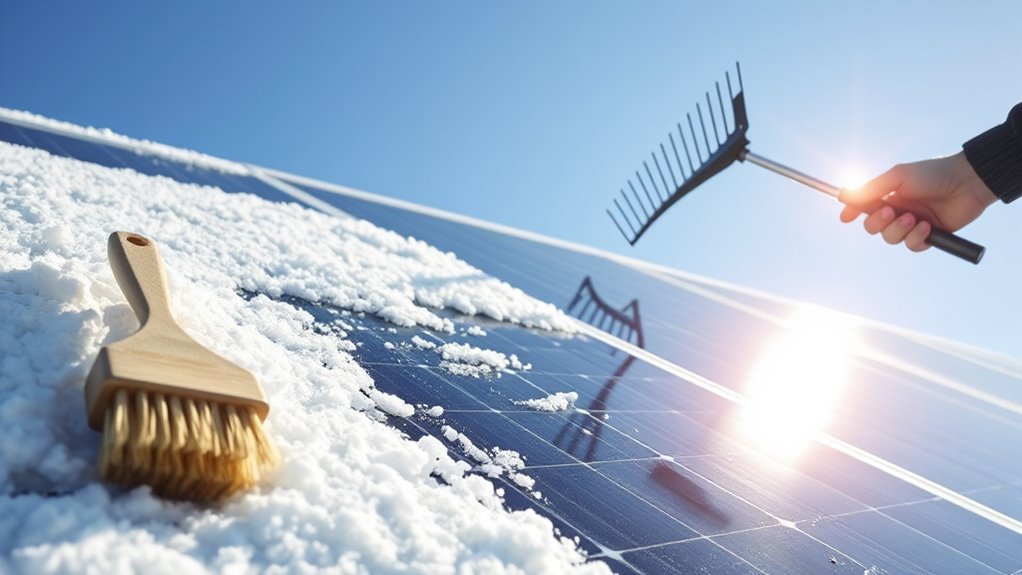
3 Tips to Keep Snow Off Solar Panels
You can keep snow off your solar panels by safely clearing buildup using a long-handled roof rake while standing on the ground. This way, you avoid damage to the panels and reduce the risk of injury. It’s a simple step that helps maintain your system’s efficiency during snowy weather.
Installing heating systems or snow guards is another great way to handle snow. These tools gently melt the snow or prevent dangerous slides, which means less manual work for you. Plus, they help protect your panels from sudden snowfalls.
Finally, setting your panels at a steeper angle, between 30 and 45 degrees, encourages snow to shed naturally. This not only keeps your panels clear but also boosts energy production.
If you want to uncover more ways to protect and optimize your panels in winter, keep exploring these strategies.
Key Takeaways
- Use a long-handled roof rake or soft-bristled broom to safely remove snow while standing on the ground. This way, you stay safe and keep your panels clear.
- Install heating systems like electric mats or cables to gently melt snow and keep panels clear. They work quietly and prevent buildup before it gets heavy.
- Add snow guards to prevent large snow slides and protect panels and property from damage. These help control the snow’s movement and keep everything safe.
- Set solar panel angles between 30 and 45 degrees to encourage natural snow shedding. It’s a simple trick that uses gravity to your advantage.
- Avoid sharp tools and excessive force to prevent damaging solar panels during snow removal. Being gentle goes a long way in protecting your investment.
Clear Snow Off Your Solar Panels Safely
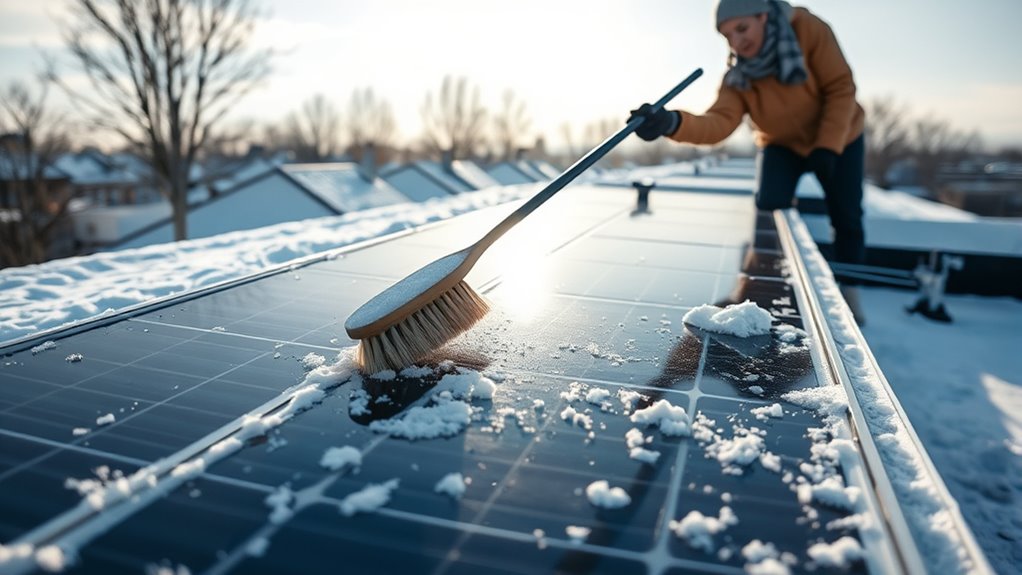
Although it can be tempting to quickly remove snow from your solar panels, you should always prioritize safety first. Climbing onto your roof without proper equipment or experience can be dangerous.
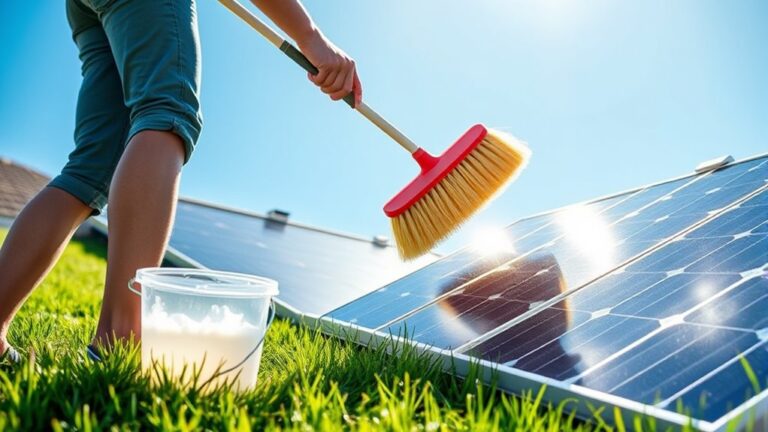
Instead, use a long-handled roof rake or a soft-bristled broom to gently clear snow from the panels while standing safely on the ground. Avoid using sharp tools or excessive force, as you might damage the panels.
Be careful not to slip on icy surfaces during the process. If the snow is too heavy or hard to reach, consider waiting for it to melt naturally rather than risking injury.
Install Heating Systems or Snow Guards to Stop Snow on Solar Panels
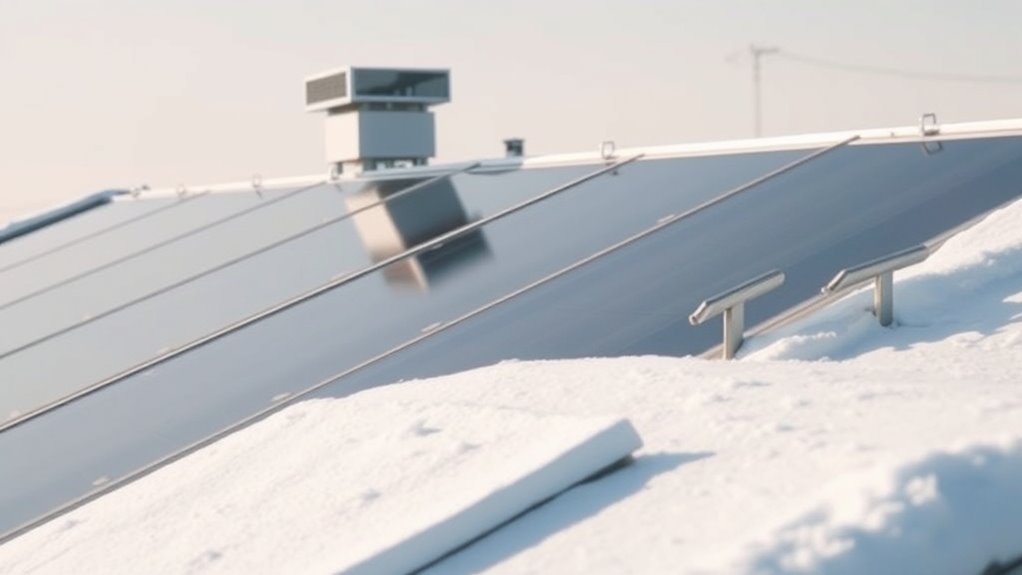
If you want to prevent snow buildup without constant manual clearing, installing heating systems or snow guards can be a smart solution. These options help maintain panel efficiency during snowy months and reduce maintenance efforts.
Here are three benefits to consider:
- Heating Systems: Electric heating mats or cables gently melt snow. This ensures your panels stay clear and operational even during heavy snowfall.
- Snow Guards: These devices prevent large snow slides that could damage your panels or surrounding property. They work by holding snow in place until it melts.
- Energy Efficiency: Both options minimize downtime caused by snow coverage. This way, you maximize your solar energy production throughout winter.
Set Roof and Panel Angles to Shed Snow From Solar Panels
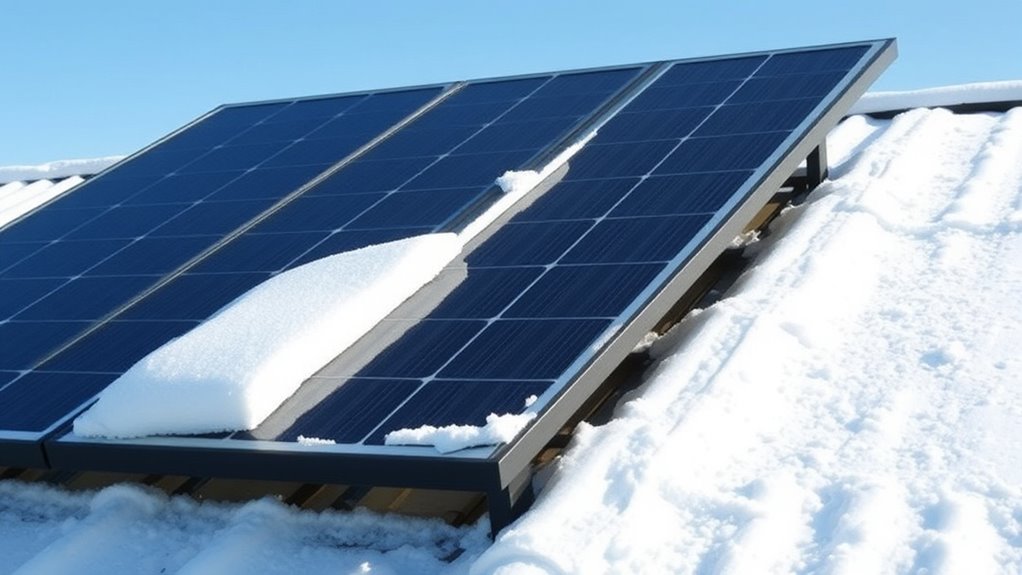
When you set your roof and panel angles correctly, snow slides off more easily, keeping your solar panels clear and efficient. Aim for a steep pitch—ideally between 30 and 45 degrees—so gravity helps shed snow naturally.
If you’re installing new panels, choose mounting brackets that allow adjustable tilt angles. This flexibility lets you optimize both solar exposure and snow runoff.
For existing setups, consider modifying panel angles if feasible, especially in heavy snowfall regions. Avoid flat or low slopes, as they trap snow, reducing energy output.
Frequently Asked Questions
Can Snow Damage the Solar Panel Warranty?
Snow usually won’t void your solar panel warranty unless it causes physical damage from improper maintenance or neglect.
You should clear heavy snow carefully to avoid harm, ensuring your warranty stays intact and panels function well.
How Does Snow Affect Solar Panel Efficiency?
Snow reduces your solar panels’ efficiency by blocking sunlight, cutting energy production. Even a thin layer can considerably drop output.
Are There Solar Panels Designed Specifically for Snowy Climates?
Imagine your solar panels like winter hikers; yes, some are built with slick coatings and steeper angles so snow slides off easily.
You’ll find these snowy-climate panels keep producing power even during heavy winter storms.
They’re designed to handle the cold and keep working when you need them most.
Can Snow Accumulation Cause Roof Damage?
Yes, snow accumulation can cause roof damage by adding extra weight and moisture. You’ll want to clear heavy snow promptly to avoid structural issues and leaks.
Especially if your roof isn’t designed to handle that much load, it’s better to be safe than sorry. Keeping an eye on snow buildup can really save you a headache later.
How Do I Know if Snow Is Harming My Solar Panel System?
You’ll notice if your solar panel output drops by over 25% during snowy periods, which signals snow buildup or damage. Regularly check for cracks or loose wiring, and monitor your system’s performance closely to catch issues early.
It’s a good idea to keep an eye on things, especially when the snow starts piling up. That way, you can spot any problems before they get worse.
Conclusion
Keeping snow off your solar panels is key to maintaining their efficiency during winter. You can’t control the weather, but you can control how you respond. Clear snow safely to avoid damage, and consider installing heating systems or snow guards.
Also, set your roof and panel angles right to let snow slide off easily. These simple steps make a big difference in keeping your panels clear and working well.
Remember, “a stitch in time saves nine.” Taking small steps now prevents bigger problems later and keeps your solar panels working at their best. By managing snow buildup effectively, you ensure your solar power system stays efficient and reliable throughout the cold months. So, stay proactive with snow removal and maintenance, and enjoy uninterrupted energy all winter long!
2 Comments