Do Solar Panels Need Direct Sunlight to Maximize Efficiency?
You don’t need direct sunlight for your solar panels to produce energy, but they do work best when sunlight hits them head-on. Direct exposure lets your panels convert maximum solar energy efficiently, especially from 10 a.m. to 4 p.m.
This is when the sun is strongest and your panels can generate the most power.
On cloudy days, your solar panels still generate electricity, but usually only around 10-25% of their full capacity.
How much power they produce depends on the type of panel and where they are placed.
So, even if the sky isn’t clear, your system can keep working.
If you want to understand how to get the most from your solar system in less-than-ideal conditions, keep exploring.
There are ways to optimize performance no matter the weather or sunlight angle.
Key Takeaways
- Solar panels achieve maximum efficiency when exposed to direct sunlight, especially between 10 a.m. and 4 p.m.
- Direct sunlight allows photovoltaic cells to absorb the most solar energy for optimal electricity conversion.
- Panels still generate power from diffused light on cloudy days but at significantly lower efficiency.
- Monocrystalline and thin-film panels perform better in low light or shaded conditions than other types.
- Proper panel placement and angle maximize exposure to both direct and indirect sunlight, improving overall output.
So, while direct sun is best, your panels can still pull some energy even when it’s not perfectly sunny!
How Does Direct Sunlight Affect Solar Panel Efficiency?
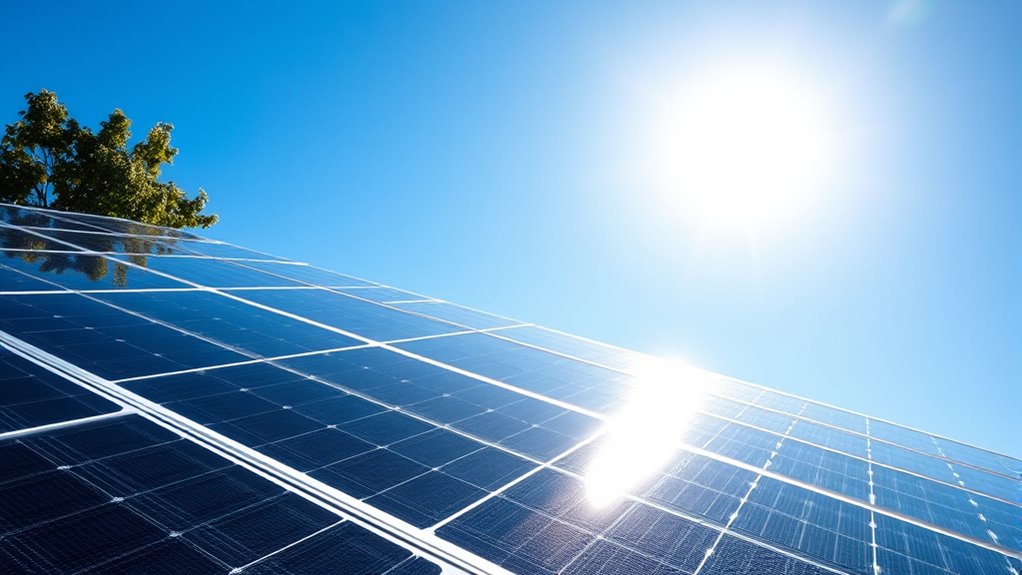
When your solar panels receive direct sunlight, they generate electricity at their highest potential because the sunlight hits the cells without obstruction. This direct exposure allows the photovoltaic cells to absorb the maximum amount of solar energy, converting it efficiently into electrical power.
You’ll notice that solar panels work best when the sun is at its peak, typically between 10 a.m. and 4 p.m., when rays strike most directly. Any shading, cloud cover, or indirect light reduces the energy your panels can produce.
Can Solar Panels Work Without Direct Sunlight?
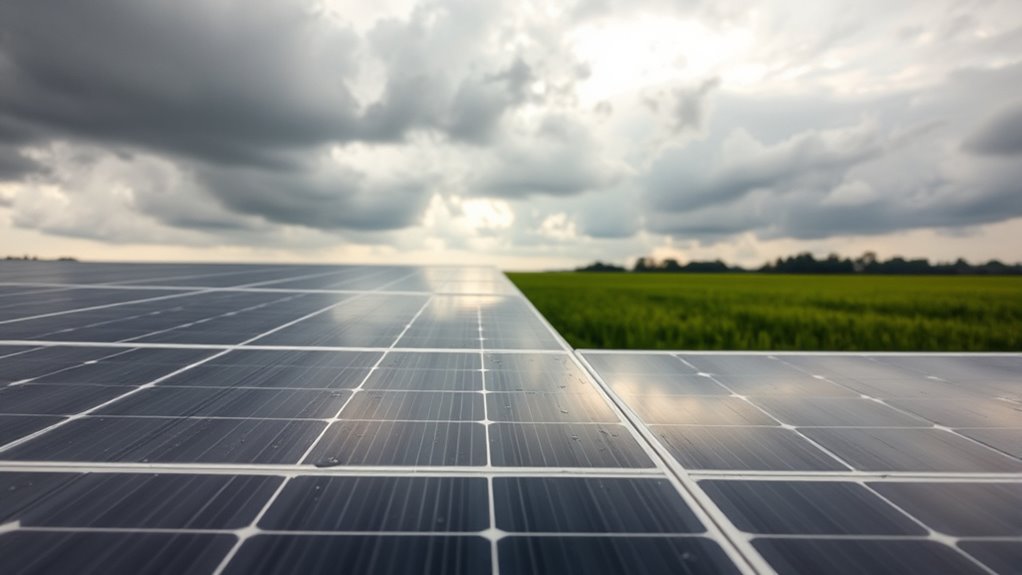
You might wonder if solar panels can still generate power on cloudy days or in shaded areas. Solar panels do capture diffused light, but their efficiency drops without direct sunlight.
Let’s explore how well they perform when the sun isn’t shining brightly. It’s pretty interesting to see what happens when the skies are gray or the sun is hidden behind clouds.
Diffused Light Performance
Although solar panels perform best under direct sunlight, they can still generate electricity from diffused light on cloudy or shaded days. When sunlight scatters in the atmosphere, it creates diffused light, which solar panels can capture and convert into energy.
While the output won’t match the peak levels seen in full sun, your panels remain productive, ensuring you keep generating power even without direct rays. So, you don’t need perfectly clear skies to benefit from your solar setup.
However, efficiency decreases as the intensity of diffused light is lower than direct sunlight. Still, your solar panels’ ability to utilize this scattered light helps maintain energy production and supports your overall power needs in less-than-ideal weather conditions.
Cloudy Day Efficiency
Even without direct sunlight, solar panels can still generate a significant amount of electricity on cloudy days. When clouds cover the sky, sunlight scatters, creating diffused light that solar panels can capture.
While the energy produced isn’t as high as on clear, sunny days, your panels won’t stop working entirely. In fact, they can still operate at 10-25% of their typical capacity depending on cloud thickness.
So, you don’t have to worry about your system being useless during overcast weather. Just keep in mind that efficiency drops because less light reaches the solar cells.
To maximize performance, make sure your panels are clean and positioned to catch as much light as possible, even when the sun hides behind clouds. It really helps to keep them in tip-top shape!
Which Solar Panels Work Best on Cloudy Days?
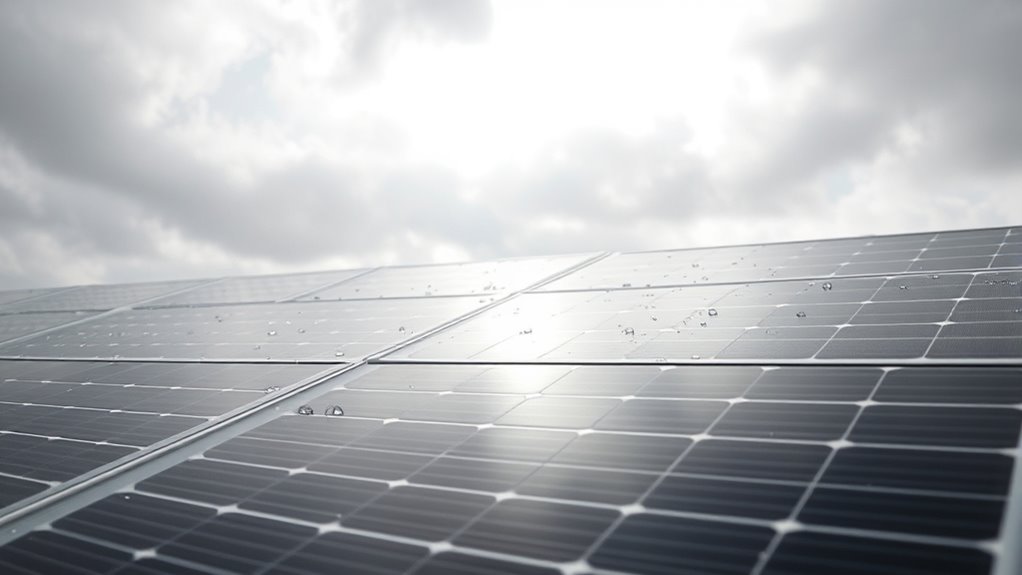
When clouds cover the sky, not all solar panels perform equally. You’ll find that monocrystalline panels tend to work better on cloudy days because they have higher efficiency and can capture diffuse sunlight more effectively.
Polycrystalline panels are less efficient in low light but still generate some power. Thin-film solar panels, while generally less efficient in direct sunlight, actually handle shading and overcast conditions better due to their flexible materials and broader light absorption spectrum.
If you want reliable energy during cloudy weather, consider monocrystalline or thin-film options. They’ll maximize your system’s output when sunlight is limited. Choosing the right panel type guarantees you get steady performance even when the sun isn’t shining brightly.
How to Optimize Solar Panel Placement in Low Light?
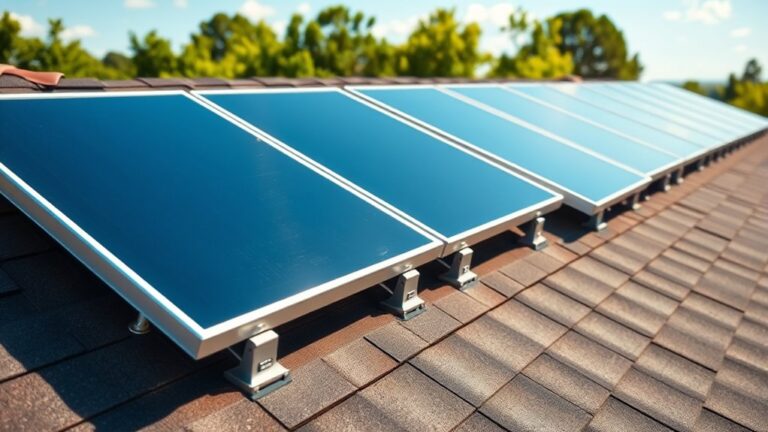
Choosing the right type of solar panel for cloudy conditions is just one part of maintaining strong energy production. To optimize placement in low light, position your panels where they’ll receive the most indirect sunlight throughout the day, such as south-facing roofs in the Northern Hemisphere.
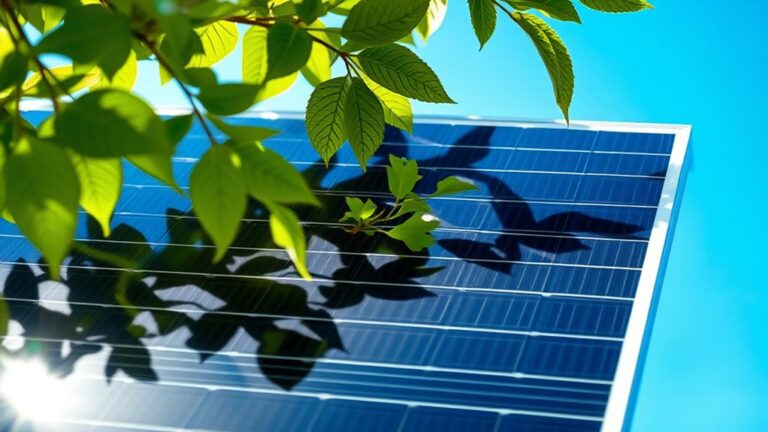
Avoid shading from trees, buildings, or other obstacles, as even partial shadows can reduce output considerably. Tilt your panels at an angle that maximizes exposure to diffuse light, typically matching your latitude.
Clean your panels regularly to remove dust and debris that block light. Additionally, consider using microinverters or power optimizers to improve performance when some panels receive less light.
How Much Power Do Solar Panels Generate on Cloudy Days?
Although cloudy days reduce sunlight intensity, solar panels can still generate a significant amount of power. You might expect a sharp drop, but modern panels often produce between 10% and 25% of their typical output on overcast days.
The reason is that solar panels capture both direct and diffuse sunlight—the scattered rays that penetrate clouds. While the power output declines compared to bright, sunny conditions, it doesn’t drop to zero.
This means your solar system continues working and contributing to your energy needs, even when the sky is gray. However, the exact amount depends on factors like cloud thickness, panel type, and angle.
Understanding this helps you set realistic expectations about your solar energy production during cloudy weather.
Is Solar Worth It Without Full Sun Exposure?
Even with less than full sun exposure, solar panels can still provide valuable energy savings. You don’t need perfect, constant sunlight to make solar worth it.
Panels capture diffuse and indirect light, so even on cloudy days or in shaded areas, they generate electricity. While efficiency drops without direct sun, the savings on your energy bills can still be significant over time.
Your location, energy needs, and local incentives also play a big role in determining if solar pays off. If your roof faces a less-than-ideal direction or gets partial shade, solar might still be a sound investment.
Frequently Asked Questions
How Do Temperature Fluctuations Impact Solar Panel Performance?
You’ll notice temperature fluctuations affect solar panel performance because higher heat reduces their efficiency. Panels work best in cooler conditions, so when it’s hot, they generate less power despite sunlight intensity.
It’s kind of interesting, right? Even though there’s plenty of sunlight, the heat itself can hold the panels back a bit. So, cooler days often mean better solar output overall.
What Maintenance Is Required to Keep Solar Panels Efficient?
Imagine Sarah cleaning her solar panels monthly to remove dust and leaves. You should do the same—regularly clear debris, check for damage, and monitor performance.
This helps keep your solar panels running efficiently and maximize energy production. It’s really not that hard once you get into the habit!
Can Shading From Nearby Objects Reduce Solar Panel Output?
Yes, shading from nearby objects can considerably reduce your solar panel output by blocking sunlight. Even partial shading causes hotspots and lowers efficiency.
How Long Do Solar Panels Typically Last Before Replacement?
Imagine your solar panels basking in sunlight for 25 to 30 years before needing replacement.
You’ll enjoy decades of clean energy, but keep an eye on performance dips.
That’s usually a sign it’s time for new panels to keep power flowing.
Are There Financial Incentives for Installing Solar Panels in Shaded Areas?
Yes, you can often get financial incentives for installing solar panels in shaded areas, but they vary by location.
Check local and federal programs, as some offer rebates or tax credits regardless of shading conditions.
It’s a good idea to do a bit of digging to see what’s available where you live.
Sometimes, even if your panels aren’t in full sun, you can still benefit financially.
Conclusion
Think of your solar panels like a thirsty plant—they thrive best when basking in direct sunlight but can still draw nourishment from a cloudy sky. Even without full sun, they keep working, just at a gentler pace.
So, don’t worry if your roof isn’t a sun magnet; with smart placement and the right panels, you’ll still harvest valuable energy. Like a garden that flourishes in varying light, your solar setup can shine in its own way.
In short, solar panels don’t need direct sunlight all the time to maximize efficiency. While direct sun boosts their power, they’re designed to capture energy from diffused or indirect light, too. This means even on cloudy days or in shaded spots, your solar system can generate electricity and reduce your energy bills. By choosing quality panels and optimizing their placement, you ensure consistent energy production. So, whether your panels get full sun or partial shade, you’re still making the most of solar energy every day.