Day: October 13, 2026

  • How Do Solar Panels Melt Snow Efficiently

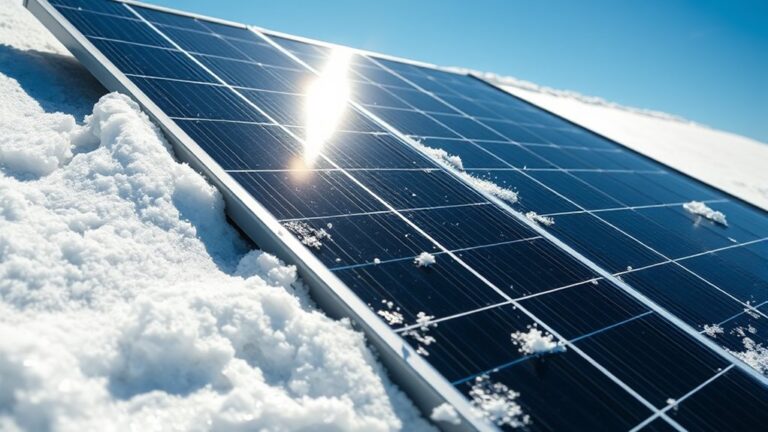
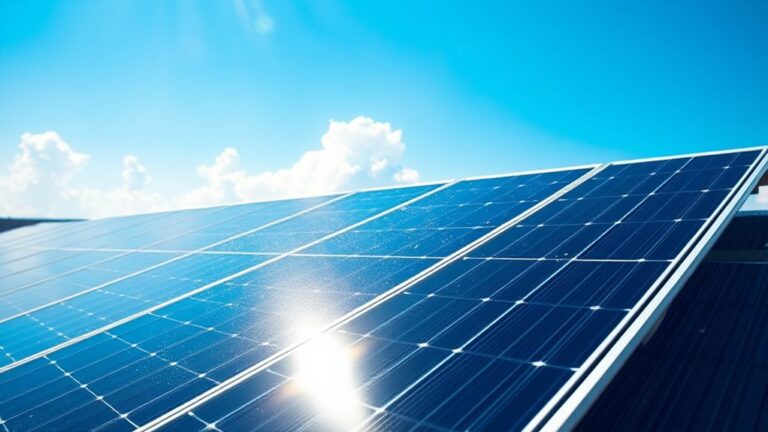
    You’ll find that solar panels melt snow efficiently because their dark surfaces absorb sunlight and convert it into heat. This warmth raises the panel temperature, melting snow even when it’s freezing outside.

    The panels’ tilt angle and weather conditions like wind help snow slide off naturally. Modern designs also include coatings and heating elements to aid removal.

    Keep these factors in mind, and you’ll understand how to keep your panels clear and productive all winter long.
  • Do Solar Panels Get Hot and How to Keep Them Cool?

    Yes, solar panels do get hot, often reaching 120°F to 150°F during sunny days. This heat can lower their efficiency and shorten their lifespan.

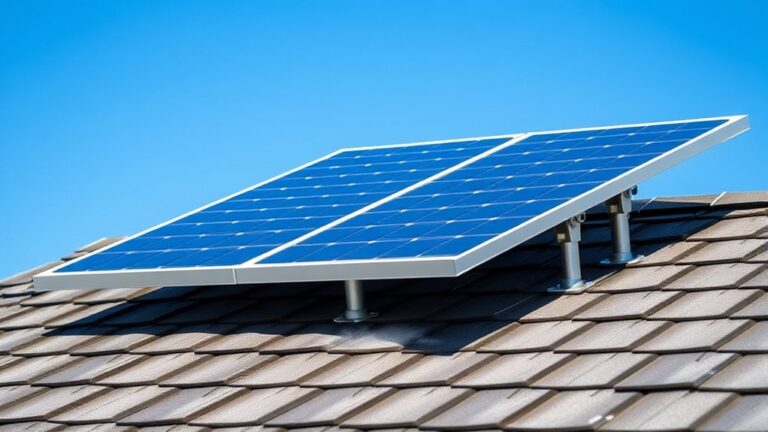
    To keep them cool, mount panels a few inches above the roof to allow for airflow. You can also use lighter roofing colors and position panels to catch breezes.

    Regular cleaning and monitoring also help keep things running smoothly. If you want to understand how heat affects power output and discover smart installation and cooling tips, you’ll find plenty of useful strategies ahead.

  • How Do You Prevent Roof Damage From Solar Panels?

    To prevent roof damage from solar panels, start by inspecting your roof’s condition and choose mounts that fit your roof type and pitch. Make certain all mounting points are sealed tightly to stop leaks, and use corrosion-resistant materials.

    Hiring professional installers helps guarantee secure, waterproof attachment and minimizes roof penetrations. Regularly maintain your roof and panels, checking for loose seals or debris.

    Keep following to discover how the right choices and care protect both your roof and investment. It’s all about making smart decisions and staying on top of maintenance!

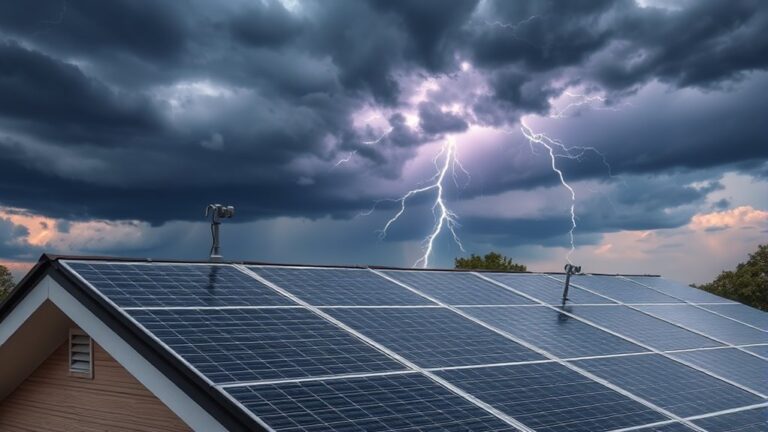
  • Do Solar Panels Attract Lightning and How to Protect Your Home

    You don’t need to worry about your solar panels attracting lightning, as they usually sit flat on your roof and don’t stand out as targets.

    However, lightning can cause electrical surges that damage your panels and home wiring. To protect your system, make certain of proper grounding, install surge protectors, and consider lightning rods.

    Turning off inverters during storms also helps prevent damage. Keep following to discover more ways to safeguard your solar setup and home from lightning-related risks.

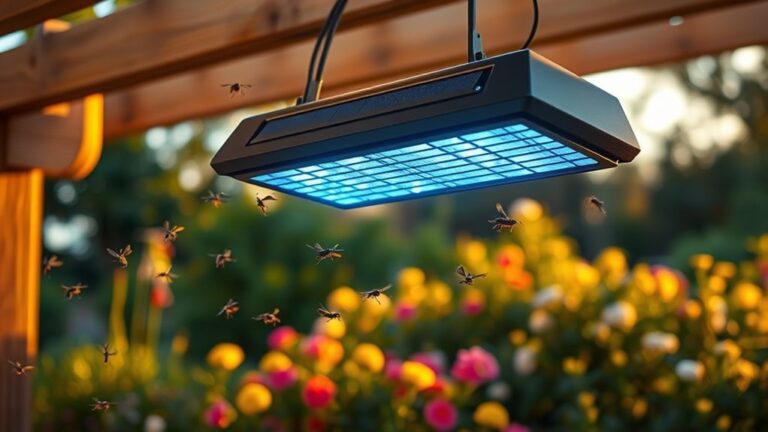
  • Do Solar Bug Zappers Work and How Can You Use Them Effectively?

    Solar bug zappers attract insects using UV LED lights and kill them with an electric grid. They work best on bugs drawn to light like moths and beetles—not so much on mosquitoes.

    To use them effectively, place your zapper where it gets full sunlight for charging. Also, keep it away from other lights and near bug hotspots.

    Make sure to keep it clean and protect it from harsh weather to maintain performance. Keep going to uncover more ways to optimize your solar bug zapper’s success.

  • How Do LED Lights Charge Solar Panels Step by Step

    To charge solar panels with LED lights, position your LEDs about 1-2 feet away, shining directly on the panel without shadows. Use LEDs with a brightness around 5000K-6500K and secure wiring with proper insulation and resistors for current control.

    Turn on your LEDs in a dark environment to stimulate the photovoltaic cells, generating a small but steady charge. Measuring with a multimeter helps optimize output.

    Keep going to uncover more tips for maximizing this setup’s efficiency. It’s a neat way to experiment with solar energy on a small scale!

  • How Do Bubbles Go on a Solar Cover: Up or Down?

    You should always place the bubbles on your solar cover facing down. This orientation traps heat more effectively, creating an insulating layer against the water that keeps your pool warmer longer.

    It also protects the bubbles from sun, wind, and chemicals, extending your cover’s lifespan and preventing damage. Incorrect placement reduces efficiency and causes quicker heat loss.

    If you want to get the most from your solar cover, understanding why bubble direction matters is a great next step. It really makes a difference in how well your pool stays warm!