
Do Solar Panels Get Hot and How to Keep Them Cool?
Yes, solar panels do get hot, often reaching temperatures between 120°F and 150°F on sunny days. This heat can actually lower their efficiency and even shorten their lifespan, which is something every solar panel owner should know.
To keep them cool, it helps to mount the panels a few inches above the roof to allow for airflow underneath. You can also choose lighter roofing colors that reflect more sunlight and position your panels to catch natural breezes.
Regular cleaning and monitoring are key too, as dirt and debris can trap heat and reduce performance.
If you want to understand more about how heat affects solar panel power output and discover smart installation and cooling tips, you’re in the right place. There are plenty of useful strategies ahead to help you keep your solar panels running efficiently and lasting longer.
Key Takeaways
- Solar panels can reach 120°F to 150°F because they absorb sunlight and trap heat on their surfaces. It’s pretty common for them to get that warm under direct sun.
- When it gets hot, the panels don’t work as well. Their voltage and power output drop, which means less energy for you during those scorching days.
- To keep them cooler, mount the panels a few inches above the roof. Using tilted frames also helps by letting air flow underneath and cool things down.
- Another trick is to use lighter-colored roofing or apply reflective coatings. These options reduce heat absorption, so your panels don’t heat up as much.
- Don’t forget to regularly check the panels with thermal cameras. Also, keeping them clean prevents hotspots and overheating, which keeps everything running smoothly.
Do Solar Panels Get Hot During Power Generation?
How hot do solar panels get during power generation? You’ll find that solar panels can reach temperatures between 120°F and 150°F (49°C to 66°C) on sunny days. This heat buildup happens because solar cells absorb sunlight and convert a portion into electricity, while the rest becomes heat.
The surface of the panels traps this heat, causing their temperature to rise considerably above the ambient air temperature. You might notice that panels installed on rooftops or areas with poor airflow tend to get hotter since there’s less cooling from wind or shade.
Keep in mind, the panel’s materials, color, and mounting setup also influence how hot they get. So, yes, solar panels can get quite warm while generating power, but that’s a normal part of their operation.
How Heat Impacts Solar Panel Efficiency and Lifespan
When solar panels heat up to temperatures between 120°F and 150°F, their performance doesn’t stay at peak levels. You’ll notice a drop in efficiency because excessive heat causes the solar cells’ voltage to decrease, reducing overall power output.
Solar panels lose efficiency as heat rises between 120°F and 150°F, lowering voltage and power output.
This means your panels generate less electricity on hot days, which can impact your energy savings. Plus, prolonged exposure to high temperatures can speed up material degradation, shortening your panels’ lifespan.
Heat puts stress on the components, leading to problems like delamination and solder joint failures over time. So, to protect your investment, it’s really important to manage heat buildup and keep your panels operating under ideal conditions.
Understanding how heat affects your solar panels helps you take the right steps to maximize efficiency and extend their useful life.
Why Some Solar Panels Heat Up More Than Others
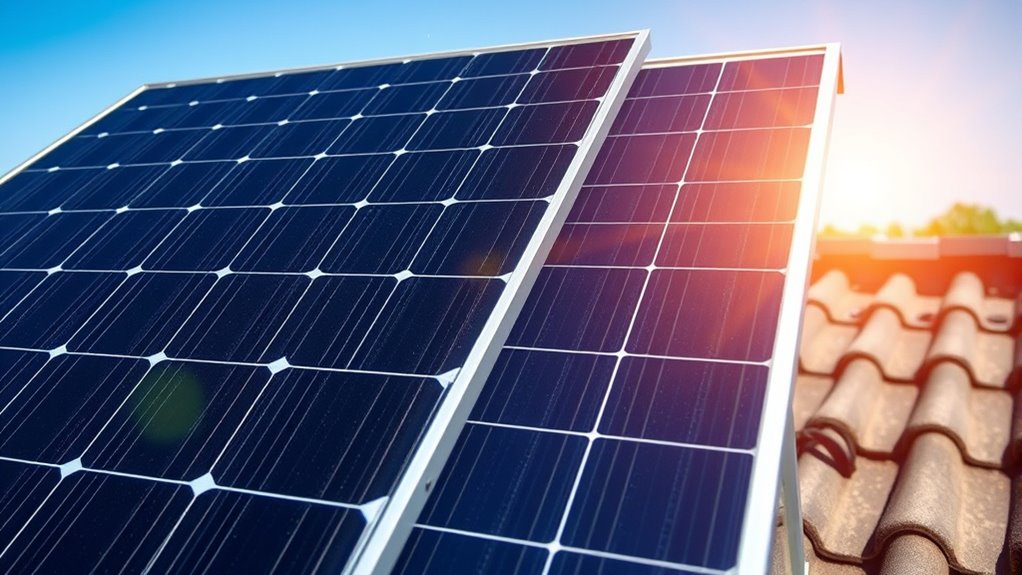
Although all solar panels absorb sunlight, some get hotter than others due to differences in materials, design, and installation. For example, panels made with monocrystalline cells tend to heat up more than polycrystalline ones because of their higher efficiency and light absorption.
The panel’s color and coating also play a role; darker surfaces absorb more heat. Additionally, the type of backing material affects heat retention—some materials trap heat, while others dissipate it better.
You’ll notice that panels with poor ventilation or those mounted directly on dark rooftops without air gaps usually run hotter. Even the glass cover’s thickness and anti-reflective coatings impact heat buildup.
Understanding these factors helps you choose panels that suit your climate and energy needs while managing temperature more effectively. It really makes a difference when picking the right setup for your home or business.
Heat-Smart Solar Panel Installation Tips
Since excessive heat can reduce solar panel efficiency, you’ll want to focus on installation methods that promote better airflow and minimize heat buildup. Start by mounting your panels at least a few inches above the roof surface to allow air to circulate underneath. Avoid flush mounts that trap heat.
Position panels with enough space between rows to prevent shading and encourage cooling breezes. Choose lighter-colored roofing materials to reflect sunlight away and reduce ambient temperatures. It really helps to think about how air moves around your panels.
Consider installing panels on a tilted frame that maximizes sun exposure and airflow simultaneously. Also, avoid placing panels near heat-reflective surfaces like dark pavement or metal chimneys. By thoughtfully planning your solar panel layout and mounting style, you’ll keep temperatures lower and maintain ideal energy production without extra effort.
Simple Cooling Tips for Solar Panels
You can keep your solar panels cooler by ensuring good natural ventilation around them. Applying reflective coatings helps reduce heat absorption, boosting efficiency.
Also, placing panels strategically to avoid excessive sun exposure during peak heat can make a big difference. It’s a simple step that really pays off!
Natural Ventilation Benefits
When solar panels have good airflow beneath and around them, they stay cooler and work more efficiently. Natural ventilation is one of the simplest, most effective ways to prevent overheating without extra costs.
You can boost this airflow by following a few easy tips:
- Mount panels with a gap: Leave space between your roof and panels to let air circulate freely.
- Tilt panels properly: Adjust the angle to encourage wind flow underneath.
- Avoid clutter: Keep the area around panels clear of debris and vegetation.
- Choose open locations: Install panels where natural breezes aren’t blocked by walls or tall trees.
Reflective Coating Options
Although natural ventilation plays a key role in keeping solar panels cool, applying reflective coatings can further reduce their temperature by bouncing off excess sunlight.
You can choose from several options, like ceramic-based or nano-coatings, which are designed to reflect infrared rays without affecting solar absorption. These coatings help lower panel surface temperature, improving efficiency and lifespan.
When selecting a reflective coating, look for one that’s durable, UV-resistant, and compatible with your panel’s material. Applying it properly is essential—consider professional installation to ensure even coverage and avoid damage.
Just keep in mind, reflective coatings won’t replace ventilation but work alongside it to keep your panels cooler and performing better during hot days.
Strategic Panel Placement
Reflective coatings help reduce panel heat, but maximizing natural airflow starts with where you place your solar panels. You want to give your panels room to breathe and cool down naturally.
Here’s how to strategically position them:
- Elevate panels at least a few inches above the roof to allow air circulation underneath.
- Avoid shading from nearby trees or buildings that block wind flow and trap heat.
- Orient panels to capture prevailing breezes, typically facing the direction where wind flows most consistently.
- Space panels apart if possible, so air can move freely between them and prevent heat buildup.
How to Monitor and Maintain Solar Panel Temperature
Keeping your solar panels at an ideal temperature is essential for maintaining their efficiency and longevity. To monitor their temperature, use infrared thermometers or thermal cameras to spot hotspots early.
Maintaining ideal solar panel temperatures is key for efficiency; use infrared tools to detect hotspots early.
Regularly check your system’s performance data; sudden drops might indicate overheating. You should also inspect the panels for dirt, debris, or shading that can raise temperatures.
Maintain proper airflow by trimming nearby plants and ensuring panels aren’t too close to the roof. Clean panels with soft brushes and mild water to avoid dirt buildup, which can trap heat.
Installing temperature sensors linked to your monitoring system helps you stay proactive. By staying vigilant and performing simple maintenance, you’ll keep your solar panels cool and maximize their energy output over time.
Frequently Asked Questions
Can Solar Panels Cause Roof Damage Due to Heat?
Solar panels rarely cause roof damage from heat since they actually absorb sunlight, reducing roof temperature. You should guarantee proper installation and ventilation to prevent moisture buildup, which can cause damage over time.
It’s really about making sure everything is set up right. Good ventilation helps keep things dry and your roof in good shape. So, with the right care, solar panels are more friend than foe for your roof!
Do Solar Panels Affect Home Air Conditioning Costs?
Imagine your home’s A/C running less because solar panels shade your roof.
Yes, solar panels can reduce air conditioning costs by lowering roof temperatures. This helps your system work more efficiently and cuts your energy bills over time.
Are There Solar Panels Designed for Extreme Heat Climates?
Yes, you can get solar panels designed for extreme heat climates. These panels use heat-resistant materials and advanced cooling technologies.
This helps you maintain efficiency and durability even under intense sunlight and high temperatures. So, if you’re worried about the heat, these panels are definitely worth considering.
How Does Snow Impact Solar Panel Temperature?
Snow cools your solar panels by lowering their temperature, which can actually improve their efficiency.
But here’s the catch: heavy snow cover blocks sunlight. That means your panels won’t produce much energy until the snow melts or slides off.
Can Reflective Coatings Improve Solar Panel Cooling?
Reflective coatings can both help and hinder you; they reduce heat by bouncing sunlight away but might lower energy absorption.
You’ll need to balance cooling benefits with potential efficiency losses when choosing these coatings for your solar panels. It’s kind of a trade-off you have to consider carefully.
Conclusion
Just like a marathon runner pacing themselves in the summer sun, your solar panels need care to stay cool and efficient. You’ve learned that heat can slow them down and shorten their lifespan. But with smart installation and simple cooling tips, you can keep them performing at their best.
Remember, treating your panels well is like tending a garden—consistent attention helps them thrive. Keeping your solar panels cool not only boosts their efficiency but also extends their lifespan. So, whether it’s proper ventilation, shading, or using reflective coatings, these cooling strategies make a big difference.
In the end, understanding that solar panels do get hot and knowing how to keep them cool ensures you get the most out of your investment. With the right care, your solar panels will power your world longer and stronger, making your clean energy system more reliable and effective every day.

One Comment