Do Solar Bug Zappers Work and How Can You Use Them Effectively?
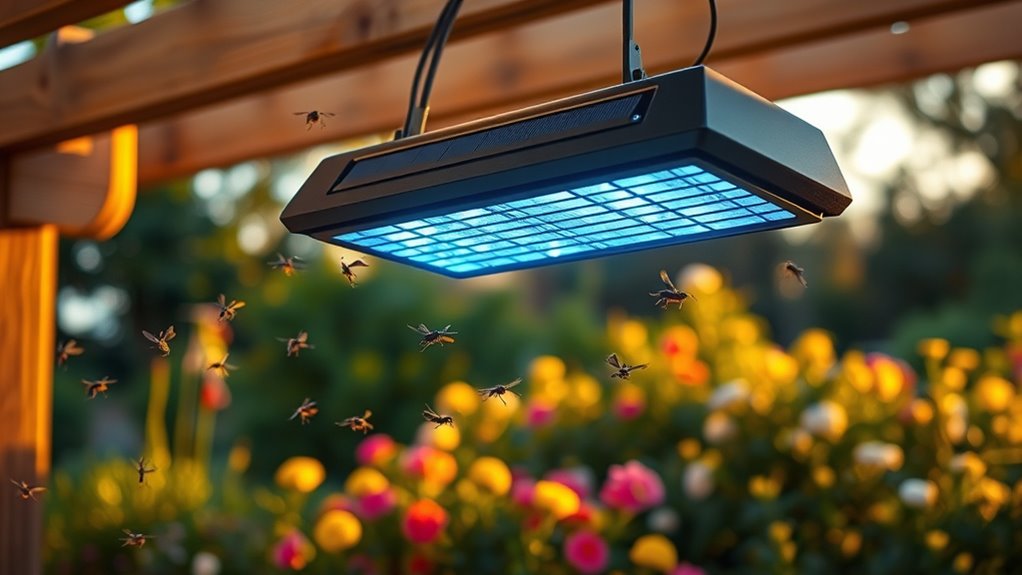
Solar bug zappers use UV LED lights to attract insects and then zap them with an electric grid. They work best on bugs that are drawn to light, like moths and beetles. But if you’re hoping to get rid of mosquitoes, these zappers might not be as effective.
To get the most out of your solar bug zapper, place it where it can soak up plenty of sunlight during the day. Make sure it’s away from other lights, so it stands out to insects.
Also, position it near areas where bugs tend to gather.
Don’t forget to keep your zapper clean and protect it from harsh weather. This will help it last longer and work better.
Keep reading to learn more tips on how to make your solar bug zapper super effective!
Key Takeaways
- Solar bug zappers use UV LED lights to attract and kill bugs, but they’re less effective against mosquitoes that aren’t drawn to light.
- Placing them in sunny, shaded spots away from other lights helps them charge better and attract more insects.
- Regular cleaning and replacing the batteries keep the device working well and extend its life.
- It’s also smart to protect the zapper from bad weather to avoid damage and keep it running smoothly.
- For best results, try using solar bug zappers alongside other pest control methods to better manage mosquitoes and bugs.
How Do Solar Bug Zappers Attract and Kill Bugs?
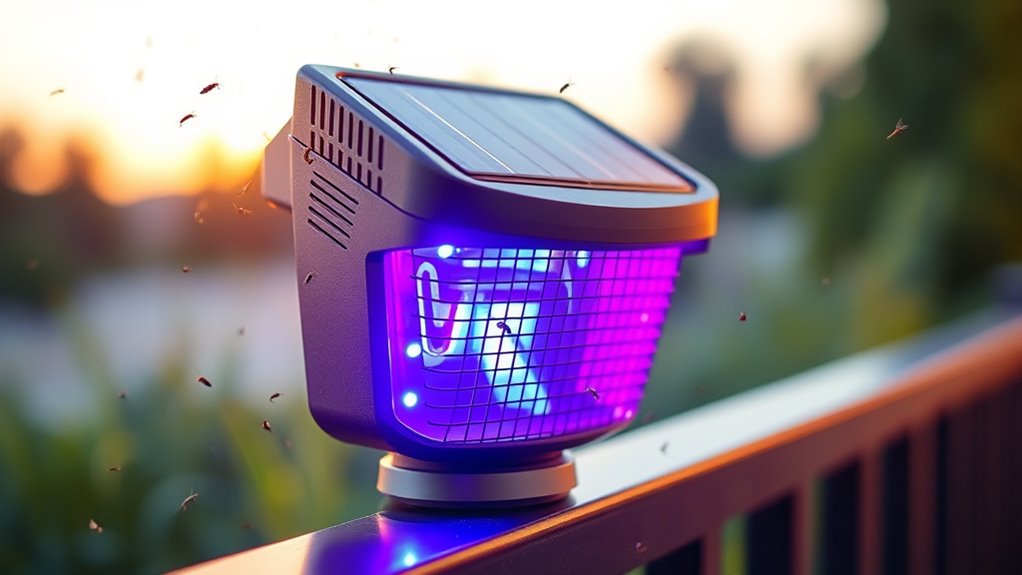
Although you might not notice it, solar bug zappers use a clever combination of light and electricity to lure and eliminate bugs efficiently. When darkness falls, the ultraviolet (UV) LED lights attract insects, mimicking natural light sources that bugs seek.
As bugs fly towards the glow, they come into contact with an electrified metal grid surrounding the light. This grid delivers a quick, lethal electric shock, effectively killing the bugs on contact.
You don’t need to plug these devices in since solar panels charge their batteries during the day, making them energy-efficient and eco-friendly. It’s pretty neat how they work without using any chemicals.
Are Solar Bug Zappers Effective for Different Bugs?
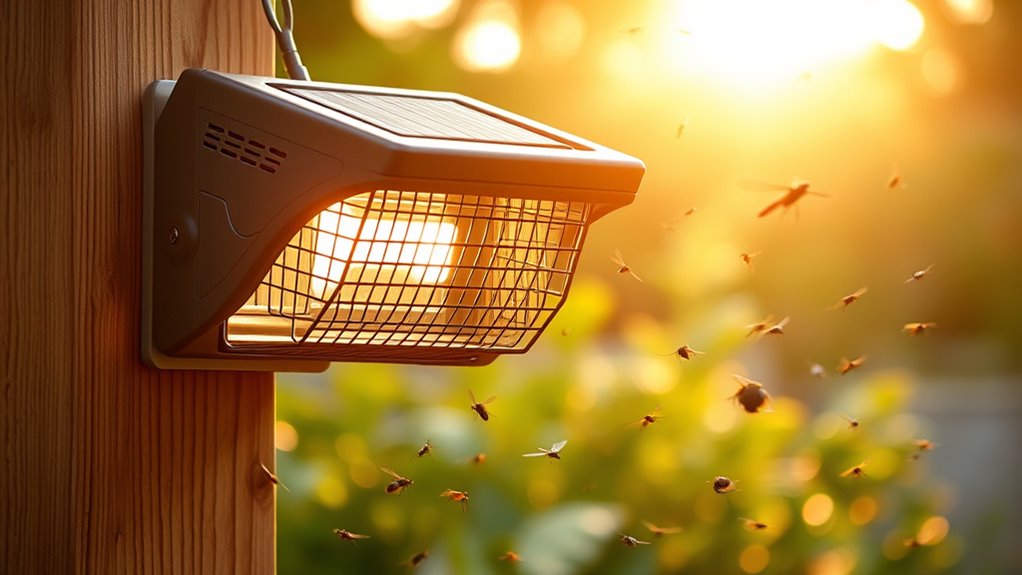
You’ll want to know if solar bug zappers work well on the specific bugs you’re dealing with. Their effectiveness can vary depending on the bug species and the environment where you use them.
Let’s explore how these factors impact their performance. It’s pretty interesting to see how different bugs react to the zapper’s light and electric grid. Plus, where you place the zapper can make a big difference too.
Targeted Bug Species
How well do solar bug zappers work against different types of insects? You’ll find they’re more effective on some species than others. These devices primarily attract bugs drawn to light, like moths, beetles, and certain flies.
However, mosquitoes—often the main nuisance—aren’t strongly attracted to light, so zappers may only catch a few. You might notice fewer moths or beetles around your yard, but don’t rely on zappers alone for mosquito control.
For best results, use solar bug zappers in combination with other methods if mosquitoes are your target. Knowing which bugs are common in your area helps you decide if a solar zapper fits your needs. Tailoring your approach ensures you tackle the right pests efficiently.
Effectiveness In Various Environments
Since different bugs respond uniquely to light, the environment where you use a solar bug zapper greatly affects its success. You’ll find that factors like humidity, surrounding vegetation, and competing light sources influence how well your zapper attracts and eliminates bugs.
For example, mosquitoes are more active in humid, shaded areas, while flies prefer open, sunny spots. To maximize effectiveness, consider these environmental aspects:
- Placement: Position the zapper away from competing lights but near bug hotspots like patios or garden edges.
- Bug Type: Understand which bugs thrive in your area and when they’re most active to time usage correctly.
- Weather Conditions: Solar bug zappers work best on warm, dry nights; rain or strong winds reduce their efficiency.
Adjusting for your environment guarantees your zapper delivers the best results. So, keep these tips in mind and enjoy a bug-free space!
What Environmental Benefits Do Solar Bug Zappers Offer?
Although many pest control methods rely heavily on chemicals, solar bug zappers offer a greener alternative that benefits the environment. By using renewable solar energy, they reduce dependence on electricity and harmful pesticides, making your pest control efforts eco-friendly.
They also minimize chemical runoff, which helps protect nearby plants and water sources. So, you’re not just getting rid of pests—you’re doing it in a way that’s kinder to nature.
Here’s a quick look at their environmental benefits:
| Benefit | Explanation |
|---|---|
| Renewable Energy Use | Powered by solar, cuts fossil fuel use |
| Chemical-Free Pest Control | Avoids toxic pesticides |
| Reduced Carbon Footprint | Less electricity means fewer emissions |
| Protects Ecosystems | Limits harm to non-target wildlife |
With solar bug zappers, you’re choosing a sustainable way to manage pests while preserving the environment. It’s a smart choice for anyone looking to keep their space pest-free and eco-friendly at the same time.
Where and When Should You Place Solar Bug Zappers for Best Results?
To get the most out of your solar bug zapper, place it in a shaded area that gets plenty of sunlight during the day but stays dark at night. This helps it charge well while attracting bugs effectively after sunset.
Use it during peak insect activity times, usually around dusk and early evening. That’s when you’ll notice it working best.
Also, avoid positioning it near other lights that can compete and reduce its effectiveness. Keeping it in a darker spot really boosts its bug-zapping power.
Ideal Placement Locations
When you place your solar bug zapper in a well-chosen spot, you considerably boost its effectiveness. Position it where it can attract the most insects without competing with other light sources.
Think about typical bug hotspots around your yard or patio. Avoid areas too close to where you spend time, so bugs are drawn away, not toward you.
Consider these ideal placement locations:
- Near standing water or damp areas where mosquitoes breed
- Around garden edges or flower beds attracting various insects
- Along pathways or near outdoor dining spaces to create a bug-free zone
Make sure the zapper receives plenty of sunlight during the day to charge fully. By strategically placing your device, you maximize its ability to reduce pests effectively.
Optimal Timing For Use
Since solar bug zappers rely on darkness to attract insects, you’ll get the best results by turning them on at dusk and leaving them active throughout the night. Insects are most active during twilight and early night hours, so this timing maximizes your zapper’s effectiveness.
Place your zapper in areas where insects gather but away from competing light sources. Keep it running continuously during peak insect activity to reduce their numbers steadily. Avoid turning it off too early, as insects may still be active well after sunset.
Avoiding Light Interference
Keeping your solar bug zapper running throughout the night helps catch insects during their most active hours, but where you place the device can make a big difference in how well it works.
To prevent light interference, position your zapper away from other light sources that can compete with its glow. This guarantees the zapper remains the most attractive light for bugs.
Also, avoid placing it near reflective surfaces that scatter light and reduce its effectiveness. Finally, place the zapper where insects are most likely to gather, such as near patios or garden edges.
- Keep it at least 15 feet away from porch or street lights
- Avoid reflective walls or water surfaces nearby
- Position it 3 to 6 feet above ground level for maximum reach
These steps help maximize your zapper’s insect-catching power. Give them a try and you’ll notice the difference!
Simple Maintenance and Troubleshooting Tips
Although solar bug zappers require minimal upkeep, performing simple maintenance regularly guarantees they work at peak efficiency. First, clean the zapper’s grid and solar panel with a soft brush or cloth to remove dirt, dust, and insect debris.
Avoid water contact with electrical components. Check the solar panel for any cracks or damage that might reduce charging.
If your zapper isn’t turning on, make certain the battery is fully charged by leaving it under direct sunlight for several hours. Replace the rechargeable battery if it no longer holds a charge.
Also, inspect the zapper for loose wires or corrosion and tighten or clean connections as needed. Following these straightforward steps helps keep your solar bug zapper reliable and ready to use.
Tips to Improve Solar Bug Zapper Effectiveness and Longevity
Regular maintenance sets the foundation, but you can also take specific steps to boost your solar bug zapper’s performance and lifespan. Position your zapper where it receives ample sunlight during the day to guarantee the battery charges fully.
Keep the unit clean by gently removing debris and dead insects after use to prevent clogging and maintain efficiency. Additionally, protect your zapper from extreme weather by placing it under a shelter or bringing it indoors during storms or heavy rain.
Use energy-efficient bulbs designed for bug zappers to maximize attraction and reduce power drain. It really makes a difference!
Replace batteries every 1-2 years to sustain strong performance. Don’t wait until the zapper starts acting up.
Also, avoid placing the zapper near competing light sources to enhance its insect-catching ability. Bugs tend to get distracted, you know?
Following these tips will help you get the most out of your solar bug zapper. You’ll enjoy a bug-free zone for longer!
Frequently Asked Questions
Are Solar Bug Zappers Safe for Pets and Children?
Yes, solar bug zappers are generally safe for pets and children. But it’s a good idea to place them out of reach to prevent any accidental contact.
Always follow the manufacturer’s safety guidelines. That way, you can keep everyone protected while enjoying a bug-free space.
How Long Do Solar Bug Zappers Typically Last?
Solar bug zappers usually last between 1 to 3 years, depending on the build quality and how well you maintain them.
You’ll get longer use by keeping them clean and storing them properly during harsh weather conditions. It really pays off to take good care of them!
Can Solar Bug Zappers Be Used Indoors?
Yes, you can use solar bug zappers indoors, but they need sunlight to recharge.
Do Solar Bug Zappers Affect Beneficial Insects Like Bees?
Don’t throw the baby out with the bathwater—solar bug zappers can accidentally zap beneficial insects like bees.
You’ll want to place them away from flowers and use them sparingly to protect these essential pollinators.
How Much Do Solar Bug Zappers Cost on Average?
You’ll find solar bug zappers typically cost between $20 and $60. Prices vary based on brand, size, and features.
You can choose one that fits your budget while effectively keeping bugs away outdoors. It’s pretty easy to find something that works for you without breaking the bank.
Conclusion
Solar bug zappers can cut mosquito populations by up to 50%, making them a handy tool for your outdoor space. To get the best results, place them in shaded, bug-prone areas and keep their solar panels clean.
With simple maintenance and smart placement, you’ll enjoy fewer pests and a greener environment. So, give solar bug zappers a try—you’ll save energy, reduce chemicals, and reclaim your evenings from annoying bugs.
Using solar bug zappers effectively means understanding where mosquitoes gather and placing the devices there. They harness solar power, so keeping the panels clean is key for maximum efficiency. Plus, they offer an eco-friendly alternative to chemical sprays, helping you create a safer outdoor space.
In short, solar bug zappers work well when used thoughtfully. They’re a sustainable, energy-saving way to reduce bugs and enjoy your yard more. By combining good placement with regular upkeep, you’ll make the most of these devices and enjoy peaceful, pest-free evenings.