
How Do LED Lights Charge Solar Panels Step by Step
To charge solar panels with LED lights, start by positioning your LEDs about 1-2 feet away from the panel. Make sure they shine directly on the surface without any shadows blocking the light.
Use LEDs with a brightness around 5000K-6500K, which mimics natural daylight and helps stimulate the solar cells better.
Also, secure all wiring with proper insulation and include resistors to control the current safely.
Turn on your LEDs in a dark environment to give the photovoltaic cells a chance to generate a small but steady charge. It might not be a lot, but it’s a great way to understand how solar panels respond to artificial light.
Using a multimeter to measure the output can help you optimize the setup for better efficiency.
Keep experimenting and you’ll discover more tips to maximize how well your LEDs charge the solar panels.
Key Takeaways
- Position LED lights 1-2 feet from solar panels, making sure they get direct light without any shadows. This helps the panels absorb photons effectively.
- Choose LEDs with the right brightness and spectrum, ideally between 5000K and 6500K. This range simulates sunlight and helps the panels charge better.
- Connect the LEDs carefully using insulated wiring and resistors that fit the voltage and current requirements. This way, you avoid damaging anything.
- Turn on the LEDs in a dark, controlled space to check if the panels are generating energy. Use a multimeter to see the voltage and current readings.
- Don’t forget to clean the panels regularly and tweak the LED positions as needed. Keeping the light consistent makes charging more efficient.
How LED Lights Help Solar Panels Generate Power
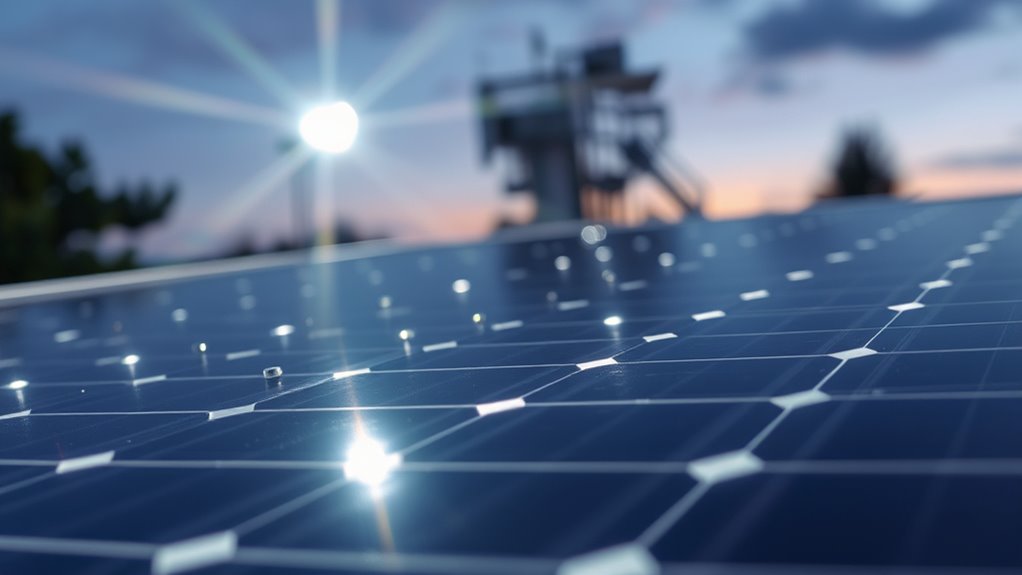
Although solar panels primarily rely on sunlight to generate power, LED lights can also contribute to their charging process. When LED lights emit photons, your solar panels capture this light energy just like they do with sunlight.
Solar panels mainly use sunlight, but LED lights can also provide useful charging energy.
Even though LED light intensity is lower than the sun’s, its specific wavelength can still stimulate the photovoltaic cells in your panels. This means your solar panels convert LED light into electrical energy, albeit at a smaller scale.
You can use LED lights strategically to provide supplemental charging during low sunlight periods or indoors. By shining LED light directly onto your panels, you help maintain a trickle charge, ensuring your batteries don’t drain completely.
This process boosts overall energy generation efficiency in certain conditions. So, while it’s not a huge power source, LED lights can definitely give your solar setup a little extra help when needed.
Why Using LED Lights to Charge Solar Panels Makes Sense
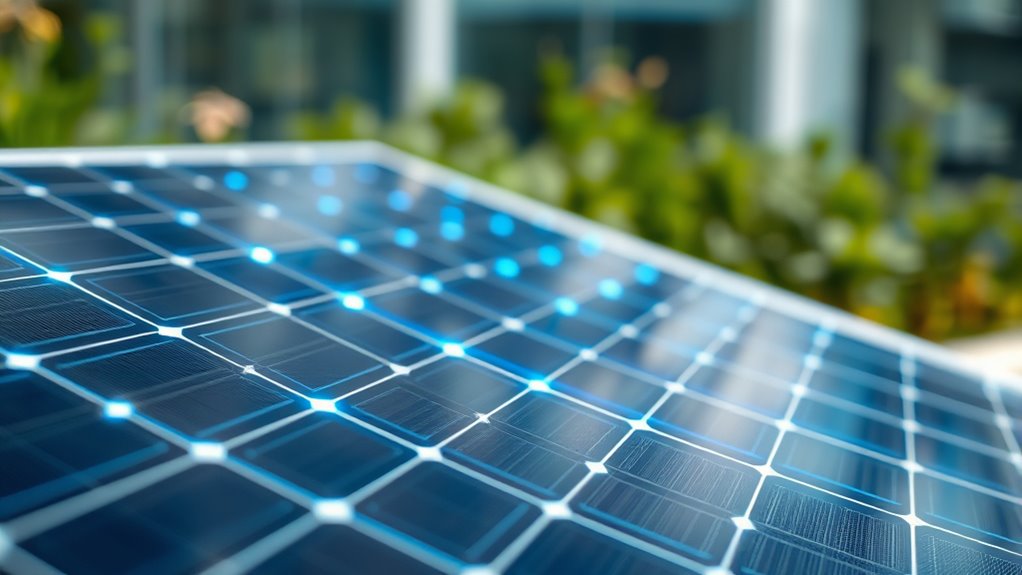
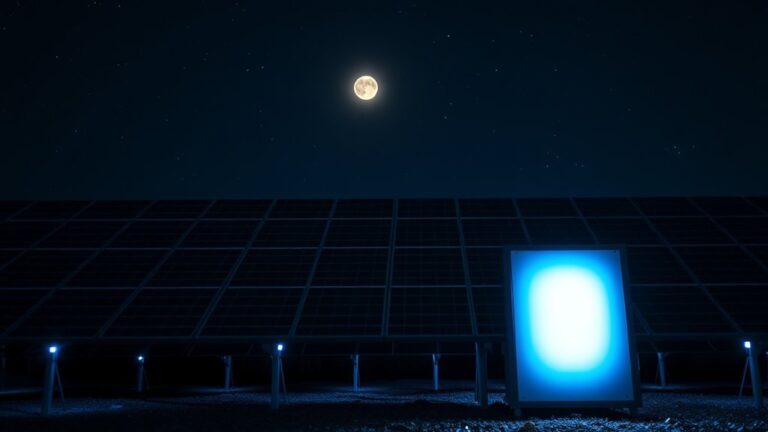
Since solar panels rely on light to generate electricity, using LED lights as a supplemental source makes practical sense. You can keep your panels active even when sunlight is limited, like during cloudy days or at night.
LEDs are energy-efficient and produce a steady, consistent light, which helps maintain a stable charge. Plus, their long lifespan means less maintenance and lower replacement costs compared to other light sources.
Using LEDs also allows you to control the light intensity and duration, optimizing your solar panel’s performance. This approach can extend your energy generation hours, enhancing overall efficiency.
How to Set up Your Solar Panel With LED Light Sources
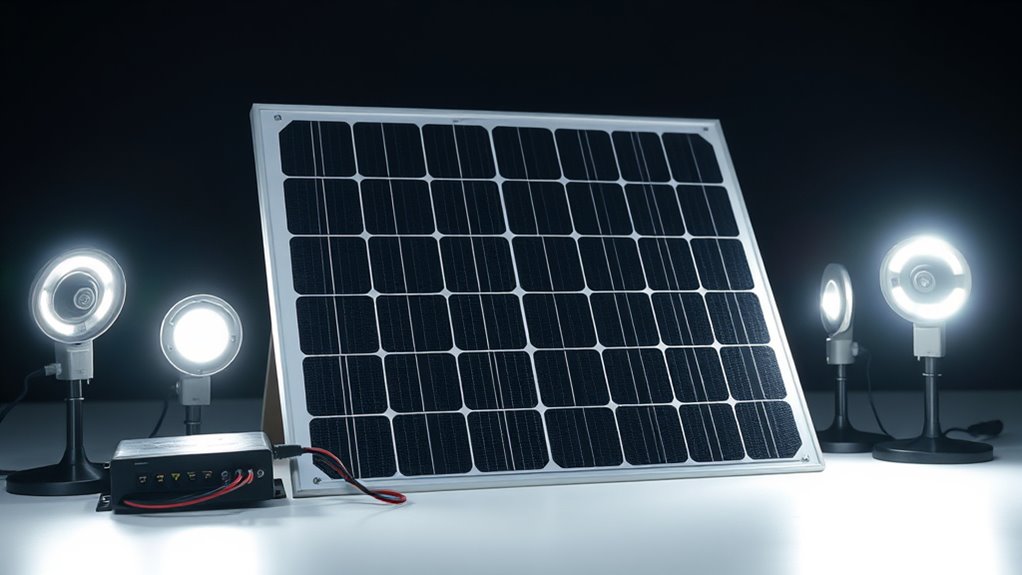
To set up your solar panel with LED light sources, start by choosing LEDs that provide enough brightness and the right spectrum. Then, position your panels to maximize exposure to the LED light without shadows or obstructions.
Make sure to connect the LED lights to the panels securely to guarantee efficient energy transfer. This way, you’ll get the best performance from your setup.
Selecting Suitable LED Light
When setting up your solar panel with LED light sources, you need to choose LEDs that emit the right intensity and spectrum to maximize charging efficiency. Not all LEDs are created equal, so focus on those that closely mimic natural sunlight or fall within the solar panel’s ideal response range.
Look for LEDs with high luminous flux to guarantee enough light reaches the panel. Also, consider the color temperature, as cooler white LEDs (around 5000K-6500K) usually perform better for charging purposes.
Keep these points in mind when selecting your LED light:
- Brightness level suitable for your panel size
- Spectrum range matching solar cell sensitivity
- Energy efficiency to reduce power consumption
- Stability and lifespan of the LED
- Compatibility with your power source and setup
Positioning Panels Correctly
Choosing the right LED light sets the stage, but positioning your solar panels correctly makes all the difference in capturing that light effectively. You want to angle the panels so they face the LED source directly, maximizing exposure.
Keep panels steady and avoid shadows or obstacles that can block the light. Distance matters too—too far, and the panel won’t charge efficiently; too close, and you risk overheating.
Here’s a quick guide:
| Position Aspect | Tip |
|---|---|
| Angle | Tilt toward the LED source |
| Distance | Maintain 1-2 feet |
| Stability | Use a firm mount or stand |
| Avoid Obstacles | Clear any shadows or cover |
Connecting LED To Panels
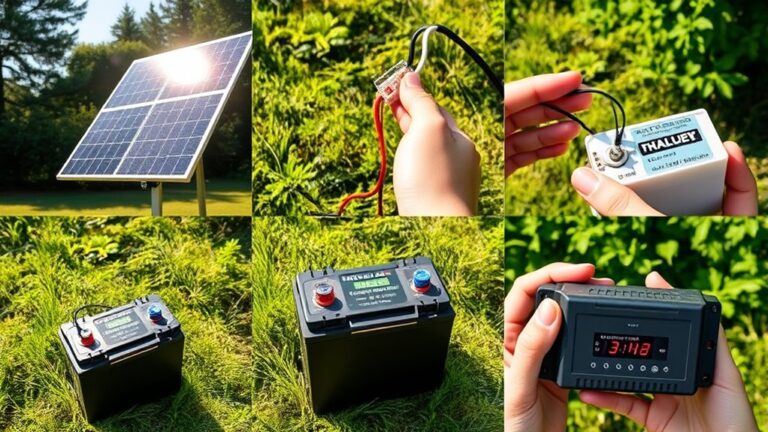
How exactly do you connect your LED lights to solar panels for peak charging? First, make sure your LED light source matches the panel’s voltage and current specs. This step is really important to avoid any damage.
Next, position the LED so its light shines directly on the solar cells. You want to get as much light as possible onto the panel for better charging.
Use proper wiring to link the LED’s positive and negative terminals to those on the panel. Be careful to avoid any loose connections because they can cause issues.
You might need a resistor to prevent overcurrent. It’s a simple addition but can save your setup from burning out.
Finally, test the setup in a dark room to confirm the panel charges under LED illumination. This way, you can be sure everything is working as it should.
- Bright LED positioned close to the panel
- Secure wiring with insulated connectors
- Resistor placed inline for current control
- LED light angled for maximum exposure
- Solar panel meter showing charging activity
How Solar Panels Convert LED Light Into Electricity
Have you ever wondered what happens when LED light hits a solar panel? When the LED light shines on the panel, its photons penetrate the solar cells made of semiconductor material, usually silicon.
These photons transfer their energy to electrons in the silicon, exciting them and freeing them from their atoms. This process creates electron-hole pairs, allowing electrons to flow through the material.
Photons energize silicon electrons, freeing them to flow and create electron-hole pairs for electricity generation.
You’ll find that this flow of electrons generates direct current (DC) electricity. The solar panel’s built-in electric field guides the electrons toward the external circuit, producing usable power.
Even though LED lights emit less intensity than sunlight, the conversion process inside the solar panel remains the same, turning the LED light energy into electrical energy you can harness for various applications.
How to Measure Energy Output From Led-Charged Solar Panels
Wondering how to accurately gauge the energy output from solar panels charged by LED lights? You’ll need to measure the current and voltage produced by the panel under LED illumination.
Start by connecting a multimeter in series to measure current (amps) and in parallel to measure voltage (volts). Then calculate power output (watts) by multiplying voltage by current.
To get a precise reading, make certain the LED light intensity remains constant during measurement. Here’s what you should focus on:
- Setting up your multimeter correctly
- Positioning the LED light at a fixed distance
- Recording voltage and current readings carefully
- Calculating power output with the formula (P = V times I)
- Comparing measurements over time for consistency
This process helps you understand how efficiently your solar panel converts LED light into usable energy.
Tips to Optimize Your Solar Panels for LED Light Charging
Accurately measuring your solar panel’s output under LED light sets the foundation for boosting its performance. To enhance charging, position your panels to face the LED source directly, guaranteeing maximum light absorption.
Properly align your solar panels with LED light to maximize energy absorption and improve performance.
Keep the panels clean—dust and grime can considerably reduce efficiency. Use LED lights with a spectrum that closely matches the solar panel’s best wavelength for better energy conversion.
Minimize shading, as even small shadows can cut output drastically. Adjust the distance between the LED light and panels; too far weakens intensity, too close may cause overheating.
Finally, confirm your setup has proper ventilation to maintain ideal operating temperatures. This helps sustain steady energy production. Following these tips will help you get the most from LED light charging.
Frequently Asked Questions
Can LED Lights Damage Solar Panels Over Time?
LED lights won’t damage your solar panels over time since they emit low-intensity light.
However, they also won’t effectively charge the panels. So, you don’t need to worry about damage, just limited energy output.
Are Specific LED Colors Better for Charging Solar Panels?
Yes, you’ll find specific LED colors, like blue and green, work better for charging solar panels because their wavelengths match the panels’ absorption spectrum.
This matching boosts efficiency compared to red or yellow LEDs. It’s pretty interesting how the color really makes a difference!
How Does LED Light Charging Compare to Natural Sunlight Efficiency?
LED light charging is much less efficient than natural sunlight because LEDs emit less energy and a narrower spectrum. You won’t get the same power output, so relying on sunlight is always better for solar panels.
That said, LED charging can still be useful in certain situations, like indoors or when sunlight isn’t available. But if you want the best efficiency, natural sunlight is definitely the way to go.
Can Solar Panels Store Energy Generated From LED Lights?
You absolutely can store energy generated from LED lights with solar panels, but it’s like trying to fill an ocean with a teaspoon—LEDs produce far less power than sunlight, so charging is very slow and inefficient.
Think about it this way: solar panels are designed to capture sunlight, which is way more powerful than what LEDs emit. So, while it’s technically possible, it’s not really practical or effective for energy storage.
Is LED Light Charging Cost-Effective for Large-Scale Solar Systems?
You won’t find LED light charging cost-effective for large-scale solar systems because LEDs emit low energy compared to sunlight.
Relying on natural sunlight saves you money and maximizes solar panel efficiency for bigger setups.
Conclusion
By using LED lights to charge your solar panels, you’re giving them a gentle, steady sunbeam—even indoors. Think of it as feeding your panels a light snack that powers them up bit by bit.
With the right setup and a sprinkle of care, you’ll turn those tiny LED rays into a bright energy feast. So, embrace the glow, and watch your solar panels dance to the rhythm of LED light, charging your world one photon at a time.
Charging solar panels with LED lights might sound unusual, but it’s all about providing consistent, low-intensity light that solar cells can absorb. This process helps maintain energy flow, especially when natural sunlight is scarce.
So, if you want to keep your solar panels active indoors or during gloomy days, using LED lights is a clever way to boost their performance. Just remember, patience and proper positioning make all the difference in turning LED light into real power for your solar setup.
One Comment