Do Solar Panels Attract Lightning and How to Protect Your Home
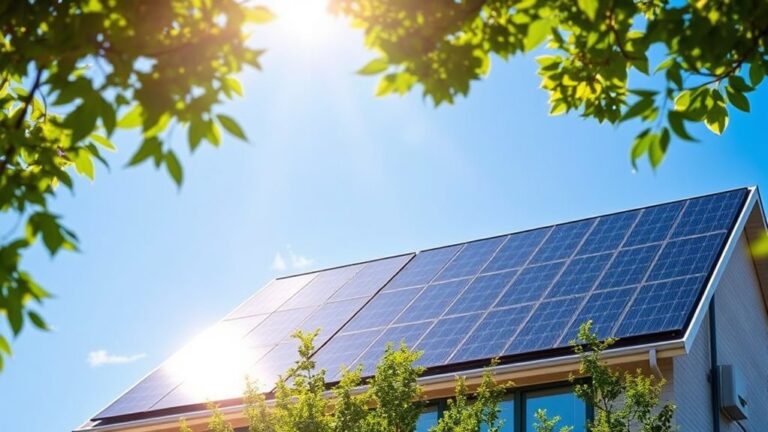
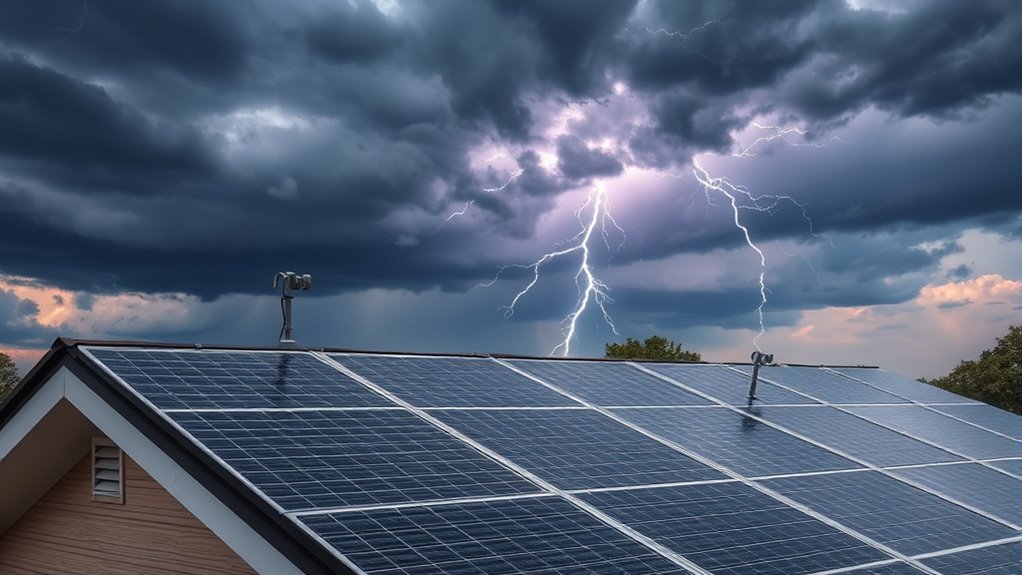
You don’t need to worry about your solar panels attracting lightning, as they usually sit flat on your roof and don’t stand out as targets. Solar panels are designed to blend in, so they aren’t likely to draw lightning strikes more than any other part of your home.
That said, lightning can still cause electrical surges that may damage your panels and home wiring.
To protect your system, make certain of proper grounding, install surge protectors, and consider lightning rods. These steps help keep your solar setup safe during storms.
Turning off inverters during storms also helps prevent damage. Keep following to discover more ways to safeguard your solar setup and home from lightning-related risks.
Key Takeaways
- Solar panels do not attract lightning more than other roof materials since they lie flat and are not the tallest objects nearby.
- Lightning can cause electrical surges that damage solar inverters and home electronics if not properly protected.
- Proper grounding and bonding of solar panel systems redirect lightning currents safely into the earth, reducing damage risk.
- Installing surge protectors and lightning rods helps absorb voltage spikes and channel strikes away from the solar array.
- Regular inspections and turning off inverters during storms enhance protection against lightning-induced electrical faults and fires.
Do Solar Panels Actually Attract Lightning Strikes?
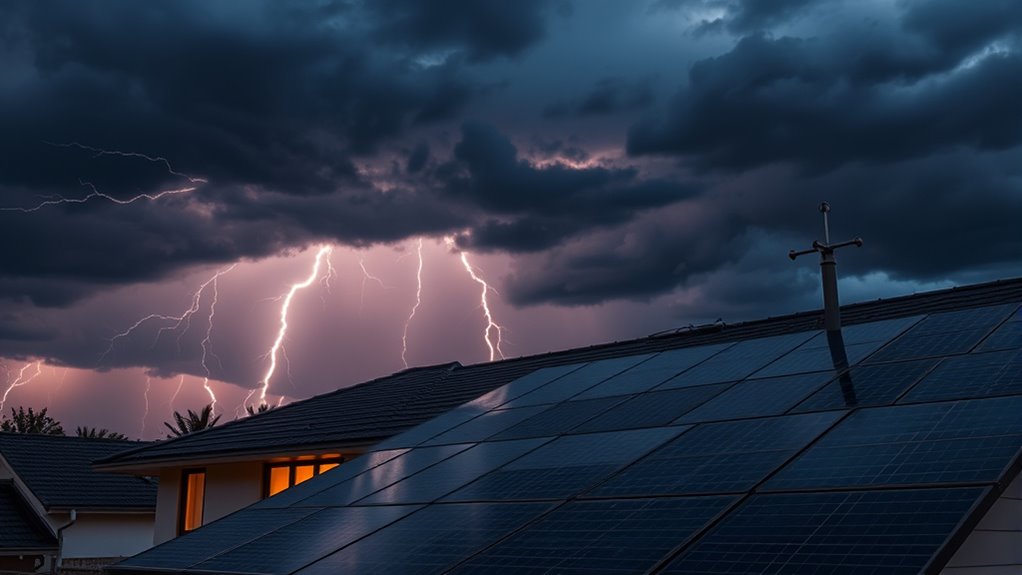
Although many people worry that solar panels might attract lightning strikes, research shows they don’t increase the risk. When lightning looks for a target, it’s drawn to the tallest or most conductive objects nearby.
Your solar panels usually sit flat on your roof, not standing out as lightning magnets. Plus, modern solar panel systems include grounding and bonding techniques that safely direct any electrical surges away from your home.
You don’t need to fear that adding panels suddenly makes your house a lightning hotspot. Instead, the panels blend into your roof’s profile, keeping your home’s overall lightning risk about the same.
What Risks Does Lightning Pose to Solar Panels?
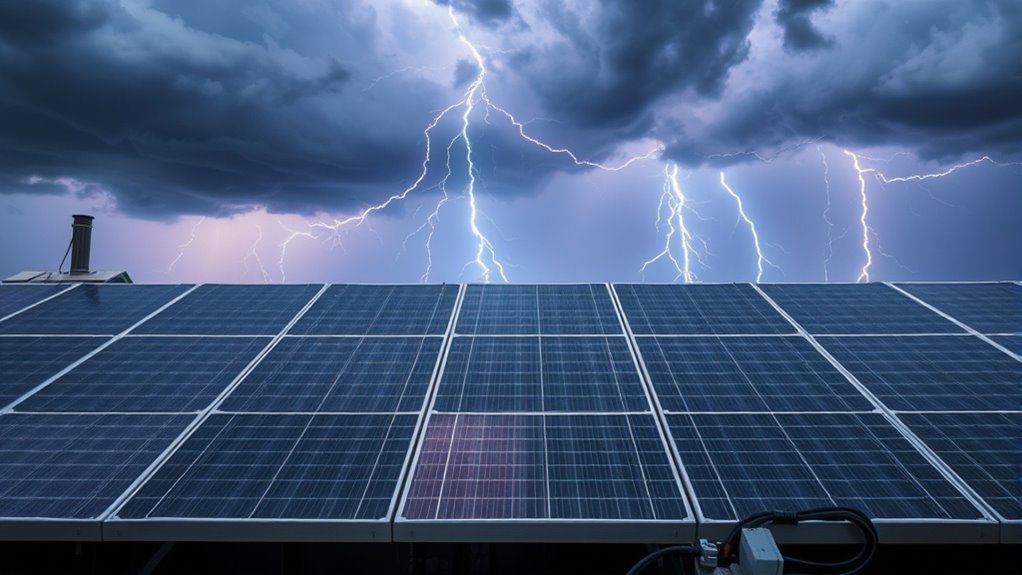
Even if solar panels don’t attract lightning, they can still face damage when a strike occurs nearby. Lightning generates intense electrical currents and surges that can travel through your home’s wiring, reaching your solar system.
These surges can fry the panels’ delicate electronics or damage the inverter that converts solar energy into usable electricity. You might also experience power outages or blown fuses caused by a nearby strike.
Additionally, the metal frames and wiring in your solar array can act as conductors, increasing the risk of electrical faults or fires if lightning’s energy isn’t properly grounded. Understanding these risks helps you take the right precautions to keep your solar investment safe during thunderstorms.
How Does Lightning Affect Solar Panels?
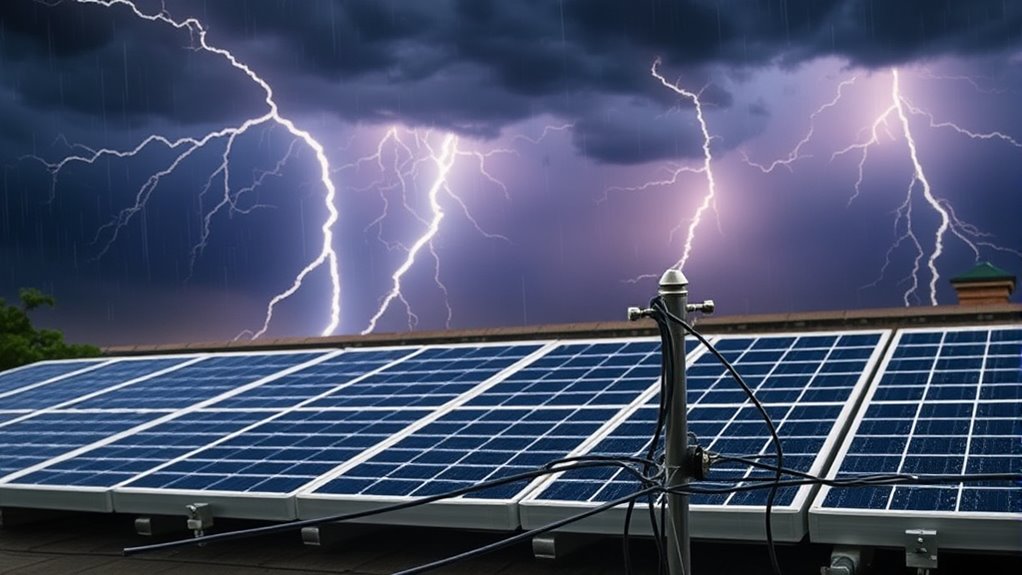
When lightning strikes near your solar panels, it can cause serious damage beyond just the initial impact. The intense electrical surge can overload your panels’ circuits, damaging the cells that convert sunlight into electricity.
You might find your system suddenly stops working or produces far less energy. Additionally, the surge can harm the inverter, which manages the power flow to your home.
This damage isn’t always visible but can lead to costly repairs or replacements. Lightning can also create power spikes that affect your entire electrical system, risking fires or further harm.
Damage may be hidden yet cause expensive repairs, with power spikes risking fires and further electrical harm.
Understanding how lightning affects your solar panels helps you recognize the risks and prepares you to respond quickly if a strike occurs near your home.
How Can You Protect Your Home and Solar Panels From Lightning?
Since lightning can cause serious damage to your solar panels and home, taking proactive steps to protect them is essential. First, make certain your solar system is properly grounded to safely direct electrical surges into the earth.
Also, inspect your roof and panels regularly for any loose connections or damage that could increase vulnerability. You should install surge protectors specifically designed for solar power systems to minimize electrical spikes during storms.
Trimming nearby trees can reduce the risk of lightning strikes traveling through branches to your panels. And during severe thunderstorms, it’s wise to turn off your solar inverter to prevent electrical overload.
What Lightning Protection Solutions Are Available for Solar Panels?
You’ll want to think about installing a lightning protection system to shield your solar panels. Proper grounding and surge protection are key to preventing damage from lightning strikes.
Let’s look at how these solutions work together to keep your setup safe. It’s all about making sure your equipment can handle a strike without costly repairs or downtime.
Lightning Protection Systems
Although solar panels can increase the risk of lightning strikes due to their elevated and exposed position, you don’t have to leave your system vulnerable.
Installing a dedicated lightning protection system safeguards your panels and home from damage. You can choose from several effective solutions designed specifically for solar setups:
- Air terminals (lightning rods) placed near panels to intercept strikes
- Conductive paths to safely channel lightning current away from equipment
- Mesh or cage systems covering the array for added protection
- Surge protection devices integrated with the lightning system for immediate response
- Regular inspection and maintenance to guarantee system integrity
Taking these steps really helps keep your solar setup safe and sound. It’s all about being proactive and giving your investment the best protection possible.
Grounding and Surge Protection
When protecting your solar panels from lightning, grounding and surge protection play essential roles in minimizing damage. Grounding directs electrical current safely into the earth, which helps reduce the impact of a strike.
Surge protection devices (SPDs) shield your system from voltage spikes caused by lightning or electrical surges. When you combine these methods, you strengthen your defense and help prolong your panels’ lifespan.
| Solution | Purpose |
|---|---|
| Grounding Rods | Divert lightning safely into the ground |
| Metal Frame Bonding | Connect panels to grounding system |
| Surge Protection Devices | Absorb and block voltage surges |
| Lightning Arrestors | Intercept and redirect lightning strikes |
| Regular Inspections | Ensure system integrity and functionality |
Tips to Keep Solar Panels Safe During Lightning Storms
Since lightning storms can pose risks to your solar panels, taking proactive steps to protect them is essential. You want to minimize damage and guarantee your system keeps running smoothly.
Here are some practical tips to safeguard your panels during storms:
- Install a professional grounding system to safely direct lightning strikes.
- Use surge protectors on your inverter and electrical components.
- Regularly inspect your panels and wiring for wear or damage.
- Trim nearby trees to reduce the risk of falling branches during storms.
- Consider adding a lightning rod to your roof for extra protection.
Frequently Asked Questions
Do Solar Panels Increase My Electricity Bills During Lightning Storms?
No, solar panels don’t increase your electricity bills during lightning storms. They generate power when sunlight’s available, and storms usually reduce production.
Your system’s designed to shut down safely, so you won’t face higher charges. It’s all built to keep things running smoothly, even when the weather’s rough.
Can Lightning Damage the Inverter Connected to Solar Panels?
Yes, lightning can damage your solar inverter by causing power surges. These surges can seriously harm your equipment if you’re not careful.
You should install surge protectors and grounding systems to protect your inverter and solar setup. This way, you can help ensure your equipment stays safe during storms. It’s definitely worth taking these precautions!
Are There Insurance Policies That Cover Lightning Damage to Solar Panels?
Of course, your insurance probably won’t cover lightning damage to solar panels—unless you specifically check.
You’ll want to add a rider or specialized policy because standard coverage often excludes such costly, rare, but possible events.
How Often Should Lightning Protection Systems for Solar Panels Be Inspected?
You should have lightning protection systems for your solar panels inspected at least once a year. After severe storms, check them promptly to guarantee they’re intact and functioning properly.
This helps keep your home safe. It’s a simple step that can save you a lot of trouble down the road.
Do Solar Panels Affect the Likelihood of Lightning Strikes Near My Home?
No, solar panels don’t increase lightning strikes near your home. They’re made from non-conductive materials, so they don’t attract lightning.
Just make certain you have proper grounding and lightning protection to keep your system safe. It’s all about making sure your setup can handle whatever nature throws at it.
Conclusion
You don’t need to worry that solar panels will wildly welcome lightning, but you do want to watch out for weather worries. Lightning can cause costly damage, so taking timely, targeted steps to protect your panels and property is powerful prevention.
With proper protection plans in place, you’ll feel secure and savvy, safeguarding your solar setup from strikes. Stay smart, stay safe, and shine on with strong, storm-ready solar solutions!
Remember, while solar panels don’t specifically attract lightning, they can still be affected by storms. That’s why investing in lightning protection systems and surge protectors is essential for your home.
By doing so, you ensure your solar energy system remains efficient and safe, even during severe weather. Protect your home and solar panels to enjoy clean, reliable energy without the stress of potential lightning damage.