How Do Solar Panels Melt Snow Efficiently
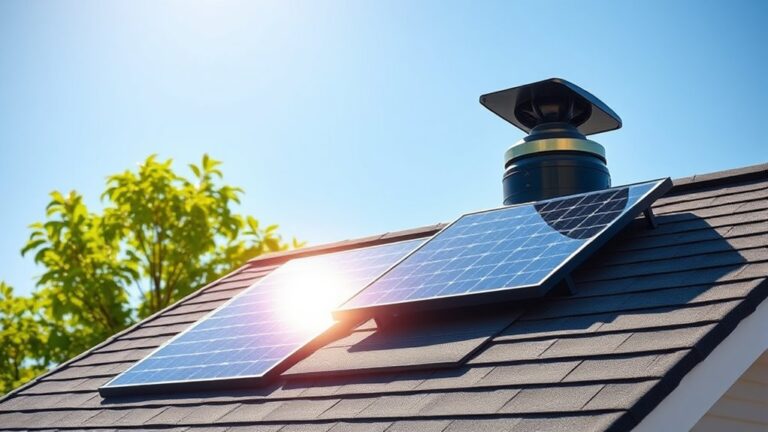
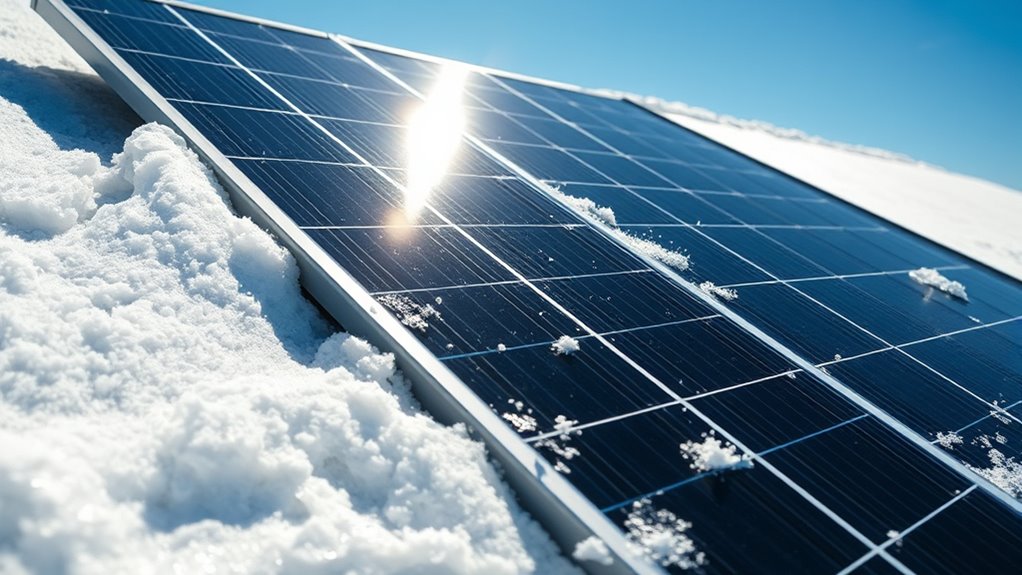
You’ll find that solar panels melt snow efficiently because their dark surfaces absorb sunlight and convert it into heat. This warmth raises the panel temperature, melting snow even when it’s freezing outside.
Solar panels are designed to handle winter conditions, so they keep working even under snow cover.
The panels’ tilt angle and weather conditions like wind help snow slide off naturally. These factors make it easier for snow to fall away without sticking around and blocking the sunlight.
Plus, modern designs often include special coatings and heating elements to speed up snow removal.
Keep these factors in mind, and you’ll understand how to keep your panels clear and productive all winter long. It’s all about using smart design and natural elements to maintain energy flow, no matter the season.
Key Takeaways
- Dark solar panel surfaces absorb sunlight and convert it to heat, warming the panels to melt snow faster. This natural warming helps keep the panels clear even on chilly days.
- Sunlight raises the panel temperature above the ambient air, which stops thick snow from piling up and keeps the panels working efficiently. It’s pretty clever how just a bit of heat makes such a difference.
- The panels are often installed at steep angles, so gravity lends a hand by letting snow slide off naturally and quickly. This way, snow doesn’t just sit there and block the sun.
- Wind and mild weather also pitch in by blowing snow off the heated and tilted panels. It’s like a team effort between heat, tilt, and the breeze to keep things clear.
- Some panels have advanced coatings or built-in heating systems that make snow shedding even easier. That means less manual shoveling and more time enjoying clean, efficient solar power.
How Solar Panels’ Dark Surfaces Help Melt Snow
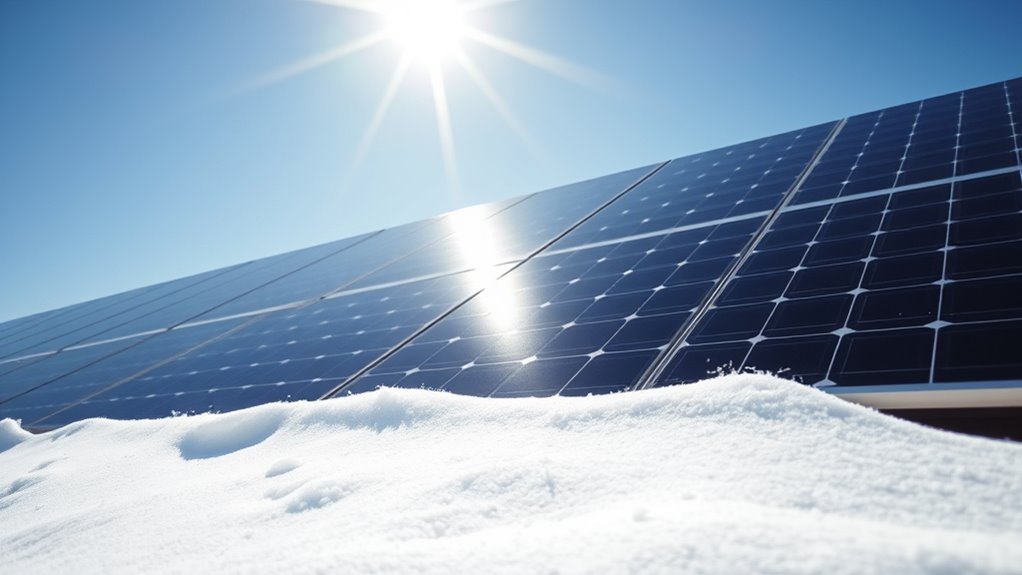
Although snow can cover your solar panels during winter, their dark surfaces actually help melt it faster. You might not realize it, but the deep black color absorbs sunlight more effectively than lighter colors.
This absorption turns sunlight into heat, warming the panel’s surface even on cold days. As a result, the snow in direct contact with the panels starts to melt quicker than snow on surrounding surfaces.
You’ll notice that this melting happens even when the air temperature is below freezing, thanks to the panels’ ability to trap solar energy as heat. So, while snow can accumulate, the dark surface of your solar panels plays an essential role in reducing buildup and maintaining their energy production throughout winter.
How Solar Panels Warm Up to Melt Snow
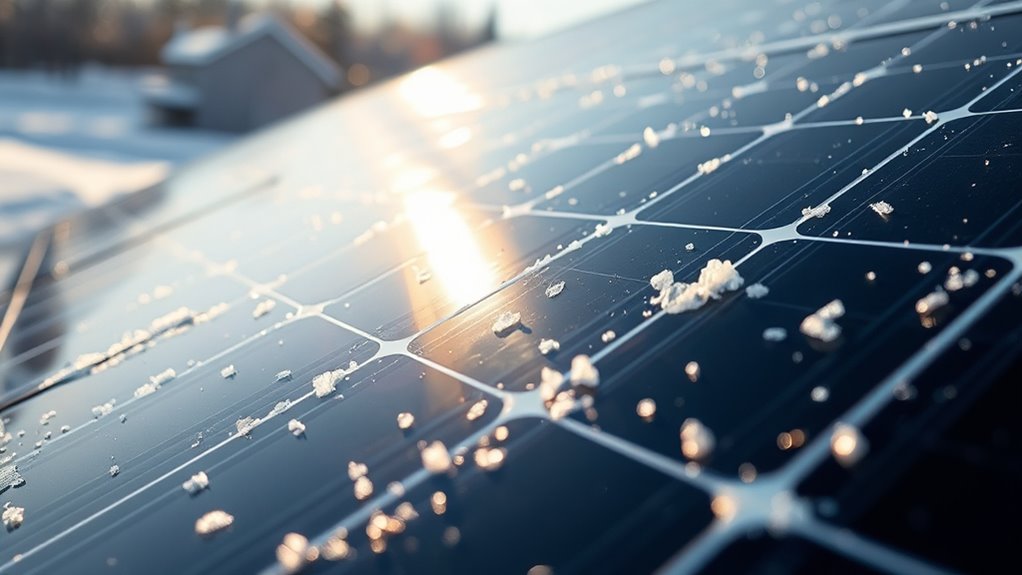
When sunlight hits your solar panels, they quickly warm up, turning their surface temperature higher than the surrounding air. This happens because solar panels absorb sunlight not only to generate electricity but also to convert light into heat.
As a result, the panel surface becomes warm enough to melt snow resting on top. You’ll notice that the heat accumulates since solar panels are made with materials that retain warmth effectively.
This warmth accelerates snowmelt, preventing thick layers from building up and blocking sunlight. By warming up, your panels maintain their efficiency and reduce downtime caused by snow coverage.
Understanding this natural warming effect helps you appreciate how solar panels keep working even in snowy conditions. Pretty neat, right?
How Weather and Sunlight Help Solar Panels Shake Off Snow
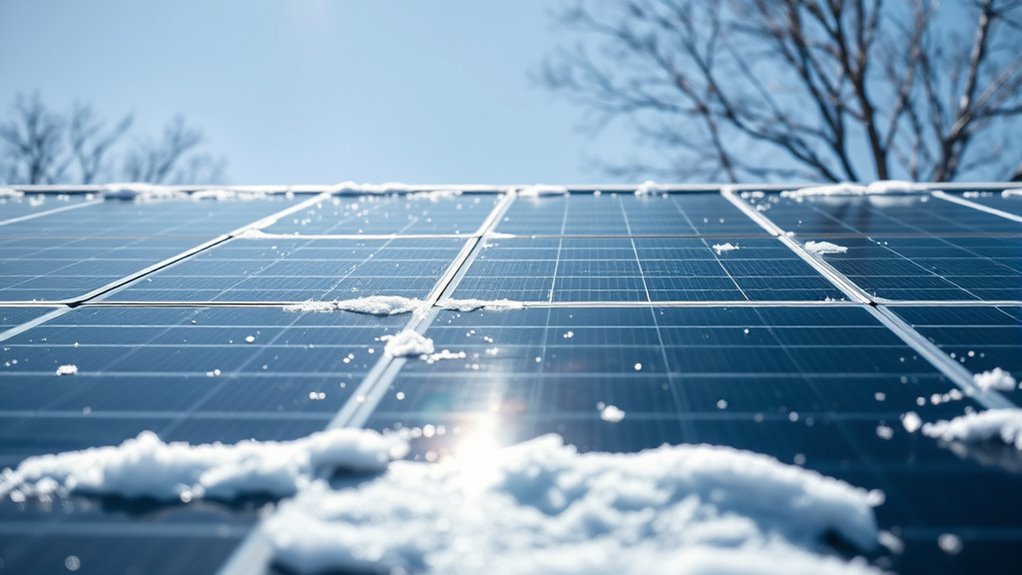
Besides the warmth generated by the panels themselves, weather and sunlight play a big role in clearing snow away. When sunlight hits the panels, it doesn’t just produce electricity—it also raises their surface temperature, helping melt snow faster.
Weather conditions like wind and ambient temperature influence how quickly snow melts or falls off. You can count on these factors to work together:
- Direct sunlight: Boosts panel surface heat, speeding snow melt.
- Wind: Blows snow off panels, preventing buildup.
- Mild temperatures: Help reduce stubborn ice and make snow melt easier.
How Installation Angle Helps Solar Panels Shed Snow
You’ll want to install your solar panels at an ideal tilt angle to help snow slide off easily. Gravity plays a key role by pulling snow down the sloped surface, preventing buildup.
Let’s explore how the right angle makes a big difference in keeping your panels clear. It’s all about making sure the snow doesn’t stick around longer than it should!
Optimal Tilt Angles
How does the angle of your solar panels affect their ability to shed snow? The tilt angle plays a vital role in encouraging snow to slide off quickly, preventing buildup that can block sunlight.
When you choose the right angle, snow won’t linger and reduce your panel’s efficiency. It’s all about finding that sweet spot.
Here’s what you should consider for ideal tilt angles:
- Steeper angles (around 30-45 degrees) help snow slide off naturally.
- Adjust angles seasonally if possible—steeper in winter to shed snow, flatter in summer for maximum sunlight.
- Consider your geographic location; areas with heavy snowfall benefit from steeper panels.
Gravity’s Role In Shedding
Because gravity constantly pulls snow downward, the angle at which your solar panels are installed directly influences how quickly snow slides off. When panels are tilted steeply, gravity helps snow shed more efficiently, preventing buildup that blocks sunlight.
If your panels lie too flat, snow tends to accumulate and linger longer, reducing energy production. By installing panels at an angle optimized for your location’s typical snowfall, you let gravity do much of the work.
This natural shedding minimizes the need for manual snow removal and keeps your system running smoothly all winter. So, when planning your solar setup, consider the slope carefully—it’s a simple adjustment that enhances snow shedding and maximizes your panels’ efficiency during snowy months.
How Modern Solar Panel Designs Improve Snow Removal
You’ll find that modern solar panels use special surface coatings to help snow slide off more easily. Some even come with built-in heating systems to melt snow quickly.
These design improvements make it easier for your panels to stay clear and efficient during winter. It’s pretty cool how technology keeps things running smoothly, even in the snow!
Enhanced Panel Surface Coatings
Although snow can considerably reduce solar panel efficiency, modern designs tackle this issue with advanced surface coatings. These coatings help snow slide off faster and prevent buildup, keeping your panels productive during winter.
When you choose panels with enhanced coatings, you benefit from:
- Hydrophobic surfaces that repel water and reduce snow adhesion
- Anti-reflective layers that improve sunlight absorption even with partial snow coverage
- Durable, scratch-resistant finishes that maintain efficiency over time despite harsh weather
Integrated Heating Technologies
Building on surface coatings that reduce snow buildup, many modern solar panels now include integrated heating technologies to actively clear snow. You’ll find thin heating elements embedded within or attached to the panel’s frame, which generate warmth when powered. This heat melts snow efficiently without substantially impacting energy production.
Some systems activate automatically when sensors detect snow or low temperatures, so you don’t have to monitor them constantly. Others allow manual control, giving you flexibility based on weather conditions.
These integrated heaters prevent snow from blocking sunlight, maintaining ideal panel performance during winter. Plus, they reduce the need for manual snow removal, saving you time and effort.
Maintenance Tips to Keep Solar Panels Snow-Free in Winter
How can you guarantee your solar panels keep producing energy even after a heavy snowfall? Regular maintenance is key to preventing snow buildup and ensuring peak performance.
You don’t have to wait for the sun to melt the snow naturally. Instead, take proactive steps to keep your panels clear.
Here are some simple maintenance tips:
- Use a soft brush or roof rake: Gently remove snow without damaging the panels.
- Install heating cables: These can melt snow quickly during heavy storms.
- Check panel angles and trim nearby trees: Ensuring proper tilt and sunlight exposure helps snow slide off faster.
Frequently Asked Questions
Can Snow Accumulation Damage Solar Panels?
Yes, snow accumulation can damage your solar panels by adding weight and causing stress. You should regularly clear heavy snow to prevent cracks or structural issues.
This helps ensure your panels stay efficient and last longer through winter. It’s a simple step that can save you from bigger problems down the road.
Do Solar Panels Work Efficiently in Heavy Snowfall?
You won’t see your solar panels turning into ice castles during heavy snowfall—they still work efficiently! They keep generating power, sometimes even melting snow to stay clear.
How Long Does It Take for Snow to Melt on Panels?
It usually takes a few hours for snow to melt on your solar panels, depending on sunlight intensity and temperature. If it’s sunny and above freezing, your panels warm up quickly, melting snow faster than you might expect.
Are There Special Coatings to Prevent Snow Buildup?
Yes, you can find special hydrophobic coatings that help prevent snow buildup on solar panels. These coatings make snow slide off more easily, keeping your panels clearer and more efficient during snowy weather.
They’re pretty handy when you want to avoid the hassle of manually clearing snow. Plus, maintaining efficiency in winter becomes a lot easier with these coatings in place.
Can Solar Panels Generate Power During Snowstorms?
Like a silent warrior, your solar panels can generate power during snowstorms, though output drops. Snow coverage blocks sunlight, but any exposed areas still produce energy.
Conclusion
You’ve seen how solar panels use their dark surfaces and warm-up properties to melt snow efficiently. With the right angle and modern designs, they shake off snow like a pro, letting sunlight do the heavy lifting.
Just remember to keep up with maintenance to avoid any winter hiccups. When it comes to snow, you’ll be ahead of the game—no need to let winter put a freeze on your solar power!
Solar panels are designed to efficiently melt snow by absorbing sunlight and converting it into heat. Their dark surfaces naturally attract warmth, which helps snow slide off quicker. Plus, the angle at which panels are installed encourages snow to fall away instead of piling up.
With regular maintenance and smart design, solar panels keep producing energy even in snowy conditions. So, don’t worry about winter slowing down your solar power system. Embrace these efficient snow-melting features and enjoy consistent clean energy all year round!