Day: October 16, 2026

  • How Long Do Solar Inverters Last and How to Maintain Them

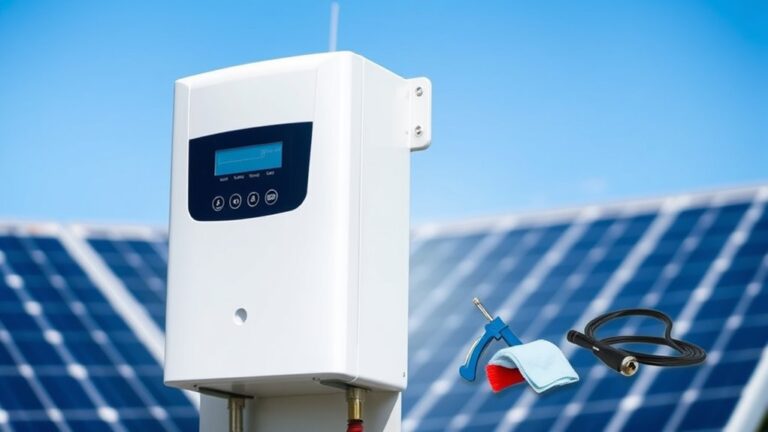
    You can expect your solar inverter to last around 10 to 15 years, especially if you choose a quality unit and maintain it well. Keep it cool by installing it in a shaded, ventilated spot and clean the vents regularly.

    Watch for signs like frequent shutdowns or unusual noises, and update firmware when needed. Avoid electrical surges and moisture to extend its life.

    Keep following these tips, and you’ll discover how to pick the best inverter and troubleshoot common issues. It’s not as tricky as it sounds!
  • How Long Do Commercial Solar Installations Typically Take to Estimate?

    You can expect a commercial solar installation estimate to take anywhere from a few days up to two weeks. Factors like your site’s size, layout complexity, structural challenges, and how quickly you provide details all affect the timing.

    Providers may also need to coordinate permits and utility reviews, which can add time. Being prepared with key info speeds things up and makes estimates more accurate.

    Keep exploring to understand how these elements shape your project timeline.

  • How Hot Can Solar Panels Get and How to Manage Temperatures

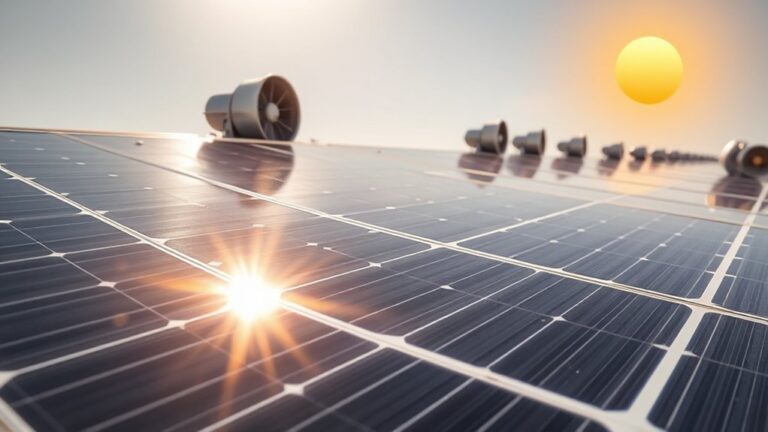
    Solar panels can reach surface temperatures between 110°F and 150°F during peak sun hours. They often feel much hotter than the surrounding air.

    You’ll want to manage this heat since excessive warmth reduces their efficiency and shortens their lifespan. Simple steps like ensuring good ventilation, cleaning panels regularly, and adjusting angles help keep them cooler.

    For more effective methods and monitoring tips, you can explore ways to optimize your solar panel’s performance and durability. It’s all about keeping them in top shape to get the best energy output.

  • How Fast Does a Solar Cover Heat a Pool: 7 Facts

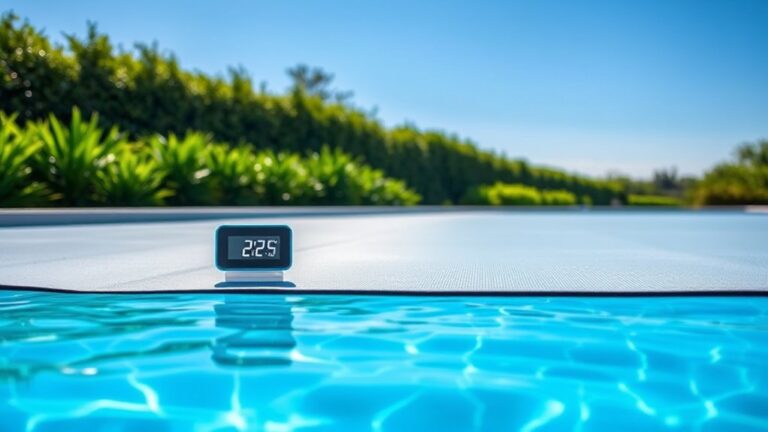
    You can raise your pool’s temperature by 5 to 10°F within a day using a solar cover, especially if you place it early to trap daylight heat. Sunlight, pool size, and depth affect how quickly your water warms—larger or deeper pools take longer.

    Proper circulation helps distribute heat evenly but avoid too fast a flow that reduces absorption. Choosing the right cover type and keeping it clean boosts warming speed.

    Keep exploring to uncover tips that make your pool heat even faster. You’ll be surprised how small changes can make a big difference!

  • How Does Solar Energy Work at Night?

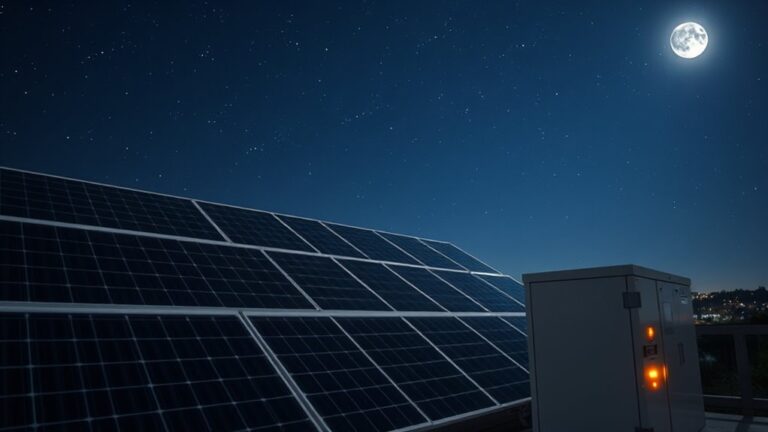
    You might wonder how solar energy works at night when there’s no sunlight. Solar panels alone can’t produce power after dark since they need sunlight to excite electrons and generate electricity.

    But don’t worry, you can still use solar energy at night by tapping into batteries that store excess power collected during the day. Or, there are thermal systems that save heat for later use.

    These solutions help you keep your home powered continuously. Exploring how these technologies work reveals even smarter ways to guarantee round-the-clock solar energy.

  • Does Location Play a Role in Solar Energy Efficiency?

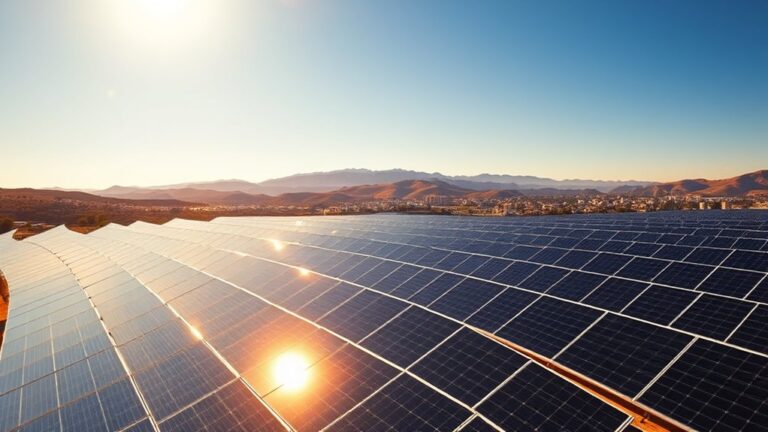
    Yes, your location plays a big role in solar energy efficiency. Sunlight availability, climate, and seasonal sun angles all affect how much energy your solar system produces.

    Places near the equator get more direct sunlight, while higher latitudes see less intense rays. Weather patterns like cloud cover, temperature, and local environmental factors also impact performance.

    Knowing your location helps you optimize panel placement and get the best return on your investment. There’s a lot to take into account when planning your solar setup.

  • How Does a Solar Farm Connect to the Grid?

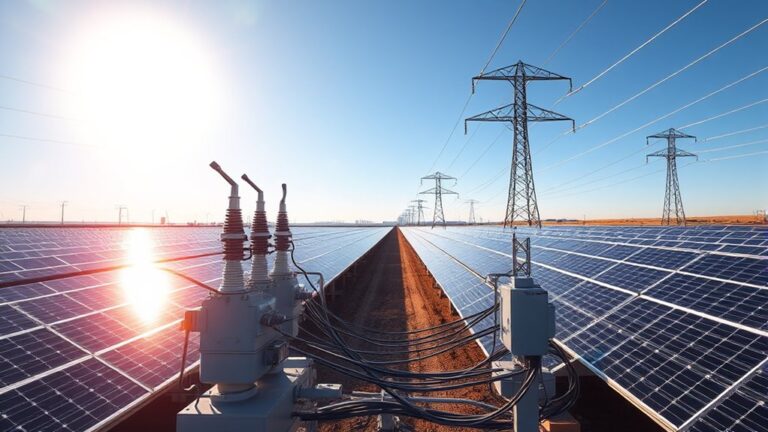
    To connect a solar farm to the grid, you first convert sunlight into DC electricity using solar panels, then use inverters to turn it into grid-compatible AC power. Transformers adjust voltage, while protective devices guarantee safety by managing faults and surges.

    You also coordinate with the utility to meet regulations and verify system performance through testing. Control systems keep everything stable during operation.

    If you want to understand the detailed steps and equipment involved, there’s more to explore.