
How Fast Does a Solar Cover Heat a Pool: 7 Facts
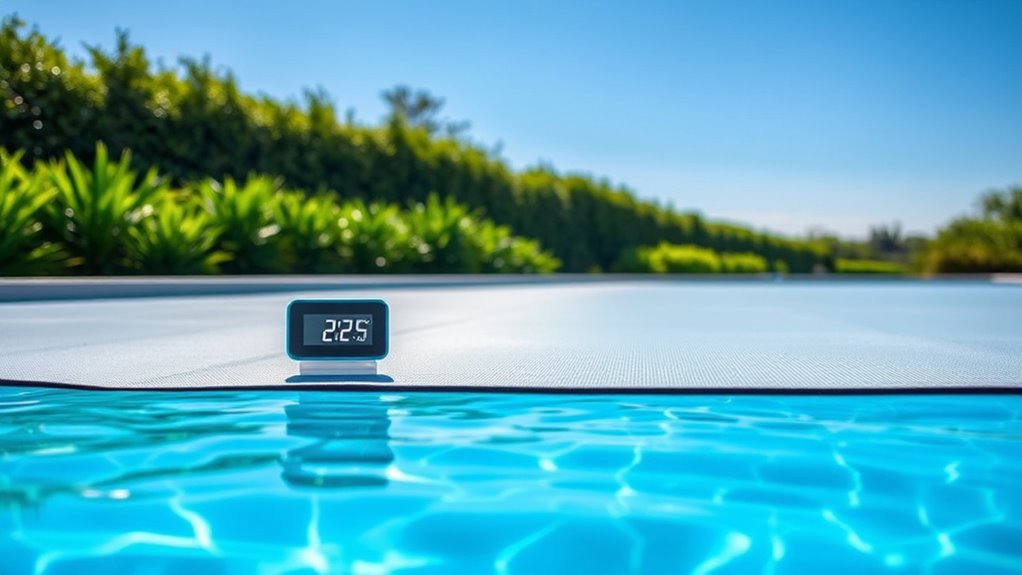
You can raise your pool’s temperature by 5 to 10°F within a day using a solar cover, especially if you place it early to trap daylight heat. Solar pool covers work by capturing the sun’s warmth and preventing heat from escaping, making them a smart choice for heating your pool efficiently.
Sunlight, pool size, and depth affect how quickly your water warms—larger or deeper pools take longer.
Proper circulation helps distribute heat evenly but avoid too fast a flow that reduces absorption.
Choosing the right cover type and keeping it clean boosts warming speed. Keep exploring to uncover tips that make your pool heat even faster.
Key Takeaways
- Solar covers can raise pool temperature by 5-10°F within 24 hours with consistent daily use. It’s pretty impressive how quickly they work.
- Sunlight intensity and direct exposure significantly speed up pool warming with a solar cover. So, the sunnier the day, the faster your pool heats up.
- Proper water circulation distributes heat evenly, enhancing the solar cover’s heating efficiency. Without good circulation, some spots might stay cooler than others.
- Thicker bubble covers retain heat better, accelerating pool warming compared to mesh or woven covers. They do a better job trapping that warmth.
- Removing debris and using a solar cover reel ensures maximum sunlight absorption and faster heating. Keeping the cover clean really makes a difference.
How Quickly Can a Solar Cover Raise Pool Temperature?

While the exact speed varies, you can expect a solar cover to raise your pool’s temperature noticeably within a single day. Typically, you’ll see a 5 to 10-degree Fahrenheit increase after just 24 hours of use.
A solar cover can boost your pool temperature by 5 to 10 degrees in just one day.
Factors like sunlight intensity, pool size, and ambient temperature affect how fast your water warms up. If you place the cover early in the day, it maximizes heat retention throughout daylight hours.
You’ll also find that consistent daily use builds up a steady temperature increase over several days. Keep in mind, wind and cool nights might slow the warming process, but the cover still helps maintain heat better than an uncovered pool.
Using your solar cover regularly ensures your pool stays inviting longer into the season. It’s a simple way to keep your swim time comfortable without extra energy costs.
How Do Solar Covers Trap Heat in Your Pool?
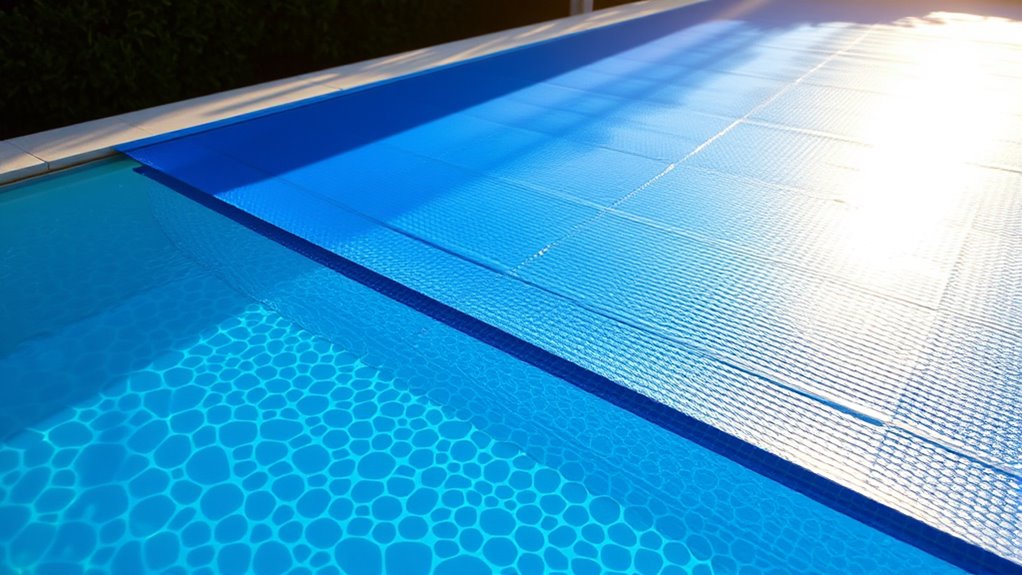
You’ll notice that solar covers work by absorbing the sun’s energy and trapping heat in your pool. They create a barrier that reduces heat loss, keeping the water warmer for longer.
It’s pretty cool how they do this, right? Understanding this process helps you see why covers are so effective at heating your pool quickly.
Heat Retention Mechanism
Because solar covers float directly on your pool’s surface, they create a barrier that traps heat from the sun and prevents it from escaping into the air. This barrier works by minimizing heat loss through evaporation, convection, and radiation.
When you use a solar cover, you’re effectively locking in the warmth your pool water gains during the day. It’s a simple way to keep your pool cozy without extra energy.
Here’s how the heat retention mechanism functions:
- Reduces evaporation, which is the biggest source of heat loss
- Blocks heat from escaping through convection currents
- Limits infrared radiation loss from the water surface
- Acts as insulation, slowing heat transfer to cooler air
Solar Energy Absorption
Although solar covers primarily retain heat by reducing loss, they also actively absorb and transfer solar energy to your pool water. When sunlight hits the cover, its material captures the sun’s rays and converts them into heat.
This heat then passes through the cover, warming the water beneath. The cover’s surface and thickness influence how much energy it absorbs and transfers.
| Feature | Function | Benefit |
|---|---|---|
| Material Type | Absorbs solar radiation | Increases heat transfer |
| Thickness | Retains and conducts heat | Boosts water temperature |
| Surface Texture | Captures sunlight | Maximizes energy absorption |
How Do Sunlight, Weather, Pool Size, and Depth Affect Heating?
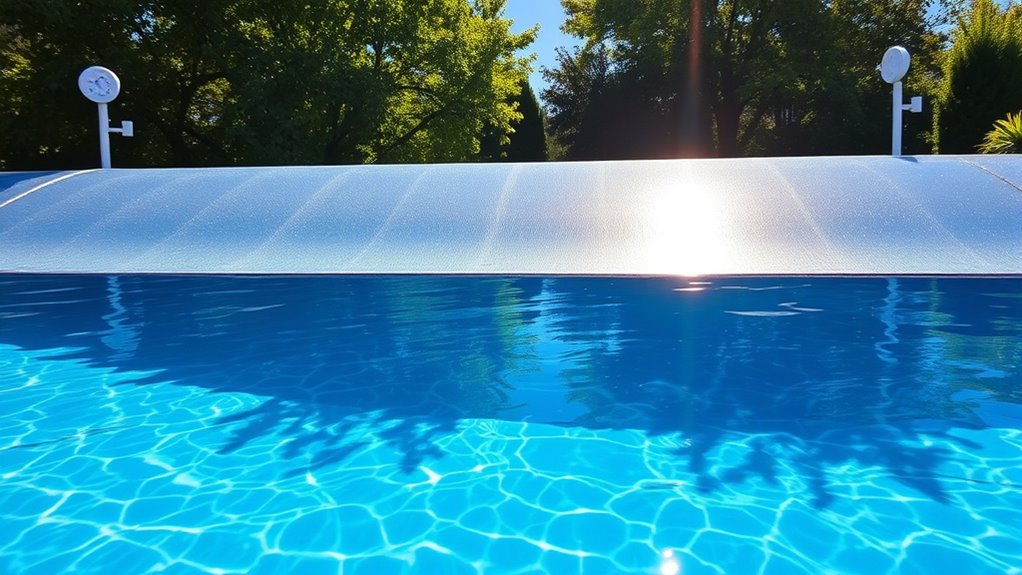
When sunlight hits your pool, it directly influences how quickly the water warms up under a solar cover. The amount and intensity of sunlight determine the heat energy your pool absorbs.
But, weather conditions and pool characteristics also play vital roles. Here’s how these factors affect heating:
- Sunlight: More direct sunlight means faster heating.
- Weather: Cloudy or windy days slow down heat retention.
- Pool Size: Larger pools take longer to warm because there’s more water to heat.
- Pool Depth: Deeper pools heat slower since solar energy warms surface water first.
Understanding these elements helps you set realistic expectations for your solar cover’s performance. It also lets you optimize your pool heating strategy accordingly.
How Does Pool Water Circulation Influence Heating Time?
You’ll notice that how fast your pool water circulates can change the heating time with a solar cover. Faster circulation spreads warm water more evenly, while slower flow might create cooler spots.
Adjusting your pump run duration can help optimize this process for quicker heating. It’s all about finding the right balance to keep your pool nice and warm.
Circulation Speed Effects
Because pool water circulation directly affects how evenly heat spreads, it plays an essential role in how quickly your solar cover warms the water. If the circulation speed is too slow, warmer water stays near the surface, limiting heat distribution.
Too fast, and water may not absorb enough heat from the solar cover before moving on. You want the right balance to maximize efficiency.
Here’s how circulation speed impacts heating time:
- Moderate speeds promote even heat distribution throughout the pool.
- Slow circulation can cause temperature stratification, slowing overall warming.
- Fast circulation may reduce solar heat absorption by constantly moving water.
- Adjustable pump speeds help optimize heating based on your pool size and solar cover efficiency.
Adjusting circulation speed can make a noticeable difference in how fast your pool heats up.
Water Flow Patterns
Although circulation speed sets the pace, the patterns of water flow determine how heat spreads throughout your pool. When water circulates evenly, warm water from the surface mixes efficiently with cooler water below, distributing heat consistently.
If your pool has dead zones where water barely moves, those areas stay cooler, slowing overall heating. You’ll want to arrange your return jets and inlet positions to promote a circular or spiral flow, encouraging full pool coverage.
This prevents hot spots near the surface and cold pockets at the bottom. Proper flow patterns help your solar cover work faster by maintaining uniform temperatures.
Pump Run Duration
How long you run your pool pump directly affects how quickly your solar cover heats the water. The pump circulates water, pushing cooler water from the bottom to the surface where the solar cover traps heat.
If you don’t run the pump enough, the water won’t circulate properly, slowing down heating. On the other hand, running the pump too long wastes energy without much additional warming.
To optimize heating time, consider these points:
- Run the pump during peak sunlight hours for maximum heat absorption.
- Guarantee the pump cycles water steadily, avoiding short bursts.
- Balance pump duration with energy costs to keep heating efficient.
- Regularly check and clean filters to maintain good water flow and circulation.
Adjusting your pump schedule helps your solar cover warm your pool faster. It’s all about finding the right balance for your setup.
Which Solar Cover Types Warm Pools Fastest?
When you want to heat your pool quickly, choosing the right solar cover type makes all the difference. Bubble covers, especially those with larger bubbles, trap heat efficiently by creating a layer that absorbs sunlight and transfers warmth directly to the water.
Clear or blue-tinted covers work well by letting sunlight pass through while minimizing heat loss. Thicker covers generally retain heat better, speeding up the warming process.
On the other hand, woven or mesh covers offer less insulation and heat retention, so they warm pools more slowly. If rapid heating is your goal, prioritize bubble solar covers with good thickness and clarity — they strike the best balance between heat absorption and retention, helping your pool reach comfortable temperatures faster.
How Can You Maximize Your Solar Cover’s Heating Speed?
Choosing the right solar cover sets the stage for faster pool heating, but you can boost its efficiency even more with a few simple strategies. To maximize your solar cover’s heating speed, focus on these key actions:
Keep the cover on whenever the pool isn’t in use to retain heat and reduce evaporation. It really makes a difference in keeping your pool warm.
Keeping the cover on when not swimming helps lock in heat and cuts down evaporation.
Position your pool to maximize sun exposure, especially during peak sunlight hours. More sun means faster heating!
Remove debris from the cover regularly to ensure sunlight passes through unobstructed. A clean cover works way better.
Use a solar cover reel to make covering and uncovering quick, encouraging consistent use. It’s all about making the process easy and convenient.
Bonus: Common Mistakes That Slow Pool Heating With Solar Covers
Although solar covers can considerably boost your pool’s temperature, certain mistakes can slow down the heating process. You might leave debris on the cover, reducing sunlight absorption.
Forgetting to remove the cover during strong winds can cause damage, limiting its effectiveness. Also, using a worn-out or improperly sized cover won’t trap heat efficiently.
Here’s a quick look at common mistakes and their impact:
| Mistake | Effect on Heating Speed |
|---|---|
| Debris on cover | Blocks sunlight, lowers heat |
| Not removing in strong wind | Tears or damages cover |
| Using wrong size cover | Poor heat retention |
Avoid these pitfalls to make your solar cover work at its best. That way, you can enjoy a warmer pool faster!
Frequently Asked Questions
How Durable Are Solar Pool Covers Over Multiple Seasons?
You’ll find solar pool covers generally last 3 to 5 seasons if you handle them carefully and store them properly during winter.
Exposure to harsh sun and chemicals can shorten their durability, so regular maintenance helps a lot.
It’s all about giving them a little TLC to keep them going strong year after year.
Can Solar Covers Reduce Pool Water Evaporation?
Absolutely, you can reduce pool water evaporation with a solar cover—it’s like having a medieval moat protecting your water.
Are Solar Covers Safe for Children and Pets?
Solar covers can be safe for children and pets if you supervise closely and use safety features like sturdy materials or pool alarms.
Just don’t leave them unattended on the pool, as covers can pose drowning risks.
It’s all about keeping an eye on things and using the right precautions to stay safe.
How Do Solar Covers Affect Pool Chemical Balance?
Think of your pool like a delicate recipe—solar covers trap heat but also slow chlorine evaporation, which helps maintain chemical balance.
You’ll still need to test regularly, though, since trapped heat can speed up chemical reactions unexpectedly.
What Is the Average Cost of Installing a Solar Cover?
You’ll typically spend between $50 and $300 for a solar cover, depending on your pool size and cover quality.
Installation is usually simple enough to do yourself, saving you extra labor costs. It’s pretty straightforward, so no need to hire a pro if you’re comfortable with a little DIY.
Conclusion
Using a solar cover to heat your pool is like giving your water a warm, cozy blanket—it traps the sun’s energy and speeds up warming. But remember, factors like weather, pool size, and circulation can change how fast you feel the heat.
By choosing the right cover and using it properly, you’ll maximize warmth and enjoy longer swims. Avoid common mistakes, and your pool will heat up faster than you’d expect.
Solar covers are an easy and effective way to boost your pool’s temperature. When used consistently, they help retain heat and reduce evaporation, making your pool more energy-efficient. So, if you want to enjoy a warmer pool without extra costs, investing in a quality solar cover and using it correctly is the way to go.
3 Comments